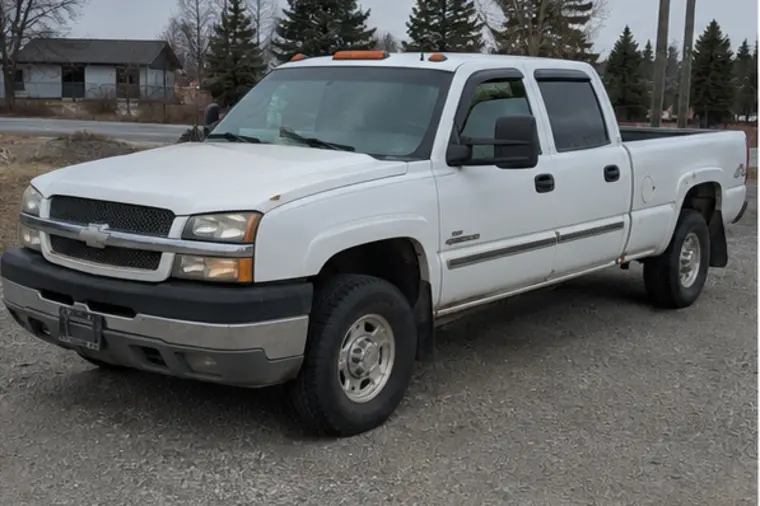
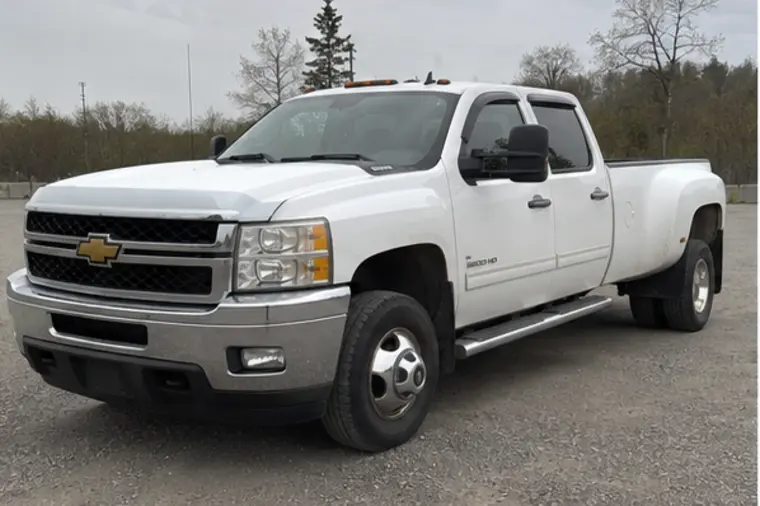
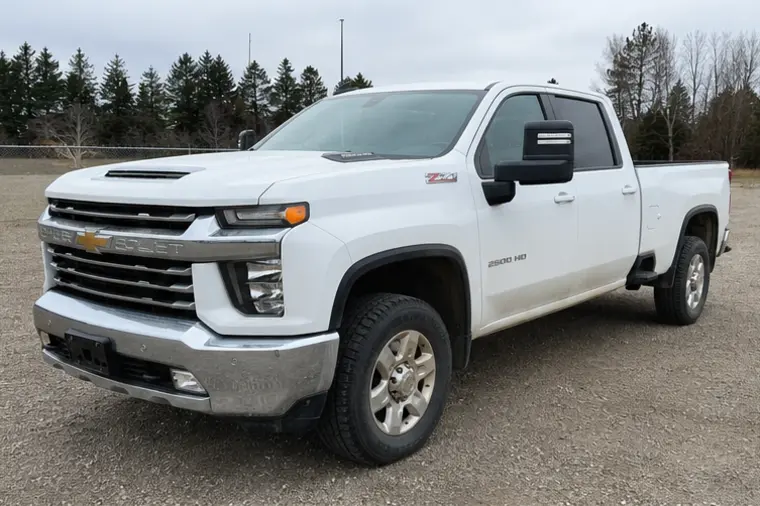
The 6.6L Duramax name spans multiple generations. A useful used-truck comparison begins with the engine code or model year, not the displacement alone.
Build a 6.6L Duramax file from the exact application
The current GM L5P reference publishes 470 hp at 2,800 rpm and 975 lb-ft at 1,600 rpm as tested in Silverado HD and Sierra HD. It also identifies high-pressure common-rail injection, cooled EGR, SCR and DPF. Those facts describe the current HD application; they do not overwrite LB7, LLY, LBZ, LMM, LML or earlier L5P specifications, and they do not describe the separate 3.0L Duramax.
For a used candidate, record model year, VIN-derived engine identification through reliable vehicle documents, pickup or chassis-cab application, transmission, emissions configuration and factory-versus-modified calibration. Keep the matching vehicle owner manual and Duramax supplement together. A current technical page can frame the newest system, but only exact-year literature can supply the candidate's operating, fluid, warning and maintenance instructions.
Turn the records into a dated sequence for oil and filters, fuel filters and water warnings, cooling-system work, transmission service, emissions repairs, campaigns and major component replacement. Ask the inspecting shop to separate completed maintenance, diagnosed repair, unresolved symptom and modification. A component invoice is evidence for that scope; it is not proof that the entire engine, truck or remaining service life has been renewed.
Finish with the complete HD truck. Confirm cab, bed, drive, rear-wheel arrangement, GVWR/GCWR branch, payload label, hitch equipment and the exact towing row for the intended work. The engine output does not cure a payload, axle, tire, hitch or combination-weight deficit. Choose a Duramax candidate only when the application, present condition, records, local service support and truck configuration all fit the same ownership brief.
| Evidence layer | Record | Do not infer |
|---|---|---|
| Engine | Exact code/year/application and calibration state | One universal 6.6L specification |
| Operating literature | Matching vehicle manual and diesel supplement | A later procedure applies backward |
| Condition | Scan, inspection, invoices and unresolved findings | A brand-wide failure rate or remaining life |
| Complete truck | Labels, configuration, hitch and exact rating row | Engine output establishes towing suitability |
L5P is a version family, not a single frozen output
GM’s later L5P reference lists 470 hp and 975 lb-ft and explicitly compares that engine with 2023-and-older L5P versions. The practical conclusion is that an L5P badge alone does not supply the output specification for an earlier truck.
Write the verified specification beside the truck being evaluated rather than beside the whole Duramax name. This is especially useful when comparing an older HD with a newer truck whose advertising quotes a higher output. The difference in numbers should lead to a workload and ownership comparison, not an assumption that the older engine is defective.
| Identifier to establish | Why it belongs in the purchase file |
|---|---|
| Model year and engine code | Separates the engine generation from later revisions |
| Pickup or chassis-cab application | Keeps different powertrain calibrations and documentation apart |
| Transmission identification | Connects the truck to the right operating and service material |
| Factory versus modified calibration | Helps a shop interpret the present configuration |
Make the service history answer specific questions
Ask whether the records identify fuel-system work, cooling work, emissions repairs and transmission service separately. “Fully serviced” is too broad to establish what was inspected or changed. A useful invoice allows the next shop to identify the parts and fluids used and understand why work was performed.
For a recently repaired truck, ask what evidence shows the original symptom was resolved. For a truck without relevant invoices, ask the inspecting shop which checks are possible now and which historical questions remain unanswered. Price the uncertainty as a separate decision instead of silently treating missing records as a clean history.
The best HD comparison starts with your trailer
A Silverado or Sierra HD shortlist should include actual rear-wheel arrangement, bed and hitch equipment before comparing engine versions. Take the same loaded trailer and cargo assumptions to each candidate. If the decision depends on a headline tow rating, stop and obtain the truck-specific rating and footnotes.
The engine guide is a starting point for that process. Follow the model guide for complete-truck differences, transmission research for the installed unit, and the towing planner for your carried load. Each answers a different part of whether the truck can do the work.
Where this engine is used
Applications include Chevrolet Silverado HD and GMC Sierra HD pickups, with exact output, transmission and emissions hardware changing across generations.
Evolution over time
Generation changes are especially important when comparing older used trucks with newer emissions-equipped models.
Output ratings, calibrations, turbocharging, emissions systems and supporting hardware can differ. Compare a specific model year and configuration rather than treating the engine name as one unchanging specification.
Output and transmission context
Horsepower and torque ratings can change by year, calibration and application. Transmission pairings also evolve and may differ between standard-output, high-output, pickup and chassis-cab configurations. Verify the exact powertrain instead of applying one current rating to every used truck.
Work and towing context
The engine is only one part of a tow vehicle. Cab, bed, axle ratio, transmission, cooling package, payload label, SRW or DRW configuration and hitch setup determine how the complete truck fits a workload.
Maintenance and emissions context
Modern diesel ownership includes the DPF, DEF and EGR systems as well as the engine itself. Usage pattern, maintenance, warning history and previous modifications are relevant when evaluating a used truck.
Build the service plan from the exact model-year owner documentation and the truck's records. Cold weather, extended idling, short trips, dust and frequent towing may change inspection priorities.
Questions for a used-truck inspection
Ask what work the truck performed, whether service intervals are documented and whether the powertrain or emissions system has been modified.
- Ask for dated maintenance and repair records rather than relying on a verbal summary.
- Evaluate a true cold start, warning lights, leaks, transmission behaviour and underbody condition.
- Confirm whether the truck has towed, carried commercial loads or been modified, and inspect accordingly.
- Verify emissions equipment, tires, suspension and the exact payload label on the truck itself.
Keep reliability claims tied to the Duramax code
Identify the exact engine code and application before researching a reported concern. LB7, LLY, LBZ, LMM, LML and L5P references are not interchangeable, and a pickup document should not silently become a medium-duty specification. Retain the build evidence when an engine has been replaced.
GM's PIP5007B addresses an exhaust-fluid diagnostic situation on selected 2011–2013 LML pickups. Its scope matters: it is service guidance, not a recall, not an injector-failure statistic and not a verdict on every 6.6L Duramax. Ask the technician whether the vehicle and symptom actually match before relying on a bulletin.
Collect fuel-system, cooling and emissions repair records along with the transmission history. A shared Allison name does not establish an unchanged transmission across eras. For commercial buyers, evaluate the complete loaded configuration and service access; an engine-family reputation cannot replace axle weights or an upfit inspection.
Use the engine code to select the right question
Duramax 6.6L research starts with the factory code and exact pickup or commercial application. Keep the code, transmission and body platform together in the purchase record. The Allison name spans different transmission contexts, so it should not be used as a stand-alone parts identifier.
| Evidence branch | Useful follow-up |
|---|---|
| Earlier HD pickup | Engine-code confirmation and age-related chassis inspection |
| LML-related warning | Match the symptom and vehicle to applicable service information |
| Later HD | Verify transmission, installed equipment and current service history |
Keep medium-duty evidence in its own file
An engine family can appear in vehicles with different commercial roles. Use the matching body-builder and chassis documents when a work body is involved. A pickup capacity table does not establish the completed truck's load distribution, and a bulletin for selected pickups does not automatically apply to another application.
A documented later L5P reference point
GM’s L5P specification page distinguishes its later engine from 2023-and-older L5P engines. It lists common-rail direct injection and EGR, SCR and DPF emissions controls. This confirms why one L5P badge should not be treated as one permanent output or hardware specification.
For a purchase inspection, use the truck’s own model-year information and ask which parts, software and aftertreatment equipment are actually installed. The product specification describes an engine application; it is not an assessment of a used truck.
Evidence note: manufacturer documents establish the specific facts and applications cited. Buying workflows and cost scenarios are DieselTrucks.ca editorial guidance. These pages do not publish measured failure rates or confirm the condition, recall status or capacity of a particular truck.
FIND TRUCKS USING THIS ENGINE
Connect the engine to a model year and exact truck.
Engine-family research is one part of the configuration. Use the explorer to connect model, year, transmission, cab, bed and rear-wheel context.
General educational content for Canadian diesel-pickup research. Verify the exact truck, model year, certification labels, owner manual and manufacturer documentation, and obtain qualified mechanical or towing advice where appropriate.
Sources & Further Verification
Use the exact model year, VIN, truck labels and current manufacturer documentation when moving from general research to a purchase or towing decision.
- GM: PIP5007B, selected 2011–2013 LML exhaust-fluid diagnosis
- Allison: 2020 Silverado HD 10-speed introduction
- GM: body-builder manuals and incomplete-vehicle documentation
- GM — L5P specifications and comparison with 2023-and-older engines
- Chevrolet/GMC — official 2026 6.6L Duramax supplement
- Chevrolet Canada manuals and guides