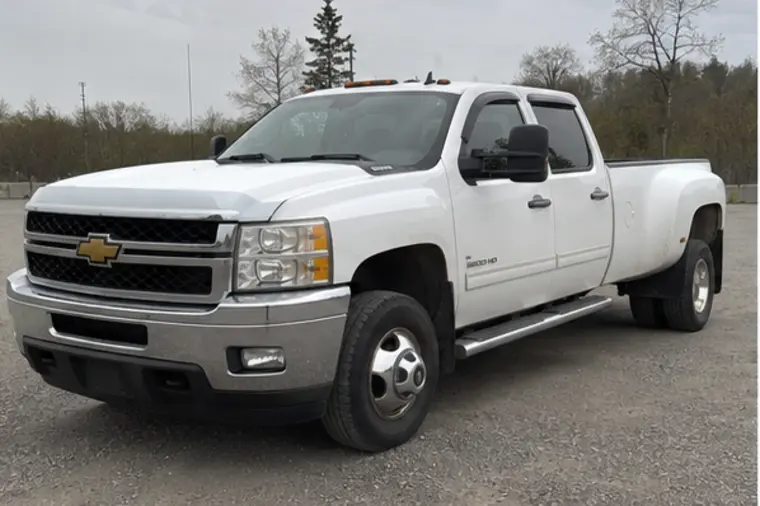
The best LML Duramax year is the one attached to the best verified truck for your assignment. For a buyer who specifically wants a later LML-era pickup, 2015–2016 is a reasonable search filter, but the reviewed GM sources do not establish that those years fail less often than 2011–2014. A documented earlier truck can be the stronger purchase. Start with engine identity, required configuration and maintenance history, then compare fuel-system repair evidence, emissions operation, cold and loaded behaviour, chassis condition and support. Treat model year as a document selector and preference—not a substitute for inspection.
Best-year verdict: define what “best” must accomplish
If your priority is a later LML pickup, begin with 2015–2016 candidates in the cab, axle and rear-wheel configuration that suits the job. This is an editorial shopping preference for the later model years, not a claim that GM proved a durability improvement in every subsystem.
If purchase cost, repair documentation or a particular body configuration matters more, keep 2011–2014 candidates in the search. Do not pay a later-year premium that consumes the inspection, maintenance and repair reserve needed to put the truck into service.
The winning candidate should have fewer important unanswered questions, not merely fewer birthdays. A year recommendation loses its value when the truck has an unidentified engine, unresolved warning, unsafe chassis or insufficient payload.
Compare years without manufacturing a ranking
These are shopping and research bands, not revision dates for every component. The service documents below contain narrower conditions than a general engine-family label suggests.
| Shopping band | Useful reason to consider it | Evidence requiring attention | What the year does not prove |
|---|---|---|---|
| 2011 | An earlier LML pickup that may fit the required configuration and budget | Exact LML identity; applicable 2011–2012 DEF coverage history; after-repair fuel evidence where symptoms match | First-year status does not measure failure probability |
| 2012–2013 | An earlier candidate with a coherent service and ownership record | Overlapping but separate after-repair connector, return-pipe and VIN-defined DEF evidence | Appearing in several bulletins does not make every truck defective |
| 2014 | A candidate that meets the job without assuming later-year superiority | Defined 2012–2014 return-pipe condition if a pump was replaced; complete current diagnosis | The end of one bulletin's model list does not prove all later hardware was fixed |
| 2015–2016 | A later-LML search preference when equipment, condition and budget agree | Correct year-specific literature, fuel history and applicable emissions-message diagnosis | Later model year is not a controlled reliability result |
Establish the engine before comparing the year
Record the VIN, model year, Silverado or Sierra HD model, engine RPO, original market, transmission, drivetrain, cab, box and single- or dual-rear-wheel configuration. Match the installed equipment with the identification and invoices. Badges and exterior generations are helpful context but not conclusive engine evidence.
Do not apply an Express or Savana LGH branch simply because it appears beside LML in a GM bulletin. A document can include several applications with different years and procedures. Engine replacement, tuning or body changes require additional records connecting the current truck to the original specification.
A verified later-LML specification reference
GM's 2016 Silverado HD specification sheet identifies the LML 6.6L turbo-diesel and its Allison 1000 six-speed automatic combination. The following is a reference for that documented application, not a replacement for an individual truck's configuration records.
This establishes an equipment reference for shoppers wanting that combination. It neither certifies a used truck's present output nor supplies comparative engine failure rates. Modified calibration and mechanical condition can invalidate assumptions about what is installed or how it behaves.
| 2016 Silverado HD LML item | Published specification |
|---|---|
| Engine | 6.6L turbo-diesel V8 |
| Rated power | 397 hp at 3,000 rpm |
| Rated torque | 765 lb-ft at 1,600 rpm |
| Fuel delivery | High-pressure common-rail direct injection |
| Transmission | Allison 1000 six-speed automatic |
| Emissions equipment | Cooled EGR, DPF and SCR |
Do not confuse an equipment change with a reliability finding
A later truck can be preferable for its cabin, body configuration or documented equipment. Those are legitimate reasons to select it without claiming its engine is statistically better. Conversely, an earlier truck does not become mechanically superior because it costs less or has fewer convenience features.
Ask which exact change justifies a seller's premium: a verified component revision, a completed repair, desired configuration, or simply a model-year label? Require a source and applicability for technical claims. The reviewed set does not supply a complete year-by-year LML engineering-change ledger, so this guide does not invent one.
Fuel-system evidence can outweigh the calendar
GM PIP5133C describes a pump-request evidence process, including complaint, codes, selecting diagnosis, debris location, magnetic characteristics and fuel-sample observations. Its clean, questionable and contaminated examples lead to different diagnostic decisions.
For a candidate with prior pump work, ask for the findings that justified the repair and the documented scope that followed. “New pump” alone does not explain whether other components were inspected, contamination was addressed or the original symptom was resolved. A later truck with an open fuel-system story is not automatically preferable to an earlier one with a coherent repair and recheck.
Keep inspection of high-pressure fuel equipment with a qualified technician. A buyer should request the results, not loosen lines or improvise a pressure test during a viewing.
Interpret post-repair codes within their exact scope
PIP5119 covers a defined after-fuel-system-or-engine-repair condition in listed 2011–2013 Silverado and Sierra applications. Its P0088/P128E branch includes checking whether regulator connectors were exchanged during the work.
This matters when comparing two early trucks: a recurring complaint after repair deserves a documented circuit diagnosis, not an immediate assumption that another pump is needed. It does not establish a defect in every untouched 2011–2013 vehicle, and it is not a basis for declaring 2014 the best year.
Ask when the symptom began relative to the repair, which codes returned and whether the condition was reproduced after correction. Preserve the chronology before it is lost in a stack of parts invoices.
Check the narrow return-pipe repair branch
PI1188 addresses fuel-temperature-sensor connector clearance to the fuel return pipe after pump replacement on specified 2012–2014 LML Silverado and Sierra 2500/3500 trucks. The bulletin provides adjustment and replacement direction when the clearance condition is present.
For a matching repaired candidate, request confirmation that routing and clearance were checked. Do not assume all trucks in those years have contact, or that every later truck has an upgraded fuel system. A service bulletin's publication date and application limit are not a complete production-change history.
Treat fuel history as its own buying question
Build a chronology of fuel-filter changes, water-in-fuel concerns, storage, unusual refuelling events and fuel-system work. Record the actual complaint and the shop's findings. Missing documentation leaves uncertainty; it does not itself establish contaminated fuel or internal damage.
When symptoms or prior evidence make contamination plausible, require qualified sampling and diagnosis before agreeing to a limited repair budget. Distinguish observed material, its location and the proposed repair boundary. Do not let a seller's statement that an additive “fixed it” replace condition-matched operating evidence.
Separate early DEF coverage from a year blacklist
GM special coverage 14652 describes specified DEF reservoir or supply-module conditions for involved 2011–2012 Silverado HD and Sierra HD vehicles. Eligibility was VIN-defined; the document expressly requires checking involvement because similar vehicles need not be included.
A completed, well-documented repair is relevant purchase evidence. The coverage record is not a verdict against every early LML, and historic time or distance terms do not establish free repairs today. Obtain current written eligibility and repair history from the appropriate service channel; no candidate VIN was supplied for this guide.
Compare warning resolution, not a clear dashboard
GM's December 2015 emissions-message guidance distinguishes warning conditions and reset requirements, including separate early and later message strategies. It explains that a message can persist after the initiating fault has been repaired if the correct completion process is not followed.
Ask for the original warning wording and order, diagnostic codes, selecting tests, repair and successful completion checks. A fluid top-up, battery disconnect or cleared code is not enough to prove the cause was corrected. Equally, a persistent message should not automatically be labelled a failed tank, pump or catalyst without diagnosis.
This is particularly important when a seller claims a late LML “has none of the early emissions issues.” Require evidence for the particular truck, rather than accepting a family-wide promise.
Choose a duty cycle that the whole truck can support
Describe the planned work before choosing a year: trailer type, loaded frequency, route grades, winter starts, idle time, short local trips and availability requirements. A truck that suits occasional recreation may not meet a daily commercial assignment with little backup capacity.
The buyer's comparison should include whether normal operating routines, maintenance access and emissions-system support fit that use. Do not presume an older diesel is the simplest solution for every low-distance task. If the intended operation repeatedly conflicts with the exact manual's requirements, reconsider the vehicle choice rather than assuming the newest LML will compensate.
Inspect from a genuine cold start
Arrange a cold inspection where practical and record ambient temperature, heater use, cranking, warning behaviour, idle, smoke and leaks. Compare observations with the exact diesel supplement and investigate material abnormalities before assigning a cause.
If a seller has already warmed the truck, mark cold behaviour as unverified and arrange another opportunity when it matters to the job. One successful warm start is not equivalent evidence. Do not convert a smooth first minute into a remaining-life prediction, especially when maintenance or previous repairs are undocumented.
Recheck at operating temperature and representative load
A qualified inspection should include stable-temperature operation, safe acceleration, transmission behaviour and a warm restart. Where practical, use legal conditions representative of intended work, without exceeding any verified rating. Record what was actually tested and what could not be reproduced.
A short unloaded drive cannot settle a complaint that occurs only towing uphill or after an extended shift. If the seller reports a previous repair for such a condition, request a comparable post-repair result. Treat an unavailable test as an open decision item, not an automatic pass or proof of failure.
Maintenance records must describe the service, not just the stamp
Match oil, filters, coolant and driveline service to the exact vehicle and diesel literature. Retain dates, distance, product specifications, parts and provider information. Separate evidence of completed work from an estimate or a service reminder reset.
Look at continuity: long gaps, repeated fluid additions, unexplained component replacements or changing odometer records require answers. Account for working conditions and storage when building the next-service plan. This guide does not assign one universal service interval to every 2011–2016 LML application; the correct manual and current service information remain necessary.
Modified does not automatically mean improved
Require a record of calibration, engine, fuel-system, transmission and emissions changes. Identify who can diagnose the current configuration and whether the vehicle can meet applicable inspection, registration and use requirements. Do not assume a return-to-stock claim proves all original components and software are present.
A modification advertised as prevention is not independent evidence that the truck is healthier than a standard candidate. Ask what concern prompted it, which supporting changes were made and what results followed. If legality, support or repair scope is unresolved, the year advantage is irrelevant.
Compare complete-truck condition and actual capacity
Inspect frame and structural repairs, corrosion, brakes, steering, suspension, tyres, wheel ratings, hitch installation and electrical equipment. An engine-focused reputation can distract from expensive or unsafe whole-truck defects. Have a qualified inspector distinguish cosmetic deterioration from structural or operational concerns.
Verify the exact truck's weight ratings and available capacity with its labels, configuration documents and loaded weights where necessary. Engine torque is not a payload or trailer rating. A 2500HD and a dual-rear-wheel 3500HD must not be treated as interchangeable simply because both are described as LML-powered.
Resolve Canadian campaign and support questions separately
Use Chevrolet Canada's recall path and Canadian safety records for Canadian-market research; use NHTSA for relevant U.S. history without converting it into Canadian VIN status. Record the lookup date, exact VIN and written completion evidence. Model-level information is a starting point, not an individual clearance certificate.
Before choosing a truck, confirm a suitable service provider can inspect and support its actual configuration. Ask about diagnostic capability, appointment availability, parts and expected downtime. A location appearing in a directory does not guarantee those capabilities or a particular repair price.
Use a written final comparison
Compare each candidate on verified identity, assignment fit, maintenance continuity, closed repair history, cold and warm inspection, campaigns, modifications and support. Mark each item confirmed, unresolved or not tested. Keep a separate allowance for identified work and for uncertainty you are willing to accept.
Choose the later truck when its desired equipment and evidence justify the extra cost. Choose the earlier truck when its condition, history and capacity make it the stronger documented purchase. Defer either when a high-consequence question cannot be resolved before commitment. The reviewed sources do not establish a universal LML winner, failure-rate ranking or guaranteed remaining life.
Evidence note: manufacturer documents establish the specific facts and applications cited. Buying workflows and cost scenarios are DieselTrucks.ca editorial guidance. These pages do not publish measured failure rates or confirm the condition, recall status or capacity of a particular truck.
General educational content for Canadian diesel-pickup research. Verify the exact truck, model year, certification labels, owner manual and manufacturer documentation, and obtain qualified mechanical or towing advice where appropriate.
Sources & Further Verification
Use the exact model year, VIN, truck labels and current manufacturer documentation when moving from general research to a purchase or towing decision.
- GM PIP5119, May 2013 — LML/LGH fuel-pressure codes after repair and connector check
- GM PI1188, March 2014 — defined 2012–2014 LML fuel-return-pipe clearance after pump replacement
- GM special coverage 14652, July 2015 — VIN-defined DEF reservoir and supply-module condition
- Chevrolet Canada manuals and guides — model-year vehicle literature lookup
- GM 2016 Chevrolet Silverado HD specifications — LML diesel and Allison configuration
- GM PIP5133C, November 2014 — LML/LGH fuel-pump evidence and debris classification
- GM DEF diagnostic guidance, December 2015 — 2012–2016 warning order and code-group requirements
- Chevrolet Canada recall centre — current vehicle recall lookup
- Government of Canada — current recalls, advisories and safety-alert search
- NHTSA vehicle recall search — U.S. VIN and model-level safety research
- Chevrolet Canada dealer and service locator — current support discovery