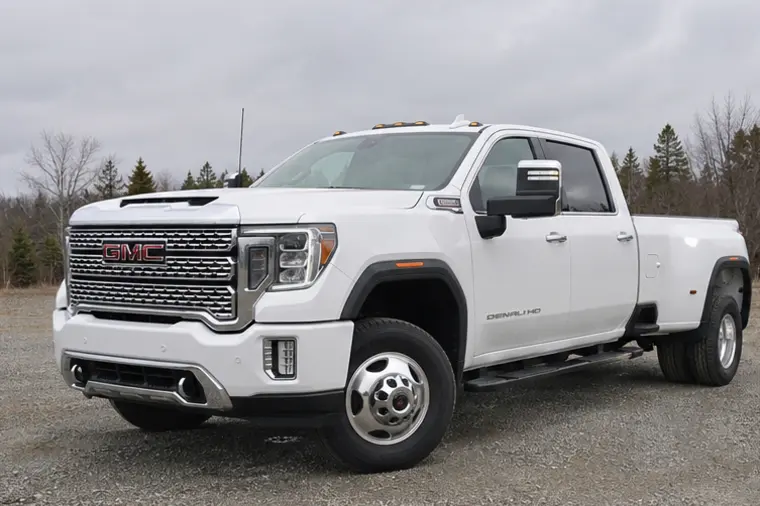
GMC Sierra 3500HD problems research needs to include the truck's working configuration. A diesel pickup with dual rear wheels, a single-rear-wheel camper truck and a vehicle carrying permanent work equipment do not have identical inspection priorities. Use the engine and model-year evidence below, then assess tires, attachments, service history and the consequences of downtime for the actual job.
Begin with the complete vehicle identity
Confirm the VIN, engine code, model year, rear-wheel configuration and installed body before arranging an inspection. Where a truck has been upfitted, obtain the relevant completion and equipment information as well. A photograph of a Sierra pickup cannot establish the limits or condition of a differently completed work vehicle.
An older truck may need a different investigation from a later L5P. Follow the year and equipment boundaries of each source rather than treating the entire 3500HD nameplate as one mechanical design.
| Inspection area | Why it belongs in the review | Evidence to retain |
|---|---|---|
| Transmission campaign and shifts | Recall status and present condition are separate | VIN response, invoices and symptom report |
| Fuel-pressure concerns | Electrical and fuel-system investigations differ | Codes, confirmed cause and repair verification |
| Coolant history | The source controls repair scope | Loss history and a located leak |
| Exhaust and emissions equipment | Warnings need a specific diagnosis | Scan results and component inspection |
| SRW/DRW tires and hitch | The working configuration needs its own assessment | Tire details, hardware findings and load records |
| Commercial maintenance | Kilometres alone do not describe previous service | Dated work orders and use history |
Check the diesel transmission recall for the actual VIN
Canadian recall 2024637 includes specified 2020–2022 diesel Sierra HD vehicles. Transmission valve wear can lead to harsh shifting and wheel lock-up. Software monitoring is the corrective action; detected wear can produce warnings and restricted gearing.
Before a long-distance purchase, ask GMC to check current applicability and completion for the VIN. If an action remains open, establish the manufacturer's instructions and the service appointment position before planning the collection trip. Do not assume that a U.S. campaign printout establishes the complete Canadian service history.
Read any transmission invoice closely. Programming, diagnosis, a fluid service and replacement hardware should not be described interchangeably. Ask the seller what symptom led to the visit and whether it returned afterward. For a truck intended to tow regularly, resolve an unexplained shift complaint before scheduling its first loaded assignment.
Fuel-pressure warnings: require a confirmed cause
The September 2020 version of GM 20-NA-197 covers specified 2017–2020 L5P Sierra applications and identifies fuel-pressure sensor connector damage or corrosion as a possible cause of listed codes. It directs an electrical inspection, not automatic pump replacement.
Use that distinction when assessing an invoice history. A shop should be able to explain whether it found a connector problem, a sensor fault, a pressure-control concern or something else. If several parts were replaced over multiple visits, ask which finding finally accounted for the original symptom and what was checked afterward.
For commercial buying, an intermittent warning can be particularly difficult to price because the truck may behave normally during a short viewing. Agree on the diagnostic conditions and inspection time needed before the sale. Do not substitute the seller's confidence, a recently cleared dashboard or a generous discount for a known repair scope.
Fuel contamination records matter on an older work truck
GM PIP5151F includes specified 2011–2019 6.6L Sierra applications. It discusses contamination evidence in investigations of starting, running and fuel-pressure concerns, including water and incorrect-fluid contamination.
Ask how the truck was fuelled and maintained, especially if it used site tanks or spent time out of service. This is a records question, not an assumption that commercial fuel handling damaged the vehicle. Have any suspected contamination assessed professionally and retain the findings rather than relying on the appearance of one component in a photograph.
When an earlier repair involved contamination, request a complete account of the affected system and work performed. The buyer needs to understand how the condition was addressed, whether additional components were assessed and whether follow-up problems occurred. A replacement pump invoice by itself is not the entire repair history.
Coolant and exhaust complaints should stay separate
GM 18-NA-098 provides leak-location guidance for specified 2017–2020 Duramax applications. It recognizes multiple possible paths, including leaks that travel down the engine. A low-coolant message does not by itself identify a failed major assembly.
Ask about repeated top-ups, visible leakage, temperature warnings and the circumstances of any previous repair. A truck that only loses fluid on a particular assignment needs that history communicated to the technician. Keep observations factual: what was seen, when it happened and how frequently fluid was added.
Do not connect every exhaust observation to the cooling system without diagnosis. Record smoke, warning messages and operating conditions separately. An inspector can decide what tests are appropriate. The purchase decision should rest on located faults and their implications, not a chain of assumptions built from a low reservoir and one brief tailpipe observation.
A DPF code needs more than a regeneration guess
GM 16-NA-380 distinguishes DPF integrity and pressure-sensing concerns in specified diesel applications through 2023. The diagnostic direction depends on the actual code and findings; a generic regeneration recommendation does not cover every case.
For a used Sierra 3500HD, ask the technician to assess the condition and completeness of the installed emissions equipment. Compare physical findings with repair receipts and the seller's description of modifications. Request an explanation of what remains unresolved if a warning has recently been cleared or a part changed without successful follow-up.
If the vehicle's past work involved long idle periods or unusual operating patterns, record that context for the shop. Do not infer the state of the filter from a job title or an odometer alone. Obtain the current evidence and use the correct service information for the engine and year.
Inspect SRW and DRW candidates as different configurations
On a dually, include the inner rear tires in the inspection rather than judging the set from the visible outer sidewalls. Have the shop record size, specification, condition, wear and suitability of the installed wheel-and-tire combination. Ask about previous tire replacements and any changes from the documented configuration.
On an SRW truck, give the rear tire and axle assessment the same attention as the engine. A heavy camper or substantial hitch load makes the actual labels and installed equipment central to the decision. Do not treat a 3500HD badge as a substitute for weighing the planned truck and matching all applicable limits.
For either configuration, inspect hitch mounting, the bed or body installation, attachment points and evidence of previous changes. A removed hitch can still leave questions about the installation and the truck's history. Request the inspection findings rather than inferring a safe installation from clean paint or the presence of a familiar hitch brand.
Examine the work history behind the odometer
Ask what the Sierra carried, how often it towed, where it operated and who maintained it. Request hours if they are available and useful to the inspecting shop, but do not convert them into an invented equivalent-kilometre formula. A service history should be interpreted alongside the condition of the actual vehicle.
Inspect working systems that matter to the next owner: trailer connections, lighting, cameras, brakes, accessory controls and any installed power equipment. A sound engine can coexist with an unsuitable or poorly documented upfit. Agree on which systems the technician can inspect and identify any specialist assessment still required.
For a fleet purchase, keep the vehicle inspection separate from the seller's broader maintenance reputation. Ask for records tied to this VIN. A fleet policy describing regular service is useful context, but it does not replace the work orders showing what happened to the particular truck being sold.
Plan the repair path and the return to work
An estimate should identify the diagnosed problem, the proposed repair, what is still uncertain and how completion will be checked. Where a shop needs further testing, authorize a defined diagnostic stage before treating a preliminary figure as the complete cost. Include fluids, programming and related work where the quote requires them.
For a 3500HD earning revenue, ask about parts lead time, appointment availability and transport to the repairing shop. Decide what happens to the attached trailer or cargo if the truck becomes unavailable. A towing plan and a substitute vehicle need to suit the actual combination, not just provide a ride home for the driver.
Set the first work date after repairs and verification are complete. The strongest buying proposition may be a truck with clear repair evidence and suitable configuration rather than the lowest purchase price. Evaluate the total practical requirement: purchase, immediate work, maintenance catch-up and the cost of being unable to perform the intended job.
Sierra 3500HD problems: buyer FAQs
Does DRW eliminate drivetrain or load problems? No. It identifies a configuration that must still be checked against the exact truck's limits, tires, attachments and condition. Engine evidence remains year-specific.
Is every transmission campaign entry evidence of a replacement transmission? No. Obtain the work order and distinguish the recorded action from any separate mechanical repair.
Can a low-mileage work truck be assessed from kilometres alone? No. Records, operating history, condition and the next assignment provide information that the odometer cannot.
Are documented problems a reason to avoid the entire model? These sources describe particular concerns, not the failure frequency of every 3500HD. Use the findings to investigate a candidate, then make the purchase decision from its verified condition and suitability.
Evidence note: manufacturer documents establish the specific facts and applications cited. Buying workflows and cost scenarios are DieselTrucks.ca editorial guidance. These pages do not publish measured failure rates or confirm the condition, recall status or capacity of a particular truck.
General educational content for Canadian diesel-pickup research. Verify the exact truck, model year, certification labels, owner manual and manufacturer documentation, and obtain qualified mechanical or towing advice where appropriate.
Sources & Further Verification
Use the exact model year, VIN, truck labels and current manufacturer documentation when moving from general research to a purchase or towing decision.
- Transport Canada 2024637 — diesel transmission recall
- GM 20-NA-197, September 2020 — fuel-pressure connector diagnosis
- GM PIP5151F, July 2018 — diesel fuel contamination evidence
- GM 18-NA-098, June 2019 — Duramax coolant leak diagnosis
- GM 16-NA-380, September 2022 — DPF fault distinctions
- Chevrolet Canada manuals and guides