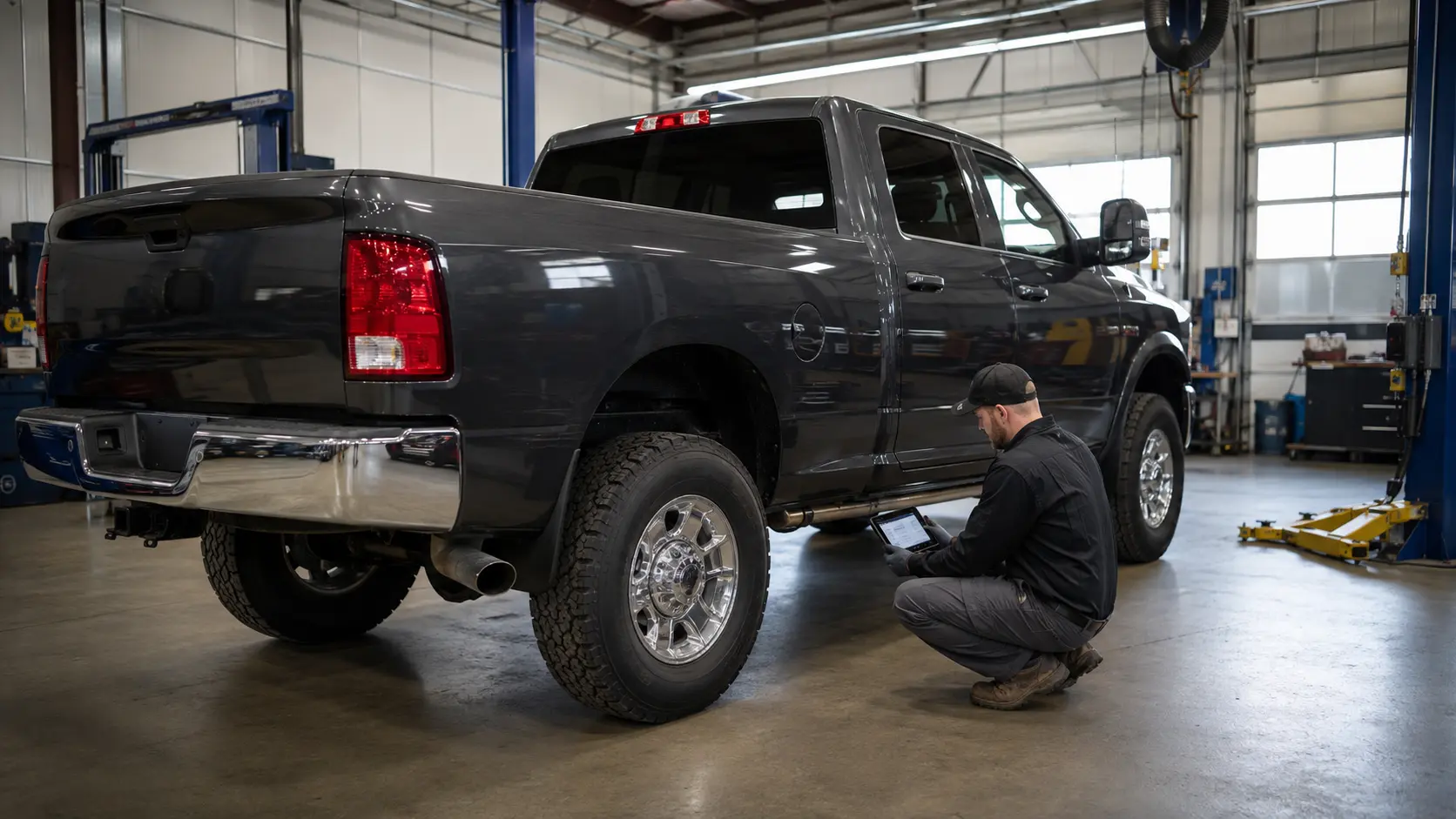
A scan report is a snapshot taken with a particular tool under particular conditions. Its value depends on what was read, what was tested and how the findings relate to the truck's history.
Build the buying decision
Capture scope
VIN + tool coverage + conditions
Interpret findings
Codes + symptoms + technician diagnosis
Retain uncertainty
Untested systems + intermittent faults + next test
Request a usable report
Ask the shop to record the VIN, date, kilometres, available engine hours and tool coverage. Request the exact codes and their reported status, relevant freeze-frame information when available, and the technician's interpretation. A verbal statement that there are no codes loses useful context.
Confirm which systems were inspected. An engine-only scan does not necessarily assess transmission, braking, body or installed equipment controllers. The shop should explain any unavailable information rather than imply the report covers every electronic system.
Connect codes to symptoms and repair evidence
A code identifies a monitored condition or diagnostic path; it does not automatically identify the component to replace. Compare it with the road test, operating conditions and invoices. Ask whether a repair was verified after the conditions that produced the complaint were reproduced appropriately.
Manufacturer bulletins can guide a technician when vehicle and symptom applicability match. GM's PIP5007B is one such application-specific document. A bulletin is not a recall, a promise of free repair or a population failure rate.
Understand a clean result
A truck can have mechanical wear or an intermittent fault without a current code. Ask about recent battery disconnection, software work or code clearing and let the technician interpret readiness or history information that the specific vehicle exposes.
Retain the original report with the inspection findings and repair estimate. If the technician recommends additional testing, decide whether to commission it before buying. The useful outcome is a stated inspection scope and remaining uncertainty, not a digital pass badge that the evidence cannot support.
Evidence note: manufacturer documents establish the specific facts and applications cited. Buying workflows and cost scenarios are DieselTrucks.ca editorial guidance. These pages do not publish measured failure rates or confirm the condition, recall status or capacity of a particular truck.
General educational content for Canadian diesel-pickup research. Verify the exact truck, model year, certification labels, owner manual and manufacturer documentation, and obtain qualified mechanical or towing advice where appropriate.
Sources & Further Verification
Use the exact model year, VIN, truck labels and current manufacturer documentation when moving from general research to a purchase or towing decision.