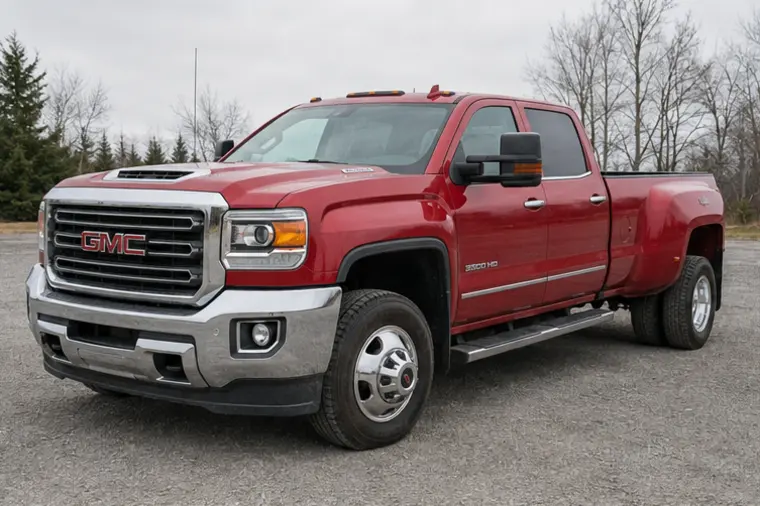
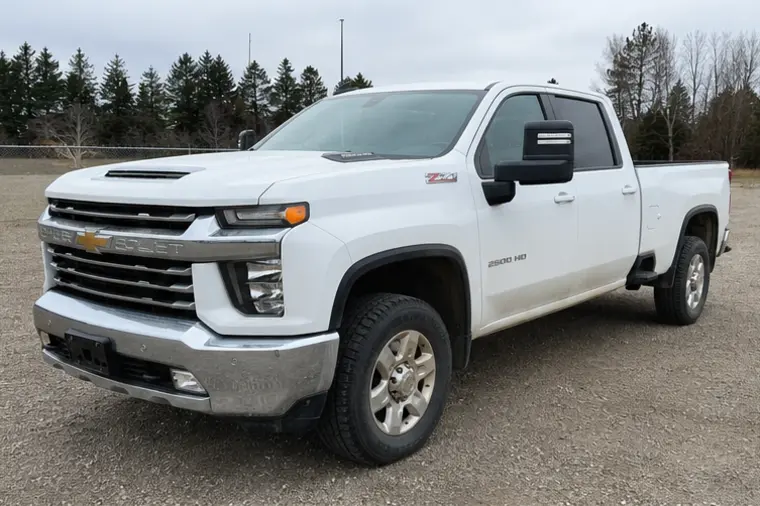
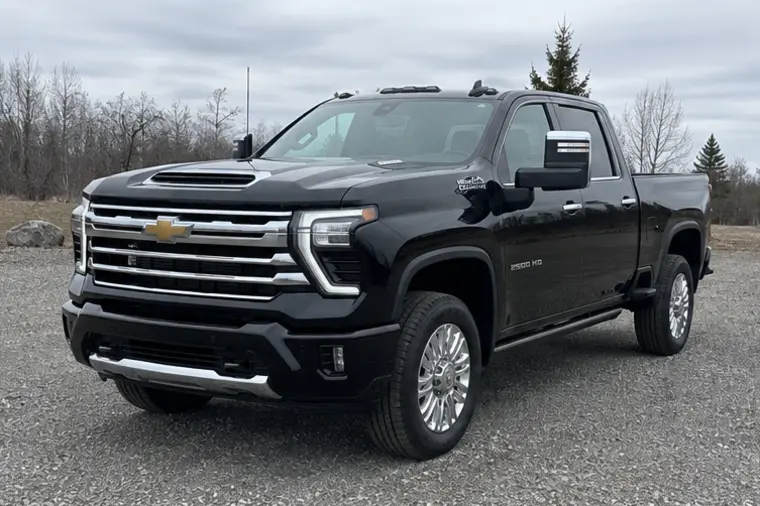
No reviewed primary source supports a universal blacklist of L5P Duramax model years. GM documentation instead defines equipment bands and narrowly scoped service paths: 2017–2019 trucks use the earlier L5P/HD context; 2020–2023 introduces the redesigned truck and Allison ten-speed while retaining 445 hp and 910 lb-ft; and 2024+ moves to 470 hp and 975 lb-ft. Avoid a candidate when its identity, cold and hot behaviour, fuel or cooling evidence, emissions legality, transmission history, repairs, capacity or support cannot be reconciled within the purchase plan. A model year selects the correct evidence. It does not replace inspection.
Years-to-avoid verdict: reject unresolved candidates, not a whole year
Do not blacklist 2017–2019, 2020–2023 or 2024-and-later L5P trucks as a class. The reviewed official material does not provide a common exposure denominator, maintenance standard and inspected outcome needed to rank failure rates by year.
Use year and configuration to choose the correct specifications, manuals, diagnostic documents and safety research. Then reject or pause the individual truck when a material condition is unresolved, a repair cannot be traced to a cause and recheck, or the vehicle cannot safely and legally do the intended work.
A later truck earns no automatic pass. An earlier truck with aligned identity, complete chronology and satisfactory testing can be the lower-risk purchase.
Use the official L5P timeline as a verification map
These are research bands, not reliability grades. Verify the candidate's actual model year, engine RPO, installed hardware and transmission before using them.
| Shopping band | Official equipment anchor | Evidence to verify before proceeding |
|---|---|---|
| 2017–2019 | 445 hp/910 lb-ft; Allison six-speed documented for 2019 | True-cold behaviour, matching 2017–2019 service paths, fuel/cooling chronology, exact transmission and truck condition |
| 2020–2023 | Redesigned HD; 445 hp/910 lb-ft with Allison ten-speed | Ten-speed history and applicable campaign status, exact configuration, duty, repairs and current operation |
| 2024+ | 470 hp/975 lb-ft; GM distinguishes latest L5P from 2023-and-older | Exact-year literature, current configuration, shorter evidence horizon, acquisition cost and support |
Avoid any candidate with unresolved identity
Record VIN, Chevrolet or GMC model, model year, L5P RPO, transmission, cab, box, drivetrain, axle, wheel configuration, original market and emissions label. Photograph vehicle and engine labels.
Connect replacement engines, transmissions and control modules to part numbers, programming and invoices. A 6.6L badge or seller description does not prove the engine is an L5P, and pickup L5P evidence must not be applied to an L5D medium-duty installation.
Pause when build data, labels, installed hardware and records conflict. Identity uncertainty can invalidate specifications, maintenance procedures, service documents and valuation.
Do not reject 2017–2019 from bulletin scope alone
GM 19-NA-108 addresses a defined rough-run or misfire condition during cold operation in specified 2017–2019 L5P trucks. The document supplies a condition and diagnostic route; it does not report that every truck, or most trucks, develops it.
Arrange a true cold soak where practical and record ambient temperature, block-heater use, battery state, cranking, warnings, codes, smoke, idle and stabilization. Reject or pause a candidate that is pre-warmed to conceal a relevant test, has a material symptom without diagnosis, or cannot be retested after repair.
Do not convert the bulletin's year range into a blacklist. Give credit to condition-matched evidence and a verified outcome.
Do not reject 2017–2020 from connector or coolant documents alone
GM 20-NA-197 provides a fuel-pressure connector diagnostic path for specified 2017–2020 L5P applications. GM 18-NA-098 shows multiple coolant-leak paths for defined 2017–2020 L5P/L5D applications.
Those scopes tell an inspector which questions and measurements may apply. They do not establish prevalence, make every in-scope truck defective or prove later trucks are immune to fuel and cooling concerns.
Avoid a candidate when the matching symptom remains unresolved, records show parts replacement without a measured cause, or the original condition was never reproduced and rechecked under comparable conditions.
Do not approve 2020–2023 because it has the ten-speed
GM's 2023 literature documents the 445-hp/910-lb-ft L5P with an Allison ten-speed in the redesigned HD generation. More ratios are an equipment difference, not proof of greater engine or truck reliability.
Identify the transmission, calibration, service history, converter behaviour, temperatures, shifts and prior work. Test cold and warm operation under a safe condition appropriate to the truck.
Treat engine and transmission evidence separately. Decline a truck whose powertrain symptoms, repair boundary or current operating result remain outside the buyer's risk and downtime limits.
Verify the defined 2020–2022 transmission campaign separately
Transport Canada recall 2024637 identifies a defined population of 2020–2022 diesel Silverado and Sierra trucks and a software remedy intended to detect excessive transmission-control-valve wear before a wheel-lock condition.
Check the Canadian VIN through current manufacturer and Government of Canada paths and retain dated results and remedy documentation. Do not infer inclusion, exclusion or completion from model year alone.
Campaign status does not diagnose present mechanical condition, while a completed remedy does not certify the engine. Pause when status cannot be resolved or transmission symptoms remain unexplained.
Do not approve 2024+ from output or newness
GM documents the latest L5P at 470 hp and 975 lb-ft and distinguishes it from 2023-and-older versions. That is a specification change, not a comparative durability study.
Newer trucks have a shorter long-term evidence horizon. Apply exact-year manuals and service information, verify warranty and support, and inspect the same fuel, cooling, emissions, transmission and whole-truck systems used for earlier candidates.
Reject configuration, condition or cost mismatches even when the latest output is attractive. Horsepower and torque cannot create payload, axle, tire or hitch capacity.
Avoid fuel-pressure guesses and incomplete repair chains
For long crank, stall, no-start, low power or pressure codes, retain exact conditions, codes and freeze-frame data. Inspect supply, filtration, fuel quality, electrical circuits, sensor signals, commanded versus actual pressure, high-pressure components and injectors using the matching procedure.
A pump, injector, sensor or connector invoice is incomplete without the original complaint, measurement that selected the repair, full work boundary and a comparable result. Repeated parts replacement can indicate an unresolved cause rather than renewed reliability.
Pause until the evidence chain closes. Decline when the unresolved consequence or repair uncertainty exceeds the plan.
Avoid contamination histories with an unknown boundary
GM PIP5151F describes a defined contamination-inspection process for listed Duramax applications. Preserve an appropriate sample, filter condition, photographs and technician findings before cleanup when contamination is suspected.
Determine which tank, lines, rails, pumps and injectors were inspected, cleaned, replaced or reused, and retain flushing and post-repair test evidence. A clean-looking sample does not certify the whole system; one new component does not prove complete remediation.
Avoid the truck when contamination scope, cause or downstream effects cannot be bounded to an acceptable written plan.
Avoid cooling uncertainty and shortcut diagnoses
Record coolant level trends, pressure-test results, residue origin, temperature and load, prior repairs, refill or bleed procedure and condition-matched recheck. Inspect radiator, hoses, fan, charge-air cooling and evidence of overheating or cleanup.
GM's scoped coolant document demonstrates why fluid visible at a low point may have another origin. Do not accept a head-gasket, EGR-cooler, water-pump or radiator diagnosis based only on reputation or drip location.
Pause for unexplained loss, cross-fluid evidence, overheating history or a repair that did not reproduce and close the original condition.
Avoid unresolved DPF, DEF and reduced-power evidence
Capture exact codes, dashboard messages, countdowns, soot and ash information, differential pressure, temperatures, regeneration history, duty and upstream fuel, air or engine evidence.
GM 16-NA-380 separates degraded-filtration, missing-filter and differential-pressure-line paths. Regeneration may address soot under appropriate conditions; it does not remove ash or repair damaged filtration, sensors or upstream causes.
Avoid illegal, deleted or unknown hardware and calibration when legality, insurance, diagnostic integrity or shop acceptance cannot be resolved. Do not treat deletion as a year-selection advantage.
Avoid pre-warmed or one-condition inspections
Require a true-cold start when practical, then assess fully warm operation and restart. Record temperatures, load, road conditions, codes, warnings, smoke, leaks, cooling stability, response and transmission behaviour.
A clean warm idle cannot prove cold starting. A good cold idle cannot prove fuel delivery, cooling, emissions or transmission operation under representative duty.
Mark an inaccessible condition not assessed. Do not convert missing evidence into a pass because the truck presents well during one short drive.
Avoid unexplained smoke, low power or turbo claims
Record whether the event occurs cold, warm, during regeneration, unloaded or towing, and at what speed, gear and load. Preserve smoke colour and duration plus relevant scan data.
Inspect air restriction, charge-air plumbing, turbo control, exhaust restriction, fuel delivery, sensors and commanded versus actual values before naming a component.
A turbo, hose or sensor invoice helps only when complaint, measured cause, complete work and comparable outcome agree. Avoid recurring symptoms or broad diagnoses without a reproducible path.
Avoid unmeasured oil-use or internal-engine claims
Trend oil level and consumption over known distance and duty with the correct product and procedure. Inspect external leakage and intake or turbo contribution before inferring internal wear.
Describe noise, crankcase pressure, smoke and coolant interaction by temperature and operating condition. One oil-cap observation is not a calibrated health or remaining-life test.
Use application-correct professional measurements when symptoms justify them. Pause for material oil/coolant interaction, unexplained consumption or internal concerns that lack a bounded diagnosis.
Avoid repeated visits without one chronology
Put complaints, codes, conditions, tests, parts, programming and outcomes on one timeline. Several invoices may represent one unresolved intermittent concern, staged diagnosis or unrelated events.
Do not count every visit as an independent failure, and do not call the chain closed when the last record ends at parts replacement. Ask whether the original condition returned under comparable load and temperature.
Classify each concern as repaired and rechecked, unresolved or not assessed. Repetition without closure is a candidate-level rejection signal, not proof against an entire year.
Avoid unknown tuning and mismatched hardware
List engine and transmission calibrations, injectors, turbo, pumps, intake and exhaust hardware, emissions changes, lifts, tires and axle changes. Obtain installer, part numbers, software, purpose, supporting changes and results.
“Stock,” “deleted” and “returned to stock” are seller descriptions until hardware, software and records agree. Unknown tuning can change code interpretation, protection strategies, component load, legality and service access.
Decline or price a complete verification and correction plan when modification risk exceeds the intended use or available support.
Avoid complete-truck blind spots
Inspect steering, brakes, tires, wheels, frame, mounts, hitch, transfer case, axles, driveshafts, electrical systems, cab, box and corrosion. Include plow, service-body, fifth-wheel, off-road and collision history.
Separate engine, transmission, chassis and body findings. A sound L5P cannot make an unsafe, overloaded or structurally unacceptable truck a reasonable purchase.
Age, kilometres, engine hours and duty show different exposure. Test “highway kilometres” and “never worked” claims against records and physical evidence.
Avoid trucks that cannot legally perform the assignment
Use certification and payload labels, axle and tire limits, hitch limits and exact-year Chevrolet or GMC configuration tables. Add occupants, cargo, accessories, body equipment and loaded tongue or pin weight.
Published maximums apply only to stated cab, box, drivetrain, wheel, axle, hitch and package conditions. Engine output cannot override any lower-rated component.
Reject a configuration that lacks capacity margin for the real load, regardless of model year or power rating.
Avoid histories that cannot support the intended duty
Retrieve the exact-year owner manual and diesel supplement. Reconstruct oil, filters, fuel filtration, coolant, transmission, transfer case, axle and emissions service by date, kilometres, engine hours and duty where available.
Towing, idling, dust, short trips, storage and winter operation can make odometer-only histories misleading. Fresh fluids and reset monitors create a baseline, not proof of earlier maintenance.
Classify each interval as supported, partial or unknown, then compare the catch-up plan and uncertainty with the buyer's workload and interruption tolerance.
Verify Canadian safety status before committing
Use Chevrolet Canada's current recall centre and Government of Canada sources. Retain dated VIN results, notices and completed-repair records; do not substitute a U.S. filing for Canadian candidate status.
No VIN was supplied for this guide, so no truck is represented as included, excluded, open, complete or unaffected. Model-level research identifies a question, not an answer for one truck.
Pause when a material safety action cannot be resolved before transfer or when the remedy and present condition do not fit the operating plan.
Avoid support and downtime mismatches
Identify facilities that accept the exact year, L5P configuration, transmission, emissions hardware and modifications. Confirm diagnostic capability, parts path, appointment time, recovery and post-repair validation.
A dealer-locator result is only a discovery path. It does not guarantee expertise, parts, timing or price.
For a work truck, include towing, diagnostic queue, disassembly, sourcing, programming, reassembly, recheck and substitute capacity. Decline a technically repairable candidate when realistic interruption exceeds the assignment.
Use explicit pause, decline and reconsider gates
Do not average a severe safety, legality or identity failure into a numeric score.
| Gate | Pause and investigate | Decline when | Reconsider when |
|---|---|---|---|
| Identity | Labels, RPO, hardware or records disagree | Material identity remains irreconcilable | Correct documentation and inspection align |
| Operation | Cold, hot or load condition was not tested | Serious symptom has no viable diagnosis | Condition is reproduced, repaired and rechecked |
| Fuel/cooling/emissions | Repair boundary or legality is unclear | Consequence exceeds budget, law or support | Written scope closes cause and configuration |
| Transmission/truck | History, safety or structure is uncertain | Unsafe, structurally unacceptable or unsuitable | Qualified inspection supports a bounded repair |
| Work fit | Capacity or downtime evidence is missing | Truck cannot safely do the job | Exact configuration and support meet the assignment |
Stage a rejection-focused pre-purchase inspection
Before arrival, collect VIN, labels, advertisement, maintenance, repairs, modifications, load requirements and current safety lookups. Ask that the truck remain cold when a cold test matters.
At inspection, preserve scans before clearing codes, document cold and warm behaviour, inspect fuel/cooling/emissions systems, test transmission operation and inspect the whole truck. Use a safe representative load only when lawful and appropriate.
Afterward, sort findings into supported, repaired and rechecked, unresolved and not assessed. Price only defined work; keep open investigation separate from optional upgrades.
Preserve unknowns and the limits of the answer
The reviewed primary set supports L5P architecture, selected output/transmission bands, exact-year operating research and scoped cold-start, connector, contamination, coolant, DPF and transmission-campaign paths.
It does not supply exposure-adjusted failure rates, a universal worst year, an unseen truck's exact specification, Canadian candidate VIN status, repair-cost distributions or remaining-life forecasts.
An unknown is not proof of failure, but it is not a pass. Move from pause to proceed only when evidence closes the material risk within the assignment.
L5P Duramax years-to-avoid questions
Which L5P Duramax years should I avoid? No universal year blacklist is supported; avoid individual trucks with unresolved material evidence.
Should every 2017–2019 L5P be avoided? No. Scoped service documents guide inspection but do not establish prevalence.
Is every 2020–2023 ten-speed truck a better choice? No. Verify transmission history, applicable safety status and present condition separately.
Is 2024+ automatically safest? No. GM documents higher output, not comparative reliability, and the long-term evidence horizon is shorter.
Should a deleted truck be preferred? No. Unknown or illegal emissions configuration can compromise diagnostics, insurance, service access and the purchase.
What is the strongest reason to decline? Irreconcilable identity, safety or legality; a serious unresolved symptom; incomplete contamination or overheating evidence; unacceptable structure, capacity, support or downtime.
Evidence note: manufacturer documents establish the specific facts and applications cited. Buying workflows and cost scenarios are DieselTrucks.ca editorial guidance. These pages do not publish measured failure rates or confirm the condition, recall status or capacity of a particular truck.
General educational content for Canadian diesel-pickup research. Verify the exact truck, model year, certification labels, owner manual and manufacturer documentation, and obtain qualified mechanical or towing advice where appropriate.
Sources & Further Verification
Use the exact model year, VIN, truck labels and current manufacturer documentation when moving from general research to a purchase or towing decision.
- GMC 2019 trailering guide — original 445 hp, 910 lb-ft and Allison six-speed L5P-era specification
- GMC 2023 Sierra HD brochure — original 445 hp, 910 lb-ft, Allison ten-speed and configuration tables
- GM L5P technical description — later specification versus 2023-and-older engines
- GM 19-NA-108, June 2019 — defined L5P cold-start concern
- GM 20-NA-197, September 2020 — fuel-pressure connector diagnosis
- GM 18-NA-098, June 2019 — Duramax coolant leak diagnosis
- Transport Canada 2024637 — diesel transmission recall
- GM N242454440 / U.S. 24V-797 — affected vehicles and remedy
- Chevrolet Canada recall centre — current vehicle recall lookup
- Chevrolet Canada manuals and guides — model-year vehicle literature lookup
- GM PIP5151F, July 2018 — diesel fuel contamination evidence
- GM 16-NA-380, September 2022 — DPF fault distinctions
- Chevrolet 2024 Silverado 2500HD chart — original manufacturer hitch, cab, wheel and package conditions
- Chevrolet 2024 Silverado 3500HD chart — original manufacturer SRW, DRW and hitch conditions
- GM 2025 6.6L Duramax diesel supplement — original manufacturer operating and maintenance instructions
- Government of Canada — current recalls, advisories and safety-alert search
- Chevrolet Canada dealer and service locator — current support discovery