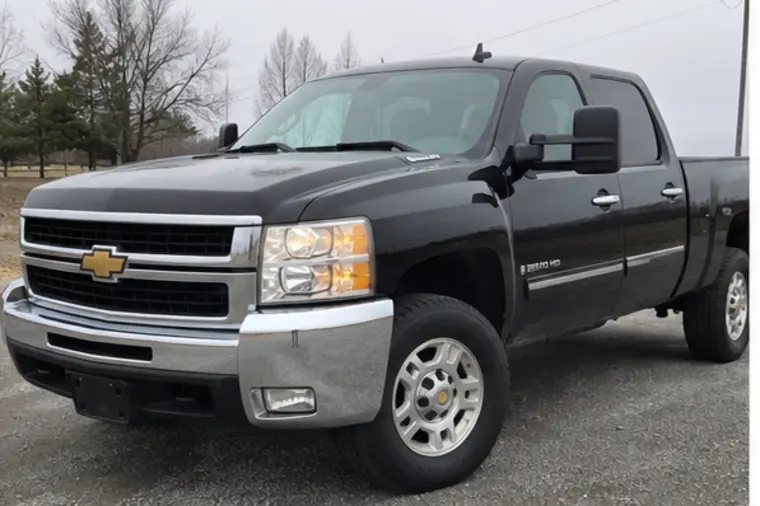
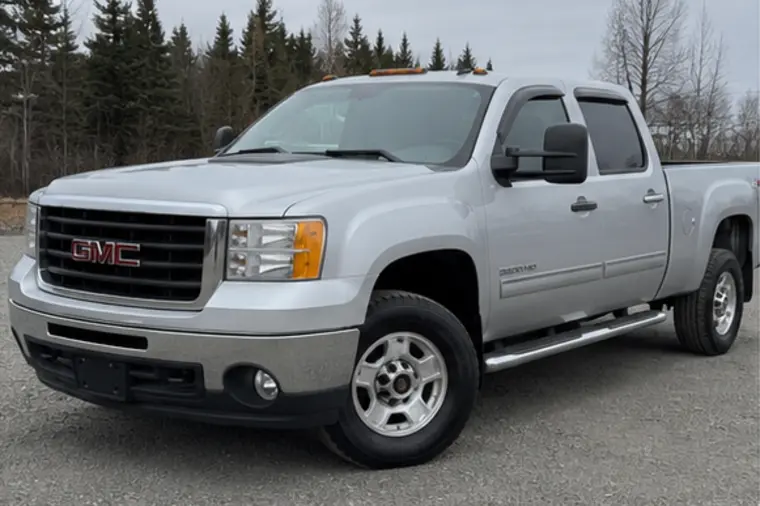
There is no defensible single best LMM Duramax year in the primary evidence reviewed here. For buyers browsing 2007–2010 Silverado and Sierra HD advertisements, the stronger purchase is the correctly identified LMM truck with the better documented condition, suitable configuration and supportable maintenance needs. A 2010-first search is reasonable if a later model year is an explicit preference; it is not evidence that 2010 has a lower failure rate. Keep earlier candidates in the comparison. This guide separates verified specifications from year-selection judgment and explains which findings should actually change the shortlist.
Best-year answer: start with a preference, finish with a truck
If you specifically want a later LMM-era HD pickup, start the search with 2010 and widen it when condition, equipment or availability disappoints. That is a shopping sequence, not a reliability league table. No exposure-adjusted annual failure comparison was obtained, so neither a numerical score nor a universal winning year is assigned.
An earlier candidate can be preferable if it has a verified identity, an intact and supportable configuration, stronger service documentation and satisfactory inspection results. Conversely, the newest date on the shortlist cannot compensate for unresolved warnings, unsuitable capacity or concealed modifications. Decide what evidence must be present before deciding how much the year matters.
Resolve the 2007 advertisement before comparing it
Do not let an advertisement's calendar year, body description or informal half-year label settle the engine identity. When a 2007 candidate is advertised as LMM, reconcile the VIN, engine RPO, certification information and installed equipment with the exact vehicle records. A replacement engine or altered control system creates additional questions.
The original 2007 Silverado manual expressly directs diesel owners to the separate Duramax supplement. The general manual alone is therefore not a complete engine specification or maintenance source. If the candidate proves to have a different engine, move it into that engine's comparison rather than making the LMM guide fit an uncertain label.
A year-by-year shortlist without invented production fixes
These are editorial screening rules. They do not assert identical engineering across the years. A complete manufacturer production-change ledger was not obtained, and the absence of a documented revision here must not be presented as proof that nothing changed.
| Advertised model year | How to use it in the search | What still controls selection |
|---|---|---|
| 2007 | Resolve exact vehicle and engine identity before comparing LMM candidates | RPO confirmation, installed configuration and records |
| 2008 | Keep a verified LMM candidate eligible rather than dismissing it by age alone | Inspection, maintenance and repair closure |
| 2009 | Compare against earlier and later trucks on the same evidence checklist | Work fit and known outstanding requirements |
| 2010 | Useful first filter when a later model year is a personal preference | No automatic reliability advantage or exemption from checks |
Verified reference: the 2010 Chevrolet HD diesel
This is the HD powertrain table, not the brochure's Silverado 1500 gasoline or hybrid data. The manufacturer-authored brochure is accessed through an archival host. Its numbers establish that documented configuration, not every GMC, van, incomplete chassis or modified vehicle. Engine output is not a payload or trailer rating. Verify the actual candidate against its own records.
| Item | Original 2010 Chevrolet brochure reference |
|---|---|
| Engine described | Duramax 6.6L turbo-diesel V8 |
| Rated output | 365 hp at 3,200 rpm |
| Rated torque | 660 lb-ft at 1,600 rpm |
| Listed transmission | Allison six-speed automatic overdrive |
| Fuel-system description | High-pressure common-rail direct injection |
| Brochure fuel compatibility | B5 biodiesel |
Do not turn a brochure into a durability study
Original sales literature is useful for equipment and specification context, but promotional language and old awards do not determine which used LMM is best now. A combined Silverado brochure can discuss several vehicle classes and powertrains on adjacent pages. Transferring a gasoline fuel-economy statement or a maximum rating to a diesel HD would distort the comparison.
Use the document to test a seller's description, then use inspection and maintenance evidence to assess present condition. Historical warranty advertising is also not a current coverage promise. Keep those three questions—original specification, present condition and current coverage—separate.
Engine revisions and service-publication dates are different
A bulletin revised in 2016, 2017 or 2022 can discuss an older truck. Its publication date does not mean that the same engine continued in production until then, or that the final LMM year received the described repair as a factory improvement.
For a claimed “updated” truck, request the actual part identification, invoice, applicable service information and reason for the work. Determine whether it was scheduled service, a repair, a calibration update or an aftermarket alteration. Without that chain, the claimed update cannot fairly elevate one model year over another.
Fuel history can outweigh a one-year difference
GM PIP4436C, October 2016, covers listed older 6.6L applications including LMM and discusses abnormal crankcase sludge. It directs technicians to check oil-service records and fuel usage, with the diesel owner's supplement controlling acceptable fuel guidance. The document states B5 acceptability for LMM and earlier RPOs unless the manual directs otherwise.
Ask what fuel the candidate used, whether relevant warnings or oil concerns occurred, and what inspection or corrective work followed. A statement that it “runs on diesel” does not answer fuel-blend history. This is a condition-specific screening route, not evidence that one LMM year commonly develops sludge or that sludge can be diagnosed from the odometer.
Separate an Allison communication fault from engine quality
GM PI0310B addresses particular complaints on listed 2007–2012 Silverado and Sierra vehicles with the Allison A1000, RPO MW7. Its diagnostic route includes ground resistance and certain aftermarket-belt or upfit circumstances. A communication-related complaint must not automatically become a failed transmission or a bad LMM engine.
If a candidate has relevant history, ask for the codes, actual cause, repair and successful recheck. Do not assume the bulletin applies merely because the truck has an Allison badge. A resolved, documented electrical cause is different from an unresolved shift complaint; neither provides an annual engine failure rate.
Use reduced-power history to ask better questions
GM 07-06-04-019F discusses intermittent P2138 in a broad light-duty application set, including possible water intrusion at a body-to-instrument-panel connector and aftermarket circuit interference. It is not an LMM-only defect notice and does not explain every reduced-power event.
For year selection, the useful distinction is between a candidate with a closed diagnosis and one repeatedly clearing an unexplained warning. Ask what the original code was and whether the relevant operating conditions were tested afterward. Do not infer the cause from the driver's remembered phrase or buy parts based solely on a bulletin title.
Keep the DPF and calibration history in the comparison
GM's 08-06-04-006N identifies LMM among its listed legacy applications and discusses calibration evidence and diesel-particulate-filter context. It supports checking the present configuration, not describing an LMM as free of emissions equipment. The document is a service and claim-evidence publication, not a controlled comparison of model years.
Have a qualified shop assess unexplained hardware or calibration changes. A claim that a truck has been returned to stock should be supported by the current equipment and relevant records, not just removal of a visible accessory. The absence of a warning on a short drive does not by itself settle this history.
Compare complete repair stories, not invoice totals
For each major repair, record the complaint, diagnosis, work scope and verification. A large invoice may document a well-resolved issue, while a smaller recent invoice may cover only an initial attempt. Neither the number of receipts nor their total value is a reliability score.
Prefer the candidate whose material concerns are understood and closed. If the same symptom keeps returning, identify that recurrence explicitly instead of calling the truck extensively maintained. Ask whether the repair can be checked under the conditions that originally produced the concern and whether any recommended follow-up remains outstanding.
Mileage and hours answer different questions
Compare distance with the available operating history, including idling, seasonal use and work assignments. Do not convert hours into invented equivalent kilometres or use a universal kilometre threshold to declare an engine worn out. When available readings or records conflict, ask for an explanation before ranking the truck.
A low-distance candidate with unknown long idle use is not directly comparable to a higher-distance truck with documented travel and maintenance. Equally, highway use is not a guarantee of good condition. The goal is to explain exposure well enough to choose suitable inspection priorities, not to replace inspection with a convenient label.
Match the inspection to the intended assignment
Arrange a genuine cold start, warm operation and restart, plus a safe representative drive. Have a qualified technician document material findings, warnings and conditions that could not be tested. A brief unloaded demonstration cannot establish readiness for every towing or work scenario.
If a symptom appears only during extended operation, record whether that condition was reproduced. Do not mark an unavailable check as passed. The better purchase may be the candidate that permits a credible assessment, even if its model year is less fashionable than another truck on the list.
Whole-truck capacity can decide the better year
Start with the actual load: passengers, tools, body equipment, cargo and trailer-imposed weight where applicable. Compare this with the exact vehicle's payload, axle, tyre, hitch and other relevant limits. Do not transfer a maximum brochure rating from a different cab, wheelbase or rear-wheel configuration.
A truck that cannot support the assignment within its verified limits is not the best choice just because its engine is preferred. Inspect chassis, brakes and structural condition separately. In a Canadian used-truck search, visible body presentation should not substitute for a qualified assessment of the underlying vehicle.
Use a consistent two-candidate worksheet
Only after those entries are comparable should model year, trim and personal preferences break a close decision. A blank entry is an unknown, not a positive finding.
| Comparison field | Candidate A | Candidate B |
|---|---|---|
| VIN and LMM identity | Record confirmed evidence or unresolved conflict | Use the same standard |
| Present configuration | Document hardware and calibration questions | Do not accept a verbal shortcut |
| Major repair history | Cause, scope and recheck | Cause, scope and recheck |
| Current inspection | Findings and untested conditions | Findings and untested conditions |
| Work capacity | Exact limits and intended load | Exact limits and intended load |
| Immediate ownership needs | Written scope and actual quotes | Written scope and actual quotes |
Budget the known needs instead of a reputation premium
Obtain actual quotes for required baseline service and any diagnosed repair. Keep routine maintenance, necessary repair and optional upgrades in separate columns. Include transport or downtime arrangements when the truck is needed for work. No standard Canadian repair allowance or current market premium is assigned here.
If buying a later year would consume the reserve needed to establish readiness, compare the earlier documented candidate again. Conversely, a lower price does not make unresolved major damage manageable. Use the inspection scope and your ability to support the work, rather than assuming either age or price determines value.
Verify Canadian records and practical service access
Use the manufacturer's Canadian recall path and Canadian safety research, matched to the exact VIN and checked date. Obtain completion records for relevant work. U.S. research is a separate jurisdictional source, particularly useful for import history, but not a substitute for Canadian candidate verification.
Confirm a qualified service provider can assess the actual configuration and requested work. The official service locator is a starting point, not proof of appointment availability or a particular shop's capability. No individual VIN, repair entitlement, dealer count, inventory or offer was verified for this guide.
The final selection rule
Choose the LMM candidate that passes the same identity, condition, configuration and work-fit checks with the fewest material unresolved questions. Use 2010 as a later-year preference only when that preference matters to you and the candidate earns its place through evidence. Keep a sound earlier truck eligible.
The reviewed sources support specific specifications and diagnostic questions, not a complete annual revision ledger, comparative failure rates or a promised lifespan. The separate problems guide develops symptom-specific evidence. Future reliability and years-to-avoid work remains a distinct editorial task, not something this best-years page claims to have completed.
Evidence note: manufacturer documents establish the specific facts and applications cited. Buying workflows and cost scenarios are DieselTrucks.ca editorial guidance. These pages do not publish measured failure rates or confirm the condition, recall status or capacity of a particular truck.
General educational content for Canadian diesel-pickup research. Verify the exact truck, model year, certification labels, owner manual and manufacturer documentation, and obtain qualified mechanical or towing advice where appropriate.
Sources & Further Verification
Use the exact model year, VIN, truck labels and current manufacturer documentation when moving from general research to a purchase or towing decision.
- GM 2007 Chevrolet Silverado owner manual — original vehicle, diesel-supplement and engine-hours context
- Chevrolet 2010 Silverado brochure, 10CHESILCAT01 — manufacturer document on archival host; HD powertrain table
- GM PIP4436C, October 2016 — 2001–2010 listed Duramax applications, oil sludge and fuel-history checks
- GM PI0310B, December 2011 — defined 2007–2012 Allison communication and aftermarket-belt diagnosis
- GM 07-06-04-019F, November 2017 — P2138 reduced-power connector and water-intrusion diagnosis
- GM 08-06-04-006N, February 2022 — hard-part and calibration evidence requirements including legacy Duramax applications
- Chevrolet Canada recall centre — current vehicle recall lookup
- Government of Canada — current recalls, advisories and safety-alert search
- NHTSA vehicle recall search — U.S. VIN and model-level safety research
- Chevrolet Canada dealer and service locator — current support discovery
- Chevrolet Canada manuals and guides