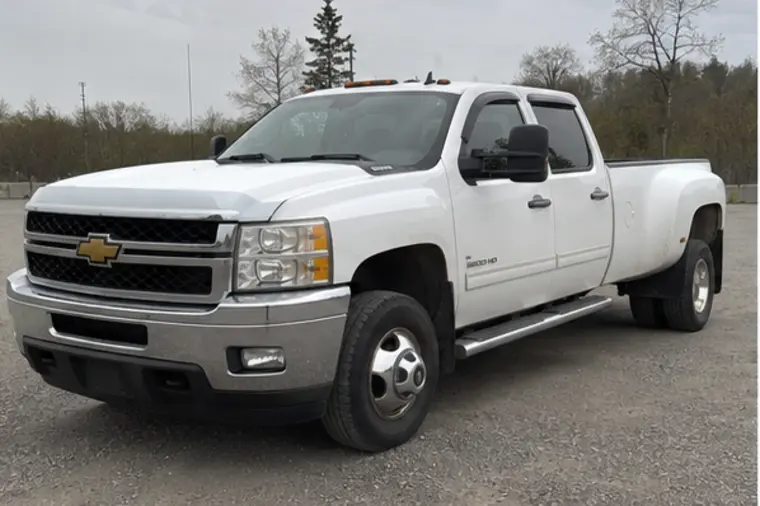
The reviewed GM evidence does not justify blacklisting every LML Duramax from a particular model year. The useful avoid decision is candidate-specific: decline a truck when an important safety, identity, fuel-system, emissions, repair or work-fit concern remains unresolved and cannot be bounded before purchase. Use 2011–2016 model-year information to select the correct documents, not to replace inspection. A later LML is not exempt from scrutiny, and an earlier truck is not condemned merely because a bulletin lists its year. This guide defines practical reject, repair-first and proceed conditions without inventing comparative failure rates.
Which years should you avoid?
None of the 2011–2016 LML years can be universally rejected from the reviewed primary set. That does not mean each year is equally reliable; comparable exposure-adjusted evidence was not available to make that determination.
Avoid a particular candidate when the seller cannot reconcile its identity, a qualified inspection finds an unbounded material concern, the repair terms cannot close that concern, or the truck does not fit the planned work. A low asking price does not change those conditions. It only changes the amount paid to accept them.
Route each period to its actual evidence
The narrower service routes are explained in the separate problems and best-years guides. This table chooses the questions to ask; it does not add failure statistics or announce undocumented production fixes.
| Period or label | Appropriate screening focus | Invalid shortcut |
|---|---|---|
| 2011–2012 LML pickups | Exact identity, current condition and applicable historic VIN-defined DEF records | Every early truck is affected or still covered |
| 2011–2013 after-repair complaint | Match the repair chronology and pressure-code diagnosis to current service information | A listed year proves the same cause in an untouched truck |
| 2012–2014 with pump replacement | Verify the repair record includes applicable routing and clearance checks | Every truck requires another pump |
| 2015–2016 LML candidate | Verify actual configuration, inspection and repair closure just as carefully | Later-year status eliminates fuel or emissions risk |
Set a decision threshold before negotiating
Write down what cannot remain unknown: legal identity, structural safety, capacity, major active faults, the repair budget and the ability to obtain competent support. Also identify what can reasonably be handled after purchase, such as documented routine service with a known scope.
This prevents a persuasive advertisement or a short successful drive from quietly changing the standard. An unresolved safety issue should not be offset by cosmetic condition. An engine with good paperwork should not compensate for a vehicle configuration that cannot carry the intended load within verified limits.
Reject conflicting identity until it is reconciled
Compare the VIN, engine RPO, vehicle documents, installed powertrain, emissions label and service invoices. Investigate replacement-engine, cab, module and transmission work when records or identifiers disagree. Confirm whether the truck is actually an LML application before applying this guide.
Decline if the conflict cannot be resolved through credible documentation and qualified inspection. Do not choose an assumed identity merely because it makes a parts catalogue or service bulletin fit. The same rule applies to imported vehicles: a model-level U.S. record does not establish the present Canadian vehicle configuration.
Reject open contamination damage, not a rumour about a year
GM PIP5151F, published July 2018, includes LML in a broader multi-engine application table and describes contamination evidence associated with starting, running and fuel-pressure complaints. Its combined years and engine list must not be read as proof that LML was installed in every year shown.
For a candidate with actual contamination findings, require a qualified diagnosis, affected-system boundary, completed cleaning or repair scope and a satisfactory recheck. Reject when these remain open or the seller offers only a component receipt without explaining the rest of the system. The document does not provide the frequency of such events or a universal year to avoid.
Distinguish uncertain repair cost from known routine work
Severity depends on the actual finding. No frequency percentage or standard repair price is assigned by this table.
| Finding | Purchase implication | Evidence needed before reconsidering |
|---|---|---|
| Active no-start, stall or recurring reduced power | Potential interruption; repair scope may be unresolved | Qualified diagnosis and condition-matched result |
| Confirmed contamination without closed repair scope | Damage boundary and recurrence risk remain open | Inspection findings, complete scope and recheck |
| Known scheduled service with no active related complaint | May be manageable rather than an automatic rejection | Exact requirement, written quote and available appointment |
| Structural, braking or capacity concern | Safety or assignment constraint overrides engine preference | Qualified clearance or a different suitable vehicle |
| Missing historical paperwork alone | Increased uncertainty, not proof of failure | Baseline inspection and a realistic maintenance plan |
Do not accept repeated parts replacement as closure
Ask whether the same complaint returned after each repair. Reconstruct the dates, operating conditions, codes and work performed. A truck with several unrelated maintenance invoices is different from one repeatedly replacing parts without resolving the original symptom.
Decline or require repair-first terms when there is no coherent diagnosis and verification chain. A seller's assertion that the latest part “must have fixed it” is not equivalent to a successful repeat test. If the shop cannot reproduce the complaint, record that limitation instead of treating the absence of a new invoice as evidence of success.
Put unresolved emissions warnings on hold
A warning still present after a claimed repair needs an explanation and a documented completion result. Do not assume that every persistent message means another component has failed; GM's message guidance describes repair/reset distinctions in its stated applications.
For purchase purposes, avoid accepting the truck as ready for work while the warning chain remains unexplained. Require the exact message, relevant diagnostic findings and the shop's final result. A cleared display without the underlying record leaves the decision open.
Do not budget a historic coverage promise as cash
If a seller says GM will pay for a repair, request current written confirmation for the exact VIN and condition. Historic special coverage 14652 is not a blanket current entitlement for all similar LML trucks.
Treat an unconfirmed promise as unavailable when judging affordability. The truck may still be worth considering if the buyer can support the independently quoted work, but it should not be acquired on the assumption that a dated notice eliminates that cost. No current coverage eligibility was established for an individual truck here.
Decline concealed or unsupported configuration changes
Request a complete account of calibration, fuel-system, emissions and transmission changes, including any claimed restoration to original equipment. Identify a shop willing and able to inspect and support the present configuration before committing.
Avoid when important alterations are concealed, their installation cannot be verified or the intended registration and use requirements remain unresolved. Do not equate a modification marketed as a preventive upgrade with demonstrated reliability. Nor should a seller's statement that “everyone does it” replace evidence of legality, work quality and practical support.
Do not dismiss a material sound with a generic explanation
A qualified assessment can distinguish a documented normal operating characteristic from a fault. However, a blanket statement that all Duramax engines make the same noise is insufficient when the sound is new, changes with conditions or accompanies an operating warning.
Require investigation before purchase if the noise materially affects confidence and cannot be characterized. Avoid assigning a specific internal failure from a phone recording alone. The decision is to obtain adequate evidence or decline—not to guess a diagnosis and negotiate as though that guess were proven.
Reject an inspection process that hides the relevant condition
Ask for access to the operating conditions that matter: a genuine cold start, warm restart and safe, representative driving. A seller may have a reasonable scheduling limitation, but unavailable evidence must still be recorded accurately.
If the only permitted test is an already-warm idle, do not describe cold-start or loaded performance as passed. When a reported fault occurs only after extended work, ask for qualified diagnostics or a realistic condition-matched recheck. Decline when the remaining uncertainty is material to the assignment and cannot be reduced before commitment.
Missing service history needs a plan, not an accusation
Compare the records with the exact vehicle and diesel manuals. Identify which services are confirmed, which are due and which cannot be established. Separate an administrative gap from a present finding such as an unsuitable fluid, recurring leak or other diagnosed concern.
An earlier truck with incomplete paperwork is not automatically a bad engine. Nevertheless, decline if the required baseline work and remaining uncertainty exceed the buyer's available reserve. Fresh service after purchase may create a known starting point; it cannot retroactively prove what happened during the undocumented years.
Decline a truck that does not fit the load or support network
Verify payload, axle, tyre, hitch and other applicable limits for the exact configuration. Include passengers, tools, body equipment and trailer-imposed weight where relevant. Do not infer capacity from an LML engine rating or a 2500/3500 badge.
For regular work, confirm service access, transport arrangements and backup options. A truck requiring support that cannot practically be obtained may be a poor purchase even if the engine passes inspection. Use actual availability and quotes rather than invented dealer counts or a nationwide average repair allowance.
Complete the Canadian safety check without overstating it
Use the manufacturer and Canadian safety research paths, record the exact VIN and lookup date, and obtain written repair-completion evidence where needed. Treat U.S. recall research as jurisdiction-specific supporting history, particularly for imports.
A search result does not replace a mechanical inspection or prove all past campaigns were completed. No candidate VIN was supplied for this article. Avoid accepting seller-provided screenshots with missing identifiers or dates as conclusive clearance; ask for the current result matched to the actual vehicle.
Choose proceed, repair-first or decline in writing
Proceed when material identity, safety, configuration, inspection and maintenance questions are satisfactorily answered for the planned use. Record any remaining routine work and the basis for accepting it. This is a purchase judgment, not a guarantee that no future repair will occur.
Use repair-first terms only with a defined concern, qualified scope, responsibility and successful verification before commitment. Decline when a high-consequence uncertainty remains unbounded, the truck is unsuitable or the cost of establishing readiness exceeds the buyer's limits. That approach answers the avoid question more honestly than declaring an entire LML model year bad without comparable evidence.
Evidence note: manufacturer documents establish the specific facts and applications cited. Buying workflows and cost scenarios are DieselTrucks.ca editorial guidance. These pages do not publish measured failure rates or confirm the condition, recall status or capacity of a particular truck.
General educational content for Canadian diesel-pickup research. Verify the exact truck, model year, certification labels, owner manual and manufacturer documentation, and obtain qualified mechanical or towing advice where appropriate.
Sources & Further Verification
Use the exact model year, VIN, truck labels and current manufacturer documentation when moving from general research to a purchase or towing decision.
- Chevrolet Canada manuals and guides — model-year vehicle literature lookup
- GM PIP5151F, July 2018 — diesel fuel contamination evidence
- GM DEF diagnostic guidance, December 2015 — 2012–2016 warning order and code-group requirements
- GM special coverage 14652, July 2015 — VIN-defined DEF reservoir and supply-module condition
- Chevrolet Canada dealer and service locator — current support discovery
- Chevrolet Canada recall centre — current vehicle recall lookup
- Government of Canada — current recalls, advisories and safety-alert search
- NHTSA vehicle recall search — U.S. VIN and model-level safety research