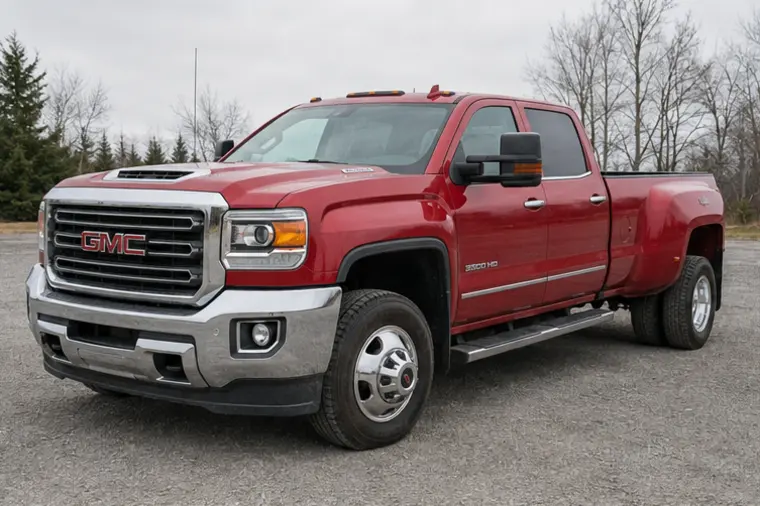
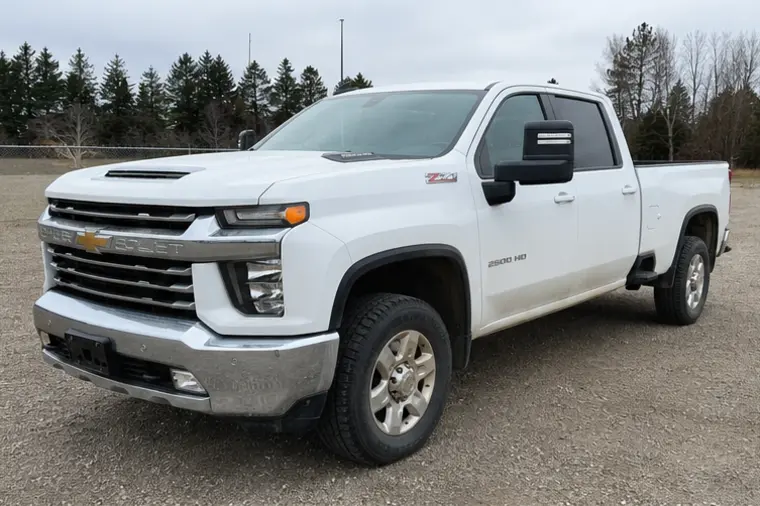
A shared L5P-era engine reference does not make these trucks identical. Compare the complete HD pickup and its transmission, body, equipment and condition rather than ranking years by reputation.
Build the buying decision
Locate the transition
Engine identity + platform + transmission
Compare loaded use
Labels + hitch + actual equipment
Price condition
Records + inspection + initial repairs
| Decision factor | Option and use case | Compared alternative |
|---|---|---|
| Research split | 2017–2019: verify the earlier HD platform and transmission. | 2020–2023: verify the updated HD platform and 10-speed application. |
| Capacity | Use the older truck's labels and year-specific guide. | Use the newer truck's labels and year-specific guide. |
| Reliability conclusion | Requires condition and service evidence. | A newer platform alone does not establish a lower failure rate. |
Use the 2020 change as a research boundary
Allison's announcement identifies the 10-speed introduction for the 2020 Silverado 2500/3500 HD. That is a concrete powertrain research boundary when comparing older and newer HD pickups. Verify the actual transmission on both candidates rather than treating the Allison name as one unchanged unit.
Keep the engine-code research separate from the body and chassis timeline. A platform update can affect dimensions and equipment even where an engine-family label continues. Match specifications to the brand, model year and configuration under inspection.
Compare two actual towing setups
Collect payload labels, axle ratios, hitch information and the applicable towing documents. Include the weight of cab occupants, accessories and trailer load carried by the truck. Do not transfer a later model's advertised maximum to an earlier pickup.
Evaluate bed access, cab space, trailer clearance and the equipment you will actually use. A newer truck's features only add value if they work and help the planned job. Test fitted equipment during the inspection instead of assuming a trim badge proves its presence or condition.
Pay for evidence, not a year ranking
Review service invoices, warning history and a qualified engine and transmission assessment on both candidates. Ask about modifications and recurring repairs. More gears or a newer body is not a demonstrated failure-rate advantage.
Compare the difference in purchase price with documented initial work and your likely ownership period. A well-documented earlier truck and an uncertain later truck require a different decision from two equally inspected candidates. State those conditions when making the comparison.
Evidence note: manufacturer documents establish the specific facts and applications cited. Buying workflows and cost scenarios are DieselTrucks.ca editorial guidance. These pages do not publish measured failure rates or confirm the condition, recall status or capacity of a particular truck.
General educational content for Canadian diesel-pickup research. Verify the exact truck, model year, certification labels, owner manual and manufacturer documentation, and obtain qualified mechanical or towing advice where appropriate.
Sources & Further Verification
Use the exact model year, VIN, truck labels and current manufacturer documentation when moving from general research to a purchase or towing decision.