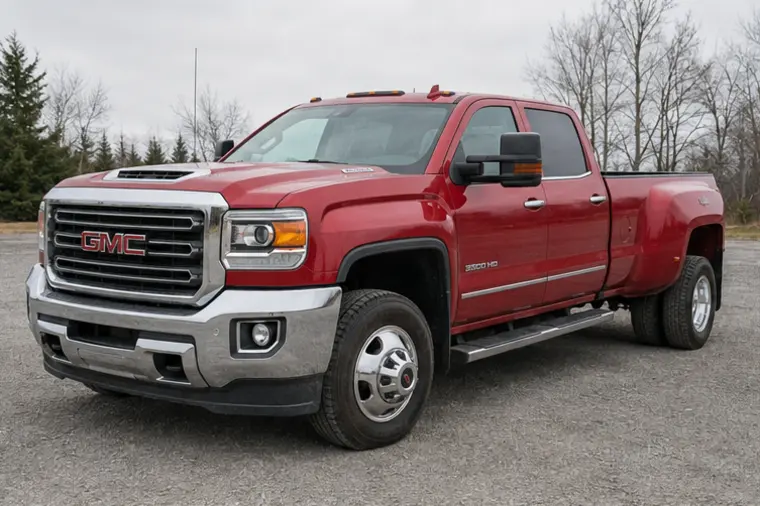
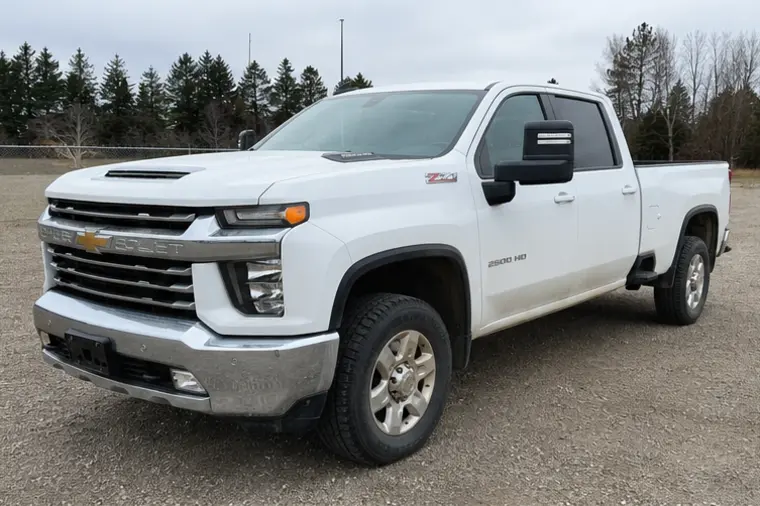
The L5P is a 6.6L Duramax engine family used across more than one Chevrolet and GMC HD generation, not a single frozen specification or a diagnosis. GM documents narrow 2017–2020 fuel-pressure connector and coolant-leak paths, a specific 2017–2019 cold-start condition, broader DPF distinctions and later L5P revisions. Use those boundaries to investigate a matching truck. They do not establish failure rates, prove that a listed concern exists on one candidate or justify avoiding every truck from an affected year.
Confirm that the truck is actually an L5P
Record the VIN, model year, Chevrolet or GMC model, engine RPO, transmission, original market and current emissions configuration. Photograph vehicle and engine labels and connect any replacement engine or control module to invoices and programming records.
Do not identify an L5P from a 6.6L badge, an exterior generation or a seller description alone. Keep L5P pickup evidence separate from L5D medium-duty evidence and from earlier LB7, LLY, LBZ, LMM and LML service information.
GM's later technical reference explicitly compares the current L5P specification with 2023-and-older L5P engines. That means even a confirmed L5P code does not make every year mechanically or electronically identical.
Build a symptom timeline before choosing parts
Separate no-crank, long crank, crank/no-start, rough cold operation, fuel-pressure codes, coolant loss, overheating, smoke, low power, DPF or DEF messages and transmission behaviour. Record ambient temperature, coolant temperature, fuel level, load, regeneration state and the order of warnings.
Preserve diagnostic codes and freeze-frame data before clearing them. Add recent fuel, service, collision, wiring, tuning and repair events to the same timeline, including what changed immediately before and after the complaint.
The useful evidence chain is complaint, reproduced condition, measurement, conclusion, repair and comparable recheck. A parts list, cleared warning or seller explanation is not a substitute for that chain.
Use the exact model-year operating literature
GM's 2025 6.6L diesel supplement defines current fuel, fluid, emissions, warning and maintenance instructions. Use it for a matching 2025 application; retrieve the correct year document for an older L5P.
A later manual can identify the questions to ask, but it cannot establish the earlier truck's capacities, maintenance schedule, dashboard messages or service procedure. Record kilometres together with engine and PTO hours where the truck exposes them.
Compare the literature with the hardware and calibration now present. A truck described as “returned to stock” still needs evidence of what was installed, restored and programmed.
Treat the fuel-pressure connector bulletin as a scoped test
GM bulletin 20-NA-197 covers defined 2017–2020 Silverado and Sierra HD L5P applications with specified fuel-pressure-related codes. It directs technicians to inspect the fuel-pressure sensor connector for corrosion or damage and to repair the connector when the defined findings are present.
For an in-scope truck, obtain the exact codes, connector and terminal findings, circuit tests, harness routing, repair order and proof that the original condition cleared. A connector replacement with no recorded initial or final result leaves the diagnosis incomplete.
The bulletin does not say that every L5P fuel-pressure complaint is caused by this connector. A truck outside its year range or without the defined findings still requires application-specific diagnosis.
Separate electrical, supply and high-pressure evidence
Low rail pressure, hard starting, stalling or reduced power can involve electrical signals, fuel supply, filtration, contamination, high-pressure components, injectors or control strategy. Diagnose those branches in sequence rather than naming one pump from a code or online reputation.
Record commanded and actual pressure, supply-side findings, filters, electrical tests, fuel quality, return or balance testing when applicable and the conditions under which the symptom occurs. Connect every measurement to the correct procedure and operating state.
If a previous repair replaced a connector, sensor, pump or injector, ask what finding condemned it and what comparable post-repair test passed. Replacement history is evidence of work, not proof that every related system is healthy today.
Preserve contamination evidence and the repair boundary
GM PIP5151F supplies a defined fuel-contamination inspection process for listed Duramax applications. It supports observing and documenting fuel condition rather than assuming that every pressure concern is contamination—or that a clean-looking sample proves the full system is sound.
When contamination is suspected, preserve an appropriate sample, filter condition, photographs and technician findings before cleanup. Identify whether water, gasoline, debris, rust or another material was observed and which tank, line, rail, pump and injector components were inspected.
For a completed repair, obtain the full replacement, cleaning, flushing and reuse boundary plus post-repair pressure and drivability verification. A single pump or injector invoice cannot establish that contamination was absent elsewhere.
Investigate coolant loss across the documented leak paths
GM 18-NA-098 covers specified 2017–2020 L5P and L5D applications and illustrates numerous possible coolant leak paths. The breadth of that inspection is a warning against jumping directly from low coolant to a head-gasket, EGR-cooler, water-pump or radiator verdict.
Record the level trend, pressure-test conditions, visible residue, temperature and load. Trace fluid from its highest credible origin because a leak from the top of the engine can travel and appear to come from another area.
For prior cooling work, request the original findings, parts and labour scope, refill or bleed procedure and a recheck under comparable conditions. A freshly topped reservoir or dry driveway does not prove the source was found.
Apply the cold-start bulletin only when its condition matches
GM 19-NA-108 addresses defined 2017–2019 L5P applications that can run rough or misfire after a cold start, with injector-timing-related codes on one bank. The document describes a particular double-head-gasket installation condition and a specific inspection, not a universal cause of rough starting.
Arrange a true cold-soak evaluation when safe. Record ambient temperature, block-heater use, battery voltage and cranking performance, smoke, cylinder or bank information, codes and time to stabilize.
Do not diagnose the bulletin's cause from roughness alone, and do not apply it to later years without current application-specific information. Glow, fuel, electrical, compression and control issues remain separate branches when the defined evidence is absent.
Distinguish DPF faults instead of calling every warning a clog
GM 16-NA-380 distinguishes specific DPF-related codes: one path concerns degraded filtration, another a missing filter and another differential-pressure sensor lines that are disconnected or blocked. Those distinctions matter more than the generic phrase “DPF problem.”
Capture the exact code, soot and ash information, differential-pressure and temperature data, operating history and upstream engine condition. Regeneration can address soot under appropriate conditions; it does not remove ash, repair broken filtration or correct every sensor, air, fuel or combustion cause.
A forced regeneration, cleared warning or replacement filter needs a recorded diagnosis and post-repair result. Confirm legal original-equipment hardware and calibration rather than treating tampering as preventive maintenance.
Keep DEF, EGR and reduced-power diagnosis code-specific
Record the exact driver message, codes, countdown or speed limitation, fluid evidence, sensor data, repair chronology and operating conditions. “DEF issue” can obscure distinct fluid-quality, dosing, heater, sensor, NOx, EGR, wiring or control questions.
Reduced-power operation may be a protective response rather than the failed component. Identify what triggered it and whether the initiating condition was reproduced and corrected.
For repeat visits, build one chronology of codes, software, parts and verification. Counting visits without exposure or root-cause evidence does not create a defensible failure rate.
Diagnose air, boost and low-power concerns in sequence
Inspect air restriction, charge-air plumbing and leakage, sensors, turbo controls, exhaust restriction, fuel delivery and commanded versus actual data under a safe, reproducible condition. Do not condemn a turbocharger because the truck feels slow or shows one boost-related code.
Record whether the complaint appears cold or hot, unloaded or towing, during regeneration or under a particular gear and speed. A safe road test must remain within verified ratings and road conditions.
If repairs were made, obtain the diagnostic result that selected the component and the post-repair data under comparable load. A new turbo, hose or sensor is not a complete outcome without that comparison.
Measure smoke, oil use and crankcase concerns
Describe smoke by colour, temperature, load, regeneration state and duration; then connect it to codes and fuel, air, turbo, emissions or engine measurements. A short cold-start haze and sustained loaded smoke are different observations.
Measure oil use over a known distance and duty interval with the correct oil and level procedure. Inspect for external leaks and intake or turbo contribution before converting an anecdote into an internal-engine conclusion.
An oil-cap observation is not a calibrated crankcase-pressure or remaining-life test. Use the appropriate professional procedure and interpret it with engine temperature, operating condition and complete evidence.
Keep the 2020–2022 transmission recall separate
Transport Canada recall 2024637 covers a defined 2020–2022 diesel Silverado and Sierra population and describes transmission-control software intended to detect excessive valve wear and limit operation before a potential wheel lock. The related U.S. filing provides campaign context, not Canadian VIN status.
Verify the individual VIN through the current manufacturer or Canadian recall path and retain the completed repair order. Diagnose continuing harsh shifts, warnings or propulsion concerns separately from campaign administration.
The campaign matters to the complete truck but is not an L5P engine failure. Do not add it to an engine-problem count or assume completion certifies the transmission's present condition.
Inspect modifications as changes to the evidence
Identify tuning, emissions changes, intake and exhaust hardware, auxiliary fuel systems, lift-pump changes, transmission tuning and engine swaps. Record installer, parts, software, original-equipment retention and current configuration.
Confirm legality, insurability, inspection consequences, warranty or policy implications and whether an appropriate shop will accept the truck. Do not promise that a modification caused or prevented a failure without candidate evidence.
Unknown calibration can change codes, protection strategies, displayed data and the value of factory diagnostic procedures. “Deleted,” “stock tune” and “returned to stock” remain descriptions until documented.
Audit major repairs for cause, scope and recheck
For an engine, fuel-system, turbo, cooling or emissions repair, obtain the complaint, measurements, technician conclusion, part numbers, labour scope, programming and final test. Connect the invoice to the same VIN, date and odometer.
Distinguish new, remanufactured, rebuilt, cleaned and reused components. A major repair can reduce one known risk when properly diagnosed and verified; it does not reset the transmission, cooling system, chassis or undocumented operating history.
If the original symptom returned, compare the two conditions before assuming the same part failed. The root cause, repair boundary or later concern may be different.
Use a problem-to-evidence matrix
This matrix routes inspection and purchase decisions. It is not a prevalence table, severity score or repair-cost estimate.
| Concern | Evidence that moves the decision | Unsupported shortcut |
|---|---|---|
| Fuel-pressure code, stall or no-start | Exact codes, connector/circuit tests, supply and rail data, fuel sample and repair result | Declaring a pump or connector from the symptom |
| Coolant loss | Level trend, pressure test, highest leak origin, temperature/load and verified repair | Naming a head gasket from reputation |
| Rough cold operation | True cold-soak data, bank/codes and the scoped 2017–2019 inspection | Applying one bulletin to every L5P |
| DPF, DEF or reduced-power warning | Exact messages/codes, soot/ash, pressures, temperatures, upstream causes and recheck | Treating a regeneration or cleared light as diagnosis |
| Low power, smoke or oil use | Reproducible conditions and measured air, fuel, turbo, emissions and engine evidence | Predicting remaining life from one observation |
| Prior major repair | Original cause, complete parts/labour/programming scope and comparable post-repair test | Treating an invoice total as proof of reliability |
Stage a used-L5P inspection
Before travel, request the VIN, engine and transmission identity, cold-start video, dashboard bulb check, scan summary, service history, fuel and coolant repairs, campaign records, modifications and current load use. Resolve identity or documentation conflicts before spending on travel.
On site, inspect cold when possible, then hot and under a safe road condition. Check fluids, leaks, wiring, batteries, fuel system, intake and charge-air path, cooling, exhaust and emissions hardware, transmission, brakes, steering, frame, hitch and tires.
Afterward, send material findings to a shop familiar with the exact year and present configuration. Separate maintenance catch-up, diagnosed repair, unresolved investigation and optional upgrade costs.
Match the complete truck to its assignment
An engine-focused guide cannot establish payload, axle, tire, hitch, trailer or gross-combination limits. Use the candidate's labels and exact-year configuration documents, then compare real occupants, cargo, accessories, pin or tongue load and trailer weight.
A mechanically healthy L5P truck can still be unsuitable for the job, while a high-output later specification does not create payload or axle capacity. Configuration and condition remain separate gates.
Include winter operation, idling, short trips, remote routes and downtime tolerance in the fit decision. Those conditions shape maintenance and support needs without proving a component will fail.
Price uncertainty and downtime honestly
Use current written estimates based on the inspected truck and diagnosed scope. Generic online repair prices can omit related components, fluids, programming, taxes, access and the work needed to confirm the repair.
For a working truck, include transport, diagnostic queue, parts availability, reassembly, validation and substitute capacity. A lower parts quote can still create a larger operational consequence.
Confirm that the chosen shop accepts the year, truck class and modifications and has the required diagnostic capability. A nearby sign or brand affiliation alone does not establish that support.
Decide from closed and open evidence
Classify each major system as supported, repaired and rechecked, unresolved or not assessed. A candidate with a material unresolved fuel, cooling, emissions, engine or transmission concern should be paused until the evidence or a priced plan fits the buyer's limits.
Give properly documented repairs credit only for the condition they actually close. Do not average strong and missing evidence into a fabricated reliability score.
No reviewed primary source supplies an exposure-adjusted L5P component-failure rate, a universal worst year, a Canadian candidate VIN result or a remaining-life forecast. Those limits belong in the decision, not in fine print.
L5P Duramax problem questions
Does bulletin 20-NA-197 mean every 2017–2020 L5P has a bad connector? No. It defines an application, codes and inspection path for a condition that may occur.
Is every rough cold start caused by the double-head-gasket condition? No. The 2017–2019 bulletin describes a narrow condition with specific bank and inspection evidence.
Does a DPF warning always mean the filter is clogged? No. The documented codes distinguish degraded, missing and pressure-line conditions, and other warnings require their own diagnosis.
Can a transmission recall be counted as an L5P engine failure? No. It matters to the truck but is a separate system and VIN-specific campaign.
Is a replaced pump, injector or turbo proof that the truck is now reliable? No. Verify the cause, full repair boundary and comparable post-repair result.
Should every older L5P receive the latest engine specification? No. GM distinguishes the later L5P from 2023-and-older versions; use exact-year literature.
Evidence note: manufacturer documents establish the specific facts and applications cited. Buying workflows and cost scenarios are DieselTrucks.ca editorial guidance. These pages do not publish measured failure rates or confirm the condition, recall status or capacity of a particular truck.
General educational content for Canadian diesel-pickup research. Verify the exact truck, model year, certification labels, owner manual and manufacturer documentation, and obtain qualified mechanical or towing advice where appropriate.
Sources & Further Verification
Use the exact model year, VIN, truck labels and current manufacturer documentation when moving from general research to a purchase or towing decision.
- GM L5P technical description — later specification versus 2023-and-older engines
- GM 2025 6.6L Duramax diesel supplement — original manufacturer operating and maintenance instructions
- GM 20-NA-197, September 2020 — fuel-pressure connector diagnosis
- GM PIP5151F, July 2018 — diesel fuel contamination evidence
- GM 18-NA-098, June 2019 — Duramax coolant leak diagnosis
- GM 19-NA-108, June 2019 — defined L5P cold-start concern
- GM 16-NA-380, September 2022 — DPF fault distinctions
- Transport Canada 2024637 — diesel transmission recall
- GM N242454440 / U.S. 24V-797 — affected vehicles and remedy
- Chevrolet Canada manuals and guides