
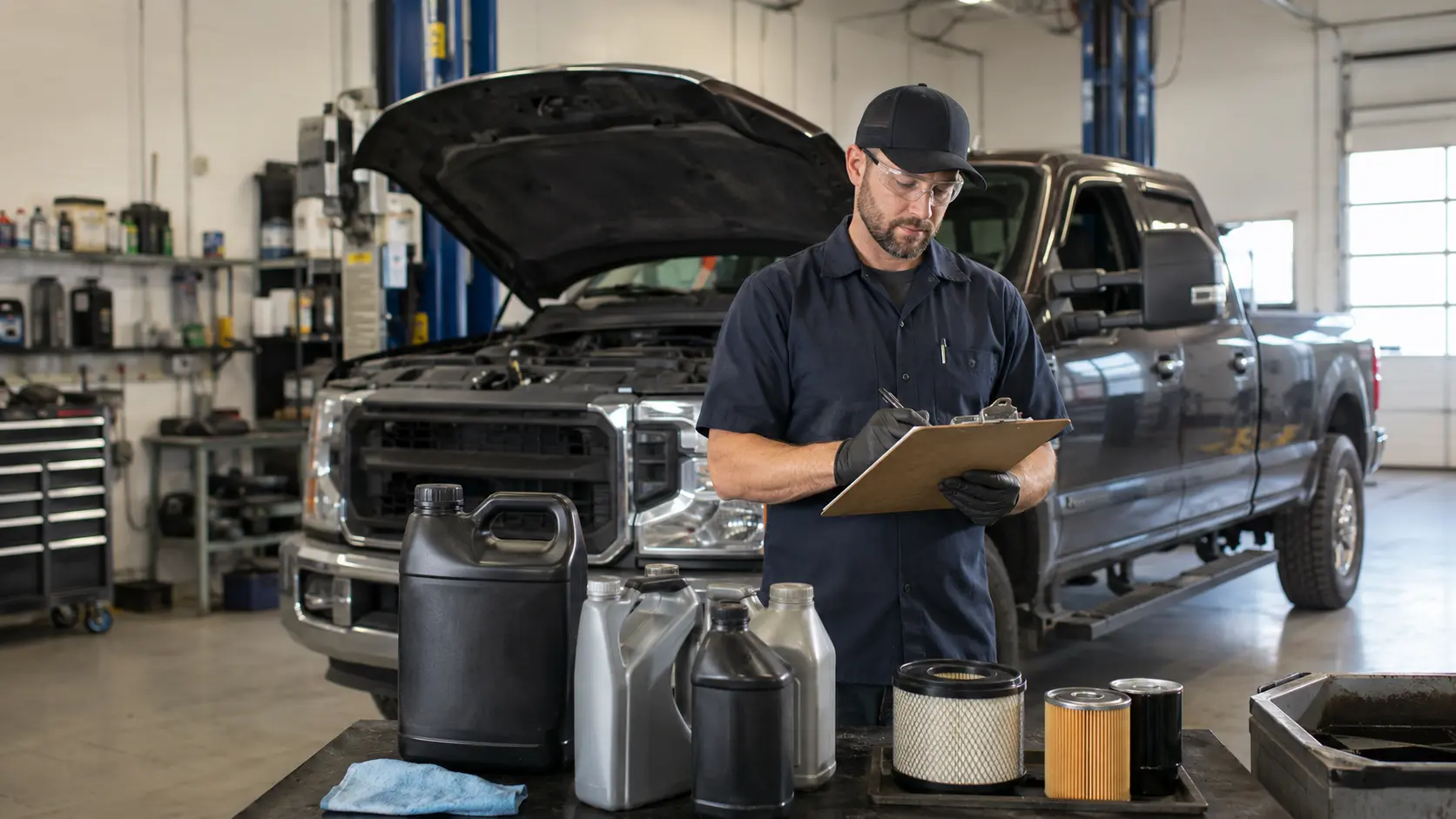

LML Duramax reliability cannot honestly be reduced to a score or a promised kilometre lifespan from the reviewed primary evidence. GM documents particular fuel-contamination, exhaust-joint, noise and calibration conditions, but those publications do not measure the probability that an individual LML will fail. For ownership planning, separate engine condition from emissions availability and whole-truck readiness. A credible assessment connects the exact truck, its maintenance and repair chronology, current cold and warm behaviour, intended duty and access to qualified support. Unknowns should remain visible until testing or records resolve them.
Reliability verdict: evaluate three different outcomes
First ask whether the engine starts, runs and maintains satisfactory mechanical condition. Then ask whether the complete fuel, control and emissions systems allow the vehicle to perform the intended work. Finally ask whether the chassis, transmission and support arrangements make the truck dependable as a working asset.
A truck can pass a brief engine demonstration while still having an unresolved warning, recurring repair or unacceptable downtime exposure. Conversely, an invoice for a correctly diagnosed peripheral repair does not establish that the engine is worn out. Keep these outcomes separate when deciding what the evidence means.
Identify the exact application and evidence period
This guide concerns LML-powered Silverado and Sierra HD pickup candidates in the 2011–2016 shopping period. Verify the engine RPO and installed equipment rather than relying on the advertisement. GM publications that also list LGH vans must be read by their specific application rows.
The reviewed contamination and exhaust bulletins extend through 2015 in the versions cited. The normal-noise publication also ends with listed 2015 models, while the calibration publication has a narrower 2006–2013 model table. Those limits must not silently become universal 2016 instructions. Use current vehicle-specific service information for diagnosis beyond the cited scope.
What the evidence can and cannot measure
The absence of a controlled failure dataset is not a finding that failures are rare. It means this guide cannot justify a percentage, a family-wide reliability rank or a universal retirement distance. Neither complaint counts nor bulletin counts provide a suitable substitute without exposure and comparable populations.
| Evidence type | What it contributes | What remains unknown |
|---|---|---|
| OEM diagnostic bulletin | A defined condition, application and diagnostic route | How often it occurs across all LML owners |
| Exact maintenance record | What was performed, when and with which materials | Whether every component remains healthy today |
| Condition-matched inspection | Observed behaviour under recorded test conditions | Every future operating condition or remaining life |
| Documented repair and recheck | A traceable response to a particular complaint | A guarantee against unrelated failures |
| Recall or coverage lookup | An applicable administrative or safety status | A complete mechanical inspection |
Fuel contamination is a cause question, not a label
GM PIP5151B describes listed LML/LGH applications with hard starting, no-start, rough running or pressure-code concerns and illustrates returned components with contamination. The document distinguishes observed signs and directs proper system cleaning and investigation.
For ownership assessment, retain the sample findings, affected locations and the repair boundary. Do not infer the source from appearance alone or conclude that replacing one component necessarily removed the problem. Missing sampling or an unexplained repeat complaint leaves the reliability assessment open.
Fuel-system inspection belongs with a qualified technician. The buyer's role is to obtain the diagnostic record and understand the remaining risk, not to dismantle high-pressure components during a viewing.
Judge repairs by closure rather than invoice size
A useful repair record connects five things: the original complaint, the conditions under which it occurred, the selecting diagnosis, the work performed and a comparable result afterward. An expensive invoice can still lack the evidence needed to establish closure.
Ask whether the same symptom returned, how much use followed the repair and whether later visits changed the diagnosis. Separate a repeat unresolved complaint from unrelated scheduled maintenance. For missing records, ask the seller to authorize release of the relevant workshop findings; do not fill the gap with either an optimistic or catastrophic assumption.
Exhaust odour and residue need a defined diagnosis
PI0235J covers listed 2011–2015 applications with exhaust-joint alignment concerns associated with certain odour, white-smoke, residue or roughly 900-rpm rattle complaints. It distinguishes this branch from an automatic conclusion that the turbocharger or engine has failed.
The bulletin also differentiates verification equipment and calibration context by year. For a matching truck, request the workshop's alignment findings and condition-corrected result. Do not reuse the procedure indiscriminately for all smoke, oil consumption or noises, and do not undertake a forced regeneration as an informal buyer test.
A documented normal tick is not every engine noise
GM 02-06-01-022O describes one irregular ticking characteristic on its listed Duramax applications, often most audible warm at idle to approximately 1,500 rpm. GM says that described characteristic is not a durability problem and discourages attempted internal repairs for it.
That is a narrow distinction, not permission to dismiss a new knock, changing noise, accompanying warning, abnormal oil pressure or loss of performance. Have the actual sound assessed in context. A recording alone, especially without temperature and operating conditions, may not establish that it matches the bulletin.
Calibration history changes the interpretation
GM 08-06-04-006N addresses non-GM calibration and power-up hardware detection within its stated applications. It explains why the calibration and hard-part evidence matter when assessing a powertrain complaint; an altered setup may operate outside the conditions GM validated.
Request current and historical configuration information, including claimed returns to stock, engine or transmission programming and supporting hardware changes. The bulletin is not a present-day warranty promise, a legal opinion or proof that a particular modification caused a particular failure. Its ownership lesson is to establish what the truck has actually been operating with before interpreting wear or repairs.
Use cold and warm observations as separate evidence
Arrange a genuine cold-start assessment when possible. Record temperature, heater use, batteries, cranking, warning behaviour, idle and visible leaks. Keep the observations separate from the diagnosis. A difficult start can warrant investigation without already identifying the failed part.
Then observe the truck at stable operating temperature and perform a warm restart. A seller's pre-warming can leave the first half of the assessment unavailable. When winter starting or repeated hot restarts are central to the assignment, an untested condition should remain an explicit limitation in the purchase decision.
Match the operating test to the claimed problem
Describe the intended duty and any reported symptom to the inspector before the road test. Note whether it involves towing, long grades, prolonged idling, a particular temperature, a restart or a regeneration event. Use safe, legal conditions and verified vehicle ratings.
Record distance, duration, operating state and what could not be tested. If a complaint only appears under a loaded condition, a clean unloaded loop cannot close it. Where a representative test is impractical, ask what further diagnostic evidence can reduce uncertainty and decide whether the remaining gap is acceptable for the job.
Maintenance continuity matters more than a reset indicator
Build a dated ledger for engine oil and filters, fuel filtration, cooling-system work and the associated driveline services. Check product specifications and intervals against the exact vehicle manual and diesel supplement. Include prior duty, storage and major repairs when interpreting the record.
An indicator reset or handwritten service sticker is not the same as an itemized invoice. Missing records do not prove neglect, but they make the next maintenance decision less certain. Establish a qualified baseline service plan without claiming that fresh fluids erase earlier wear or settle an existing mechanical complaint.
Emissions availability is part of work readiness
Keep a chronology of warning messages, diagnostic visits, components changed, reset or completion work and subsequent operation. Record whether the original condition returned. Do not classify every interruption as internal engine failure, or exclude it from ownership planning simply because the base engine still runs.
For a working truck, the practical question includes whether an unresolved control or emissions concern can prevent the next assignment. Ask a qualified shop to identify the current condition and remaining verification. Do not treat removal or suppression of emissions equipment as a reliability test or a substitute for resolving configuration and support requirements.
Separate chassis and transmission from engine reputation
Inspect structural condition, corrosion, brakes, tyres, steering, suspension, hitch hardware and any upfit. Assess transmission behaviour and relevant driveline maintenance independently. A healthy-sounding LML does not clear the vehicle for towing or commercial work.
Confirm the exact configuration and capacity for the intended load. Engine-family specifications cannot establish a particular truck's usable payload, axle reserve or hitch limit. If the vehicle cannot perform the assignment within its verified constraints, its theoretical engine longevity is not the deciding issue.
Plan for service access and downtime
Contact a suitable service provider before assuming local support. Give the exact year, RPO, configuration and modification history, and ask about inspection capability, parts access and realistic scheduling. A general dealer listing does not confirm that the relevant work can be done immediately.
Build the ownership plan around your tolerance for interruption. Include identified work, transport arrangements, backup capacity and a reserve based on actual quotes where available. Do not use an invented average repair price or a claimed fleet-wide failure rate to make that reserve appear precise.
Canadian safety status is a separate check
Research the exact Canadian VIN through the appropriate manufacturer channel and current Canadian safety information. Retain dates and written completion records. Relevant U.S. history can help investigate an imported truck, but a U.S. lookup is not Canadian campaign clearance.
No VIN was supplied here, and this guide does not declare a candidate free of recalls or eligible for historic coverage. Even a satisfactory campaign check leaves ordinary wear, previous repairs, modifications and present mechanical condition to be inspected separately.
Make the reliability decision explicit
Classify the candidate as documented and work-ready, repair-first, or unresolved. Documented means the important records agree, material complaints are closed, inspection supports the intended duty and support is practical. It is not a guarantee of future life.
Repair-first requires a written diagnosis, scope, responsibility and verification plan. Unresolved means an important question remains without a credible way to bound it. Do not average an unsafe or unexplained condition away with several minor positive observations. The most useful LML reliability conclusion is a transparent account of what this truck can presently demonstrate and what still needs to be proved.
Evidence note: manufacturer documents establish the specific facts and applications cited. Buying workflows and cost scenarios are DieselTrucks.ca editorial guidance. These pages do not publish measured failure rates or confirm the condition, recall status or capacity of a particular truck.
General educational content for Canadian diesel-pickup research. Verify the exact truck, model year, certification labels, owner manual and manufacturer documentation, and obtain qualified mechanical or towing advice where appropriate.
Sources & Further Verification
Use the exact model year, VIN, truck labels and current manufacturer documentation when moving from general research to a purchase or towing decision.
- GM PIP5151B, June 2014 — LML/LGH fuel-contamination identification
- GM PI0235J, August 2015 — LML/LGH exhaust alignment, odour and smoke diagnosis
- GM 02-06-01-022O, September 2014 — scoped Duramax normal ticking-noise information including LBZ
- GM 08-06-04-006N, February 2022 — hard-part and calibration evidence requirements including legacy Duramax applications
- Chevrolet Canada manuals and guides — model-year vehicle literature lookup
- Chevrolet Canada dealer and service locator — current support discovery
- Chevrolet Canada recall centre — current vehicle recall lookup
- Government of Canada — current recalls, advisories and safety-alert search
- NHTSA vehicle recall search — U.S. VIN and model-level safety research