LMM Duramax problem research needs to distinguish an older truck's present condition from a copied list of internet labels. GM documentation supports exact-year literature, a defined P2138 water-intrusion path, a narrow Allison communication check and an LMM-inclusive normal-tick classification. It also shows why calibration and hard-part evidence should be preserved. Those sources do not provide an exposure-adjusted LMM failure rate, a universal worst year, a Canadian candidate VIN result or a remaining-life forecast. Verify the engine RPO, vehicle, year and current configuration before applying any procedure.
Confirm LMM identity before diagnosing the era
Record the VIN, model year, Chevrolet Silverado or GMC Sierra model, cab, box, axle, transmission, engine RPO, original market and present engine configuration. Photograph the vehicle, certification and engine labels and connect replacement assemblies to invoices.
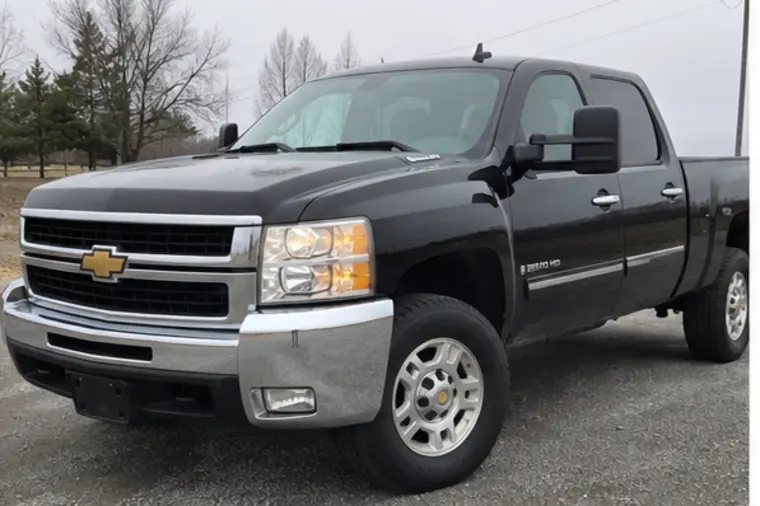
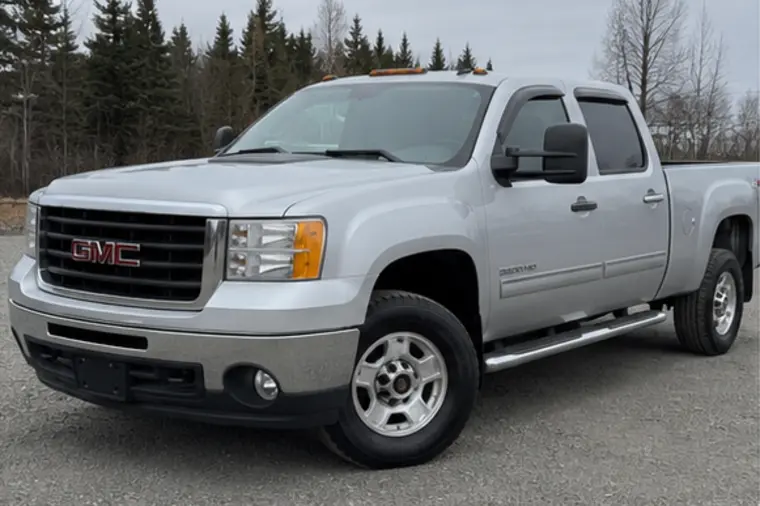
Do not identify an LMM from exterior styling, a 6.6L badge or the seller's use of “GMT900” alone. Build dates, carryover naming, swaps and rebuilt trucks make the actual RPO and installed hardware decisive.
GM's 2007 Silverado manual directs Duramax owners to the separate diesel supplement and identifies the VIN engine-code location. Use the matching vehicle manual and diesel literature together rather than importing a later LML or earlier LBZ procedure.
Build a symptom, warning and repair chronology
Separate long crank, no-start, rough running, low power, reduced-power messages, smoke, regeneration behaviour, coolant or oil change, noise and transmission concerns. Record cold or hot state, ambient temperature, speed, load, fuel level and the warning order.
Preserve codes and supporting data before clearing them. Add fuel, filter, injector, wiring, turbo, exhaust, DPF, EGR, transmission, calibration and collision work to the same dated sequence.
A useful chain connects complaint, reproduction, measurement, conclusion, work and comparable recheck. Repeated invoices without that connection do not establish the recurring cause or present condition.
Diagnose starting and fuel concerns in branches
For long crank, no-start, rough running or low power, capture battery and cranking performance, filter and restriction evidence, air intrusion, fuel quality, supply condition, commanded and actual pressure, electrical tests and exact codes.
Keep supply, filtration, wiring, regulator, high-pressure pump and injector branches separate. Do not choose a pump, injector set or relief component from reputation, a single scan value or an added lift pump.
If prior fuel work is claimed, obtain the original measurements, parts, affected-system boundary and post-repair start, pressure and drivability result. A new component is work history, not proof that every overlapping branch was assessed.
Preserve contamination evidence before cleanup
When water, gasoline, debris, rust or another contaminant is suspected, preserve a safe sample, filter evidence, photographs and qualified findings before flushing. Record the fuel source and timing without assuming that sequence alone proves causation.
Map which tank, lines, filter, pump, rails, regulators and injectors were inspected, cleaned, replaced or reused. Partial work may leave the cause or repair boundary unresolved.
Do not transfer later LML or L5P contamination procedures to the LMM simply because the displacement matches. Use current service information for the exact truck and installed fuel system.
Treat DPF and regeneration observations as operating evidence
Use the exact-year diesel supplement to identify the LMM truck's messages, maintenance and operating instructions. Record the displayed warning, codes, soot and ash information, pressure and temperature data, regeneration history and driving pattern.
Short trips, idling and towing context can guide the investigation, but they do not prove why a particular warning appeared. A regeneration may address soot under appropriate conditions; it cannot remove ash or repair every sensor, air, fuel, EGR or engine cause.
Confirm legal original-equipment exhaust and calibration. A cleared warning, forced regeneration or replaced filter needs the original diagnosis and a comparable post-repair result.
Diagnose P2138 reduced-power events at the documented connector
GM bulletin 07-06-04-019F covers 2018-and-prior GM light-duty vehicles with intermittent MIL, reduced power and P2138. It identifies a possible water-intrusion path at the instrument-panel-to-body connector and also calls for checking aftermarket connections to reference circuits.
Apply it only when the exact code, vehicle and evidence match. Inspect documented leak paths, connector corrosion or debris and any aftermarket wiring, then verify the repair.
Reduced power is a protective outcome, not a component name. Other codes, fuel, air, exhaust, transmission and engine causes retain their own diagnostic branches.
Keep the Allison communication branch separate
GM PI0310B addresses a defined 2007–2012 Allison communication condition and an aftermarket serpentine-belt path. Match the transmission, model year, codes and installed belt before applying it.
Do not convert a communication code or harsh shift into an LMM engine failure. Capture codes from all modules, battery and ground condition, harness and connector evidence, recent belt or accessory work and the exact operating condition.
After correction, reproduce the original event and retain the data. A transmission module, harness or belt invoice without the selecting test and recheck remains incomplete evidence.
Distinguish a normal Duramax tick from a new noise
GM bulletin 02-06-01-022O includes LMM and describes one irregular ticking or clacking sound it classifies as a normal 6.6L Duramax characteristic. It warns against comparing the volume between trucks or replacing internal parts for that described condition.
That document does not make every tick, knock or rattle normal. Record location, temperature, rpm, load, oil pressure, recent work and whether the sound is new, changing or accompanied by warnings, metal, misfire or fluid loss.
Use the bulletin to prevent unnecessary repair only when the observed sound matches. Diagnose materially different evidence through the correct current procedure.
Measure smoke, oil and coolant changes
Describe smoke by colour, duration, temperature, load and regeneration state, then connect it to measured fuel, air, turbo, exhaust, coolant, oil and engine evidence. A cold haze and sustained loaded smoke are different observations.
Trend oil and coolant over a known distance, time and duty interval with the correct level procedure. Inspect external leaks, residue, cooling-system pressure, airflow, fan operation and temperature under an appropriate safe load.
An unloaded drive, clean reservoir or recently changed fluid cannot reconstruct earlier towing temperatures or consumption. Stop operation when warnings or fluid change indicates a safety or engine-damage risk.
Sequence air, turbo, EGR and low-power diagnosis
Inspect air restriction, intake and charge-air plumbing, leakage, sensors, turbo controls, exhaust restriction, EGR evidence, fuel delivery and commanded-versus-actual data under a safe reproducible condition.
Do not condemn a turbocharger, EGR component or DPF from a single code, noise, shaft observation or smoke report. Record temperature, altitude, gear, load and regeneration state.
For previous turbo, hose, sensor or EGR work, require the test that selected the component and a comparable post-repair result. Otherwise classify the concern as unresolved rather than crediting the invoice total.
Audit calibration, emissions changes and auxiliary equipment
Inventory engine and transmission software, intake and exhaust hardware, emissions changes, auxiliary fuel equipment, remote start, monitoring devices and aftermarket wiring. Record installer, parts, original-equipment retention and current configuration.
GM's calibration and hard-part evidence bulletin includes LMM. Unknown tuning can change codes, protection strategies and the value of factory diagnostic procedures, while a claim that software was returned to stock needs current verification.
Confirm legality, insurance, inspection implications and shop acceptance. Do not recommend emissions defeat or claim a modification caused or prevented a failure without candidate evidence.
Audit major repairs as evidence, not reassurance
For an engine, fuel, turbo, cooling, exhaust or transmission repair, obtain the original complaint, measurements, technician conclusion, part numbers, labour scope, programming and final test. Connect the record to the same VIN, odometer and date.
Distinguish new, remanufactured, rebuilt, cleaned and reused parts. A large invoice may close one diagnosed condition without resetting the rest of an older truck.
If a symptom returned, compare the original and current conditions before assuming the same part failed. The root cause, repair boundary or later concern may be different.
Use a concern-to-evidence matrix
This matrix routes investigation and purchase decisions. It is not frequency, severity or cost data.
| Concern | Evidence that moves the decision | Unsupported shortcut |
|---|---|---|
| Long crank, no-start or low power | Cranking, restriction, air intrusion, fuel quality, pressure, circuits and repair result | Naming a pump or injector from reputation |
| DPF or regeneration warning | Exact message and codes, soot/ash, pressure, temperature, upstream causes and recheck | Treating a regeneration or code clear as diagnosis |
| P2138 reduced power | Matching vehicle/code, leak source, connector and aftermarket-circuit findings | Calling every reduced-power event a pedal failure |
| Allison communication or shift event | All-module codes, voltage, grounds, harness, exact belt and comparable recheck | Counting it as an LMM engine problem |
| Tick, knock or rattle | Match to the documented normal sound plus change, pressure, load and fluid evidence | Calling every new noise normal |
| Smoke or fluid change | Reproduced condition and measured fuel, air, exhaust, cooling, oil and engine evidence | Predicting remaining life from a video |
Stage an LMM pre-purchase inspection
Before travel, request VIN and RPO evidence, true cold-start video, dashboard bulb check, scan summary, exact-year maintenance, fuel and cooling history, emissions and calibration status, major repair records and current load use.
On site, inspect cold when possible, then hot and under a safe road condition. Check fluids, leaks, batteries, wiring, fuel system, intake and charge-air path, cooling, exhaust and emissions hardware, transmission, brakes, steering, frame, hitch and tires.
Have material findings assessed by a technician familiar with the exact LMM truck and present configuration. Separate maintenance catch-up, safety work, diagnosed repair, unresolved investigation and optional changes.
Verify Canadian safety history without inventing VIN status
Use Chevrolet Canada's current VIN centre for a Silverado or the corresponding manufacturer path for a Sierra, then retain the dated result. Use Transport Canada for Canadian model-level research and connect any record to the actual VIN and remedy.
Use NHTSA only for U.S. VIN or model context. U.S. recalls, complaints and bulletins cannot establish Canadian VIN status, and a model-year result is not automatically engine-specific.
No VIN was supplied for this guide. No candidate is represented as open, complete, unaffected or eligible.
Match the complete truck to the assignment
Use the candidate's certification and payload labels, axle and tire limits, hitch rating and exact-year configuration documents. Calculate occupants, cargo, accessories and loaded tongue or pin weight.
An LMM badge does not establish payload, towing capacity or duty-cycle suitability. Cab, box, drivetrain, axle, wheels and equipment can materially change the legal and practical result.
Include winter starts, idling, short trips, remote routes, annual distance and downtime tolerance. A mechanically sound engine in an unsuitable truck is still the wrong purchase.
Price support and downtime from present findings
Confirm that a prospective shop accepts the exact year, truck class, modifications and requested work and has appropriate diesel, emissions, transmission and programming capability. A directory listing alone cannot prove that fit.
Use current written estimates tied to the diagnosed truck. Include transport, diagnostic queue, disassembly, related-system scope, parts delay, validation and substitute capacity rather than generic online prices.
A repairable concern can still be operationally unsuitable when interruption or uncertainty exceeds the buyer's plan. Keep that consequence visible rather than hiding it in a reliability score.
Decide from closed and open evidence
Classify each material system as supported, repaired and rechecked, unresolved or not assessed. Pause for identity conflict, unsafe leakage, repeated warnings, unresolved fuel or emissions concerns, undocumented major repair, unknown calibration, load mismatch or inadequate support.
Give repairs credit only for the condition they actually close. Do not average strong and missing evidence into a fabricated percentage or forecast.
The reviewed primary set supplies no exposure-adjusted LMM engine or component failure rate, universal worst year, Canadian candidate VIN result, repair-cost distribution or remaining-life prediction.
LMM Duramax problem questions
Does a DPF warning prove the filter has failed? No. Preserve exact messages, codes, soot/ash, pressure, temperature, upstream causes and the post-repair result.
Is P2138 always a bad accelerator pedal? No. GM documents a connector water-intrusion and aftermarket-circuit branch for matching vehicles.
Can an Allison communication concern be counted as an LMM engine failure? No. It matters to the complete truck but remains a separate diagnostic system.
Is every LMM tick normal? No. Match the sound to GM's described normal characteristic and investigate materially different evidence.
Does an engine or turbo replacement reset the truck's reliability? No. Verify cause, scope and recheck, then assess every other system independently.
What should stop the purchase? Any material unresolved identity, safety, fuel, emissions, engine, transmission, repair, load or support issue outside the buyer's plan.
Evidence note: manufacturer documents establish the specific facts and applications cited. Buying workflows and cost scenarios are DieselTrucks.ca editorial guidance. These pages do not publish measured failure rates or confirm the condition, recall status or capacity of a particular truck.
General educational content for Canadian diesel-pickup research. Verify the exact truck, model year, certification labels, owner manual and manufacturer documentation, and obtain qualified mechanical or towing advice where appropriate.
Sources & Further Verification
Use the exact model year, VIN, truck labels and current manufacturer documentation when moving from general research to a purchase or towing decision.
- GM 2007 Chevrolet Silverado owner manual — original vehicle, diesel-supplement and engine-hours context
- Chevrolet Canada manuals and guides — model-year vehicle literature lookup
- GM 07-06-04-019F, November 2017 — P2138 reduced-power connector and water-intrusion diagnosis
- GM PI0310B, December 2011 — defined 2007–2012 Allison communication and aftermarket-belt diagnosis
- GM 02-06-01-022O, September 2014 — scoped Duramax normal ticking-noise information including LBZ
- GM 08-06-04-006N, February 2022 — hard-part and calibration evidence requirements including legacy Duramax applications
- Chevrolet Canada recall centre — current vehicle recall lookup
- Government of Canada — current recalls, advisories and safety-alert search
- NHTSA vehicle recall search — U.S. VIN and model-level safety research
- Chevrolet Canada dealer and service locator — current support discovery