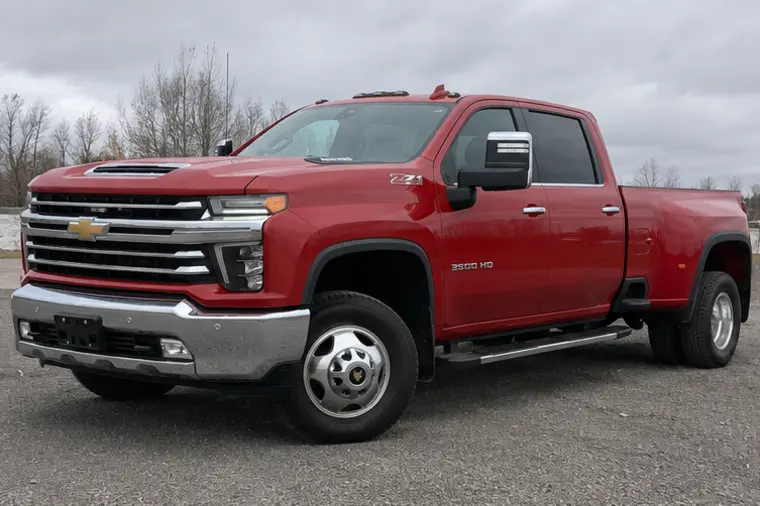
Chevrolet Silverado 3500HD problems research should answer two questions: what is wrong with this particular truck, and what would that mean for its next assignment? Identify the Duramax generation and documented concerns first. Then examine the SRW or DRW configuration, installed equipment, repair history and load plan before deciding that the truck is ready for a camper, trailer or working fleet.
Establish the identity of the complete 3500HD
Record the VIN, model year, engine, transmission, rear-wheel configuration and the body or equipment fitted to the truck. For an upfitted vehicle, retain completion information and installation records where applicable. Do not apply a standard pickup's limits to a differently completed vehicle without checking the documentation.
This is a problems-and-inspection guide for diesel candidates. It does not transfer Silverado 1500 engine concerns to an HD truck, or rank every Duramax generation from the number of bulletins published.
| Area | What to investigate | Evidence that improves the decision |
|---|---|---|
| Transmission | Campaign action and any subsequent shift complaint | Current VIN check and complete work orders |
| Fuel system | Pressure warnings, starting history and older repairs | Confirmed cause, contamination findings where relevant |
| Cooling system | Repeated top-ups, leakage and previous repair | Located source and follow-up result |
| Tires and load equipment | SRW/DRW condition and installation suitability | Physical inspection, labels and loaded-weight plan |
| Work systems | Trailer connections and fitted accessories | Functional assessment tied to the next assignment |
| Service availability | The effect of losing the truck temporarily | Repair scope, appointment position and backup plan |
Transmission history: distinguish the campaign from a rebuild
GM's 24V-797 filing includes certain 2020–2022 diesel Silverado HD vehicles. Transmission valve wear can cause harsh shifts and rare momentary wheel lock-up. The prescribed software monitors the condition; it does not establish that worn hardware has been replaced.
Ask Chevrolet to confirm current campaign applicability and completion for the actual VIN. A Canadian buyer should obtain the vehicle's local service information, especially when records come from another market. Keep the completion evidence and ask separately whether the transmission has required further diagnosis or repair.
For a 3500HD intended to move a loaded trailer, an unexplained shift complaint is a practical as well as a mechanical uncertainty. Have the condition assessed before committing the truck to the job. Do not attempt to force a dangerous event on a test drive or treat an earlier programming invoice as an approval to tow through a present fault.
Fuel-pressure complaints: look for evidence of the cause
GM 20-NA-197 covers specified 2017–2020 L5P Silverado applications and identifies fuel-pressure sensor connector corrosion or damage as one possible source of its listed codes. The bulletin supports connector inspection before an assumed pump diagnosis.
Review any repeated repair visits with the inspecting shop. Were the same codes present each time? Did the technician identify a physical or measured fault? Does the final invoice explain why the problem was considered resolved? A list of expensive components is less useful than a coherent account of the original complaint and successful correction.
A work-truck buyer should also ask whether the symptom appears only after warm-up, under load or intermittently. That information can shape the inspection without deciding the failed part in advance. If the shop cannot establish the cause within the agreed scope, keep further diagnosis as an open item rather than converting uncertainty into a confident estimate.
Understand the scope of an older fuel-system repair
PIP5151F includes specified 2011–2019 6.6L Silverado applications and describes contamination findings in starting and running investigations. Its water and incorrect-fluid evidence concerns particular cases, not a universal conclusion about an engine generation.
For a truck with a major fuel-system invoice, obtain the full work order. Ask what was found, how the repair scope was selected and which related components were assessed. If the seller has only a receipt for one part, request the original shop's explanation rather than assuming it documents the entire repair.
Fuel handling and storage history can help frame questions for a commercially used truck. Ask about the actual operating arrangement and maintenance records without presuming that jobsite fuelling or fleet use caused a failure. The decision should rely on the candidate's evidence and current condition, including whether any earlier complaint has recurred.
Coolant history: separate the symptom and the leaking component
GM 18-NA-098 gives coolant-leak location guidance for specified 2017–2020 Duramax applications. It includes multiple paths and cautions that fluid can travel down the engine, complicating identification of the actual source.
Ask how often the seller added coolant and whether the truck has had temperature warnings, visible leakage or related repairs. Retain the distinction between an observation and a diagnosis. A low reservoir, a stain and an expensive proposed repair do not become a confirmed cause simply because they appear in the same conversation.
Have a qualified shop locate the concern and explain the repair and verification plan. If access or testing is needed before the full scope is known, ask for a staged estimate. Do not open hot pressurized cooling components while viewing the truck or use continued towing as a test of whether the condition matters.
Dually inspection requires access to the whole tire set
For a DRW Silverado, ask the technician to inspect the inner tires as carefully as the outer tires. Record the installed sizes and specifications, condition, wear and any mismatching or replacement history that needs explanation. Confirm that the wheel-and-tire configuration is appropriate to the actual vehicle documentation.
Include the rear axle area, brakes, suspension and the equipment that transfers the trailer or carried load into the truck. The inspection should cover hitch attachment, bed condition and any relevant upfit structure. A familiar hitch name or a visually tidy installation is not sufficient evidence of correct fitment or present condition.
An SRW candidate needs its own load and tire assessment rather than a reduced version of a dually checklist. Compare the actual limits and loaded use for each candidate. If a pickup has been modified or converted, obtain the supporting information and specialist assessment needed to understand what the completed vehicle can legitimately do.
Keep load suitability separate from repairs
Write the intended assignment before judging the truck: trailer type, loaded weights, occupants, tools, hitch equipment and permanent accessories. Use the exact truck's labels and manufacturer information. When practical, obtain measured weights for the actual loaded combination rather than relying on the empty trailer or an assumed cargo amount.
A 3500HD can still be unsuitable for a particular combination. Engine output, trim level and the presence of dual rear wheels cannot independently establish that every relevant limit is satisfied. Resolve the configuration question before treating a mechanical inspection as the final purchasing approval.
If a previous owner used the truck differently, examine the installed equipment in the context of your next use. A service body, camper setup or hitch may be valuable, unnecessary or incompatible with your plan. Include the cost and feasibility of any required changes in the buying decision instead of assuming those items are automatically an advantage.
Inspect the systems the next job will use
Give the inspecting shop a list of relevant working systems, including trailer connections, lighting, brake controls, cameras and installed accessories. Identify what is fitted rather than assuming that every item named in a brochure is present. Request a functional assessment within the shop's capabilities and note any specialist checks still required.
Review the repair history by VIN, not only by the seller's description of fleet maintenance. Work orders can show recurring complaints, repeated parts or a clear successful repair. Ask about gaps without treating a missing receipt as proof that service was neglected. The uncertainty should remain visible in the assessment.
Include a physical inspection of the underside and areas affected by equipment installation or removal. Ask the technician to distinguish ordinary cosmetic wear from a condition needing repair or further evaluation. A working truck should be assessed by what the evidence shows, not by whether it looks as untouched as a personal-use pickup.
A practical repair and downtime plan
Request an estimate that separates diagnosis, required repairs, maintenance catch-up and optional improvements. Ask what must be completed before the vehicle returns to normal use and what evidence will verify the result. Where the scope remains uncertain, record the next diagnostic step and its estimated cost.
For a commercial buyer, identify the consequences of an unavailable truck. Can a substitute handle the actual load? Where can the trailer or cargo be secured? Who can transport the truck to the repairing shop? These questions affect the purchase decision even when the eventual mechanical repair is straightforward.
Get actual local information about parts and appointment availability. Do not promise a first work date from a preliminary quote or apply a generic internet repair average to a vehicle with an unresolved fault. A modest sale-price saving can disappear quickly if the truck cannot perform the assignment for which it was bought.
Service records and prevention after purchase
Keep the applicable maintenance schedule with the vehicle file and record dates, kilometres, fluid specifications and work performed. When the truck's use changes, review the schedule with a qualified shop. Do not borrow requirements from a different Duramax engine or treat a dashboard reset as the complete service record.
Preserve new warning messages and the circumstances in which they occurred. Note cold or warm operation, recent maintenance, load and whether the event repeats. The information can help a technician distinguish an intermittent electrical complaint from a separate operating or mechanical concern.
After repairs, retain the original symptom, confirmed cause, corrective work and verification result. This makes later decisions easier if another warning appears. It also gives the next buyer a clearer history than a collection of part receipts with no explanation of why the work was done.
Silverado 3500HD problems: buyer FAQs
Does a dually configuration guarantee enough payload? No. Evaluate the exact vehicle, installed equipment and actual load against every applicable limit.
Should a transmission software update be described as a rebuilt transmission? No. Read the invoice and distinguish programming from hardware work.
Is a previous fuel-system repair automatically a reason to reject the truck? Assess its cause, scope, documentation and follow-up condition. An incomplete history is an uncertainty to resolve, not proof of either a good or bad repair.
Can this guide determine the most reliable model year? It supports a problem investigation for a particular candidate. Year comparisons require broader evidence and should remain separate from the presence of selected service documents.
Evidence note: manufacturer documents establish the specific facts and applications cited. Buying workflows and cost scenarios are DieselTrucks.ca editorial guidance. These pages do not publish measured failure rates or confirm the condition, recall status or capacity of a particular truck.
General educational content for Canadian diesel-pickup research. Verify the exact truck, model year, certification labels, owner manual and manufacturer documentation, and obtain qualified mechanical or towing advice where appropriate.
Sources & Further Verification
Use the exact model year, VIN, truck labels and current manufacturer documentation when moving from general research to a purchase or towing decision.