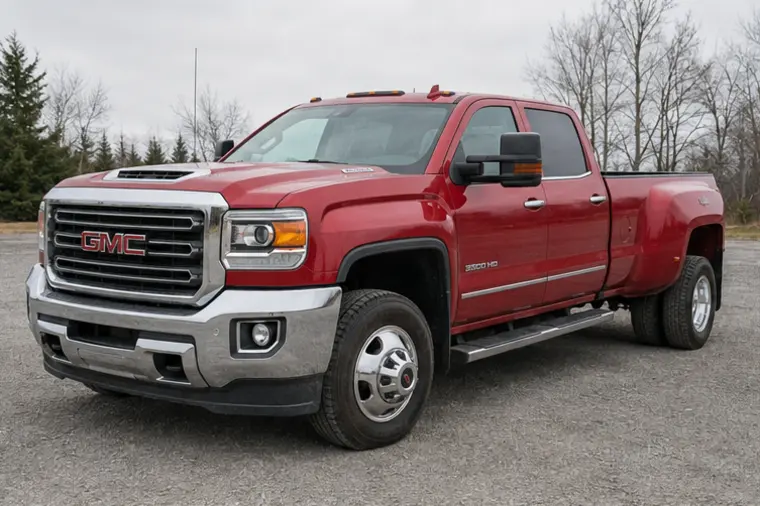
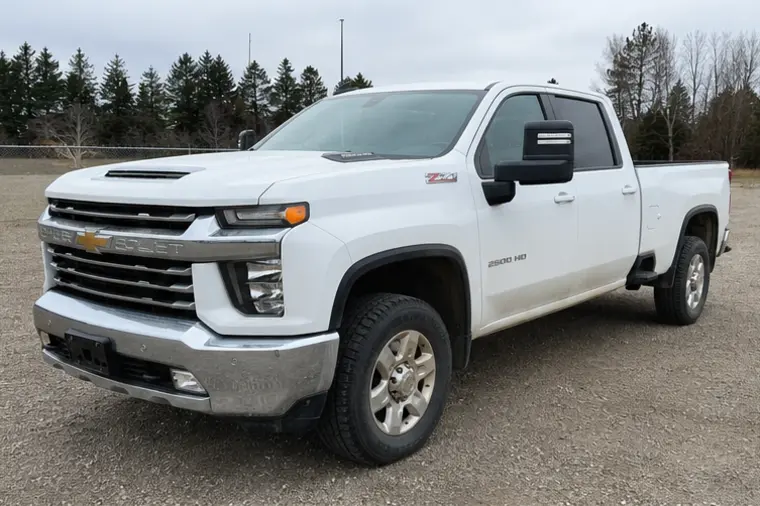
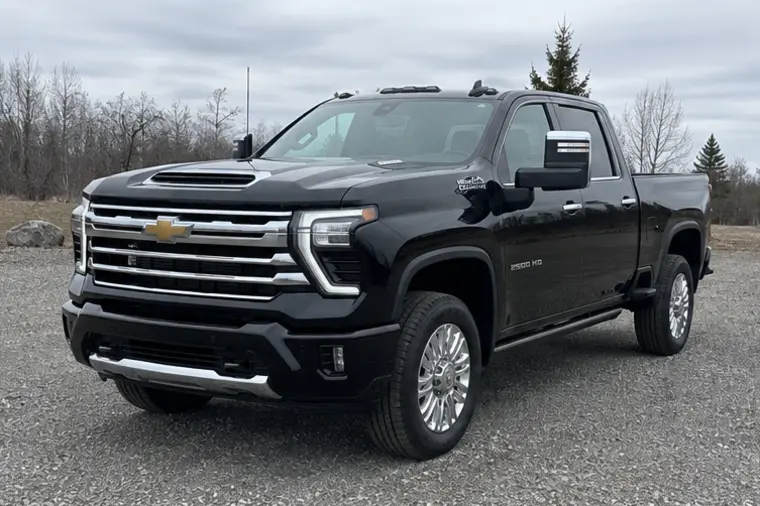
No reviewed primary source supplies one exposure-adjusted L5P Duramax reliability percentage. GM documents meaningful equipment bands—445 hp/910 lb-ft with a six-speed in 2019, 445/910 with an Allison ten-speed in the 2020–2023 HD generation, and 470/975 for the latest L5P compared with 2023-and-older engines. GM also publishes narrowly scoped connector, coolant, cold-start and DPF diagnostic paths. Those records identify what to verify; they do not prove prevalence or predict an unseen truck. Reliability is whether one correctly identified L5P and complete HD truck can repeat its assignment safely, legally and with acceptable maintenance, support and downtime.
Reliability verdict: the candidate outranks the year
A sound L5P candidate has reconciled identity, coherent maintenance and repair chronology, satisfactory cold/hot/load evidence, legal emissions configuration, a healthy transmission and truck, verified capacity and credible support.
No production band receives a universal reliability score. A documented earlier truck can outrank a newer truck with hidden symptoms, unknown tuning or incomplete repairs.
Define the work and downtime tolerance first, then use official year boundaries to select correct specifications and diagnostics.
Establish exact identity before judging reliability
Record VIN, Chevrolet or GMC model, model year, engine RPO, transmission, cab, box, drivetrain, axle, rear-wheel configuration, original market and emissions label. Photograph engine and vehicle labels.
Connect replacement engines, transmissions or control modules to part numbers, invoices and programming records. Do not infer an L5P from a 6.6L badge or exterior generation.
Keep pickup L5P evidence separate from L5D medium-duty applications and earlier Duramax codes. Identity conflicts remain unresolved until build information, installed hardware and records agree.
Use the equipment bands as diagnostic context
The table prevents cross-year assumptions. It does not rank failure rates, repair expense or remaining life.
| Band | Official anchor | Reliability implication |
|---|---|---|
| 2017–2019 | 445 hp/910 lb-ft; Allison six-speed documented for 2019 | Earlier truck/transmission context; apply scoped 2017–2019 evidence only when conditions match |
| 2020–2023 | 445 hp/910 lb-ft; Allison ten-speed | Later truck generation; assess transmission history and defined 2020–2022 campaign separately |
| 2024+ | 470 hp/975 lb-ft; latest L5P distinguished from 2023-and-older | Revised output/specification with a shorter long-term evidence horizon |
Understand what current L5P specifications prove
GM lists the latest L5P as a 6.6L/403-cu-in V8 with high-pressure common rail, cast-iron block, aluminum heads, four valves per cylinder, cooled EGR, SCR and DPF. It rates this version at 470 hp and 975 lb-ft.
Those facts define the current architecture and service questions. They do not apply the current output to 2023-and-older trucks, establish durability superiority or certify a modified candidate.
Use exact-year GM literature for fluids, warnings, maintenance, transmission and vehicle configuration.
Define the reliability assignment
Record trailer, payload, route, grades, winter exposure, idle time, annual kilometres, work schedule, recovery distance, substitute capacity and acceptable interruption.
A local personal-use truck and a remote commercial hauler can reach different decisions from the same unresolved concern. Severity, probability evidence and operational consequence are separate dimensions.
Set proceed, repair-first and decline thresholds before inspection. Engine output cannot create vehicle payload or towing capacity.
Use an evidence hierarchy
Keep observation, diagnosis, repair and recheck linked to the same truck and condition.
| Evidence | Supports | Does not prove alone |
|---|---|---|
| Candidate measurements under recorded conditions | Present operation during that test | Remaining life in every duty |
| Complete service and repair chronology | Work performed, cause and comparable outcome | Condition of unrelated systems |
| Exact-year OEM literature | Applicable procedures, specifications and limits | Prior-owner compliance |
| Bulletin or recall | Defined population, condition and service path | Prevalence or candidate status |
| Seller report | A question to investigate | Diagnosis, completion or reliability |
Separate severity, frequency and consequence
A bulletin may describe an important condition without reporting how often it occurs. A complaint count lacks common exposure and inspection standards. Neither becomes a failure percentage.
Record severity from the actual symptom and official scope, frequency only from a suitable population dataset, and candidate condition from measurements and records. The reviewed set does not provide an exposure-adjusted L5P denominator.
Then add owner consequence: towing control, recovery, missed work, substitute equipment and local support. State which dimension drives the decision.
Reconstruct maintenance by date, kilometres, hours and duty
Retrieve the exact-year diesel supplement and owner manual. Record oil and filter, fuel filtration, coolant, transmission, transfer case, axles and emissions-related service by date, kilometres and engine/PTO hours where available.
Towing, idling, dust, short cycles, winter starts and storage can make odometer-only history incomplete. A reset maintenance display or fresh fluid cannot reconstruct earlier intervals.
Classify each item as supported, partial or unknown. Define a post-purchase baseline without pretending it proves prior condition.
Test a true-cold start
Arrange a genuine cold soak when practical. Record ambient temperature, block-heater use, batteries, cranking, warnings, codes, smoke, idle, leaks and time to stabilize.
GM 19-NA-108 addresses a specific 2017–2019 L5P rough-run or misfire condition with defined evidence. It does not make every cold complaint the same diagnosis.
A pre-warmed truck cannot answer cold-start reliability. If climate or access prevents the relevant test, mark it not assessed rather than passed.
Recheck fully warm operation and restart
Bring the engine and drivetrain to stable temperature under a safe condition appropriate to the truck. Record response, cooling stability, fluid behavior, warnings, codes, emissions messages and transmission operation.
Perform a hot restart after a documented interval. Compare cold and hot observations rather than using one clean idle as proof of reliable loaded performance.
Preserve scan files, temperatures, load and road conditions so a technician can reproduce the event.
Diagnose fuel-pressure evidence in sequence
For long crank, stall, no-start, low power or pressure codes, preserve exact codes and operating context. Inspect supply, filters, fuel quality, electrical circuits, sensor signals, commanded/actual pressure, high-pressure components and injectors using exact-year procedures.
GM 20-NA-197 directs connector inspection for specified 2017–2020 L5P applications and codes. It does not make every pressure concern a connector or pump failure.
Require the finding that selected a repair and a comparable post-repair result. Parts replacement alone is incomplete evidence.
Preserve contamination evidence and repair boundaries
GM PIP5151F provides a defined contamination-inspection process for listed Duramax applications. When contamination is suspected, preserve an appropriate sample, filter condition, photographs and technician findings before cleanup.
Identify which tank, line, rail, pump and injector components were inspected, cleaned, replaced or reused. Document flushing, programming and post-repair pressure/drivability results.
A clean-looking sample cannot certify the full system, while a pump invoice cannot prove contamination or complete remediation.
Evaluate cooling reliability without shortcut diagnoses
GM 18-NA-098 illustrates multiple coolant leak paths for defined 2017–2020 L5P/L5D applications and shows why fluid may trail from another origin.
Record level trends, pressure tests, residue origin, temperature and load, prior repair scope, refill/bleed procedure and comparable recheck. Inspect radiator, hoses, fan, charge-air cooling and evidence of overheating.
Do not name a head gasket, EGR cooler, water pump or radiator from reputation or visible low point. Stable evidence under relevant conditions matters more than the invoice label.
Keep DPF, DEF and reduced-power evidence specific
Capture exact codes, messages, countdowns, soot/ash information, differential pressure, temperatures, regeneration history, duty and upstream fuel/air/engine condition.
GM 16-NA-380 distinguishes degraded filtration, missing-filter and pressure-line conditions. Regeneration may address soot; it does not remove ash or repair broken filtration, sensors or upstream causes.
Confirm legal original-equipment hardware and calibration. Deleted or unknown systems change diagnostics, legality, insurance and service access.
Diagnose air, turbo, smoke and low power in sequence
Record whether the concern occurs cold or hot, unloaded or towing, during regeneration, at a particular speed or gear. Preserve smoke colour, duration and load.
Inspect air restriction, charge-air plumbing, turbo control, exhaust restriction, fuel delivery, sensors and commanded/actual data before condemning a component.
A turbo, hose or sensor invoice supports reliability only when the original condition, measured cause, complete work and comparable outcome align.
Measure oil use and internal-engine concerns properly
Trend oil level and consumption over known distance and duty using the correct product and procedure. Inspect external leakage and intake/turbo contribution before inferring internal wear.
Describe noise, crankcase pressure, smoke or coolant interaction with engine temperature and operating condition. An oil-cap observation is not a calibrated remaining-life test.
Use professional application-correct measurements when a symptom justifies them. Do not forecast remaining life from one observation.
Keep transmission reliability separate
Identify whether the truck has the earlier Allison six-speed or later ten-speed, then record calibration, service, converter behavior, temperatures, shifts and repairs.
Transport Canada 2024637 covers a defined 2020–2022 diesel Silverado/Sierra transmission population and software remedy. Verify the Canadian VIN and retain completion documentation.
The campaign matters to complete-truck reliability but is not an L5P engine failure. Completion also does not certify current mechanical condition.
Read major repairs narrowly
For engine, fuel-system, injector, turbo, cooling, emissions or transmission work, obtain complaint, codes, measurements, technician conclusion, part numbers, labour, programming, reused components, installer, warranty and final test.
A large invoice can reduce one known uncertainty when cause, scope and recheck align. Expense alone is not reliability evidence.
A replacement engine does not renew fuel, cooling, emissions, transmission, driveline, electrical, chassis or body systems. Confirm identity and why the original assembly was replaced.
Reconstruct repeated visits as one chronology
Place warnings, codes, conditions, tests, parts, programming and outcomes on a single timeline. Repeated invoices may represent one unresolved condition, staged diagnosis, an intermittent fault or separate events.
Do not count visits as independent failures without evidence, and do not call a chain closed when records stop at parts replacement.
Classify each complaint as repaired and rechecked, unresolved or not assessed. Compare whether the same condition returned under the same load, temperature and duty.
Audit modifications as changes to reliability evidence
List tuning, injectors, turbocharger, pumps, intake/exhaust hardware, emissions changes, transmission programming, lifts, tires and axle changes.
Request installer, part numbers, software, objective, supporting modifications, measurements and results. Confirm federal/provincial legality, insurance and shop acceptance.
“Stock,” “deleted” and “returned to stock” remain reports until hardware, software and records agree. Unknown calibration can alter codes, protection strategies and diagnostic value.
Verify capacity and complete-truck condition
Use the candidate's labels, axle/tire/hitch limits and exact configuration chart. Add occupants, cargo, accessories, body and loaded tongue or pin weight.
Inspect steering, brakes, tires, wheels, frame, mounts, hitch, transfer case, axles, driveshafts, electrical system, cab, box and corrosion.
A strong L5P cannot make an overloaded or unsafe truck reliable. Engine, transmission, chassis, body and load findings stay separate.
Plan Canadian safety verification and support
Use Chevrolet Canada's recall centre and Government of Canada sources, retaining dated VIN and remedy records. A U.S. filing cannot establish Canadian status.
Identify shops that accept the exact L5P year, truck, transmission, emissions configuration and modifications. Confirm diagnostic capability, parts path, appointment timing and recovery.
No VIN was supplied, so no candidate is represented as included, excluded, open, complete or unaffected. A locator entry is not a capability or price guarantee.
Model downtime, not just repairability
For a working truck, include recovery, diagnostic queue, parts sourcing, disassembly, programming, reassembly, validation and substitute capacity.
A technically repairable issue may exceed a remote or time-critical operation's tolerance. Conversely, a documented repair with local support may fit a less demanding assignment.
Use current candidate-specific written scopes. Generic internet prices and family-wide downtime promises are unsupported.
Use an explicit reliability matrix
Do not average a severe safety issue or unknown identity into a numeric score.
| Area | Supported | Repair first | Pause or decline |
|---|---|---|---|
| Identity and literature | VIN, RPO, labels and installed hardware agree | Correctable document gap | Material identity conflict |
| Maintenance and repairs | Chronology, cause and recheck align | Defined baseline/follow-up | Repeated unresolved concern |
| Cold, hot and load operation | Relevant tests satisfactory | Bounded repair and retest | Material symptom without diagnosis |
| Fuel, cooling and emissions | Exact-year evidence supports condition | Written work fits plan | Contamination, overheating or illegal configuration beyond tolerance |
| Transmission and truck | Safe, serviced and assignment-capable | Defined chassis work | Unsafe, overloaded or structurally unacceptable |
| Support and downtime | Credible path fits operation | Funded contingency | No viable support for required use |
Apply proceed, pause and decline gates
Proceed when identity is aligned, service and repair evidence is coherent, relevant cold/hot/load checks are satisfactory, emissions configuration is legal, the truck safely fits the job and support is credible.
Proceed after work only when complaint, scope, responsibility, cost, timing and condition-matched recheck are documented.
Pause for pre-warming, unresolved codes, undocumented fuel or cooling repairs, fluid uncertainty, unknown tuning, repeated visits or missing capacity evidence. Decline when safety, legality, structural condition, repair consequence or lack of support exceeds the plan.
Preserve the evidence limits
Official material supports L5P architecture, selected output/transmission bands, exact operating guidance and scoped diagnostic or campaign paths.
It does not provide exposure-adjusted failure rates, a universal reliability percentage, a best or worst year, exact specification for an unseen truck, Canadian candidate VIN status, repair-cost distribution or remaining-life forecast.
Keep untested items marked not assessed. This method supports a defensible candidate decision, not a warranty.
L5P Duramax reliability questions
Is there an official L5P reliability percentage? No reviewed primary source supplies exposure-adjusted family-wide data.
Is the 2024+ 470/975 version proven more reliable? No. GM documents a specification revision, not comparative failure frequency.
Does a service bulletin mean every in-scope truck fails? No. It defines a condition and diagnostic path, not prevalence or candidate status.
Does an Allison ten-speed make the engine more reliable? No. Transmission configuration and condition are separate evidence.
Does a replaced pump, injector or turbo settle reliability? No. Verify cause, full scope and comparable result.
What supports a purchase? Exact identity, coherent maintenance and repairs, satisfactory inspection, legal configuration, safe load fit, complete-truck condition and credible support.
Evidence note: manufacturer documents establish the specific facts and applications cited. Buying workflows and cost scenarios are DieselTrucks.ca editorial guidance. These pages do not publish measured failure rates or confirm the condition, recall status or capacity of a particular truck.
General educational content for Canadian diesel-pickup research. Verify the exact truck, model year, certification labels, owner manual and manufacturer documentation, and obtain qualified mechanical or towing advice where appropriate.
Sources & Further Verification
Use the exact model year, VIN, truck labels and current manufacturer documentation when moving from general research to a purchase or towing decision.
- GMC 2019 trailering guide — original 445 hp, 910 lb-ft and Allison six-speed L5P-era specification
- GMC 2023 Sierra HD brochure — original 445 hp, 910 lb-ft, Allison ten-speed and configuration tables
- GM L5P technical description — later specification versus 2023-and-older engines
- Chevrolet Canada manuals and guides — model-year vehicle literature lookup
- GM 2025 6.6L Duramax diesel supplement — original manufacturer operating and maintenance instructions
- GM 19-NA-108, June 2019 — defined L5P cold-start concern
- GM 20-NA-197, September 2020 — fuel-pressure connector diagnosis
- GM PIP5151F, July 2018 — diesel fuel contamination evidence
- GM 18-NA-098, June 2019 — Duramax coolant leak diagnosis
- GM 16-NA-380, September 2022 — DPF fault distinctions
- Transport Canada 2024637 — diesel transmission recall
- GM N242454440 / U.S. 24V-797 — affected vehicles and remedy
- Chevrolet 2024 Silverado 2500HD chart — original manufacturer hitch, cab, wheel and package conditions
- Chevrolet 2024 Silverado 3500HD chart — original manufacturer SRW, DRW and hitch conditions
- Chevrolet Canada recall centre — current vehicle recall lookup
- Government of Canada — current recalls, advisories and safety-alert search
- Chevrolet Canada dealer and service locator — current support discovery