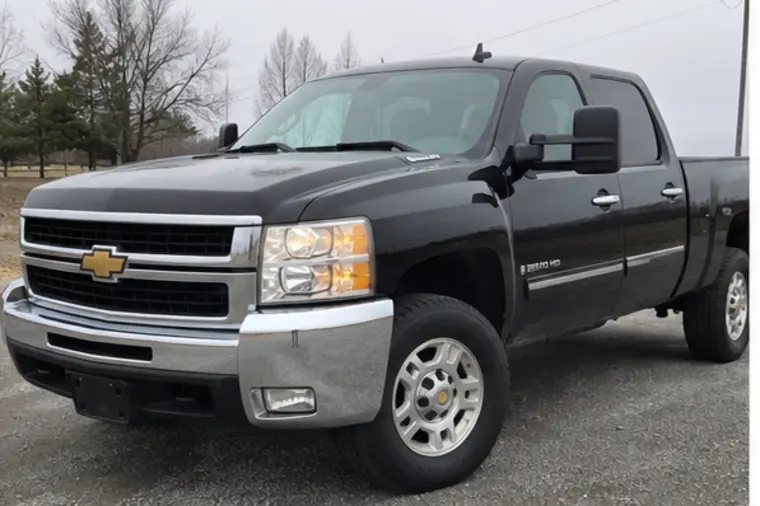
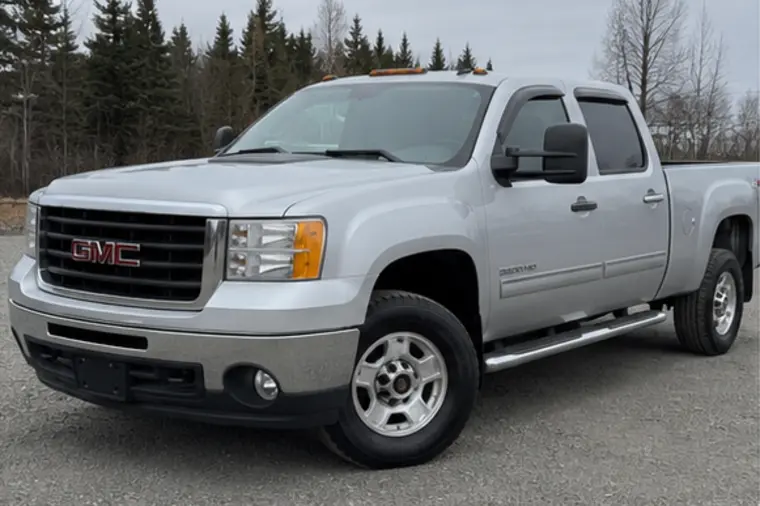
The reviewed primary evidence does not support rejecting every LMM Duramax from one model year. The defensible avoid decision concerns the actual candidate: unresolved damage, an incomplete repair chain, conflicting identity, unsupported alterations or a vehicle that cannot do the intended work. A documented 2007-specific fuel bulletin deserves an application check, not a blanket condemnation of 2007 trucks. Later candidates still require inspection. This guide sets out decline and repair-first conditions, while distinguishing unknown frequency from potentially serious consequences and a normal operating characteristic from an undiagnosed noise.
Which LMM years should you avoid?
No whole-year blacklist is justified by the reviewed set. That is not proof that all years have equal durability. Comparable annual exposure and failure data were not available to make that determination.
Decline an individual truck when a material concern remains unresolved beyond your ability to investigate, repair or support it before use. Keep earlier candidates eligible when their evidence is sound, and do not give a later year automatic clearance. A model year selects the documents to check; it does not establish the current vehicle's condition.
Separate a specific early concern from a later-year assumption
The period distinction routes investigation. It does not announce a manufacturer production fix, comparative failure percentage or universal best/worst ordering.
| Candidate or period | Evidence-led question | Unsupported conclusion to avoid |
|---|---|---|
| Advertised 2007 LMM | Is identity confirmed, and does relevant fuel-system history have a closed repair scope? | Every 2007 LMM has the documented condition |
| Advertised 2008–2010 LMM | Are inspection, configuration and maintenance records satisfactory? | Later years are exempt from fuel or operating faults |
| Any year with a repeated warning | Has the cause been diagnosed and the result verified? | Clearing the warning proves readiness |
| Any year with major modifications | Can the installed configuration be identified and supported? | An advertised upgrade guarantees dependability |
Decline unresolved identity conflicts
Match the VIN, engine RPO, vehicle documents and installed equipment. Investigate discrepancies involving replacement engines, modules, cabs or incomplete records. Do not resolve an ambiguous 2007 listing by choosing whichever engine label makes an attractive advertisement or available bulletin fit.
Require credible documentation and qualified inspection before proceeding. If a material conflict cannot be resolved, decline the candidate rather than carrying the uncertainty into registration, parts ordering and future diagnosis. The general Silverado owner manual is not a substitute for the correct diesel supplement or the actual vehicle identity.
Put unresolved fuel damage ahead of the asking price
The archived GM 08-06-04-029A excerpt explicitly adds 2007 LMM and describes a particular pump-valve failure with possible debris beyond the pump. For a candidate with relevant findings, a pump receipt alone may not explain whether the affected system was assessed and the original complaint resolved.
Require the diagnosis, complete repair scope and successful recheck. Decline or use repair-first terms when that chain remains open. The available archival copy omits later procedure steps, so it is not complete repair guidance; qualified technicians need current service information. Neither the excerpt nor a P0087 code establishes that every LMM has the same fault.
A serious possible outcome does not establish frequency
These are consequence-based purchase criteria. No percentage is assigned to how often they occur. A high-consequence unknown can justify declining a particular truck even when population frequency is unavailable.
| Finding | Why it can matter | Evidence needed before reconsidering |
|---|---|---|
| Confirmed debris with incomplete repair records | Affected-system scope may remain uncertain | Diagnosis, complete scope and recheck |
| Recurring stall or reduced power | Potential interruption of the intended assignment | Actual codes, cause and condition-matched result |
| Material oil/sludge concern | Current mechanical condition needs assessment | Qualified findings and relevant service/fuel history |
| Unresolved structural or braking concern | Safety is independent of engine preference | Qualified clearance or a different vehicle |
Do not accept unexplained sludge as routine age
GM PIP4436C links its diagnostic discussion of abnormal sludge with oil-service records and fuel usage in listed older Duramax applications, including LMM. It does not say every older truck should be expected to have that condition.
When an inspection identifies a material concern, require the actual assessment and repair implications. Decline if the seller dismisses it as normal age without supporting evidence or if the unresolved scope exceeds your reserve. Missing paperwork alone is not a diagnosis, and visual appearance alone should not be used to assign the fuel-related cause described in the bulletin.
Reject warning-clearing as a substitute for repair
A recurring complaint needs its actual code, operating conditions, diagnosis and verification record. GM's P2138 publication describes one defined electrical route in a broad application set; the Allison communication bulletin describes different, configuration-specific possibilities. Neither supports calling every reduced-power or shift complaint the same problem.
Use repair-first terms when the concern is bounded and the responsible shop can verify the outcome. Decline when the vehicle is repeatedly presented as fixed solely because the display was cleared. Do not assume a new controller, pedal or other part proves that the contributing condition was addressed.
Do not reject a confirmed normal tick—or ignore other sounds
GM's normal-tick bulletin describes a specific irregular warm-engine characteristic and advises against repairs for that identified condition. A qualified finding that the sound matches it is different from a seller's assertion that every Duramax noise is harmless.
Do not reject an otherwise suitable truck solely for a confirmed normal characteristic. Require further assessment or decline when a material new sound remains unexplained, particularly with accompanying operating concerns. This distinction protects against both an unnecessary rejection and an unsupported clearance; it does not permit diagnosis from a recording alone.
Decline concealed or unsupported alterations
Request a clear account of fuel-system, engine-control, transmission and emissions changes, including any claimed restoration. GM's calibration-evidence publication explains why changes to the released configuration matter to powertrain and aftertreatment evaluation; it is not proof that all altered trucks share one outcome.
Decline if important modifications are concealed, the present equipment cannot be verified or no competent support can be established for the intended use. Do not count a marketed upgrade as a reliability improvement without evidence. Any registration or compliance uncertainty also needs competent resolution; no legal or warranty clearance is supplied by this guide.
Require an inspection that can answer the real concern
Ask for a genuine cold start, warm operation and restart, plus a safe representative drive. Have the technician record findings and unavailable checks. If the reported fault occurs only after extended work, a short warm idle should not be described as a successful condition-matched test.
A seller may have a practical scheduling constraint, but that does not turn missing evidence into a pass. Decline when the untested condition is material to the purchase and cannot be resolved before commitment. Do not accept an assurance that you can investigate it later if that uncertainty exceeds your willingness or ability to carry it.
Missing maintenance records need a bounded plan
Identify what is confirmed, due and unknown against the correct vehicle and diesel documents. Obtain an actual baseline-service scope and quote. Distinguish absent historical paperwork from a present adverse finding: they are different reasons for uncertainty and may require different responses.
A candidate can remain eligible if the inspection is satisfactory and the starting-point work is practical. Decline when necessary service plus unresolved concerns consumes more time or reserve than you can support. Fresh maintenance after purchase can establish future records but cannot certify that previous intervals were followed.
Avoid a truck that cannot do your job
Verify applicable load limits for the exact configuration and intended passengers, tools, body equipment, cargo and trailer-imposed load. Inspect chassis and braking condition separately. An LMM engine description, HD badge or brochure maximum does not establish suitability.
Decline a candidate that cannot meet the assignment within its verified limits, regardless of year or engine condition. Also confirm practical service access and a workable downtime plan if the truck is essential to work. Use real arrangements and quotes, not invented dealer availability or a generic repair allowance.
Canadian safety checks cannot be replaced by a seller's screenshot
Use the manufacturer Canadian lookup and Canadian safety research with the exact VIN and a recorded date. Request completion evidence for relevant work. A screenshot with missing identifiers or an old check date should prompt verification, not automatic acceptance.
For imports, keep U.S. lookup information separate from present Canadian status. No candidate VIN was provided here, so the article reports no open-recall clearance or repair entitlement. A satisfactory lookup also does not replace mechanical inspection or establish every non-safety service action in the vehicle's history.
Use explicit proceed, repair-first and decline decisions
Proceed when the material identity, condition, configuration and capacity questions are satisfactorily answered for the intended use, with known routine work recorded. Repair-first means a defined concern, agreed responsibility and a successful verification result before commitment—not an open-ended promise.
Decline when a significant uncertainty remains unbounded, the candidate cannot meet the assignment or the work needed exceeds your support plan. Those are defensible reasons to avoid a particular LMM. An unsupported blacklist of every 2007, 2008, 2009 or 2010 truck would not answer the purchase question more accurately.
Evidence note: manufacturer documents establish the specific facts and applications cited. Buying workflows and cost scenarios are DieselTrucks.ca editorial guidance. These pages do not publish measured failure rates or confirm the condition, recall status or capacity of a particular truck.
General educational content for Canadian diesel-pickup research. Verify the exact truck, model year, certification labels, owner manual and manufacturer documentation, and obtain qualified mechanical or towing advice where appropriate.
Sources & Further Verification
Use the exact model year, VIN, truck labels and current manufacturer documentation when moving from general research to a purchase or towing decision.
- GM 2007 Chevrolet Silverado owner manual — original vehicle, diesel-supplement and engine-hours context
- GM 08-06-04-029A, October 2008 — archived three-page excerpt including 2007 LMM fuel-pressure and repair-history context; not a complete repair procedure
- GM PIP4436C, October 2016 — 2001–2010 listed Duramax applications, oil sludge and fuel-history checks
- GM 07-06-04-019F, November 2017 — P2138 reduced-power connector and water-intrusion diagnosis
- GM PI0310B, December 2011 — defined 2007–2012 Allison communication and aftermarket-belt diagnosis
- GM 02-06-01-022O, September 2014 — scoped Duramax normal ticking-noise information including LBZ
- GM 08-06-04-006N, February 2022 — hard-part and calibration evidence requirements including legacy Duramax applications
- Chevrolet Canada dealer and service locator — current support discovery
- Chevrolet Canada recall centre — current vehicle recall lookup
- Government of Canada — current recalls, advisories and safety-alert search
- NHTSA vehicle recall search — U.S. VIN and model-level safety research
- Chevrolet Canada manuals and guides