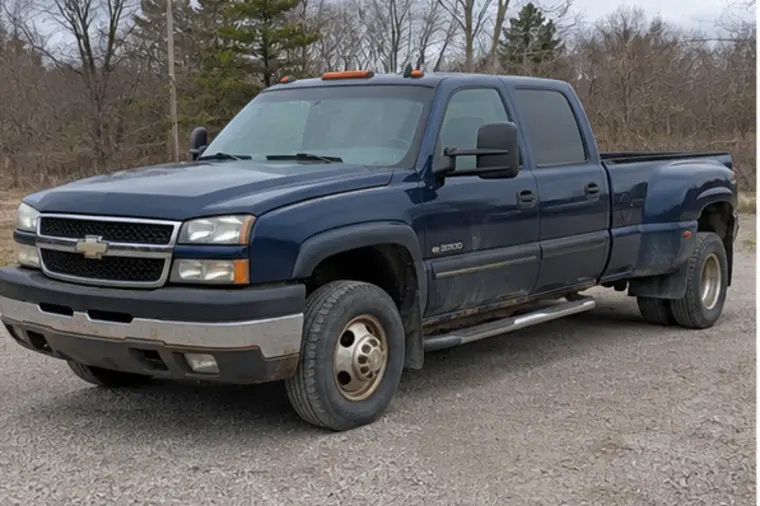
The LBZ Duramax belongs to a narrow later-GMT800 period, but its name is not a diagnosis and the exterior alone cannot confirm the engine. GM documents a normal hot-engine tick for LBZ applications, an evidence process for major powertrain work, and broader electrical and 2007 Allison paths that apply only when the vehicle and symptoms match. None supplies an LBZ component-failure rate, a universal worst year or a Canadian candidate VIN result. Use each concern to build a symptom-and-measurement trail for the actual truck.
Verify LBZ identity before applying a problem label
Record the VIN, model year, Chevrolet or GMC model, cab, box or completed body, engine RPO, transmission, original market and installed configuration. Photograph vehicle, door and engine labels and connect any replacement engine, cab or control module to invoices and programming records.
Do not infer LBZ from a 6.6L badge, later-GMT800 grille or seller description. The transition into and out of the LBZ period, engine swaps and rebuilt vehicles make original and installed identity separate questions.
The 2007 Silverado manual covers multiple configurations and directs Duramax owners to the separate diesel supplement for engine-specific information. Use both the correct chassis manual and diesel literature; neither a generic web chart nor the main owner manual alone is the complete service record.
Build the symptom chronology before selecting parts
Separate no-crank, long crank, crank/no-start, rough running, knock or tick, smoke, low power, reduced-power messages, fuel-pressure concerns, coolant loss, overheating, oil use and transmission behaviour. Record cold or hot state, ambient temperature, load, fuel level and the warning sequence.
Preserve codes and freeze-frame or supporting data before clearing them. Add recent fuel, filter, wiring, tuning, injector, turbo, cooling and transmission work to the same timeline, with odometer and engine hours where available.
A useful chain is complaint, reproduced condition, measurement, conclusion, repair and comparable recheck. A popular list of LBZ Duramax common problems cannot replace that chain or establish which system needs work.
Use exact-year vehicle and diesel literature
The original 2007 manual says equipment can vary and routes Duramax-specific questions to the diesel supplement. It also provides vehicle identification, Driver Information Center and configuration context, including engine-hours access on equipped trucks.
Retrieve literature that matches the candidate's exact model year, make, body and market. Do not transfer a 2007 warning, maintenance interval, capacity or towing table to a 2006 truck without confirming that the document applies.
Compare the literature with the hardware now present. Record swaps, calibration changes and upfit wiring rather than assuming the vehicle remains as delivered.
Separate a documented normal tick from an abnormal noise
GM bulletin 02-06-01-022O includes LBZ-equipped applications and describes a random metallic tick most audible with coolant at 70°C or higher, from idle to about 1,500 rpm. GM identifies that defined sound as a normal operating characteristic and says replacing the engine or internal components will not eliminate it.
Match the temperature, speed range, location and sound description before using that conclusion. A regular knock, cold-only clatter, load-dependent noise, warning, pressure problem, misfire or metal evidence is outside the shortcut and needs diagnosis.
Record oil level and pressure indication, temperature, rpm, load and where the noise is loudest. The bulletin prevents an unnecessary repair for one defined noise; it does not certify the rest of the engine.
Diagnose starting and fuel-pressure concerns in branches
For long crank, no-start, stall or low-power concerns, capture battery and cranking evidence, filters, restriction or air-in-fuel findings, fuel quality, commanded and actual rail pressure, wiring and the condition that reproduces the symptom.
Separate electrical, low-pressure supply, filtration, high-pressure generation, injector return and control branches. Do not name a pump, injector, filter head or pressure regulator from one symptom or code.
When prior work is claimed, obtain the initial measurements, exact parts, installer and comparable post-repair start or pressure result. An added lift pump or replaced injector set is a configuration fact, not proof that the original cause was found.
Preserve contamination evidence before cleanup
If water, gasoline, debris, rust or another contaminant is suspected, preserve a safe sample, filter evidence, photographs and technician findings before cleaning. Identify the fuel source and symptom timing without treating sequence alone as causation.
Map which tank, lines, filter, pump, rails and injectors were inspected, cleaned, replaced or reused. The repair boundary should follow evidence from this truck, not an assumed universal package.
The later GM contamination bulletin used elsewhere in the Duramax program does not list LBZ, so it is not presented as an LBZ service procedure here. Require current application-specific service information rather than borrowing a later-engine workflow.
Scope intermittent P2138 and reduced engine power correctly
GM bulletin 07-06-04-019F covers 2018-and-prior GM passenger cars and light-duty trucks with intermittent P2138 and reduced power. It describes possible water intrusion and corrosion at an instrument-panel-to-body harness connector and directs technicians to check aftermarket equipment on sensor or reference circuits.
That broad vehicle bulletin may inform a matching LBZ pickup only after model, system and code applicability are confirmed. It does not say every LBZ reduced-power event is caused by the connector, water leak or accelerator-pedal circuit.
Preserve the exact message, current or history code, connector findings, leak source, circuit tests, repair and operational verification. Diagnose other reduced-power codes and conditions through their own paths.
Investigate smoke by colour, state and duration
Describe smoke by colour, cold or hot state, idle or load, duration, fuel odour and accompanying codes or fluid changes. A brief cold-start haze, sustained white smoke, loaded black smoke and blue oil-related smoke are different observations.
Connect the observation to fuel, injector, air, turbo, compression, coolant and oil evidence. Do not infer an injector, turbo or internal-engine failure from a video or exhaust appearance alone.
Ask the inspecting technician to reproduce the same condition safely and preserve the measurements that select a repair. A cleared symptom after warming is not a diagnosis.
Evaluate cooling and overheating as a complete system
Record coolant level trend, pressure-test findings, cap and hose condition, radiator airflow, fan operation, water-pump and thermostat history, temperature under known load and any internal-leak testing actually performed.
An unloaded drive may not reproduce a complaint that occurs while towing, climbing or idling with equipment. A controlled test must remain within verified ratings and stop when continued operation could cause damage or create a road hazard.
Do not convert coolant loss, a hard hose or a seller's head-gasket story into a diagnosis without measurements. For previous major cooling work, require the original cause, full scope and a comparable loaded recheck.
Diagnose turbo, air and low-power evidence in sequence
Inspect intake restriction, charge-air plumbing and leaks, sensors, turbo control, exhaust restriction, fuel delivery and commanded-versus-actual data under a safe reproducible condition. Note temperature, altitude, gear, speed and load.
Shaft feel, visible oil or one boost code is not a complete turbo diagnosis. Connect observations to oil supply and return, air leakage, exhaust and engine condition using the correct LBZ procedure.
For a replacement turbo, vane-related service, hose or sensor, obtain the finding that selected the part and the post-repair data. Parts history without the outcome should remain unresolved.
Treat tuning and overpower evidence as a major boundary
GM's hard-part evidence bulletin includes LBZ and LLY calibration-verification instructions and describes possible symptoms associated with non-GM power-up calibrations. Its purpose is warranty and evidence administration, not a current failure-rate study or automatic denial of any diagnosis.
Identify tuners, calibration history, injectors, turbo, intake and exhaust changes, auxiliary fuel equipment and transmission programming. “Stock,” “returned to stock” and “never tuned” remain seller statements until hardware, software and records align.
Before major disassembly, preserve codes, measurements, calibration evidence, photographs and fluid or component findings. Unknown tuning changes the diagnostic and support context without proving that damage exists.
Audit previous major engine work
For piston, cylinder, head, gasket, injector, pump, turbo or replacement-engine work, obtain the original complaint, pre-disassembly evidence, technician conclusion, parts and machining scope, assembly identity, installer and post-repair validation.
The GM hard-part bulletin shows why evidence collected before disassembly matters, but its claim process is not a substitute for present diagnosis. A rebuild invoice can close only the condition its evidence addresses.
Build a chronology when repairs repeat. Recurrence, continuation, an incomplete boundary and an unrelated later symptom have different meanings even if similar component names appear on the invoices.
Keep 2007 Allison communication evidence narrow
GM PI0310B covers 2007–2012 Silverado and Sierra trucks equipped with the Allison A1000, not every LBZ configuration. It describes intermittent communication, shift, reduced-torque and range-inhibit symptoms with P0880 or U0101, including checks for G102 resistance and electrostatic discharge from certain aftermarket serpentine belts or added equipment.
For a matching 2007 truck, record transmission RPO, exact codes, ground and belt findings, added equipment, repair and recheck. The bulletin explicitly directs technicians not to replace the TCM before resolving the root cause unless permanent damage remains.
Keep this transmission and communication path separate from internal-engine conclusions. A similar shift complaint on a 2006 truck, manual transmission or different code set needs its own applicable information.
Inspect batteries, grounds and cold-start evidence together
Arrange a genuine cold soak when practical. Record ambient temperature, block-heater use, battery state, cranking speed, wait-to-start sequence, smoke, time to start, stabilization, warnings and scan evidence.
Inspect batteries, cables, grounds, starter operation, glow control, fuel quality, supply and engine condition as connected branches. A seller-warmed truck cannot answer the same question, and one successful start cannot predict the rest of winter.
Use the exact-year diesel supplement for fuel, starting and temperature guidance. Do not substitute a later engine manual or diagnose glow plugs from temperature and smoke alone.
Use a concern-to-evidence matrix
This is a diagnostic routing table, not prevalence data, a severity ranking or an estimate of repair cost.
| Concern | Evidence that moves the decision | Unsupported shortcut |
|---|---|---|
| Hot random tick | Temperature, rpm, location and sound match to the scoped GM information | Treating every tick or knock as normal |
| Long crank, no-start or stall | Cranking supply, fuel quality, restriction, commanded/actual pressure, circuit and return evidence | Naming an injector or pump from reputation |
| P2138 reduced power | Exact code, connector and leak inspection, aftermarket wiring check and repair verification | Applying the broad connector bulletin to every warning |
| Coolant loss or overheating | Level trend, pressure and leak tests, airflow, temperatures, load condition and repair recheck | Declaring a head gasket from one observation |
| Low power, smoke or boost concern | Reproduced condition plus measured fuel, air, turbo, exhaust and engine evidence | Replacing a turbo from a code or feel test |
| Allison communication or shift event | Matching 2007+ MW7 application, codes, G102, belt/upfit findings and recheck | Counting a communication fault as an engine failure |
Stage an LBZ pre-purchase inspection
Before travel, request VIN and RPO evidence, a true cold-start video, dashboard bulb check, scan summary, maintenance, fuel and cooling repair files, calibration history, transmission identity and current work or towing use. Resolve basic identity conflicts first.
On site, inspect cold when possible, then hot and under a safe road condition. Check fluids, leaks, wiring, batteries, grounds, fuel system, intake and charge-air path, cooling, exhaust, transmission, transfer case, axles, brakes, steering, frame, hitch, tires and corrosion.
Afterward, send material findings to a technician familiar with the exact year and current configuration. Separate maintenance catch-up, diagnosed repair, unresolved investigation, safety work and optional upgrades in the estimate.
Verify Canadian safety status without inventing it
Use Chevrolet Canada's current VIN recall centre and retain the dated result. Use the Government of Canada search for model-level recall and safety research, then confirm applicability and remedy through the manufacturer for the actual vehicle.
Use NHTSA only for U.S. VIN or model-level context. A U.S. filing cannot establish a Canadian VIN's status, and neither a campaign nor a complaint database is an LBZ component-failure denominator.
No VIN was entered for this guide. It does not represent any candidate as open, complete, unaffected or eligible for a campaign.
Match the whole truck to the intended work
Calculate occupants, cargo, accessories, hitch equipment and loaded tongue or pin weight. Use the candidate's certification and door labels, axle and tire limits, hitch rating and exact configuration literature rather than engine output.
Inspect the transmission, transfer case, driveline, steering, brakes, tires, wheels, frame, mounts, hitch, lighting and corrosion independently. A strong engine file cannot repair an unsafe chassis or create missing payload.
Record plowing, towing, idling, short cycles, road-salt exposure, storage and engine hours where available. These shape inspection and maintenance needs without proving a particular component will fail.
Price support and downtime from the actual findings
Use Chevrolet Canada's locator as a starting point, then confirm that a shop accepts the model year, engine, truck class and modifications and has suitable diagnostic capability. A directory listing does not establish old-Duramax expertise, parts supply or timing.
Obtain current written estimates for the candidate and defined repair boundary. Include transport, diagnostic queue, disassembly, parts availability, programming, validation and substitute capacity instead of publishing a generic online repair price.
For essential or remote work, a repairable truck may still be unsuitable when uncertainty or interruption exceeds the operating plan. Preserve those operational limits as part of the buying decision.
Decide from closed and open evidence
Classify each material item as supported, repaired and rechecked, unresolved or not assessed. Pause for an identity conflict, dangerous symptom, open safety question, unclear major repair, unknown calibration, load mismatch or a support gap outside the buyer's tolerance.
Give documented repairs credit only for the condition they close. Do not average strong and missing evidence into a fabricated reliability score or translate one candidate into a model-year verdict.
The reviewed primary set provides no controlled LBZ injector, pump, turbo, head-gasket or engine failure rate, no universal worst year, no Canadian candidate VIN result and no remaining-life forecast. Those are explicit evidence limits.
LBZ Duramax problem questions
Is the hot ticking sound always a problem? No. GM defines one warm-engine, low-rpm random tick as normal, but a noise outside that scope still needs diagnosis.
Does every LBZ reduced-power message point to the P2138 connector path? No. Match the exact code, application and findings; other conditions require their own diagnosis.
Should a TCM be replaced for every 2007 Allison communication event? No. The scoped GM information requires root-cause checks first and applies only to matching applications and symptoms.
Is an injector, pump or turbo replacement proof that the truck is fixed? No. Verify the original cause, complete repair boundary and comparable recheck.
Is there an official LBZ failure percentage or worst year? No reviewed primary source provides either.
What should stop the purchase? A material unresolved identity, safety, operating, repair, configuration or support issue outside the buyer's requirements.
Evidence note: manufacturer documents establish the specific facts and applications cited. Buying workflows and cost scenarios are DieselTrucks.ca editorial guidance. These pages do not publish measured failure rates or confirm the condition, recall status or capacity of a particular truck.
General educational content for Canadian diesel-pickup research. Verify the exact truck, model year, certification labels, owner manual and manufacturer documentation, and obtain qualified mechanical or towing advice where appropriate.
Sources & Further Verification
Use the exact model year, VIN, truck labels and current manufacturer documentation when moving from general research to a purchase or towing decision.
- GM 2007 Chevrolet Silverado owner manual — original vehicle, diesel-supplement and engine-hours context
- Chevrolet Canada manuals and guides — model-year vehicle literature lookup
- GM 02-06-01-022O, September 2014 — scoped Duramax normal ticking-noise information including LBZ
- GM 07-06-04-019F, November 2017 — P2138 reduced-power connector and water-intrusion diagnosis
- GM 08-06-04-006N, February 2022 — hard-part and calibration evidence requirements including legacy Duramax applications
- GM PI0310B, December 2011 — defined 2007–2012 Allison communication and aftermarket-belt diagnosis
- Chevrolet Canada recall centre — current vehicle recall lookup
- Government of Canada — current recalls, advisories and safety-alert search
- NHTSA vehicle recall search — U.S. VIN and model-level safety research
- Chevrolet Canada dealer and service locator — current support discovery