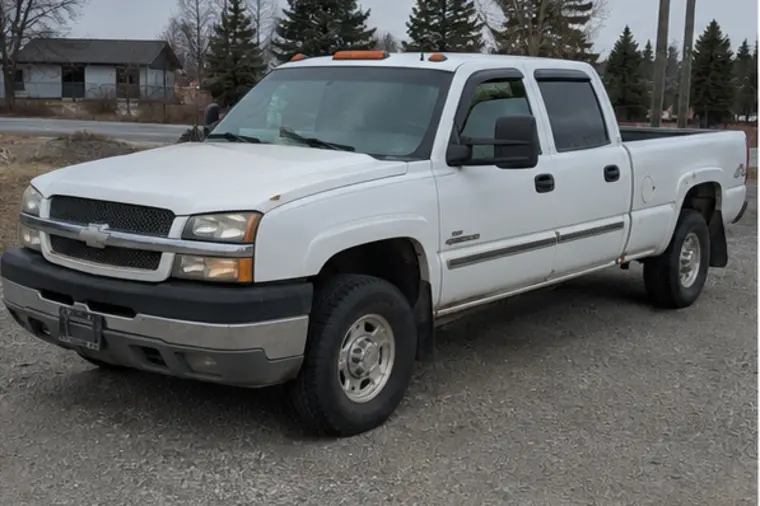
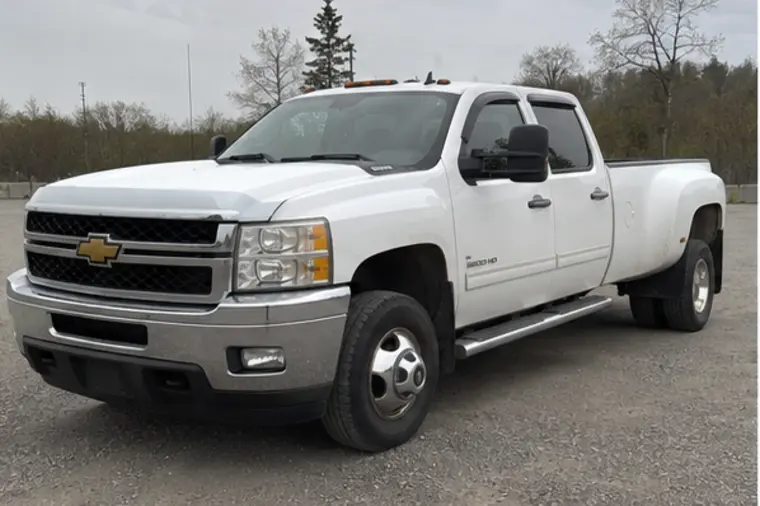
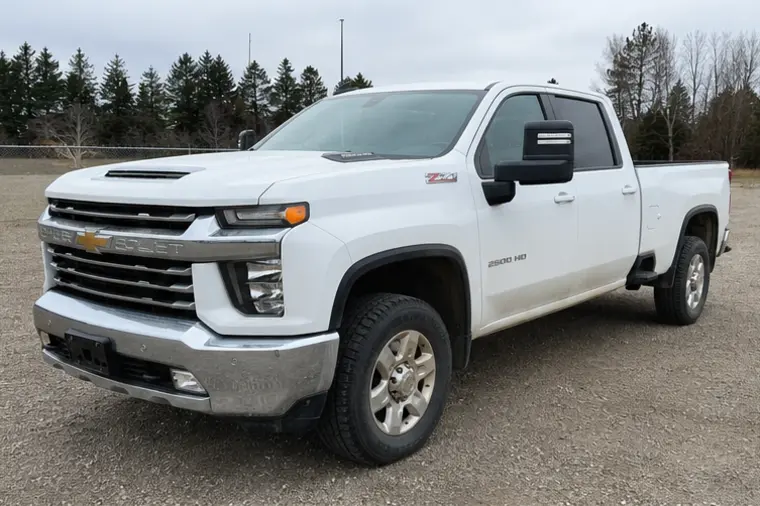
No reviewed primary source supplies one exposure-adjusted reliability percentage for every LB7, LLY, LBZ, LMM, LML and L5P 6.6L Duramax. GM documentation instead defines exact applications, operating requirements and diagnostic paths. For a buyer, reliability is a candidate-level conclusion: can the verified truck perform its assignment repeatedly, legally and safely, with coherent maintenance and repair evidence and an acceptable support and downtime plan? Keep documented campaigns, symptoms, diagnoses, repairs and unknowns separate rather than averaging them into a score.
Define reliability for the actual assignment
Reliability is not the absence of an online problem label. Define the required trailer and payload, route, winter exposure, annual kilometres, idle or PTO duty, acceptable interruption, recovery distance and service availability.
A truck can operate well in a short unloaded demonstration yet remain unsuitable for remote, time-critical or near-limit work. Another may have a completed repair history and be supportable for planned personal use.
Set pass, pause and reject thresholds before viewing candidates. This keeps engine reputation and purchase enthusiasm from changing the standard after a symptom or missing record appears.
Establish exact identity before applying evidence
Record VIN, model year, Chevrolet or GMC model, series, pickup or chassis application, engine code, transmission, drivetrain, rear-wheel arrangement, axle, engine and emissions labels, original market and installed configuration. Connect replacements and programming to identifiers and invoices.
Do not apply L5P evidence to an LB7, LLY, LBZ, LMM or LML because the displacement and badge match. Controls, fuel hardware, emissions systems, transmissions and service procedures changed across the family.
If labels, build information and records conflict, classify identity as unresolved. Correct application is a prerequisite for manuals, bulletins, parts, campaigns and ratings.
Use a reliability evidence hierarchy
Use the strongest available category for each conclusion and label missing evidence. Do not count documents or anecdotes as failures.
| Evidence type | What it can establish | What it cannot establish alone |
|---|---|---|
| Candidate measurements | Present behaviour under recorded conditions | Future life under every duty |
| Complete repair chronology | A defined complaint, diagnosis, work and recheck | Renewal of unrelated systems |
| OEM service bulletin | Application and diagnostic or repair procedure | Prevalence or presence on one truck |
| Safety recall | Defined population, risk and required remedy | General engine reliability |
| Owner manual or supplement | Correct operation and maintenance requirements | That prior owners complied |
| Seller or owner report | A lead for verification | Diagnosis, frequency or causation |
Keep severity, frequency and consequence separate
A condition can be safety-critical without being common, and a frequently discussed symptom can be operationally minor once correctly diagnosed. The reviewed recalls and bulletins identify defined hazards or service paths; they do not provide a common denominator of vehicles exposed under comparable duty.
Record severity from the actual consequence and official notice, frequency from a suitable population dataset when one exists, and candidate status from inspection, VIN and repair evidence. Do not substitute search-result volume, forum repetition, bulletin count or recall population for a failure rate.
For the purchase decision, add the buyer's consequence: recovery distance, work interruption, trailer handling, substitute vehicle and repair support. A low-frequency event can still exceed a remote operator's tolerance, while a known and fully resolved repair may fit another buyer. State which dimension drives the decision rather than compressing all three into “reliable” or “unreliable.”
Read current L5P specifications narrowly
GM lists the latest L5P at 470 horsepower and 975 lb-ft and explicitly compares it with 2023-and-older L5P engines. This proves that a single engine code can include specification changes important to research.
It does not prove the latest version is more reliable. Use output and transmission data only for the exact application and treat greater performance as a workload question, not a durability score.
For earlier candidates, retrieve exact-year literature rather than backfilling current figures. Specification accuracy supports correct operation and load planning; it is not expected-life evidence.
Audit maintenance against the matching literature
GM's 2025 supplement documents current fuel, fluids, emissions operation, cold-weather use and maintenance. Use it for a 2025 truck and obtain the corresponding literature for every other model year.
Build a chronology by date, kilometres, engine hours and duty. Separate oil and filter, fuel filtration, coolant, transmission, transfer case, axle and emissions-related service and record the product specification used.
Missing history remains an uncertainty even after baseline service. Fresh fluids can improve the present maintenance position but cannot recreate previous intervals or prove how the truck was operated.
Assess fuel reliability through evidence, not part names
For no-start, stall, low-power or rail-pressure concerns, preserve exact codes and freeze-frame data and obtain supply, high-pressure, electrical and contamination findings. Do not assign injectors or one pump from symptoms alone.
GM PIP5151F defines contamination inspection for listed applications. It supports preserving a fuel sample, filters and component findings and identifying the cleaning and replacement boundary.
If fuel-system work exists, require the complaint, measurements, cause, all replaced and reused components and comparable recheck. An invoice line without system context cannot establish a reliable repair.
Keep the L5P connector bulletin within scope
GM 20-NA-197 covers a defined 2017–2020 L5P fuel-pressure-connector diagnostic path. For a matching truck, ask for the codes, circuit tests, pin or terminal findings, routing, repair and verified outcome.
The bulletin does not show that all in-scope trucks develop the concern or that every pressure complaint has that cause. An out-of-scope engine requires its own diagnostic information.
Classify a repair as supported only when the measured original condition and recheck align. Parts replacement without that link stays uncertain.
Evaluate cooling reliability under relevant conditions
GM 18-NA-098 defines a coolant-leak context for specified 2017–2020 L5P applications. Record level trend, pressure testing, residue, temperature data, load, diagnosis, repair and comparable verification.
Do not infer a head gasket, EGR cooler, water pump or radiator from coolant loss alone. A topped reservoir or isolated part replacement does not show the source was identified.
For trucks used near their verified ratings, request safe condition-appropriate loaded evidence. Do not reproduce overheating or protection events during a buying test.
Test cold start and hot operation separately
GM 19-NA-108 addresses a defined 2017–2019 L5P cold-start/run concern. It is a targeted procedure context, not proof of a family-wide pattern.
From a true cold soak, record temperature, heater use, battery and charging state, cranking, smoke, warnings, codes and stabilization. After full warm operation, recheck restart, temperatures, fluids and drivability.
A seller-warmed truck cannot answer the cold question. One abnormal start also cannot identify glow, fuel, compression, sensor or software cause without application-specific measurements.
Diagnose DPF and reduced-power evidence by condition
GM 16-NA-380 distinguishes DPF-related fault categories for defined diesel applications. Capture exact messages and codes, soot and ash information, pressure and temperature sensor evidence, duty and regeneration history.
Regeneration addresses soot under proper conditions; it does not remove ash or settle an upstream air, fuel, sensor or exhaust cause. A cleared light or new filter is not a complete result without diagnosis and recheck.
Confirm legal emissions hardware and calibration. Unknown or altered systems change diagnostics, insurance and service support and cannot be counted as a reliability improvement.
Separate whole-vehicle campaigns from engine conclusions
Transport Canada 2024637 defines a 2020–2022 diesel Silverado/Sierra transmission campaign involving control software intended to detect valve wear before wheel lock. The related GM/NHTSA filing supplies U.S. scope and remedy context.
Verify Canadian applicability and completion by actual VIN and retain the repair order. Diagnose current transmission behaviour independently.
The campaign matters to the truck's safety and availability but is not an engine failure. Do not add its affected population to a 6.6L reliability numerator or claim completion certifies the powertrain.
Reconstruct repair effectiveness
For injectors, pump, turbocharger, cooling, DPF, transmission or engine replacement, create one timeline: complaint, operating conditions, codes and measurements, diagnosis, complete work, programming and condition-matched recheck.
Identify parts retained and systems not assessed. An engine replacement does not automatically renew fuel, cooling, emissions, transmission, driveline or chassis components.
Repeated visits are not automatically repeated failures. They may represent one unresolved cause, a new concern or staged work; the records must connect each visit to its condition and outcome.
Treat modifications as a separate reliability context
List tuning, calibrations, injectors, pumps, turbochargers, intake and exhaust changes, emissions alterations, transmission programming, tires, lifts and axle changes. Record who specified and supports the combination.
Confirm federal/provincial legality, inspection, insurance and shop acceptance. “Returned to stock” does not prove previous operation or present programming and hardware are original.
Unknown modification history increases uncertainty but is not proof of damage. Classify it according to the buyer's legal, diagnostic, support and downtime requirements rather than inventing a failure probability.
Verify complete-truck condition and load fit
Inspect transmission, transfer case, axles, steering, brakes, tires, wheels, frame, mounts, hitch, electrical system, body and corrosion. A reliable engine cannot make an unsafe chassis or overloaded configuration suitable.
Calculate occupants, cargo, accessories, hitch equipment and loaded tongue or pin weight using door labels, axle and tire limits, hitch ratings and the exact configuration chart.
Chevrolet's 2024 2500HD and 3500HD charts separate cab, bed, drivetrain, wheel/tire, SRW/DRW, hitch and package conditions. Do not transfer one maximum to another truck or infer capacity from engine output.
Account for duty, winter and storage
Record towing load, grades, idling, PTO work, short cycles, regeneration opportunity, dusty sites, plow work, fuel sources, parking, block-heater use and storage. Compare these reports with hours, wear, service and measured condition.
Low kilometres do not prove low duty; high kilometres do not prove abuse. Calendar-based maintenance can matter on stored trucks, while engine hours can reveal use the odometer does not.
If weather prevents reproducing an important cold condition, retain the limitation. Do not mark a seasonal question passed because the truck starts warm in summer.
Include service support and downtime consequence
Confirm that a reachable shop accepts the exact engine code, truck, body, emissions configuration and modifications. Ask about diagnostic capability, parts path, scheduling and whether previous work changes acceptance.
For commercial duty, include recovery, diagnosis, access, parts delay, reassembly, validation and substitute capacity. A technically repairable truck may still be operationally unreliable for a remote or time-critical assignment.
Obtain current candidate-specific scopes. Generic repair prices and remaining-life estimates are not supported by the reviewed evidence.
Apply explicit candidate classifications
Reclassify only when new evidence resolves the same reason for pause. A discount or unrelated maintenance does not close an open condition.
| Classification | Required evidence |
|---|---|
| Suitable | Identity aligns; maintenance and repairs are coherent; cold/hot operation and inspection are satisfactory; emissions legal; load fit and support credible |
| Suitable after defined work | Written scope, responsibility, cost, timing and relevant recheck fit the ownership plan |
| Pending diagnosis | Material symptom, identity conflict, campaign question, repair gap or test limitation remains open |
| Unsuitable | Unsafe, overloaded, illegally configured or unsupported beyond the buyer's requirements |
Preserve a reliability file for the chosen truck
Save the advertisement, VIN and labels, exact manuals, campaign results, maintenance, scan and inspection evidence, repair chronology, modifications, load documents, estimates and test limitations.
Mark seller statements as reports until verified. Preserve codes before clearing and date superseded results so a repair or later test changes the assessment transparently.
The output is a defensible decision about one candidate at one point in time. It is not a percentage, fleet study, warranty or promise of remaining life.
6.6L Duramax reliability questions
Is there one official 6.6L Duramax reliability score? No reviewed primary source provides an exposure-adjusted family-wide percentage.
Does a GM bulletin mean every listed truck fails? No. It defines an application and diagnostic or repair path, not prevalence or candidate condition.
Is a completed transmission recall evidence of engine reliability? No. It closes a defined campaign question and remains separate from the engine assessment.
Does a replacement engine make the whole truck reliable? No. Verify cause, installed scope, reused systems, outcome and complete-vehicle condition.
What supports a purchase? Exact identity, coherent service and repair evidence, satisfactory cold/hot inspection, legal configuration, safe load fit, credible support and acceptable downtime.
Evidence note: manufacturer documents establish the specific facts and applications cited. Buying workflows and cost scenarios are DieselTrucks.ca editorial guidance. These pages do not publish measured failure rates or confirm the condition, recall status or capacity of a particular truck.
General educational content for Canadian diesel-pickup research. Verify the exact truck, model year, certification labels, owner manual and manufacturer documentation, and obtain qualified mechanical or towing advice where appropriate.
Sources & Further Verification
Use the exact model year, VIN, truck labels and current manufacturer documentation when moving from general research to a purchase or towing decision.
- GM L5P technical description — later specification versus 2023-and-older engines
- GM 2025 6.6L Duramax diesel supplement — original manufacturer operating and maintenance instructions
- GM PIP5151F, July 2018 — diesel fuel contamination evidence
- GM 20-NA-197, September 2020 — fuel-pressure connector diagnosis
- GM 18-NA-098, June 2019 — Duramax coolant leak diagnosis
- GM 19-NA-108, June 2019 — defined L5P cold-start concern
- GM 16-NA-380, September 2022 — DPF fault distinctions
- Transport Canada 2024637 — diesel transmission recall
- GM N242454440 / U.S. 24V-797 — affected vehicles and remedy
- Chevrolet 2024 Silverado 2500HD chart — original manufacturer hitch, cab, wheel and package conditions
- Chevrolet 2024 Silverado 3500HD chart — original manufacturer SRW, DRW and hitch conditions
- Chevrolet Canada manuals and guides