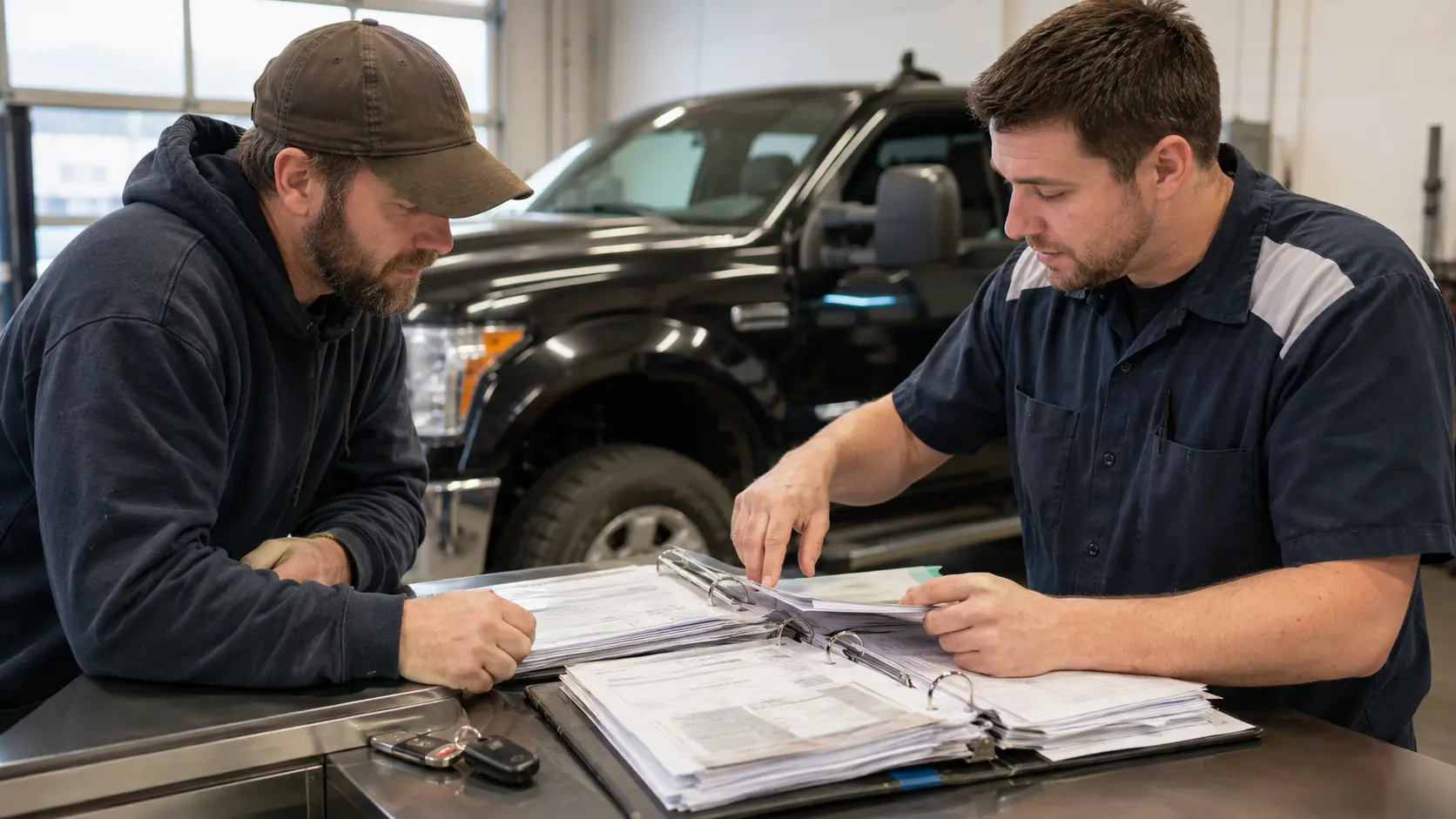
A fuel-system concern needs a documented cause and repair scope. Hard starting, a warning light or a replaced filter cannot identify contamination on its own.
Build the buying decision
Identify evidence
Complaint + fuel finding + diagnostic record
Audit repair scope
Components + system checks + follow-up
Check exact VIN
Campaign applicability + completion + condition
Separate contamination from a suspected component fault
Ask for the original complaint, diagnostic findings and repair invoice. Clarify whether the shop identified water, incorrect fuel, debris or a component fault, and what evidence supports that finding. Avoid reducing all fuel-system work to the name of one pump design.
Ford's 2011 6.7L supplement provides model-specific fuel and water-separator guidance. Use it only for the applicable vehicle; other years and engines require their own instructions. A seller's filter-change schedule should be checked against the exact documentation and actual duty.
Check whether the repair addressed the system
Have a qualified shop explain what was inspected, which components were replaced or cleaned, and how the repair was validated. An invoice for one component does not establish that the rest of the fuel system was examined. Ask for follow-up operating history and any recurring warnings.
Do not open high-pressure diesel fuel lines as a buyer check. Arrange professional diagnosis when contamination or pressure-system failure is suspected. Preserve invoices and any laboratory or diagnostic findings; they are more useful than an unsupported statement that the system was completely rebuilt.
Keep recall evidence scoped
FCA's U.S. recall 21V-880 / Y78 documents a high-pressure fuel-pump concern in certain 2019–2020 RAM diesel pickups and chassis cabs. It identifies a campaign population, not every Cummins-equipped truck and not a brand-wide failure percentage.
For a Canadian purchase, check the VIN through Canadian and manufacturer resources and obtain completion evidence. Then inspect the truck's present condition. Completed campaign work and a satisfactory fuel-system inspection answer different questions.
Evidence note: manufacturer documents establish the specific facts and applications cited. Buying workflows and cost scenarios are DieselTrucks.ca editorial guidance. These pages do not publish measured failure rates or confirm the condition, recall status or capacity of a particular truck.
General educational content for Canadian diesel-pickup research. Verify the exact truck, model year, certification labels, owner manual and manufacturer documentation, and obtain qualified mechanical or towing advice where appropriate.
Sources & Further Verification
Use the exact model year, VIN, truck labels and current manufacturer documentation when moving from general research to a purchase or towing decision.