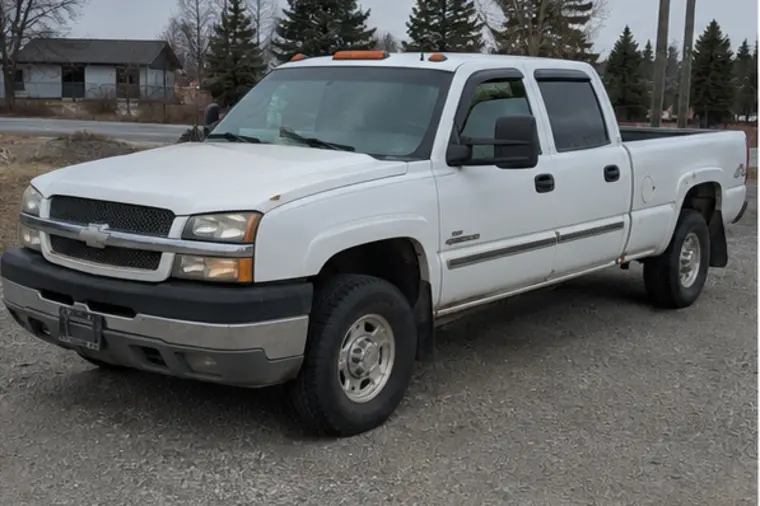
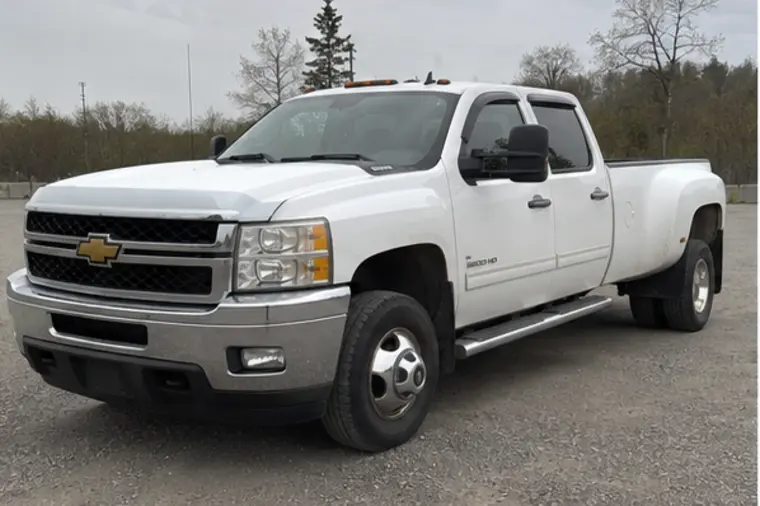
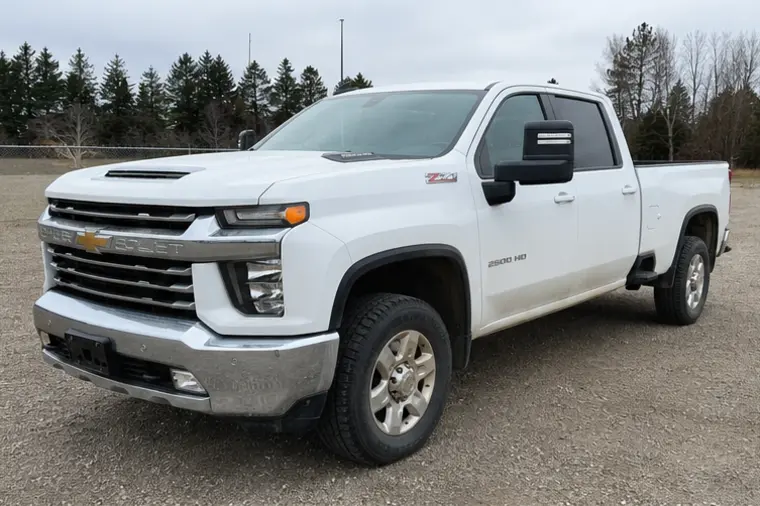
“6.6L Duramax” spans multiple engine codes, emissions systems and truck generations, so a universal problem list is a poor diagnostic tool. The primary GM evidence reviewed here defines particular L5P diagnostic conditions, fuel-contamination procedures, current 6.6L operating guidance and a separate Canadian transmission campaign. Confirm the exact engine, model year and symptom before applying any of it; none of these documents provides a cross-generation failure rate.
Identify the engine code before naming a problem
Record VIN, model year, Chevrolet or GMC model, engine code, transmission, original market and present emissions configuration. Photograph engine and vehicle labels and connect replacement-engine identity to invoices.
Do not apply an L5P bulletin to an LB7, LLY, LBZ, LMM or LML simply because all are called 6.6L Duramax. Injection hardware, controls, emissions equipment and service procedures changed across the family.
Build a one-page identity sheet for the inspecting shop. If the truck has been swapped, exported or tuned, document what is actually installed rather than relying on the registration description.
Classify the symptom and operating state
Separate no-crank, long crank, crank/no-start, hard cold start, rough running, low power, smoke, coolant loss, overheating, DPF/DEF messages, fuel-pressure codes and transmission behaviour. Record temperature, load, fuel level and warning sequence.
Preserve codes and freeze-frame data before clearing them. Ask what changed immediately before the event and what was disconnected, replaced, cleaned or programmed afterward.
A component list is not a diagnostic chain. Connect the complaint to measurements, conclusion, repair and a comparable recheck.
Use current operating guidance for current engines
GM's 2025 6.6L supplement supplies current operating, fuel, emissions and maintenance instructions. It is the correct starting point for a 2025 application, not a substitute for earlier-generation literature.
Match fuel, fluids, warnings and regeneration behaviour to the exact model-year manual. Do not assume a newer display message or procedure appears on an older truck.
For a used candidate, compare the documentation retained with the truck against the engine and control modules actually installed. Unknown programming or swaps make generic instructions less reliable.
Diagnose fuel-pressure electrical concerns narrowly
GM 20-NA-197 covers defined 2017–2020 L5P applications and a particular fuel-pressure-connector diagnostic path. It does not establish that all low-pressure, rail-pressure or reduced-power complaints have a connector cause.
Record the exact codes, circuit tests, pin/terminal findings and repair outcome. If a connector or harness was replaced, inspect routing and ask whether the original symptom was reproduced and cleared by the completed work.
Do not transfer the bulletin to another engine code without application-specific service information. Similar symptoms can arise from fuel quality, supply, high-pressure components, sensors, wiring or controls.
Preserve contamination evidence before replacing parts
GM PIP5151F defines a fuel-contamination inspection process for listed Duramax applications. It distinguishes observed fuel condition and system findings rather than treating every no-start or pump complaint as contamination.
When contamination is suspected, preserve an appropriate sample, filter evidence and technician findings before cleaning. Identify water, gasoline, debris, rust or other material and record which components were inspected.
Ask for the complete repair boundary and post-repair verification. A replaced pump or injector does not prove the tank, lines, rails and remaining components were assessed, and one contaminated truck does not establish model-wide prevalence.
Keep DPF fault categories separate
GM 16-NA-380 distinguishes DPF-related fault conditions in defined diesel applications. Use the exact codes, soot and ash information, pressure/sensor evidence and operating history rather than calling every warning a blocked filter.
Regeneration can address soot under the correct conditions; it does not remove every cause of soot accumulation or settle ash loading. A forced regeneration, cleared code or new filter is not a complete repair record without diagnosis of the triggering condition.
Confirm current legal emissions equipment and calibration. Do not reproduce unsafe conditions or advise tampering to avoid a diagnostic process.
Investigate coolant loss using the defined L5P path
GM 18-NA-098 covers specified 2017–2020 L5P vehicles and a coolant-leak diagnostic context. Use it only when the application and symptom match.
Record level trend, pressure test, visible residue, temperature data and load. Identify external, internal and unresolved findings without jumping from coolant loss to a head-gasket, EGR-cooler, water-pump or radiator verdict.
For previous cooling work, request the original diagnosis, complete part and labour scope and a recheck under comparable conditions. A fresh reservoir level does not prove the leak was found.
Treat cold-start evidence as year-specific
GM 19-NA-108 addresses a defined 2017–2019 L5P cold-start/run concern. Its scope is useful precisely because it is narrow; do not apply it to every generation or every cold complaint.
Inspect from a true cold soak when possible. Record ambient temperature, heater use, battery and charging state, cranking, smoke, codes and stabilization.
A seller-warmed truck cannot answer the same question. Conversely, one rough cold start does not identify injectors, glow plugs, fuel pressure or compression without measured testing.
Separate transmission campaigns from engine faults
Transport Canada 2024637 covers a defined 2020–2022 diesel Silverado/Sierra population and describes transmission-control software intended to detect valve wear and limit operation before wheel lock. It is not a 6.6L engine-failure campaign.
Verify the actual VIN and retain completion evidence. Diagnose continuing harsh shifts, warnings or propulsion concerns separately; campaign completion does not certify every internal component.
Do not add transmission campaign counts to a Duramax engine problem tally. The complete truck matters to the buyer, but evidence categories must remain accurate.
Handle injector and high-pressure-system claims carefully
“Needs injectors,” “bad CP3/CP4” or “low rail pressure” should lead to generation-specific diagnosis, not automatic parts. Obtain codes, commanded versus actual data, supply and return tests, contamination findings and the conditions producing the concern.
For a previous system repair, identify every replaced and reused component, cleanliness procedure, calibration and outcome. A single invoice line may omit the system boundary.
The reviewed documents do not provide comparable cross-generation failure rates. Keep popular labels as questions until the candidate evidence supports a cause.
Investigate smoke, blow-by and oil use without folklore
Record smoke colour, cold/hot state, load, regeneration state, fluid levels and codes. Ask whether oil use was measured over a known distance and whether leaks, intake, turbo, fuel and engine condition were assessed.
A brief oil-cap observation is not a complete crankcase-pressure or remaining-life test. Use the correct professional procedure and interpret it with temperature and engine condition.
For a replacement or rebuilt engine, obtain assembly identity, reason, machining or parts scope, installer and recheck. A major invoice does not reset the transmission, cooling, emissions or chassis.
Assess low power and turbo complaints in sequence
Capture air restriction, charge-air leakage, fuel delivery, exhaust restriction, boost-related data, codes and load. Inspect plumbing and previous repairs before naming a turbocharger.
Reduced-power operation may be commanded to protect the system. Record the initiating message and data; do not treat the protection response as a component diagnosis.
Ask whether the truck can be safely evaluated under the intended load. Never reproduce a hazardous condition or exceed verified ratings to make a symptom appear.
Use a symptom-to-evidence matrix
This matrix routes investigation. It is not a frequency or repair-price table.
| Reported concern | Evidence to capture | Avoid this shortcut |
|---|---|---|
| Fuel-pressure code or no-start | Exact engine, codes, supply/high-pressure and electrical tests | Naming one pump for every generation |
| DPF warning or reduced power | Codes, soot/ash, pressure/sensors, duty and upstream causes | Assuming regeneration is the complete repair |
| Coolant loss | Level trend, pressure/temperature tests, residue and load | Declaring a head gasket from reputation |
| Rough cold operation | True cold conditions, electrical/fuel/glow data and scoped bulletin | Applying one L5P document to all years |
| Smoke or oil use | Measured trend, leaks, intake/turbo/fuel and engine tests | Predicting remaining life from one observation |
| Harsh shift or propulsion warning | VIN/campaign status, transmission codes and diagnosis | Counting a transmission action as engine failure |
Inspect modifications and calibration
Identify tuning, emissions changes, intake/exhaust hardware, auxiliary fuel, lift-pump changes and engine swaps. Ask who performed the work, what software and parts were used and whether the original equipment remains.
Confirm provincial legality, insurability and service acceptance for the actual truck. “Deleted,” “returned to stock” and “built motor” are seller descriptions until documented.
Unknown changes can alter codes, protection strategies and diagnostic results. Do not erase that uncertainty because the truck presently starts and drives.
Stage a used-truck inspection
Before travel, request VIN, engine identity, cold-start evidence, warning check, scan summary, maintenance, fuel and duty history, campaign results, modifications and major-repair invoices. Resolve conflicts early.
On site, inspect fluids, leaks, fuel system, cooling, intake/charge-air, exhaust/emissions, wiring, batteries, transmission, frame and complete vehicle. Then perform cold/hot operation and a safe road evaluation.
Afterward, obtain engine-code-specific diagnosis for material findings. Separate maintenance catch-up, diagnosed work, unresolved investigation and optional upgrades in the budget.
Plan service continuity and current estimates
Confirm that a nearby shop accepts the exact Duramax generation, truck, modifications and requested work. Ask about diagnostic capability, parts path and appointment timing rather than relying on a logo.
For a work truck, include transport, access, parts delay, validation and substitute capacity. A component quote may omit downtime and related system work.
Use current written estimates tied to the candidate. This guide does not publish generic repair costs or remaining-life promises because generation, findings, region and access change the scope.
Preserve the evidence chain
Save identity, complaint conditions, codes, measurements, technician conclusion, parts and labour, programming and post-repair results. Connect every record to the same VIN and engine.
If a symptom returns, compare conditions rather than assuming the same part failed. A new cause, intermittent connection or incomplete repair may require a different path.
Classify systems as supported, repaired and rechecked, unresolved or not assessed. Do not average those into a fabricated reliability score.
6.6L Duramax problem questions
Is one “common problems” list valid for every 6.6L? No. Identify the engine code, year and application first.
Does a DPF warning always mean filter replacement? No. Diagnose codes, soot/ash, sensors, duty and upstream causes.
Can a transmission recall be counted as an engine failure? No. It matters to the truck but is a distinct system and campaign.
Does an injector or pump invoice prove the complete fuel system is clean? No. Verify the contamination findings, scope and outcome.
Can a bulletin prove a candidate has the concern? No. It defines an application and diagnostic path; the truck still needs evidence.
Evidence note: manufacturer documents establish the specific facts and applications cited. Buying workflows and cost scenarios are DieselTrucks.ca editorial guidance. These pages do not publish measured failure rates or confirm the condition, recall status or capacity of a particular truck.
General educational content for Canadian diesel-pickup research. Verify the exact truck, model year, certification labels, owner manual and manufacturer documentation, and obtain qualified mechanical or towing advice where appropriate.
Sources & Further Verification
Use the exact model year, VIN, truck labels and current manufacturer documentation when moving from general research to a purchase or towing decision.
- GM 2025 6.6L Duramax diesel supplement — original manufacturer operating and maintenance instructions
- GM 20-NA-197, September 2020 — fuel-pressure connector diagnosis
- GM PIP5151F, July 2018 — diesel fuel contamination evidence
- GM 16-NA-380, September 2022 — DPF fault distinctions
- GM 18-NA-098, June 2019 — Duramax coolant leak diagnosis
- GM 19-NA-108, June 2019 — defined L5P cold-start concern
- Transport Canada 2024637 — diesel transmission recall
- GM N242454440 / U.S. 24V-797 — affected vehicles and remedy
- Chevrolet Canada manuals and guides