
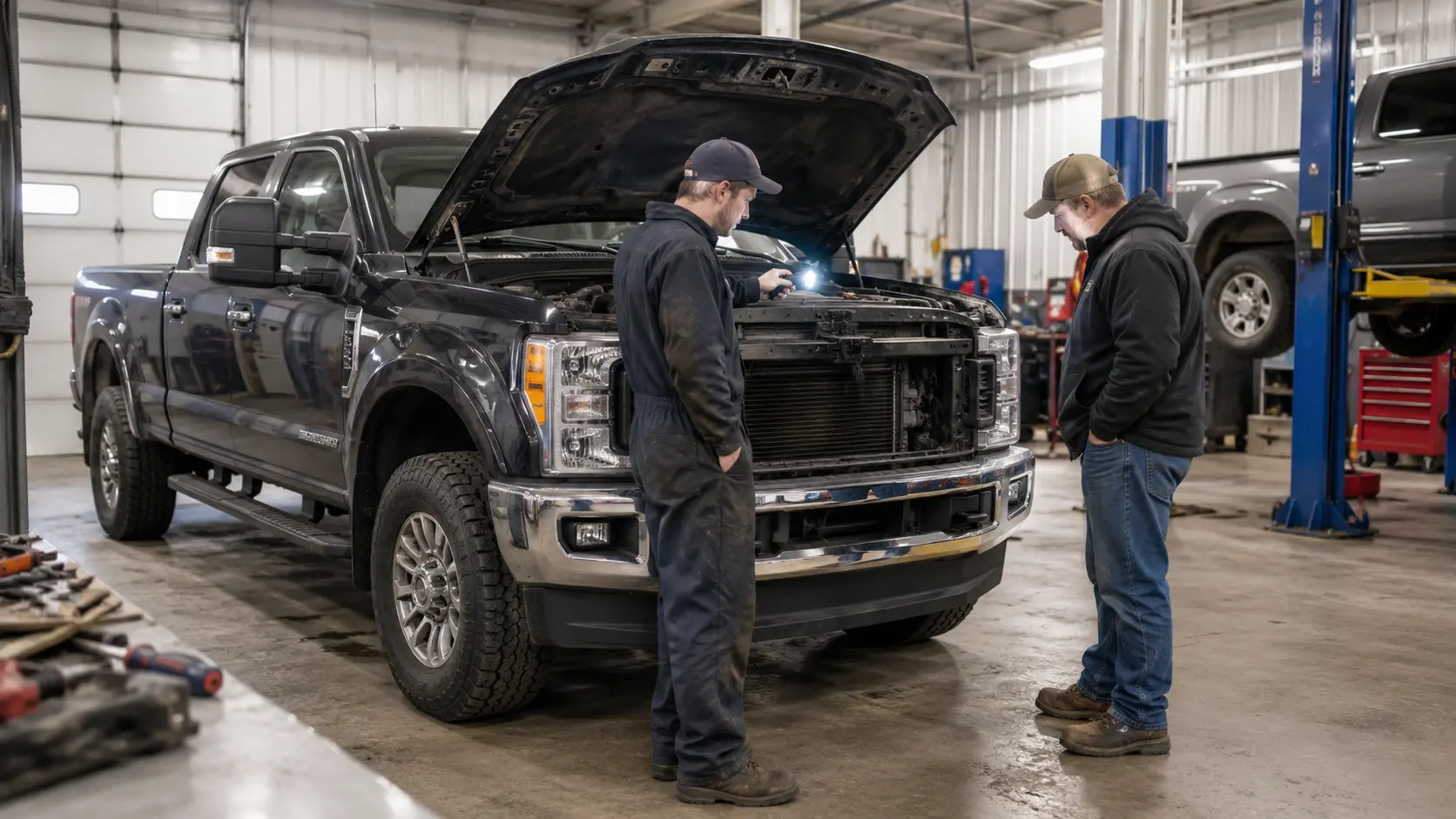
A disciplined inspection starts before the test drive: identify the exact truck, its intended job and the records that can support the seller's description.
Before viewing the truck
Ask for the VIN, model year, engine, kilometres, cab, bed, drivetrain, SRW or DRW configuration, modification history and available service records.
- Compare the advertisement with the VIN and registration.
- Ask that the engine remain cold for your arrival.
- Arrange an independent diesel inspection before committing funds.
At the truck
Inspect the complete vehicle in daylight, including tires, brakes, suspension, frame, hitch area, bed, fluids, leaks, warning lamps and underbody corrosion.
- Ask for dated maintenance and repair records rather than relying on a verbal summary.
- Evaluate a true cold start, warning lights, leaks, transmission behaviour and underbody condition.
- Confirm whether the truck has towed, carried commercial loads or been modified, and inspect accordingly.
- Verify emissions equipment, tires, suspension and the exact payload label on the truck itself.
Before purchase
Verify ownership, lien status and applicable provincial requirements independently. Confirm the exact towing and payload information from the vehicle and manufacturer documentation.
Leave the inspection with a decision file
Collect identity photos, label readings, service records, the history report, dated recall checks and the inspector's findings. List the intended trailer or work equipment alongside the payload and towing inputs so the mechanical and configuration decisions stay connected.
Separate findings into work needed before use, scheduled catch-up maintenance and unresolved questions. Ask for written quotations on material repairs. A vehicle can run well during a viewing and still be unsuitable for the work or budget.
Decide what would stop the purchase
Resolve a VIN mismatch, unclear ownership, unexplained warning history or refusal of an independent inspection before proceeding. A seller's explanation should be supported where it materially affects condition or cost.
Keep the inspection scope and limitations with the purchase file. No checklist proves future reliability; its purpose is to make the current evidence and remaining uncertainty clear enough to decide.
Use three purchase gates
Screen remotely before travelling: request label photographs, a service timeline, underbody pictures and permission for an independent inspection. At the viewing, reconcile the documents with the actual truck. Make the final decision after a written defect list and the intended-load calculation are available.
| Gate | Evidence to collect | Reason to pause |
|---|---|---|
| Identity and use | VIN, model year, labels, trailer and cargo requirements | Documents disagree or load remains unknown |
| Condition | Cold start, scan, road test and underbody inspection | Unexplained warning, unsafe road-test condition or concealed access |
| Ownership cost | Written immediate-repair and maintenance estimates | Unresolved diagnosis or unaffordable downtime |
Leave with a decision record
Separate defects into repair before operation, repair before planned towing, routine service and cosmetic work. Record what could not be inspected and why. A price reduction does not resolve an unknown engine fault; a completed diagnosis may change the decision more than a larger discount.
Evidence note: manufacturer documents establish the specific facts and applications cited. Buying workflows and cost scenarios are DieselTrucks.ca editorial guidance. These pages do not publish measured failure rates or confirm the condition, recall status or capacity of a particular truck.
General educational content for Canadian diesel-pickup research. Verify the exact truck, model year, certification labels, owner manual and manufacturer documentation, and obtain qualified mechanical or towing advice where appropriate.
Sources & Further Verification
Use the exact model year, VIN, truck labels and current manufacturer documentation when moving from general research to a purchase or towing decision.