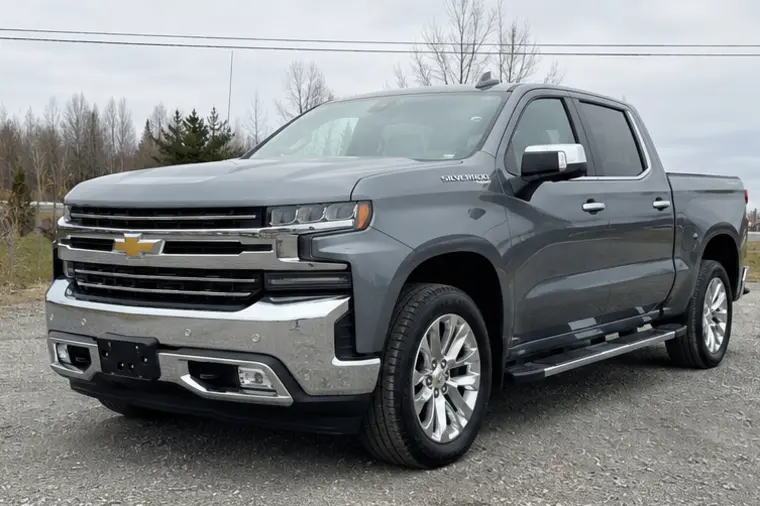
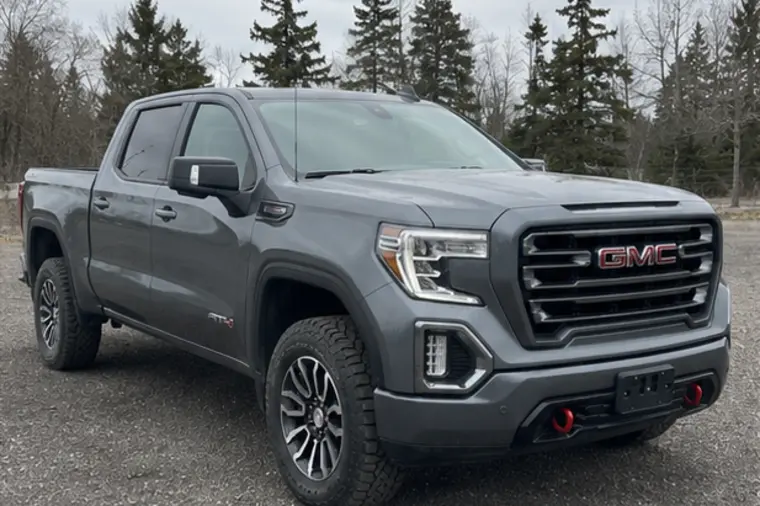
The 3.0L Duramax belongs to a different use case than the 6.6L HD engine, serving half-ton buyers balancing everyday use and moderate towing.
A current LZ0 snapshot needs its full application boundary
GM's current technical page identifies LZ0 as the second-generation 3.0L inline-six after LM2. In the Chevrolet Silverado test application it lists 305 hp at 3,750 rpm and 495 lb-ft at 2,750 rpm, with 94 percent of maximum torque available by 1,500 rpm. It also lists a 15.2:1 compression ratio, 84 x 90 mm bore and stroke, and compatibility with ultra-low-sulfur diesel and B20 biodiesel.
Those figures form one dated factory snapshot, not a universal specification for every 3.0L badge. They do not establish the calibration of a Tahoe, Suburban, Yukon or Escalade, a Canadian VIN, or a replacement engine. Confirm the truck's engine code and build record, then use its exact-year vehicle literature before assigning output, fuel, service or towing information.
Keep output and complete-truck limits in separate files. The engine rating does not establish payload, axle capacity, trailer rating or hitch suitability. The vehicle labels and exact configuration guide remain controlling evidence for the truck and load being evaluated.
| LZ0 item | GM-published value | Boundary |
|---|---|---|
| Output | 305 hp at 3,750 rpm; 495 lb-ft at 2,750 rpm | As tested in Chevrolet Silverado |
| Low-speed torque | 94% of maximum by 1,500 rpm | Torque-curve statement, not another peak rating |
| Core dimensions | 15.2:1; 84 x 90 mm bore/stroke | LZ0 technical reference only |
| Fuel | ULSD and B20 biodiesel | Verify market and owner-information requirements |
Generation changes identify parts and procedures; they do not rank reliability
GM describes steel pistons, new injectors designed for higher fuel pressure and a revised turbocharger among the LZ0 refinements. These details make LM2 versus LZ0 a real parts-and-procedure boundary. They support checking the engine code before ordering components, choosing a diagnostic path or copying a maintenance instruction from another 3.0L truck.
A revision is not proof of a lower failure rate. The manufacturer page does not compare exposed populations, kilometres, duty cycles, maintenance histories or repair outcomes. It therefore cannot establish an expected life, a best year or a reliability ranking. Those conclusions require different evidence and remain on the separate problems, reliability, best-years and years-to-avoid guides.
For a candidate, record the installed engine, truck application, transmission, build date and any replacement-engine or calibration documentation. If the seller's description conflicts with a manufacturer build record or exact-year manual, leave the specification unresolved until the conflict is reconciled rather than choosing the more favourable number.
The emissions system is a chain, not one interchangeable component
GM's LZ0 page lists high-pressure and low-pressure exhaust-gas recirculation, a close-coupled diesel oxidation catalyst, selective catalytic reduction on the particulate filter, a separate selective-catalytic-reduction stage and an ammonia-slip catalyst. That sequence is useful for understanding why one warning code or seller description cannot identify the failed component by itself.
Ask the inspecting shop to preserve the current codes, freeze-frame information, monitor state and operating complaint before clearing anything. The diagnostic conclusion should identify what was tested, what passed, what remains uncertain and which exact service information was used. A replaced sensor or software update does not prove that every neighbouring component was tested or that the original symptom is resolved.
Do not infer legal emissions status, warranty coverage or Canadian recall applicability from the component list. Those questions depend on the actual truck, market, modification history and current manufacturer or government records. A missing invoice is uncertainty; it is not evidence that a repair did or did not occur.
Treat the 200,000-mile oil-pump-belt statement as validation evidence
GM says the LZ0 oil-pump belt was validated to a 200,000-mile service interval, compared with 150,000 miles for its predecessor. Preserve that wording and its units. It does not provide the labour operation, parts list, Canadian schedule, inspection method or a promise that every belt reaches that distance without other service considerations.
Long-term budgeting should start with the exact vehicle's owner information and current service procedure. Ask a qualified shop what access is required for the identified engine and truck, what related parts it normally quotes, and what evidence would change the scope. Keep the manufacturer's validation statement, the applicable schedule, the installed estimate and any completed invoice as four separate records.
Distance is also not the only useful ownership field. Retain date, odometer, engine hours when available, operating pattern and any repeat warnings. An access-intensive future item may affect the purchase reserve even when it is not currently due; that is a budgeting conclusion, not a prediction of failure.
Build a candidate file that can survive a second opinion
Begin with identity: model year, market, engine code, build record, transmission and emissions configuration. Add the payload, certification and tire labels from the actual truck. Then attach the matching owner information, dated maintenance and repair invoices, current campaign lookups and an inspection that records both findings and unresolved questions.
Next, write the job brief: annual distance, winter use, city or highway share, passenger and cargo load, trailer type, measured or estimated tongue weight, expected downtime and access to qualified service. Compare the truck against that brief without replacing payload or axle calculations with the engine's torque number.
Finally, separate facts from decisions. A documented LZ0 specification can establish output; an invoice can establish recorded work; an inspection can establish observed condition. None alone establishes future reliability or a universal best purchase. If identity, load fit or a material diagnostic question remains unresolved, make that a purchase gate instead of filling the gap with an online reputation claim.
| Evidence layer | Minimum useful record | Do not infer |
|---|---|---|
| Identity | Engine code, build record, application and transmission | Specification from badge alone |
| Service | Exact manual plus dated invoices and current diagnosis | Universal interval or repair-free future |
| Ratings | Truck labels, exact guide and loaded worksheet | Payload or tow rating from engine output |
| Decision | Use case, condition, support and unresolved gates | Best year or lifespan from one candidate |
Identify LM2 or LZ0 before comparing the service plan
GM describes LZ0 as the second-generation 3.0L inline-six following LM2. Its listed LZ0 output is 305 hp and 495 lb-ft. The published revisions include changes to pistons, injectors and turbocharging. Those revisions make the engine code a useful dividing line when comparing used half-ton trucks.
Do not transfer a service interval between LM2 and LZ0 because both are advertised as a 3.0 Duramax. A long-term ownership plan should identify the engine-specific scheduled work before calculating annual allowances. Ask the shop to separate routine fluids and filters from longer-interval access-intensive work, then obtain a quote for the actual vehicle.
| Buying question | Useful evidence |
|---|---|
| Which version is installed? | Engine/build identification matched to the model year |
| Which maintenance schedule applies? | The exact vehicle’s diesel supplement and schedule |
| What work is already complete? | Itemized invoices with date and odometer reading |
Choose a half-ton diesel for a half-ton job
Start with the passengers and cargo that will travel with the trailer. A 3.0L diesel can be attractive to a buyer researching a daily-use pickup, but choosing the engine does not establish sufficient carrying capacity. Compare the truck’s actual payload evidence with the same loaded worksheet used for an HD candidate.
The useful test is whether the half-ton satisfies the job with the cabin, bed, equipment and comfort you need. If it does, compare total ownership costs with alternatives rather than buying a heavier class solely for its engine. If it does not, moving to an HD is a whole-vehicle decision; a tune does not supply missing payload allowance.
Read fuel-economy claims in their original units
When comparing Canadian and U.S. information, keep litres per 100 kilometres, U.S. mpg and Imperial mpg distinct. Also separate an official test-cycle figure from a towing log. A truck’s unloaded highway number does not describe winter short trips or a loaded trailer route.
For your budget, run more than one consumption assumption and use the same annual distance and local fuel prices. The difference between those scenarios is a useful planning range, not a prediction of what a particular used truck will achieve.
Where this engine is used
Applications include selected Chevrolet Silverado 1500 and GMC Sierra 1500 configurations, subject to model-year availability.
Evolution over time
Model-year changes, transmission pairing and the truck's payload label matter when comparing half-ton diesel examples.
Output ratings, calibrations, turbocharging, emissions systems and supporting hardware can differ. Compare a specific model year and configuration rather than treating the engine name as one unchanging specification.
Output and transmission context
Horsepower and torque ratings can change by year, calibration and application. Transmission pairings also evolve and may differ between standard-output, high-output, pickup and chassis-cab configurations. Verify the exact powertrain instead of applying one current rating to every used truck.
Work and towing context
The engine is only one part of a tow vehicle. Cab, bed, axle ratio, transmission, cooling package, payload label, SRW or DRW configuration and hitch setup determine how the complete truck fits a workload.
Maintenance and emissions context
Modern diesel ownership includes the DPF, DEF and EGR systems as well as the engine itself. Usage pattern, maintenance, warning history and previous modifications are relevant when evaluating a used truck.
Build the service plan from the exact model-year owner documentation and the truck's records. Cold weather, extended idling, short trips, dust and frequent towing may change inspection priorities.
Questions for a used-truck inspection
Ask what work the truck performed, whether service intervals are documented and whether the powertrain or emissions system has been modified.
- Ask for dated maintenance and repair records rather than relying on a verbal summary.
- Evaluate a true cold start, warning lights, leaks, transmission behaviour and underbody condition.
- Confirm whether the truck has towed, carried commercial loads or been modified, and inspect accordingly.
- Verify emissions equipment, tires, suspension and the exact payload label on the truck itself.
LM2, LZ0 and service-planning precision
GM identifies LZ0 as the second-generation 3.0L inline-six following LM2 and describes changes to pistons, injectors and turbocharging. Confirm which engine the truck actually has before applying technical or service information. An advertised 3.0L Duramax badge alone is insufficient.
GM's engine reference also distinguishes oil-pump-belt service validation between these designs. Use the exact vehicle owner's documentation and confirmed engine identity to establish the applicable service plan and obtain a qualified estimate where work is approaching. Do not copy a mileage interval from another generation or confuse miles with kilometres.
A design update is not proof of a population-wide reliability improvement. Review starting, warning history, maintenance and current VIN campaigns with the same evidence standard used for other engines. Compare the half-ton truck's actual payload and trailer configuration with the intended job rather than treating this engine as a smaller substitute for every HD application.
Separate LM2 and LZ0 service planning
GM describes the LZ0 as the second-generation 3.0L inline-six following the LM2. Identify the engine before using a long-term service interval or ordering parts. The related development does not make every specification interchangeable.
| Buying evidence | What it answers |
|---|---|
| Engine identifier and year | Which owner's maintenance schedule applies |
| Routine trip pattern | Whether the proposed use fits the operating guidance |
| Oil and emissions records | Whether recurrent warnings or service gaps need follow-up |
Budget access as well as scheduled work
Ask the shop for the relevant engine's upcoming scheduled items and an installed estimate for substantial work. Do not transfer a published interval from the other engine code. Combine this with the half-ton truck's passenger, cargo and trailer calculation before deciding that the powertrain suits the purchase.
Evidence note: manufacturer documents establish the specific facts and applications cited. Buying workflows and cost scenarios are DieselTrucks.ca editorial guidance. These pages do not publish measured failure rates or confirm the condition, recall status or capacity of a particular truck.
FIND TRUCKS USING THIS ENGINE
Connect the engine to a model year and exact truck.
Engine-family research is one part of the configuration. Use the explorer to connect model, year, transmission, cab, bed and rear-wheel context.
General educational content for Canadian diesel-pickup research. Verify the exact truck, model year, certification labels, owner manual and manufacturer documentation, and obtain qualified mechanical or towing advice where appropriate.
Sources & Further Verification
Use the exact model year, VIN, truck labels and current manufacturer documentation when moving from general research to a purchase or towing decision.