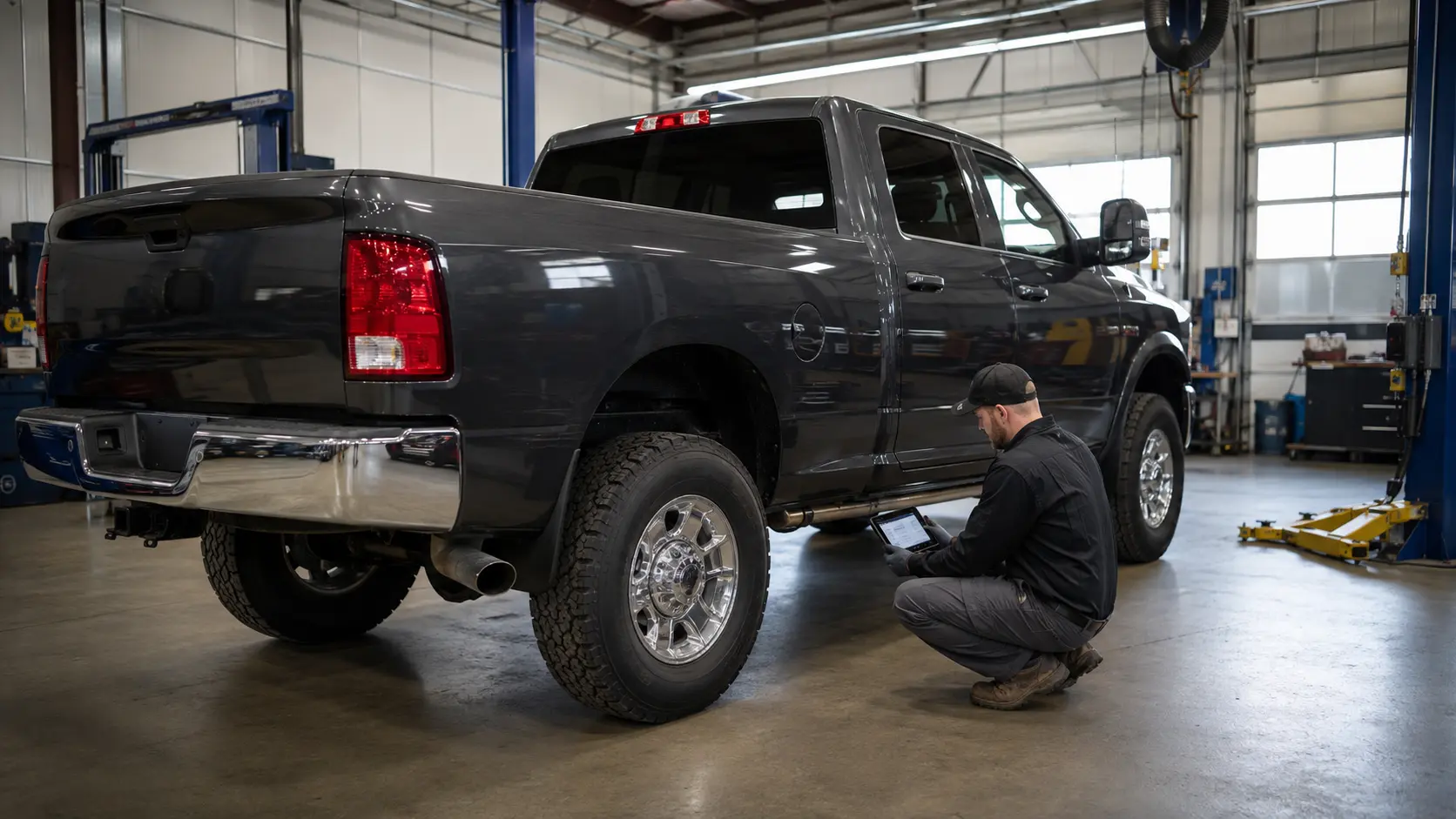
A diesel's working day matters as much as its annual kilometres. Review the actual trip pattern and the applicable owner's guidance before deciding whether an aftertreatment-equipped truck fits the job.
Build the buying decision
Map operating week
Trip length + idling + stationary work
Review warning history
Exact messages + diagnosis + verified repair
Check duty fit
Owner guidance + service time + alternatives
Describe a real operating week
Log typical trip duration, stops, stationary work, highway runs and seasonal changes. A large annual distance can coexist with many short local trips. Conversely, a low-kilometre vehicle may spend substantial time running equipment while parked.
Take that operating description to a shop familiar with the exact engine and emissions system. Ask which manufacturer instructions and service conditions apply. Do not use a universal driving speed or time recommendation as a substitute for the truck's own regeneration guidance.
Investigate warnings before adapting the routine
Collect the exact dashboard messages, diagnostic records and repair history. Ask whether a previous shop established a cause, completed a repair and confirmed operation afterward. A forced regeneration entry on an invoice is not, by itself, proof that the cause of repeated warnings was corrected.
The scan-report guide explains how to connect a warning with application-specific service information. Ask the technician whether the identified condition concerns filtration, exhaust-fluid operation or another system, and what evidence supports that conclusion. Keep the original report with the repair file.
Decide whether the job fits
Discuss lawful, manufacturer-compliant operating and service arrangements for the intended duty. Account for time spent on maintenance and any required interruptions to the workday. Do not plan around removing emissions equipment or ignoring recurring warnings.
If the truck's routine cannot meet the applicable operating guidance, compare a different vehicle or power source for stationary equipment. That is an editorial buying judgment based on the work pattern, not a claim that a particular annual mileage makes diesel ownership universally good or bad.
Evidence note: manufacturer documents establish the specific facts and applications cited. Buying workflows and cost scenarios are DieselTrucks.ca editorial guidance. These pages do not publish measured failure rates or confirm the condition, recall status or capacity of a particular truck.
General educational content for Canadian diesel-pickup research. Verify the exact truck, model year, certification labels, owner manual and manufacturer documentation, and obtain qualified mechanical or towing advice where appropriate.
Sources & Further Verification
Use the exact model year, VIN, truck labels and current manufacturer documentation when moving from general research to a purchase or towing decision.