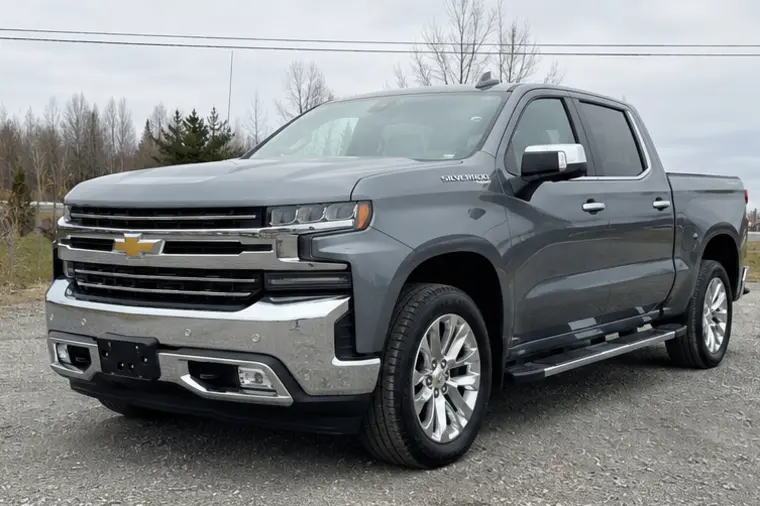
Chevrolet Silverado 1500 diesel problems research should begin with the 3.0L engine identity and the truck's build information. A broad Silverado complaint list can mix diesel, gasoline and HD issues that do not belong to the same vehicle. This guide organizes documented diesel concerns into a practical purchase assessment, from the first seller questions to the final repair and load-planning decision.
What to investigate on a diesel Silverado 1500
Ask for the VIN, engine code, model year, build information and service history before travelling to view the truck. If the listing simply says Duramax, clarify whether the candidate is the 3.0L half-ton covered here. A 6.6L Silverado HD uses a different research path.
A source document is most useful when its application and the vehicle's symptoms match. The existence of a service bulletin does not prove that the candidate has the concern, and it does not provide an ownership-wide probability of failure.
| Reported concern | Starting evidence | Question for the inspection |
|---|---|---|
| Harsh shifting or transmission campaign | GM 24V-797 filing | Is the VIN affected, and is there a current mechanical complaint? |
| Intermittent rough running or several codes | LM2 sections of 21-NA-149 | Was a wiring fault identified and successfully repaired? |
| Warning light on a 2023 LZ0 truck | 23-NA-071 | Did the actual codes and calibration match the guidance? |
| Smoke or emissions-related warning | 16-NA-380 where applicable | What was diagnosed rather than assumed? |
| Towing or daily-use dissatisfaction | Actual configuration and use | Does this truck fit the intended load and driving pattern? |
Transmission recall history deserves a precise answer
The GM 24V-797 filing identifies certain 2020–2022 diesel Silverado 1500 vehicles with a transmission valve-wear concern. Harsh shifts and rare momentary rear-wheel lock-up are described. The corrective software monitors wear; it is not a replacement transmission.
For a Canadian candidate, obtain Chevrolet's current VIN-specific information. Build boundaries matter, so a model-year match alone is not the final applicability check. Keep the response and any completion invoice together. If the truck was imported, obtain the service history relevant to the vehicle's actual markets rather than assuming one country's paperwork covers everything.
Ask what happened after the campaign visit. Has the seller experienced another shift complaint, a warning or further repair? Give that history to the inspecting shop. If present behaviour is unexplained, arrange diagnosis before normal towing use; do not deliberately reproduce a dangerous condition during a viewing.
LM2 electrical faults: keep the model-year boundary intact
GM 21-NA-149, May 2022, includes 2020–2021 Silverado 1500 and specified 2022 LTD/LM2 applications. Its LM2 guidance addresses several drivability complaints and wiring investigation. The 2022 LTD restriction matters; the bulletin's gasoline-engine sections are not interchangeable diesel instructions.
A buyer should ask for the initial symptoms, stored codes and the cause identified by the shop. If the truck received a control module, ask what evidence supported that replacement and what happened afterward. If it received wiring work, obtain the location and nature of the repair without treating every repaired harness as a permanently unreliable vehicle.
Intermittent issues are easier to assess when the service history preserves the circumstances. Ask whether the complaint occurred after a repair, on a particular road, under load or only at certain temperatures. Give the observations to the technician as evidence, not as a preselected diagnosis that the shop must confirm.
A 2023 LZ0 warning may require a calibration check
Bulletin 23-NA-071 specifically covers 2023 Silverado 1500/Sierra 1500 with LZ0, including Canada. Certain listed codes may relate to a software anomaly. The service direction checks for an ECM update and otherwise refers the technician to normal service diagnostics.
When a seller describes an emissions or engine warning as a software issue, ask for the actual code and programming record. A completed update should be distinguishable from clearing the warning. Have the shop explain whether the truck's present complaint falls within that guidance and whether the follow-up findings are satisfactory.
Do not apply this bulletin to an LM2 vehicle or extend its application to every later LZ0 without verification. A shared displacement does not make all calibrations, components or diagnostic procedures identical. The purpose of the source is to narrow an investigation on the right vehicle, not to provide a universal explanation for a warning light.
Emissions complaints: preserve the code and physical findings
GM 16-NA-380 discusses different DPF-related faults on applicable diesel vehicles through 2023. Its distinctions include filter damage and pressure-sensing concerns. Record the actual code before accepting a generic diagnosis of a blocked filter.
Ask the inspector to assess the installed equipment, warning history and any previous emissions-system repairs. A replacement part or recently reset light needs a supporting explanation of what failed and how the repair was checked. If the seller offers a long highway drive as the complete solution, ask the technician whether that is actually appropriate to the documented condition.
Evaluate modifications with the same care. A truck advertised as easier to own because equipment has been altered still needs a clear account of what is fitted and what work would be required for your intended use. Do not make emissions removal the buying solution to a fault that has not been diagnosed.
Send useful questions before arranging the viewing
Ask whether the seller can provide service invoices, consent to an independent inspection and leave the truck cold when a starting concern is relevant. Request photographs of the identity and rating labels in advance. This makes the appointment more productive and can reveal a configuration mismatch before you spend money travelling.
Describe the intended use clearly: daily driving, occasional trailer, camper, longer-distance towing or work equipment. Ask about previous use without assuming that personal ownership means light service or commercial ownership means abuse. The records and present inspection should establish the truck's condition.
If a warning or repair is mentioned, request the chronology. What happened first, what did the shop find, what was repaired and what has happened since? That sequence is more useful than a seller's summary that the truck has had “everything replaced.” Retain both favourable and unresolved information for the technician.
Use the appointment to close specific uncertainties
A buying inspection should produce findings about the vehicle, not just a pass/fail impression. Ask the shop to document cold and warm observations where relevant, scan results, leakage, tires, steering, suspension, brakes and the installed hitch or accessories. Agree on any inspection limits before the appointment.
Review each unresolved item with the technician. Is more diagnosis required? Is a specialist needed? Is the defect affecting normal operation, or is it scheduled maintenance that can be planned? Obtain the next step in writing so that the sale decision does not depend on an optimistic interpretation of an incomplete report.
A clean drive is useful evidence but not a substitute for that process. Some concerns are intermittent, some depend on temperature or use, and some are visible during physical inspection. Do not deliberately provoke instability or hazardous behaviour to make a fault appear. Let the professional choose an appropriate assessment.
Towing suitability is a separate part of the problem assessment
Check the payload and trailer limits for the exact Silverado, accounting for occupants, carried gear, hitch equipment and the trailer's loaded tongue or pin weight. Verify the installed receiver or in-bed equipment and any previous modifications. The vehicle's appearance does not show how much usable capacity remains.
A buyer moving from an HD truck should not assume that a diesel half-ton fills the same role simply because both tow well in some configurations. Conversely, do not reject a suitable half-ton because another model has a higher advertised maximum. Work from your real load and the actual candidate's limits.
If the load plan is marginal or incomplete, resolve it before the sale. A repair budget cannot fix a capacity calculation that was never performed. Use the linked planning resources and exact manufacturer documentation to decide whether to keep researching this truck or compare a different configuration.
Service planning and repair costs
Build the initial ownership budget from the inspection and the applicable maintenance schedule. Identify overdue work, items due soon and diagnosed repairs separately. Request local quotes that specify labour, parts, fluids, programming, taxes and any further testing needed before the full cost can be known.
A large invoice does not automatically prove a poor candidate, and an empty invoice folder does not establish trouble-free ownership. Evaluate the diagnosis, the work and subsequent condition. Where the seller's documentation is incomplete, price the uncertainty honestly rather than assuming the cheapest possible repair.
Keep the same record after purchase. Note kilometres and dates, retain fluid and part specifications, and record new symptoms before they become a series of unexplained visits. Prevention includes following the correct maintenance requirements and acting on observed concerns; it is not a promise that a chosen routine eliminates every potential defect.
Silverado 1500 diesel problems: FAQs
Are gasoline Silverado engine complaints relevant to a 3.0L diesel? Only when evidence establishes that the specific concern applies. Do not import engine-specific gasoline faults into this diesel assessment.
Does every 2022 Silverado use the same LM2 bulletin? The cited document identifies a restricted LTD application. Verify the actual build and engine rather than relying only on the registration year.
Can a software invoice establish that every emissions component is healthy? No. It records the work performed; present symptoms and physical condition still need assessment.
Should I choose a year from the number of bulletins found online? No. Bulletins do not provide a comparable failure-rate denominator. Judge the candidate's condition and records, and use a separate reliability assessment for broader year-selection questions.
Evidence note: manufacturer documents establish the specific facts and applications cited. Buying workflows and cost scenarios are DieselTrucks.ca editorial guidance. These pages do not publish measured failure rates or confirm the condition, recall status or capacity of a particular truck.
General educational content for Canadian diesel-pickup research. Verify the exact truck, model year, certification labels, owner manual and manufacturer documentation, and obtain qualified mechanical or towing advice where appropriate.
Sources & Further Verification
Use the exact model year, VIN, truck labels and current manufacturer documentation when moving from general research to a purchase or towing decision.