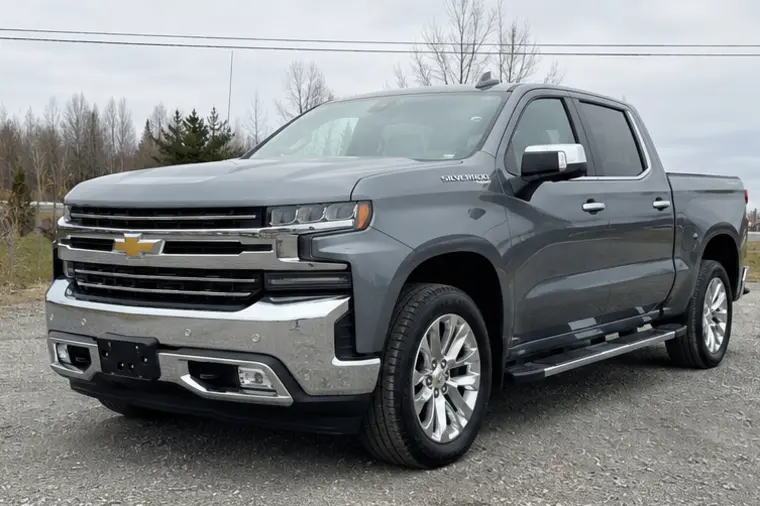
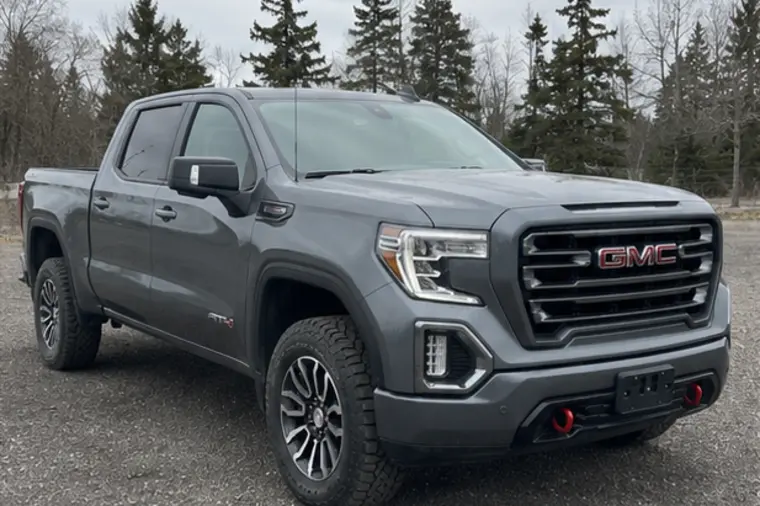
No LM2 or LZ0 model year is proven here to be universally bad. The primary records define particular engine generations, maintenance requirements, transmission campaign populations, wiring/software conditions and truck configurations; they do not provide comparable failure rates. Avoid an individual 3.0L Duramax candidate when identity is uncertain or a material powertrain, emissions, maintenance, load or support problem cannot be resolved within the buyer's risk and downtime limits.
Do not blacklist an era from a bulletin
GM identifies LZ0 as the second generation after LM2 and documents revised pistons, injectors, turbocharging and oil-pump-belt validation. That makes engine identification important; it does not establish that all LM2 years should be avoided or every LZ0 is improved in field reliability.
Similarly, a service bulletin defines an application and diagnostic path, not a population-wide defect rate. Use it only when the candidate's year, engine, codes and condition match.
The decision belongs to the actual truck. Record VIN, engine code, model year, transmission, drivetrain, cab/bed, payload label, towing equipment and modifications before ranking anything.
Pause when LM2 or LZ0 identity is uncertain
Do not rely on a 3.0L Duramax badge, seller memory or broad registration description. Match VIN/build information, underhood identity, invoices and any replacement-engine record.
An uncertain engine code makes maintenance schedules, parts, bulletins and calibration history uncertain. Resolve the identity before approving the candidate or pricing major work.
If records describe a different engine, vehicle or kilometres, preserve the mismatch. A corrected explanation can return the truck to review; unexplained identity conflict is a reason to decline.
Photograph the labels and retain the source used to decode them. When an engine or major module was replaced, request assembly and calibration identifiers plus the installing invoice. A replacement can be legitimate and well documented, but the original model year alone no longer describes every installed part or service requirement.
Treat 2020–2022 campaign scope as a VIN gate
Transport Canada 2024637 covers a defined 2020–2022 diesel Silverado/Sierra transmission population and describes a software remedy intended to detect valve wear and limit operation before wheel lock. This is a transmission concern, not an LM2 engine reliability score.
Obtain current official VIN status and a detailed work order. Ask whether existing shift, engagement or warning symptoms were diagnosed; campaign completion does not prove mechanical condition.
Pause a candidate with unresolved applicability, an active instruction or unexplained transmission symptoms. Do not reject every truck in those years merely because the population spans them.
Pause repeated LM2 multi-code or rough-running history
GM 21-NA-149 contains an LM2-specific wiring branch for defined rough-running, misfire/low-power and multi-code conditions and restricts the cited 2022 Silverado/Sierra application as stated in the bulletin.
Request codes, symptom conditions, wiring findings, repair and comparable recheck. Replaced modules or sensors without a documented fault and result leave the original concern unresolved.
Do not assume every rough-running LM2 needs the cited wiring repair. Pause until an application-specific diagnosis addresses the actual truck, then reconsider from the result.
Pause a 2023 LZ0 warning blamed only on software
GM 23-NA-071 covers specified 2023 LZ0 warning/code conditions and directs an ECM-update check before normal diagnostics. It does not say every warning is software or that programming repairs mechanical faults.
Request the calibration check, codes, service action and outcome. If the original condition returned or was never rechecked, preserve it as unresolved.
For later LZ0 years, do not assume the 2023 bulletin or calibration applies. Use current, VIN- and application-specific service information.
Verify major scheduled maintenance by generation
The 2021 3.0L supplement documents LM2-era fuel-system and oil-pump-belt maintenance. GM's LZ0 reference states a longer belt validation. Use the exact engine and vehicle manual to establish the applicable requirement.
Pause when significant scheduled work is due or claimed complete without evidence and its cost/access matters to the purchase. A maintenance-life reset is not proof of physical replacement.
Obtain a current scope that includes access, related parts, transport and validation. Missing history does not prove failure, but it belongs in price and risk rather than being silently treated as complete.
Pause recurring DPF, DEF, EGR or reduced-power concerns
Capture the exact warning, codes, temperature, route/load, tests, repair and outcome. Several aftertreatment and control conditions can share a seller's “DPF issue” description.
GM's reviewed DPF guidance distinguishes diagnostic conditions. It does not support automatic filter replacement, a universal highway-drive cure or a year blacklist.
Cleared codes, forced regeneration or a brief warning-free drive do not establish resolution. Reconsider only when diagnosis and a comparable recheck address the original concern.
Reject a payload or towing mismatch regardless of year
The 2020 and 2023 Chevrolet trailering charts use configuration-specific rows. Match cab, bed, drivetrain, axle, wheels/tires, hitch and required equipment to the actual truck.
Use its door-label payload and subtract occupants, cargo, accessories and loaded hitch weight. Higher LZ0 output cannot make an unsuitable configuration legal or dependable.
If the recurring load exceeds the candidate's verified limits, reject that truck or change the assignment. No engine year cures a class/configuration mismatch.
Apply explicit candidate thresholds
These rules classify a candidate. They do not turn a truck's year into a confirmed defect.
| Finding | Initial decision | Evidence needed to reconsider |
|---|---|---|
| Engine identity or records conflict | Pause | Matching VIN/RPO/engine and corrected chronology |
| Current campaign status unknown | Verify | Official VIN result and detailed work order |
| Active shift, warning or propulsion concern | Pause operation | Professional diagnosis and safe-condition confirmation |
| Repeated LM2 multi-code/rough-running history | Pause | Correct-application tests, repair and recheck |
| 2023 LZ0 condition attributed only to software | Pause | Calibration check, normal diagnosis if required and outcome |
| Due major maintenance unsupported | Price/verify | Correct schedule, completed record or current scope |
| Recurring emissions warning or reduced power | Pause | Codes, cause, repair and comparable recheck |
| Payload/towing mismatch | Reject configuration | Different truck or changed load |
| No suitable service/recovery plan | Reject when continuity is essential | Credible support and substitute capacity |
Challenge seller explanations consistently
“All recalls are done” requires current official status and work orders. “It only needs software” requires the matching bulletin, calibration check and result. “The belt was done” requires parts/labour records tied to the VIN and kilometres.
“The warning only appears on short trips” still requires codes and diagnosis. “It tows anything” requires configuration evidence, payload arithmetic and the actual trailer's loaded hitch weight.
A weak explanation is not proof of deception, but it cannot close the question. Refusal of reasonable independent inspection may justify declining without proving a model-wide problem.
Inspect cold, hot and under a safe road test
Arrange a true cold start when possible. Record temperature, block-heater use, cranking, idle stabilization, smoke, warnings and leaks. Preserve scan evidence before clearing codes.
After warm operation, recheck restart, cooling, transmission engagement, shifts and reported symptoms. Use a safe evaluation appropriate to the truck, traffic and weather; do not intentionally provoke a severe derate or unsafe condition.
A warmed arrival or brief dealer-lot loop cannot answer the same questions. Refer material findings to a technician familiar with the exact LM2/LZ0 application.
Review repairs as a chronology, not a total
For engine, turbo, injector, wiring, emissions or transmission work, record complaint, codes/measurements, diagnosis, installed parts, date/kilometres and outcome. Several invoices may describe one unresolved symptom.
Keep scheduled maintenance, campaign action, preventive work and failure repair separate. A large invoice is useful only when it explains what happened and whether the original condition was rechecked.
Pause unexplained engine replacement or repeated repair. Reconsider when the assembly identity, installer, cause, related work and successful outcome are documented.
Investigate tuning and emissions changes
Identify engine/transmission calibration, emissions removal, intake/exhaust changes, auxiliary fuel, larger tires, suspension work and electrical accessories. Ask who performed the work and retain configuration records.
Unknown changes can affect diagnosis, compliance, insurance, warranty and shop acceptance. Do not accept “stock” or “returned to stock” without support when the question is material.
Obtain an application-specific restoration scope if needed. Reinstalling visible components does not prove software, wiring and every original control strategy were restored.
Account for duty, climate and storage
Record trip length, idle, towing, winter temperature, road-salt exposure and storage. These conditions provide context for maintenance and warnings; they do not prove a component failed.
Low kilometres do not erase elapsed-time maintenance, battery, fluid, tire or storage questions. High kilometres do not prove imminent engine failure without candidate evidence.
Avoid the candidate when its actual duty repeatedly conflicts with payload, aftertreatment operation, service access or acceptable downtime and no credible mitigation exists.
Price defined work and preserve unknown scope
Separate routine maintenance catch-up, immediate safety work, diagnosed repairs, unresolved investigation, modifications, transport and substitute cost. Use current written estimates for the actual truck and province.
A discount can cover defined work but cannot make an unknown scope predictable. Do not use generic online repair averages as a promise.
For commercial or remote use, include lost capacity and the suitability of a substitute. A technically repairable truck may still fall outside the buyer's operational limits.
Require service and recovery continuity
Confirm a shop accepts the exact LM2/LZ0 vehicle, modifications and requested work. Ask about diagnostic capability, parts path, appointment timing and major scheduled-service access.
Plan recovery and a substitute capable of the same passengers, payload and trailer. A generic rental may not cover the assignment.
If no credible support exists and downtime is consequential, decline the candidate without claiming its year is mechanically defective.
Preserve a defensible decline or reconsideration file
Save advertisement, VIN/engine identity, campaign result, maintenance, scan, inspections, repair orders, estimates and limitations. Mark seller statements as reports unless verified.
Classify the truck as suitable, suitable after defined work, pending diagnosis or unsuitable. A supported repair and comparable recheck can return it to the shortlist.
Keep rejection reasons specific: unresolved transmission warning, unsupported major maintenance, recurring emissions condition, modification uncertainty, load mismatch or unavailable support. Do not publish them as universal year claims.
3.0L Duramax years-to-avoid questions
Should every 2020–2022 LM2 be avoided? No. Verify the actual VIN, campaign work, transmission condition, maintenance and engine evidence.
Is 2023 LZ0 automatically bad because of a software bulletin? No. It defines specified conditions, not a failure rate.
Is LZ0 automatically safer to buy than LM2? No. It has documented revisions; candidate evidence still decides.
What should be avoided? A truck with unresolved identity, safety, powertrain, emissions, maintenance, load or support risk outside the buyer's limits.
Can a rejected truck be reconsidered? Yes, when the original concern is properly resolved and rechecked.
Evidence note: manufacturer documents establish the specific facts and applications cited. Buying workflows and cost scenarios are DieselTrucks.ca editorial guidance. These pages do not publish measured failure rates or confirm the condition, recall status or capacity of a particular truck.
General educational content for Canadian diesel-pickup research. Verify the exact truck, model year, certification labels, owner manual and manufacturer documentation, and obtain qualified mechanical or towing advice where appropriate.
Sources & Further Verification
Use the exact model year, VIN, truck labels and current manufacturer documentation when moving from general research to a purchase or towing decision.
- GM LZ0 technical description — later 3.0L version and LM2 comparison
- Transport Canada 2024637 — diesel transmission recall
- GM N242454440 / U.S. 24V-797 — affected vehicles and remedy
- GM 21-NA-149, May 2022 — engine-specific wiring diagnosis
- GM 23-NA-071, April 2023 — 2023 LZ0 engine software
- Chevrolet/GMC 2021 3.0L Duramax supplement — original manufacturer maintenance and fuel-system instructions
- GM 16-NA-380, September 2022 — DPF fault distinctions
- Chevrolet 2020 Silverado 1500 trailering chart — original manufacturer configurations and separate Trail Boss table
- Chevrolet 2023 Silverado 1500 trailering chart — original manufacturer package and wheel conditions
- Chevrolet Canada manuals and guides