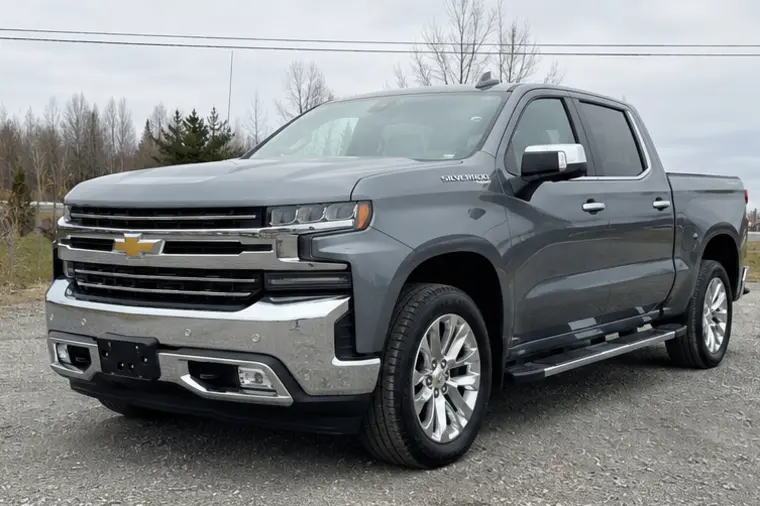
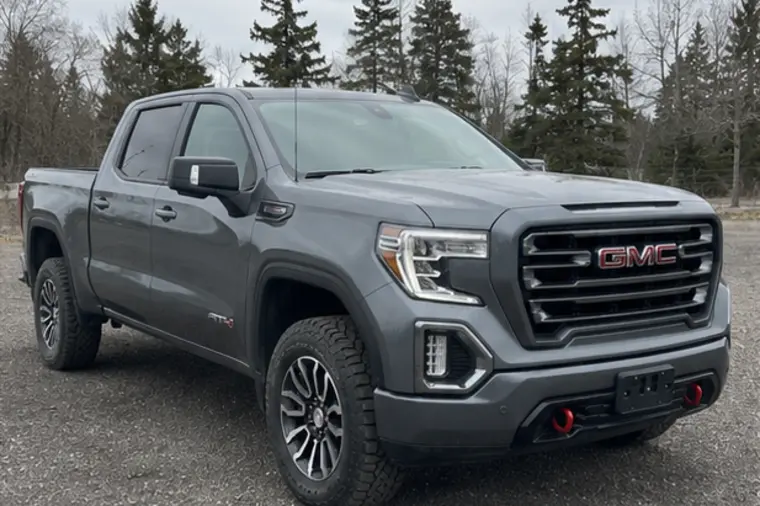
The best LZ0 Duramax year is not established by a controlled reliability comparison in the reviewed primary sources. The meaningful starting point is the second-generation 3.0L diesel introduced for the 2023 Silverado 1500, followed by verification of the exact truck and its current condition. GM documents hardware refinements and specific service conditions; those are useful buying evidence, not proof that every later year is better. This guide compares the 2023–2026 pickup shopping period, separates SUV timing and announced future products, and explains when year preference should yield to maintenance, repair closure and work fit. Sources were checked on 9 September 2026.
Important limit before comparing 2025–2026 candidates
Primary-document verification for additional later-model internal-engine concerns remains unfinished. The year map below is therefore not a complete 2025–2026 issue timeline or a clearance of those years. The documented introduction, specifications and service examples cannot establish that a later truck is the safer mechanical choice.
Have the exact candidate checked against current manufacturer service information, with any mechanical noise, oil-pressure concern and engine-repair history assessed before purchase. This guide does not supply an unverified production cutoff, inspection tolerance or blanket best/worst-year finding. Its later-model evidence gap remains open rather than being treated as proof of no concern.
Best-year answer: choose the evidence you need
Keep a properly documented 2023 LZ0 eligible. A later 2024–2026 candidate can also be appropriate, but its date does not establish that every earlier concern was eliminated at the factory. If newer equipment or a later model year is a personal requirement, use that as a shopping filter and then apply the same inspection standard.
There is no evidence-backed reason here to pay a reliability premium solely for the last digit of the year. Prefer the candidate with verified identity, suitable equipment, a coherent maintenance history and satisfactory current findings. Those are purchase criteria, not a promise of trouble-free ownership.
Start with the actual 2023 pickup introduction
Chevrolet's 16 August 2022 announcement identified the refined second-generation diesel for the 2023 Silverado 1500. It described 305 hp and 495 lb-ft, compared with 277 hp and 460 lb-ft for the preceding model year, with a ten-speed automatic for retail applications.
That is a documented generational change, not a measured improvement in failure frequency. The announcement also lists particular Silverado trims; it is not evidence that every 2023 vehicle carrying a 3.0L badge uses LZ0. Verify the engine RPO and exact application before transferring the figures or service information to another candidate.
What GM actually changed
Do not invent a complete 2024, 2025 or 2026 production-change ledger from this initial announcement. A replacement part, revised service instruction and factory engineering change are different kinds of evidence. A seller claiming a particular later-year fix should be able to identify the exact change and its applicability.
| Documented refinement at the 2023 introduction | What it contributes to the comparison |
|---|---|
| Steel pistons with revised combustion-bowl design | A specific hardware change, not an annual failure-rate result |
| Retuned turbo compressor | Part of the documented performance revision |
| New fuel injectors | A revised component family, not proof of immunity from faults |
| Improved temperature-control features | A stated design refinement requiring application-specific service information |
A bounded LZ0 specification reference
GM qualifies the output reference as tested in the Chevrolet Silverado. These engine figures are not a trailer or payload rating and do not establish every vehicle's calibration or operating requirements. Use the exact truck documents for service and fuel instructions. The separate 6.6L Duramax family must not be substituted simply because both engines use the Duramax name.
| Item | GM Powered Solutions LZ0 reference |
|---|---|
| Layout and displacement | Turbocharged inline-six; 2,999 cc |
| Output | 305 hp at 3,750 rpm |
| Torque | 495 lb-ft at 2,750 rpm |
| Compression ratio | 15.2:1 |
| Valve arrangement | Dual overhead camshafts; four valves per cylinder |
| Fuel reference | Ultra-low-sulfur diesel and B20 biodiesel |
Year and application decision map
The table routes research; it does not rank the rows by reliability. Later vehicles have different observation periods and may also have different use histories.
| Shopping period | Useful evidence | What remains candidate-specific |
|---|---|---|
| 2023 LZ0 pickups | Introduction plus defined software and harness publications | Actual condition, applicability and repair completion |
| 2024 LZ0 candidates | Verified identity and the vehicle's own build/service records | No blanket carry-forward or factory-fix assumption |
| 2025 LZ0 pickups | Exact equipment and configuration-specific trailering documents | Service history, warnings, capacity and inspection |
| 2026 Silverado diesel | Current manufacturer equipment reference checked September 2026 | Canadian build details and individual readiness |
| Announced 2027 Silverado | Forward-looking product announcement | Delivery, exact configuration and in-service outcomes not established here |
Do not apply pickup timing to SUVs
Chevrolet's 2025 Tahoe and Suburban introduction describes their move to the refined second-generation diesel after its earlier Silverado launch. That timing is important when a search result groups pickups and SUVs under one engine-family headline.
For a pickup purchase, use pickup-specific RPO and configuration records. If comparing an SUV instead, confirm its own model-year application and specifications. A service bulletin with several models and engine codes should be read row by row, not as evidence that all listed vehicles used LZ0 throughout the combined date range.
What the 2023 software bulletin tells a buyer
GM 23-NA-071, April 2023, is limited to its listed 2023 Silverado and Sierra 1500 LZ0 applications and defined warning/code conditions. It directs a check for an ECM update, with further service-information diagnosis if no update is available. That is a diagnostic branch, not an explanation for every warning.
Ask a seller with relevant history for the original codes, work record and successful result. Do not exclude an entire model year because an update document exists, or assume an update certifies unrelated hardware. Its publication date does not establish a later production cutoff or prove all subsequent trucks received an identical correction.
What the 2023 harness bulletin adds
GM 23-NA-102, June 2023, distinguishes listed LM2 and LZ0 applications. In its LZ0 branch, an air-conditioning line can press on the harness near the alternator bracket; the described correction addresses damaged wiring and contact prevention. The document does not provide the rate at which this occurs.
For a candidate with matching symptoms or repair history, confirm that the actual cause was assessed and both damage and contributing contact were addressed where applicable. A receipt naming a replaced component is less informative than a complete diagnosis-and-recheck record. Do not transfer the LM2-specific branch to LZ0 or turn the 2023 scope into an unsupported universal later-year clearance.
DEF-level history needs more than a dashboard photograph
The January 2025 revision of GM 22-NA-150 covers a broader listed application set including LZ0 and describes particular DEF-level/message conditions. It distinguishes learned reductant level from sensor output and includes calibration and reset work in its defined diagnostic route.
If a candidate has this history, ask for the actual findings, work performed and verification. Do not declare a tank or sensor defective from a single gauge photograph, and do not assume every DEF warning is software. The broad model table also cannot prove LZ0 was installed in every vehicle and year it contains.
Separate DEF use from a component failure claim
GM 20-NA-082 explains DEF-use and gauge context in its stated applications, including 2023 LZ0 pickups. Differences in load and fuel use can matter to interpretation; a segmented display is not a precision usage log.
For comparison, ask how the truck was used and whether an unusual pattern was diagnosed. A buyer who plans different duty should not assume the seller's refill experience will repeat exactly. This is not a promised consumption rate, nor a reason to dismiss an actual warning. Keep normal-use questions and fault investigation separate when assessing the service record.
Oil-pump-belt claims require precise wording
GM's LZ0 technical page says the oil-pump belt was validated for a 200,000-mile service interval, compared with 150,000 miles previously. That is a useful manufacturer statement about the design, not a guarantee of engine life or permission to transfer LZ0 guidance to LM2.
For the truck being considered, obtain the applicable current maintenance schedule and any vehicle-specific guidance. Confirm the basis for a seller's claim that no belt-related work will ever be needed. A design-validation interval and the actual state of a used vehicle are not interchangeable evidence.
Compare towing configurations rather than headline torque
Chevrolet's 2025 Silverado 1500 trailering chart separates cab, bed, driveline and equipment combinations, including distinct ZR2 rows. Its notes explain that passenger, cargo and option weight can change the specific vehicle's usable trailer capability.
Select the correct row and verify the candidate's actual labels and equipment against the intended load. Do not lift the largest number from a chart and assign it to every LZ0. A newer year with the wrong configuration may be less suitable than an earlier truck correctly equipped for the work. Engine output alone cannot settle that decision.
Treat 2026 equipment as an exact-market reference
The current U.S. Chevrolet 2026 Silverado 1500 page lists the 3.0L diesel with a ten-speed automatic, 305 hp and 495 lb-ft. It also describes trim-specific availability. This is a current manufacturer reference checked on 9 September 2026, not an inventory count or a Canadian order confirmation.
Use the actual Canadian vehicle's documentation when comparing equipment, capacity and support. Current marketing material does not establish long-term durability, and a promoted maximum or feature should not be assumed on a particular used or newly offered truck without verification.
Should you wait for an announced 2027 truck?
Chevrolet's 16 June 2026 announcement describes the next-generation 2027 Silverado 1500 and says the lineup continues to offer a 3.0L Duramax, with sales expected toward the end of the year. It is an announcement, not evidence of completed delivery or long-term owner outcomes for a candidate.
Waiting may be a personal equipment or timing choice. It is not a defensible reliability upgrade based on this material alone. Exact 2027 RPO/build details and in-service results were not verified here; do not quietly append an unverified future configuration to the 2023–2026 LZ0 comparison.
Compare maintenance and repairs on equal terms
Ask each seller for dated maintenance records, actual distance and available operating-history information. Separate scheduled work from repairs prompted by a recurring complaint. Reconstruct significant repairs from symptom through diagnosis, scope and successful recheck.
Missing paperwork should remain an explicit uncertainty, not be counted as evidence that nothing went wrong. Conversely, a documented and resolved issue should not automatically disqualify a candidate. The better comparison is between the remaining material questions on each truck, not merely the number of invoices or the apparent cleanliness of a service summary.
Verify the operating conditions that matter
Arrange a genuine cold start, warm operation and restart, and a safe representative drive. Ask the inspecting technician to distinguish satisfactory findings, concerns requiring more work and conditions that could not be tested. A short unloaded drive is not evidence of every towing or extended-work condition.
If a relevant complaint occurred only after a particular duration or workload, ask whether the repair was checked under comparable safe conditions. An unavailable test must remain untested. This provides a clearer basis for selecting between years than assuming newer automatically means ready for the assignment.
Build a shortlist around resolvable decisions
Year, trim and personal preferences can break a close decision after these fundamentals are addressed. Do not offset a serious safety or capacity concern with an unrelated feature advantage.
| Question | Stronger evidence | Reason to pause |
|---|---|---|
| Is it the intended LZ0 application? | Consistent RPO, VIN and installed configuration | Conflicting identity or records |
| Are material complaints closed? | Diagnosis, scope and verified result | Repeated warning clearing or unresolved recurrence |
| Does it fit the assignment? | Exact capacity/equipment match | Reliance on a generic maximum |
| Can ownership be supported? | Actual service access and realistic reserve | Unknown repair scope or unsupported alterations |
Finish with Canadian vehicle verification
Use the manufacturer Canadian recall path and Canadian safety research, matched to the exact VIN and recorded date. Obtain relevant completion evidence and keep any U.S. lookup jurisdiction-specific. No VIN was supplied for this guide, so no individual clearance or current coverage entitlement is claimed.
Confirm qualified service access for the installed configuration and obtain actual quotes for known needs. No current dealer count, appointment, price, inventory or offer is invented. A suitable LZ0 year is the year of a truck whose evidence supports the purchase—not a number that replaces the necessary checks.
Evidence note: manufacturer documents establish the specific facts and applications cited. Buying workflows and cost scenarios are DieselTrucks.ca editorial guidance. These pages do not publish measured failure rates or confirm the condition, recall status or capacity of a particular truck.
General educational content for Canadian diesel-pickup research. Verify the exact truck, model year, certification labels, owner manual and manufacturer documentation, and obtain qualified mechanical or towing advice where appropriate.
Sources & Further Verification
Use the exact model year, VIN, truck labels and current manufacturer documentation when moving from general research to a purchase or towing decision.
- Chevrolet 16 August 2022 announcement — second-generation 3.0L diesel for 2023 Silverado 1500
- GM LZ0 technical description — later 3.0L version and LM2 comparison
- Chevrolet 29 November 2023 — 2025 Tahoe/Suburban second-generation diesel introduction; application timing differs from pickups
- GM 23-NA-071, April 2023 — 2023 LZ0 engine software
- GM 23-NA-102, June 2023 — defined 2023 LZ0 harness-chafe diagnosis
- GM 22-NA-150, January 2025 — LZ0-inclusive DEF-level software and reset diagnosis
- GM 20-NA-082, March 2023 — scoped LZ0 DEF-use and gauge interpretation
- Chevrolet 2025 Silverado 1500 trailering chart — configuration-specific rows and rating limitations
- Chevrolet 2026 Silverado 1500 — current U.S. engine and equipment reference, checked 9 September 2026
- Chevrolet 16 June 2026 — announced 2027 Silverado 1500; forward-looking availability, not durability evidence
- Chevrolet Canada recall centre — current vehicle recall lookup
- Government of Canada — current recalls, advisories and safety-alert search
- NHTSA vehicle recall search — U.S. VIN and model-level safety research
- Chevrolet Canada dealer and service locator — current support discovery
- Chevrolet Canada manuals and guides