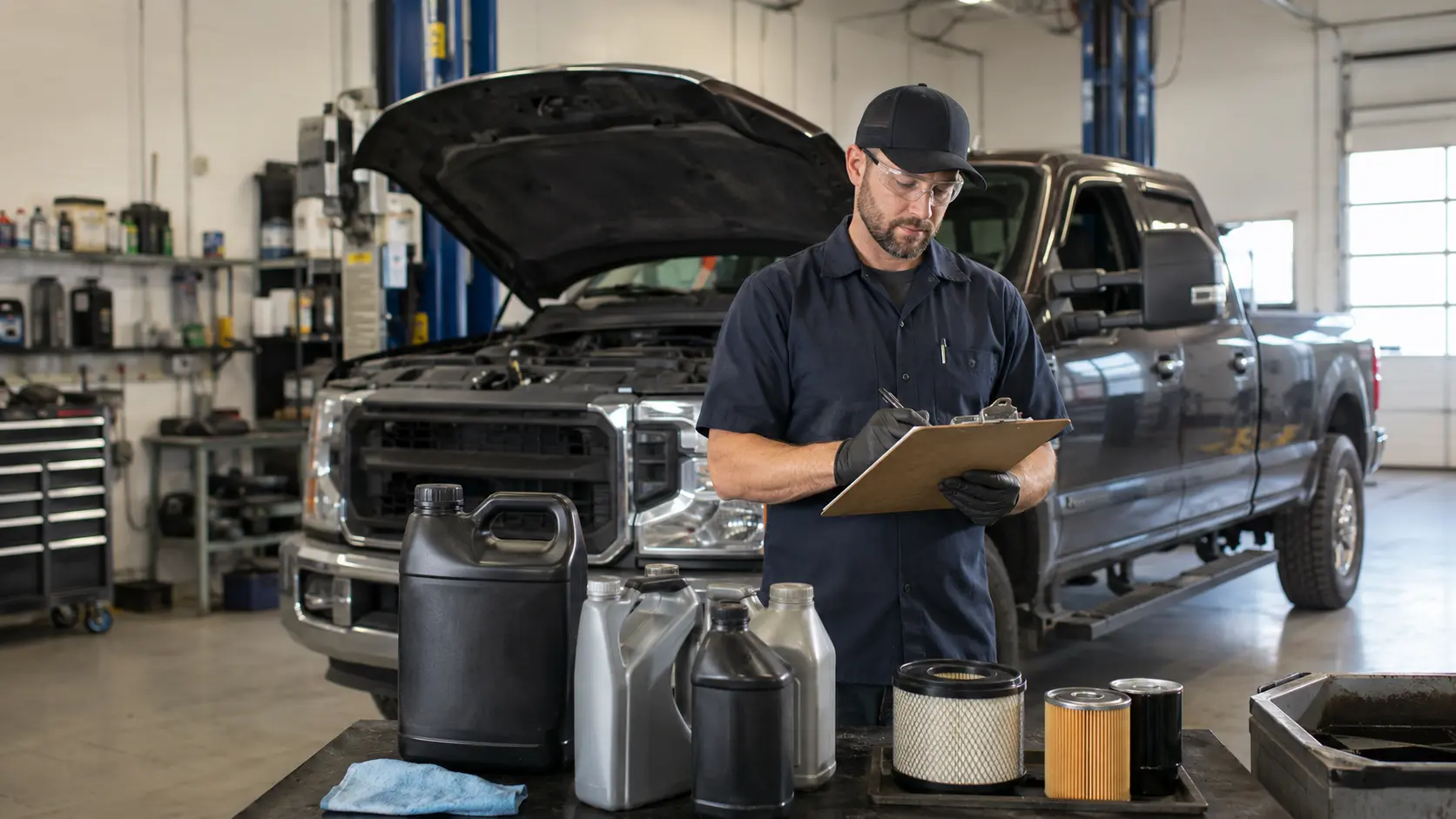
A maintenance baseline is an organized record of what is known, due and unresolved. It should follow the truck's documentation and condition, not a universal replace-everything shopping list.
Build the buying decision
Inventory evidence
VIN + invoices + dates + hours
Prioritize work
Faults + due service + unknown history
Record new baseline
Completed work + specifications + next trigger
Make the evidence inventory
Match invoices to the VIN and note dates, kilometres, hours, fluid specifications and actual work performed. Separate inspection entries from replacement entries. A line saying checked does not demonstrate that a service item was renewed.
Compare the records with the correct model-year owner documentation and any additional instructions for installed equipment. Mark missing information as unknown. Do not silently reset every interval to the purchase date or assume an unknown service was completed by the previous owner.
Prioritize condition and due work
Ask the inspecting shop to distinguish safety or operational faults, scheduled maintenance due now, items requiring diagnosis and work that can be planned later. Obtain estimates for each category so a maintenance package does not hide an unresolved fault.
Verify the specified fluids and filters for the actual engine, transmission and axles. Avoid applying one diesel owner's preferred oil, additive or transmission-fluid practice to every truck. Body hydraulics, auxiliary engines and other upfit equipment need their own service records and instructions.
Start a record you can continue
Record the baseline date, odometer and hours, completed work, specifications used and the next review trigger. Keep receipts and diagnostic reports in one file. Use both calendar and usage information where the applicable schedule calls for them.
Revisit the plan if the duty changes to frequent towing, short trips, dust, winter work or extended idling. The objective is a defensible service history for this truck, not an invented interval that claims to fit all Power Stroke, Cummins and Duramax engines.
Evidence note: manufacturer documents establish the specific facts and applications cited. Buying workflows and cost scenarios are DieselTrucks.ca editorial guidance. These pages do not publish measured failure rates or confirm the condition, recall status or capacity of a particular truck.
General educational content for Canadian diesel-pickup research. Verify the exact truck, model year, certification labels, owner manual and manufacturer documentation, and obtain qualified mechanical or towing advice where appropriate.
Sources & Further Verification
Use the exact model year, VIN, truck labels and current manufacturer documentation when moving from general research to a purchase or towing decision.