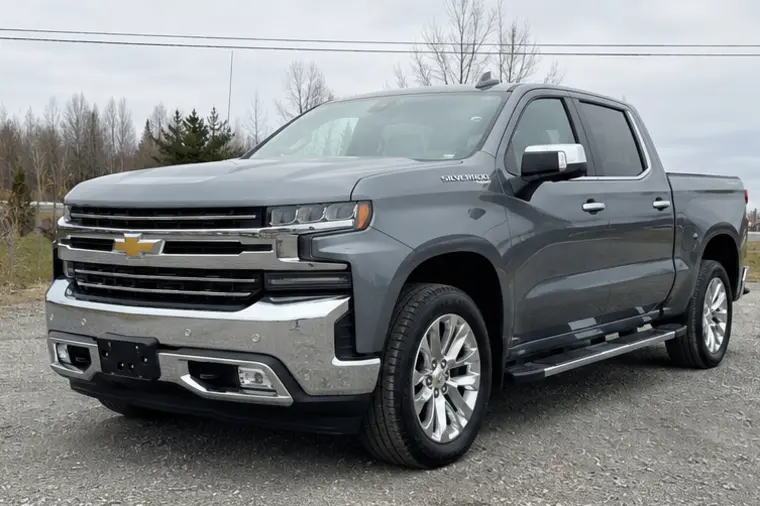
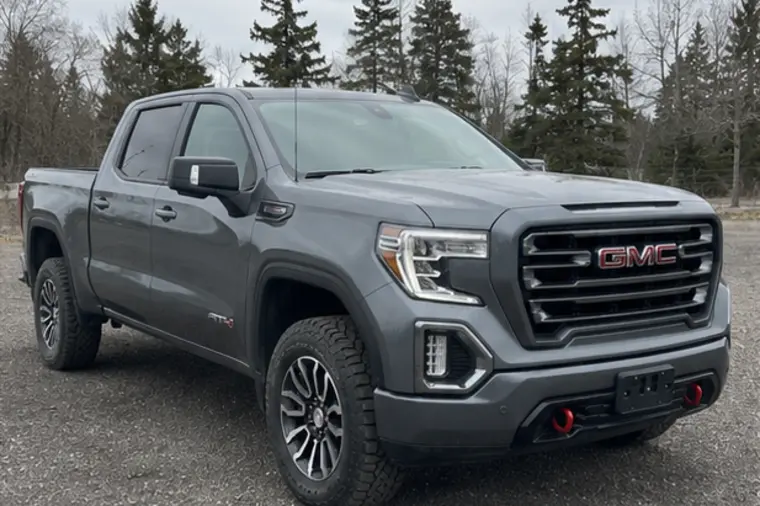
No reviewed primary source establishes a universal best LM2 Duramax year. GM's 2021 diesel supplement provides detailed LM2-era operation, fuel, emissions and maintenance requirements; bulletin 21-NA-149 defines wiring checks across specified 2020–2021 and 2022 Limited/LTD applications; Transport Canada recall 2024637 covers a VIN-defined 2020–2022 diesel transmission population. These records create meaningful year and variant questions but do not rank engine durability. When specifically shopping for LM2 rather than the later LZ0, begin with a correctly identified 2022 Limited/LTD LM2 candidate as a search order, then choose the truck whose identity, maintenance, campaigns, operating evidence, legal configuration, capacity and support are strongest.
Best-year verdict: newer is a search order, not proof
Start with a correctly identified 2022 Limited/LTD LM2 when the buyer specifically wants the first-generation 3.0L rather than the later LZ0 and two trucks are otherwise comparable.
That preference reduces calendar age and may preserve more recent records, but the reviewed primary sources do not demonstrate lower LM2 component-failure rates for 2022. A documented 2020 or 2021 can outrank a later truck with unresolved wiring, transmission, emissions or maintenance evidence.
Use year and variant to select the right documents and campaigns. Let the candidate's closed evidence decide the purchase.
Use a year-and-variant research matrix
This table routes research; it is not a failure-rate or resale ranking.
| Search band | Required identity check | Official evidence route | Boundary |
|---|---|---|---|
| 2020 | Confirm Silverado or Sierra 1500, LM2 RPO, transmission and configuration | Exact vehicle/diesel literature; 21-NA-149 and transmission campaign only when scope matches | First model year does not establish worse reliability |
| 2021 | Confirm LM2 and complete half-ton configuration | 2021 diesel supplement provides fuel, emissions and maintenance context | One model-year manual cannot prove individual care or condition |
| 2022-labelled | Confirm Limited/LTD variant where cited and verify installed engine rather than assuming LM2 | Bulletin and campaign applicability depend on exact vehicle and VIN | Registration year cannot distinguish every body/engine transition |
Prove LM2 identity before comparing years
Record VIN, model year, Chevrolet Silverado 1500 or GMC Sierra 1500, Limited/LTD identity where relevant, engine RPO, transmission, drivetrain, cab, box, original market, emissions label and current calibration.
Photograph identifiers and connect engine, module, transmission or cab replacement to invoices and programming. A 3.0L badge, registration year or seller description cannot distinguish LM2 from the later LZ0 or prove the installed configuration.
Keep LM2 half-ton service information separate from 6.6L HD Duramax procedures. Similar dashboard language does not make another engine's diagnosis applicable.
Understand the LM2-to-LZ0 boundary
GM identifies LZ0 as its later second-generation 3.0L Duramax. That is a different engine-code and evidence branch, not proof that the earlier LM2 is unreliable.
When a 2022- or 2023-labelled truck sits near the changeover, verify the actual VIN, RPO, variant and installed hardware before selecting parts, manuals or service bulletins. Treat conflicting advertisement, registration and build evidence as a pause.
If the buyer prefers LZ0 features or output, compare that engine separately. Do not convert a design revision into a matched field-reliability conclusion without comparable exposure data.
Use the 2021 diesel supplement as an evidence baseline
GM's 2021 3.0L diesel supplement describes starting, cold-weather operation, fuel requirements, water-in-fuel handling, DPF and DEF operation, maintenance and diesel-specific technical data. It instructs owners to use it with the vehicle manual.
Use the exact candidate's model-year publications for the final decision. A 2021 procedure cannot be transferred blindly to 2020 or a 2022 variant when the applicable manual differs.
The supplement defines owner obligations and correct operation; it does not prove that a used truck followed them or that one model year fails less often.
Verify output without turning it into reliability
GM's 2020 trailering guide lists the 3.0L Duramax at 277 horsepower and 460 lb-ft in its original half-ton context. Confirm the candidate's exact engine, calibration, market and vehicle literature before applying any rating.
Output establishes neither payload nor tow rating. Those depend on the completed truck's cab, box, drivetrain, axle, tires, wheels, equipment and labels.
More power also does not establish better durability. Keep original specification, current calibration, legal configuration and observed operation as separate facts.
Treat wiring evidence as candidate-specific
GM bulletin 21-NA-149 covers listed 2020–2021 Silverado and Sierra 1500 applications and specified 2022 Limited/LTD LM2 vehicles. Its LM2 branch addresses rough running, misfire, low power and multiple codes with defined harness and connector inspections.
Confirm the exact vehicle, engine, 2022 variant, symptoms and codes before using it. Preserve pin, routing, chafe, short or continuity findings, repair method and condition-matched recheck.
The bulletin does not prove every LM2 has a wiring fault or that one year is worse. A closed repair can strengthen a candidate; undocumented parts replacement does not.
Build one warning and repair chronology
Separate no-crank, long crank, crank/no-start, rough running, misfire, reduced power, smoke, oil or coolant change, regeneration behaviour and transmission symptoms. Record temperature, load, fuel level and warning order.
Preserve codes and freeze-frame or equivalent context before clearing. Add fuel, filter, oil, wiring, software, emissions, transmission and collision work with dates and kilometres.
Several codes do not equal several failures. A useful chain connects complaint, reproduction, measurement, conclusion, work and comparable result.
Verify scheduled oil-pump-belt evidence
The 2021 supplement establishes an LM2-era scheduled oil-pump-belt replacement obligation. Use the exact model-year manual to determine the applicable interval and conditions for the candidate.
Ask whether the service is completed, due, deferred or unknown. Require dated part and labour records, related access work, seals, fluids and post-service findings.
A schedule does not prove common failure. A reset display or verbal claim does not prove work. Price the candidate-specific service and downtime rather than publishing a generic cost.
Reconstruct all maintenance by time, distance and duty
Record oil and filter, fuel filter, air filter, coolant, transmission, transfer case, axles, DEF and scheduled belt work using the exact vehicle and diesel literature. Capture dates, kilometres, products and parts.
Add towing, short trips, regeneration pattern, idling, winter starts, dust and storage. The supplement notes that fuel, oil and DPF operation have specific requirements; incorrect fluids or altered operation can change the evidence.
Fresh service creates a baseline but does not reconstruct missing history. Classify each item as supported, partial or unknown.
Test cold-start behaviour correctly
Arrange a true cold soak where practical. Record ambient temperature, block-heater use, battery state, wait-to-start behaviour, cranking, smoke, idle, warnings and stabilization.
GM explains that cold conditions can extend the starting sequence and briefly limit power for turbo protection. It also specifies cold-weather fuel, oil and heater considerations. Use the exact operating context rather than calling every delay abnormal.
A seller-warmed truck leaves the cold gate unassessed. Route abnormal behaviour through current LM2 diagnosis instead of naming a component from reputation.
Recheck warm operation and restart
Bring the engine and transmission to stable temperature under a safe duty that fits the verified truck. Record power delivery, smoke, coolant and oil indications, regeneration state, warnings, codes and shift behaviour.
Shut down and restart after a documented interval. Compare cold and hot results and preserve scan data with conditions so a technician can reproduce the event.
One clean unloaded drive does not prove towing, grade or winter reliability. Stop any test that becomes unsafe or risks damage.
Diagnose fuel concerns in branches
For long crank, no-start, stall or low power, capture cranking voltage, fuel level and quality, filter and restriction evidence, water-in-fuel status, electrical tests, commanded and actual pressure and the exact condition.
Keep supply, filtration, wiring, high-pressure generation, injector and control branches separate. Do not name a pump, injector or sensor from one code or symptom.
For previous work, obtain the selecting measurements, affected-system scope, exact parts and comparable result. A new component is history, not proof that every branch is healthy.
Preserve contamination evidence safely
When water, gasoline, debris or another contaminant is suspected, retain a safe sample, filter evidence, photographs and qualified findings before cleanup. Record fuel source and timing without treating sequence as causation.
Map the tank, lines, filter, pumps, rail and injectors inspected, cleaned, replaced or reused. Partial work may leave a larger boundary open.
Never open a running high-pressure system as a buying test. Use current GM procedures and qualified equipment for the exact LM2 application.
Separate DPF, DEF and EGR evidence
Record the exact message, codes, soot and ash evidence, differential pressure, temperatures, regeneration history, DEF quality or dosing data and EGR findings that apply.
GM's supplement distinguishes DPF self-cleaning, required fuel and oil and DEF warnings. A cleared light or completed regeneration does not prove the upstream cause was identified.
Confirm legal original-equipment hardware and calibration. Do not equate every emissions warning with a clogged filter or treat tampering as repair.
Keep the transmission campaign separate from engine ranking
Transport Canada recall 2024637 covers a defined 2020–2022 diesel Silverado and Sierra population. It describes transmission-control software intended to detect excessive valve wear and limit operation before a potential wheel lock.
Verify the Canadian VIN with the manufacturer and retain the dated result and repair order. Diagnose any current harsh shift, warning or propulsion concern separately even when campaign work is complete.
This safety campaign matters to the complete truck but is not an LM2 engine-failure statistic and cannot rank all three model years.
Diagnose smoke and fluid change by condition
Describe smoke by colour, duration, temperature, load, regeneration state and odour. Measure oil and coolant changes over a known interval using the correct level procedures and inspect external leaks before inferring an internal cause.
Cold haze, sustained smoke and regeneration-related observations are different evidence. Connect them to fuel, air, turbo, emissions, coolant and engine measurements.
Stop operation when warnings or fluid behaviour indicate a safety or damage risk. A photo, video or reservoir observation cannot predict remaining life.
Sequence air, turbo and low-power testing
Inspect restriction, charge-air plumbing, sensors, turbo control, exhaust restriction, fuel delivery and commanded-versus-actual data under a safe repeatable condition. Record temperature, altitude, gear and load.
Do not select a turbo from one boost code, noise or shaft observation. Connect findings to oil supply and return, wiring, intake, exhaust and engine evidence.
For prior turbo, hose or sensor work, require the test that selected it and a comparable result. Otherwise keep the condition open.
Audit software, emissions and added equipment
Inventory engine and transmission calibrations, intake or exhaust changes, emissions hardware, auxiliary equipment, tire changes and aftermarket wiring. Connect collision or windshield work to harness or water-intrusion timing where relevant without assuming cause.
Unknown software can change codes, protection strategies and displayed data. “Stock,” “updated” and “returned to stock” need current verification and records.
Confirm legality, insurance and shop acceptance. Do not recommend emissions defeat or claim that a modification caused or prevented failure without evidence.
Inspect the complete truck separately
Assess transmission, transfer case, axles, driveshafts, brakes, steering, suspension, wheel bearings, tires, wheels, frame, corrosion, hitch, lighting, collision repair and upfits.
Keep engine, transmission, chassis and body findings distinct. A transmission campaign is not an engine failure, and a good engine cannot make an unsafe chassis suitable.
For a work assignment, compare current complete-truck condition and support, not just engine mileage or advertised fuel economy.
Verify towing and payload from the exact configuration
Use certification and payload labels, axle and tire limits, hitch rating and the configuration-specific towing table. Calculate occupants, cargo, accessories and measured tongue or pin weight.
GM's trailering guide shows configuration-dependent ratings. The LM2's 277-horsepower and 460-lb-ft listing does not establish the rating of an unseen truck.
Reject any candidate that cannot legally and safely do the intended work. Powertrain preference does not override payload, axle, tire, hitch or combined limits.
Research Canadian safety status without inventing it
Use Chevrolet Canada's VIN centre for a Silverado or the corresponding manufacturer path for a Sierra, and retain the dated result. Use Transport Canada for model-level context and connect any action to the exact VIN and remedy.
Use NHTSA only for U.S. VIN or model-level research. Keep recalls, bulletins, complaints, warranties and ordinary repairs as different evidence types.
No VIN was supplied, so this guide claims no truck is open, complete, unaffected, included or excluded.
Confirm LM2-capable service and downtime
Use Chevrolet Canada's locator to identify possible facilities, then confirm that a shop accepts the exact LM2 truck, modifications and requested work and can access suitable diagnostics and scheduled-service capability.
A directory listing does not guarantee expertise, parts, timing, campaign access, modification acceptance or price. Include transport, diagnostic queue, disassembly, parts delay, programming, validation and substitute capacity.
A repairable concern may still make the truck unsuitable for remote or time-critical work when interruption exceeds the plan.
Compare candidates with one acquisition budget
Separate purchase price, tax, inspection, transport, immediate safety work, maintenance catch-up, campaign follow-up, diagnosed repair, unresolved investigation, configuration correction and optional upgrades.
Use current written scopes tied to actual findings. Generic belt, fuel, emissions or transmission prices often omit diagnosis, access, related parts, programming and downtime.
Compare candidates over the same ownership period and assignment. A newer label cannot close an expensive unknown.
Apply proceed, repair-first and decline gates
Proceed when identity and documents align, maintenance and campaigns are coherent, relevant cold/hot/load checks are satisfactory, modifications are legal and supportable, the chassis is safe and capacity fits.
Proceed after repair only when cause, boundary, responsibility, cost, timing and a comparable recheck are documented.
Pause for transition identity conflict, seller pre-warming, repeated warnings, unclear wiring work, unknown belt status, unresolved transmission or emissions evidence, unsafe condition, load mismatch or inadequate support.
Preserve the limits of the recommendation
The reviewed primary set supports LM2-era operation and maintenance, a documented 277-horsepower/460-lb-ft 2020 powertrain listing, scoped wiring diagnosis and a VIN-defined 2020–2022 transmission campaign.
It does not provide exposure-adjusted LM2 engine or component failure rates, a universal best year, exact candidate capacity, Canadian VIN status, repair-cost distribution or remaining-life forecast.
Use a correctly identified 2022 Limited/LTD LM2 as a search-order tiebreaker only. The best year is the candidate whose evidence and work fit survive inspection.
LM2 Duramax best-year questions
Is 2022 automatically the best LM2 year? No. Verify Limited/LTD identity and LM2 RPO, then compare records, campaigns, condition and work fit.
Should I avoid every 2020 truck? No. The reviewed sources do not establish worse LM2 engine-failure frequency for 2020.
Does the transmission recall make the engine unreliable? No. It is a separate VIN-defined complete-truck safety issue.
Does scheduled oil-pump-belt service prove common failure? No. It establishes an owner obligation, not failure frequency.
Is LZ0 proven more reliable? No. GM documents a different engine generation, not a matched reliability study.
What should decide the purchase? Exact identity, closed evidence, documented maintenance and campaigns, safe configuration, verified capacity and workable support.
Evidence note: manufacturer documents establish the specific facts and applications cited. Buying workflows and cost scenarios are DieselTrucks.ca editorial guidance. These pages do not publish measured failure rates or confirm the condition, recall status or capacity of a particular truck.
General educational content for Canadian diesel-pickup research. Verify the exact truck, model year, certification labels, owner manual and manufacturer documentation, and obtain qualified mechanical or towing advice where appropriate.
Sources & Further Verification
Use the exact model year, VIN, truck labels and current manufacturer documentation when moving from general research to a purchase or towing decision.
- Chevrolet/GMC 2021 3.0L Duramax supplement — original manufacturer maintenance and fuel-system instructions
- GM 21-NA-149, May 2022 — engine-specific wiring diagnosis
- Transport Canada 2024637 — diesel transmission recall
- GM LZ0 technical description — later 3.0L version and LM2 comparison
- Chevrolet Canada manuals and guides — model-year vehicle literature lookup
- GMC 2020 trailering guide — original manufacturer powertrain and configuration tables
- GM 16-NA-380, September 2022 — DPF fault distinctions
- Chevrolet Canada recall centre — current vehicle recall lookup
- Government of Canada — current recalls, advisories and safety-alert search
- NHTSA vehicle recall search — U.S. VIN and model-level safety research
- Chevrolet Canada dealer and service locator — current support discovery