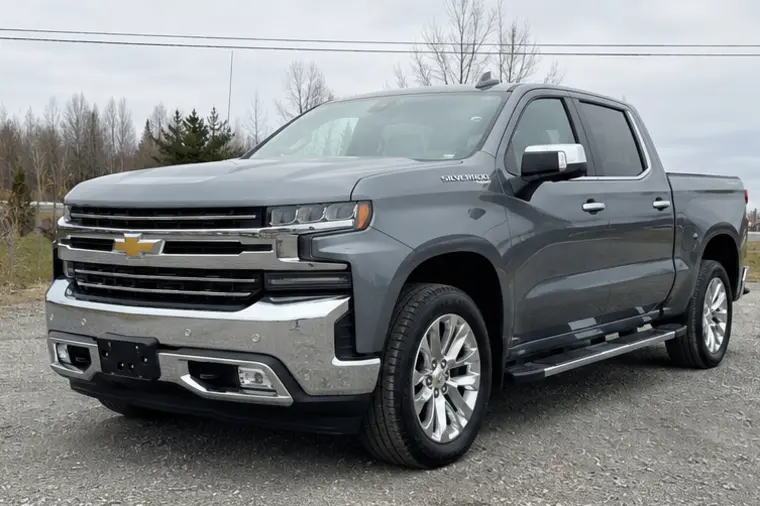
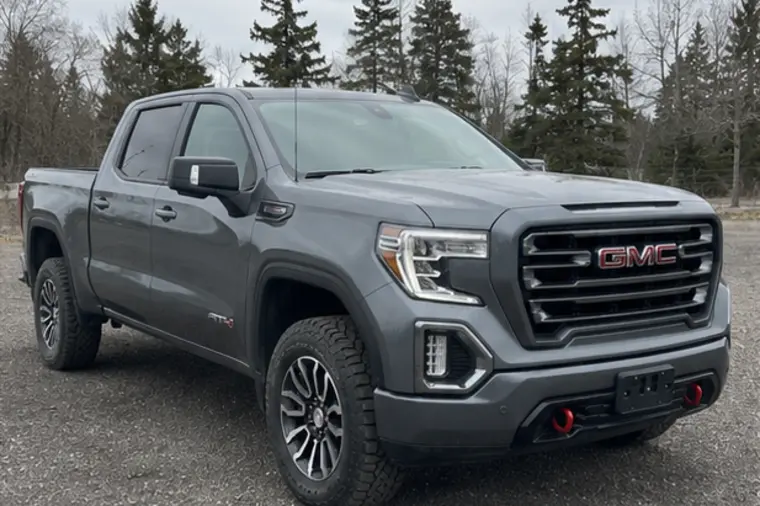
LZ0 Duramax problem research should begin with the exact truck and engine RPO, not a generic 3.0L diesel problem list. GM documents a 2023 LZ0 software branch, a separate 2023 harness-chafe condition, mapped 3.0L oil-leak paths and defined DEF gauge and level-reset guidance. Those sources improve diagnosis and buying inspection; they do not supply an exposure-adjusted LZ0 failure rate, a universal worst year, a Canadian candidate VIN result or a remaining-life forecast.
Verify LZ0 identity and exact application
Record the VIN, model year, Chevrolet Silverado 1500 or GMC Sierra 1500, engine RPO, transmission, drivetrain, cab, box, original market and current calibration. Photograph vehicle and engine labels and connect replacement assemblies or module work to invoices.
Do not identify LZ0 from a 3.0L badge, registration year or seller description alone. GM describes LZ0 as a second-generation 3.0L engine after LM2, while its 2023 bulletins distinguish LZ0 pickups from listed LM2 applications.
Keep LZ0 half-ton evidence separate from LM2 and from 6.6L HD Duramax procedures. Similar codes or dashboard messages do not make another engine's service document applicable.
Build a symptom, warning and repair chronology
Separate no-crank, long crank, crank/no-start, rough running, hesitation, reduced power, harsh shifting, smoke, oil or coolant loss, DEF messages and regeneration behaviour. Record temperature, load, fuel level and warning order.
Preserve codes and supporting data before clearing them. Add software, harness, fuel, oil, emissions, transmission, collision and accessory work to the same dated sequence.
A useful chain connects complaint, reproduction, measurement, conclusion, repair and comparable recheck. A list of codes or repeated parts does not establish one recurring cause.
Apply the 2023 ECM software branch narrowly
GM 23-NA-071 covers 2023 LZ0 Silverado and Sierra 1500 trucks with a MIL and a defined group of current or history codes. It directs the technician to check for an ECM update and use service information when no update is available.
Match the engine, model year and codes before applying it. Software may close the documented condition; it cannot certify fuel, air, wiring, emissions or mechanical health outside that scope.
Request the repair order, programming result and post-update code and drivability evidence. A cleared light alone is weaker evidence because programming resets diagnostic readiness information.
Inspect the documented LZ0 harness-chafe area
GM 23-NA-102 covers 2023 LZ0 pickups with drivability, hesitation, rough or harsh shifting, MIL and multiple possible codes. It identifies harness contact near the alternator bracket, with an air-conditioning line pressing on the LZ0 harness.
Confirm the exact condition and inspect routing, contact, damaged circuits, repairs, retained straps and local repositioning. Do not treat every communication, shift or performance concern as this chafe.
After repair, reproduce the original event and retain all-module scan results. The bulletin's symptom and code list is a diagnostic selector, not a count of failures or proof that an uninspected truck has damage.
Diagnose starting and fuel concerns in branches
For long crank, no-start, stall or low power, capture battery and cranking performance, fuel quality and level, filter and restriction evidence, electrical tests, commanded and actual pressure and the exact reproducing condition.
Keep supply, filtration, wiring, high-pressure, injector and control branches separate. Do not name a pump, injector or sensor from a single code, reputation claim or added component.
If prior fuel work is claimed, obtain the initial measurements, affected-system boundary, parts and comparable recheck. A new filter or injector is work history, not a complete fuel-system finding.
Preserve contamination evidence before cleanup
When water, gasoline, debris or another contaminant is suspected, preserve a safe sample, filter evidence, photographs and qualified findings before flushing. Record the fuel source and timing without assuming chronology alone proves causation.
Map which tank, lines, filter, pumps, rail and injectors were inspected, cleaned, replaced or reused. Partial work may leave the cause or repair boundary unresolved.
Do not open a running high-pressure system as a buying test. Use current service information and qualified equipment for the exact LZ0 application.
Trace oil leaks instead of naming a gasket
GM 23-NA-011 provides illustrated 3.0L Duramax leak-path guidance using an LZ0 engine. It maps multiple possible sources across filler, plugs, pan, bed plate, head and rocker cover, cooler area, sensors, turbo feed and return, timing covers and crankshaft seals.
Clean and trace the highest fresh source using the correct procedure. Gravity, airflow and previous cleanup can move oil away from its origin; replacing the nearest visible seal is not diagnosis.
Record level trend, leak rate, operating condition and repair recheck. The map identifies inspection locations, not frequency, severity or an automatic major-repair conclusion.
Distinguish DEF use from gauge interpretation
GM 20-NA-082 includes 2023 LZ0 pickups and explains that the segmented DEF gauge can fluctuate and take key cycles to reflect a fill. It recommends evaluating consumption relative to fuel use and load rather than judging one displayed segment.
Record fill quantities, distance, fuel used, load, ambient conditions, gauge behaviour, messages and codes. Heavy operation can change use; that context does not prove a dosing or tank fault.
A falling segment after a fill is not by itself a failed component. Unexpected use, warning or contamination still requires the matching diagnostic path.
Use the DEF-level software and reset branch only when selected
GM 22-NA-150, revised in January 2025, includes 2023–2025 LZ0 pickups among its broader application list. It addresses specified MIL, service-emission, low-level or erratic/stuck gauge conditions with calibration checks, measured level variables and a reset procedure.
Do not convert every DEF warning into a tank or level-sensor replacement. Preserve codes and displayed data, verify correct fluid and fill evidence, then follow the applicable current procedure.
Request the before-and-after level values, programming record and final message result. A top-up, reset or code clear without that evidence does not prove repair.
Keep DPF, EGR and other emissions branches distinct
Record the exact message, codes, soot and ash information, differential pressure, temperatures, regeneration history, DEF dosing and EGR findings. “Emissions problem” is not a component diagnosis.
Confirm the exact-year operating instructions and legal original-equipment hardware and calibration. A regeneration may address soot under appropriate conditions; it cannot remove ash or repair every pressure, temperature, air, fuel, EGR or engine cause.
Do not recommend emissions defeat. Treat tampering, unknown calibration and incomplete readiness as separate legal, diagnostic and support questions.
Separate shifting symptoms from engine conclusions
The LZ0 harness bulletin includes rough or harsh shifting among possible customer comments because network and wiring faults can affect multiple systems. That does not make every shift concern a harness fault or an engine failure.
Scan all modules and record voltage, grounds, network codes, transmission data, harness findings, fluid evidence and the exact operating event. Inspect the complete powertrain under a safe comparable condition.
Require the selecting evidence and recheck for any module, harness or transmission repair. Keep engine, network and transmission findings separate in the purchase decision.
Measure smoke, oil and coolant change
Describe smoke by colour, duration, temperature, load, regeneration state and odour. Trend oil and coolant over known distance, time and duty using the correct level procedure, and inspect external paths first.
A short cold haze, regeneration observation and sustained loaded smoke are different evidence. Connect them to measured fuel, air, turbo, emissions, cooling, oil and engine findings.
Stop operation when warnings, fluid change or behaviour indicates safety or engine-damage risk. A photo, video or clean reservoir cannot predict remaining life.
Sequence air, turbo and low-power diagnosis
Inspect air restriction, intake and charge-air plumbing, leakage, sensors, turbo control, exhaust restriction, EGR evidence, fuel delivery and commanded-versus-actual data under a safe reproducible condition.
Do not select a turbocharger, EGR part or DPF from one code, noise or smoke report. Record temperature, altitude, gear, load and regeneration state.
For previous turbo, hose, sensor or EGR work, require the test that selected the component and a comparable result. Otherwise classify the concern as unresolved.
Audit software, emissions changes and accessory wiring
Inventory engine and transmission calibrations, intake and exhaust hardware, emissions changes, remote start, monitoring equipment and aftermarket wiring. Connect collision or accessory work to harness evidence only when timing and physical findings support it.
“Stock,” “updated” and “returned to stock” need records and current verification. Unknown software can change warnings, readiness, displayed data and the value of factory diagnostic paths.
Confirm legality, insurance and shop acceptance. Do not claim a modification caused or prevented a failure without candidate evidence.
Use a concern-to-evidence matrix
This matrix routes investigation. It is not prevalence, severity, cost or remaining-life data.
| Concern | Evidence that moves the decision | Unsupported shortcut |
|---|---|---|
| MIL with listed 2023 codes | Correct LZ0/year/codes, update availability, programming record and recheck | Calling every MIL a software problem |
| Hesitation, harsh shift or network codes | Matching 23-NA-102 scope, harness contact and circuit repair evidence | Assuming every event is alternator-bracket chafe |
| Oil leak | Cleaned and traced highest fresh source, level trend, repair and recheck | Naming a rear seal or bed plate from drip location |
| DEF use or gauge concern | Fill, fuel-use, load, level data, codes, calibration and reset result | Replacing a tank from one gauge segment |
| Long crank, no-start or low power | Cranking, quality, restriction, pressure, circuits and control evidence | Naming a pump or injector from reputation |
| Smoke or fluid change | Reproduced condition and measured fuel, air, emissions, oil, coolant and engine evidence | Predicting life from one observation |
Stage an LZ0 pre-purchase inspection
Before travel, request VIN and RPO evidence, true cold-start video, dashboard bulb check, all-module scan summary, exact-year maintenance, software, harness, fuel, oil-leak, DEF and major repair records and current use.
On site, inspect cold when possible, then hot and under a safe road condition. Check fluids, leaks, harness routing, batteries, fuel system, intake and charge-air path, cooling, original emissions hardware, transmission, brakes, steering, frame, hitch and tires.
Have material findings assessed by a technician familiar with the exact LZ0 truck. Separate safety work, maintenance catch-up, diagnosed repair, unresolved investigation and optional changes.
Verify Canadian safety status without inventing it
Use Chevrolet Canada's current VIN centre for a Silverado or the corresponding manufacturer path for a Sierra and retain the dated result. Use Transport Canada for Canadian model-level research and connect any result to the actual VIN and remedy.
Use NHTSA only for U.S. VIN or model context. U.S. results and bulletin counts cannot establish Canadian VIN status or an LZ0 failure rate.
No VIN was supplied. No candidate is represented as open, complete, unaffected or eligible.
Match the complete truck to its assignment
Use certification and payload labels, axle and tire limits, hitch rating and exact configuration documents. Calculate occupants, cargo, accessories and loaded tongue or pin weight.
The LZ0 engine choice does not establish payload or towing capacity. Cab, box, drivetrain, axle, wheels and equipment can change the legal and practical result.
Include winter starts, short trips, idling, towing, remote routes, annual distance and downtime tolerance. A sound engine in an unsuitable half-ton configuration remains the wrong purchase.
Price support and downtime from actual findings
Confirm that a prospective shop accepts the exact model year, LZ0, modifications and requested work and can access current diagnostics and programming. A locator entry alone cannot prove capability, timing, parts or price.
Use current written estimates tied to the inspected truck. Include transport, diagnostic queue, disassembly, parts delay, programming, validation and substitute capacity rather than generic online repair prices.
A repairable concern can still be operationally unsuitable when interruption or uncertainty exceeds the plan. Keep that consequence visible instead of hiding it in a reliability score.
Decide from closed and open evidence
Classify each material system as supported, repaired and rechecked, unresolved or not assessed. Pause for identity conflict, repeated warnings, harness uncertainty, unexplained oil loss, unresolved fuel or emissions condition, unknown calibration, unsafe chassis, load mismatch or inadequate support.
Give repairs credit only for the condition their evidence closes. Do not convert a service bulletin, code count or individual truck into a failure-rate or year-wide verdict.
The reviewed primary set provides no exposure-adjusted LZ0 component failure rate, universal worst year, Canadian candidate VIN result, exact repair-cost distribution or remaining-life forecast.
LZ0 Duramax problem questions
Does every 2023 LZ0 MIL need an ECM update? No. Match the vehicle and listed codes, check update availability, and use current service information when the branch does not apply.
Does harsh shifting prove a transmission failure? No. Preserve all-module data and inspect the documented LZ0 harness branch when its scope and evidence match.
Does oil under the engine identify the failed seal? No. GM maps many possible 3.0L leak paths; clean and trace the highest fresh source.
Does a dropping DEF segment prove excessive use? No. Measure fill and fuel use, load, messages, codes and level data.
Is LZ0 proven more reliable than LM2? No. Revision and service records are not a matched field-failure comparison.
What should stop the purchase? Any material unresolved identity, safety, wiring, fuel, oil, emissions, transmission, load or support issue outside the buyer's plan.
Evidence note: manufacturer documents establish the specific facts and applications cited. Buying workflows and cost scenarios are DieselTrucks.ca editorial guidance. These pages do not publish measured failure rates or confirm the condition, recall status or capacity of a particular truck.
General educational content for Canadian diesel-pickup research. Verify the exact truck, model year, certification labels, owner manual and manufacturer documentation, and obtain qualified mechanical or towing advice where appropriate.
Sources & Further Verification
Use the exact model year, VIN, truck labels and current manufacturer documentation when moving from general research to a purchase or towing decision.
- GM LZ0 technical description — later 3.0L version and LM2 comparison
- Chevrolet Canada manuals and guides — model-year vehicle literature lookup
- GM 23-NA-071, April 2023 — 2023 LZ0 engine software
- GM 23-NA-102, June 2023 — defined 2023 LZ0 harness-chafe diagnosis
- GM 23-NA-011, August 2023 — illustrated 3.0L Duramax oil-leak paths
- GM 20-NA-082, March 2023 — scoped LZ0 DEF-use and gauge interpretation
- GM 22-NA-150, January 2025 — LZ0-inclusive DEF-level software and reset diagnosis
- Chevrolet Canada recall centre — current vehicle recall lookup
- Government of Canada — current recalls, advisories and safety-alert search
- NHTSA vehicle recall search — U.S. VIN and model-level safety research
- Chevrolet Canada dealer and service locator — current support discovery