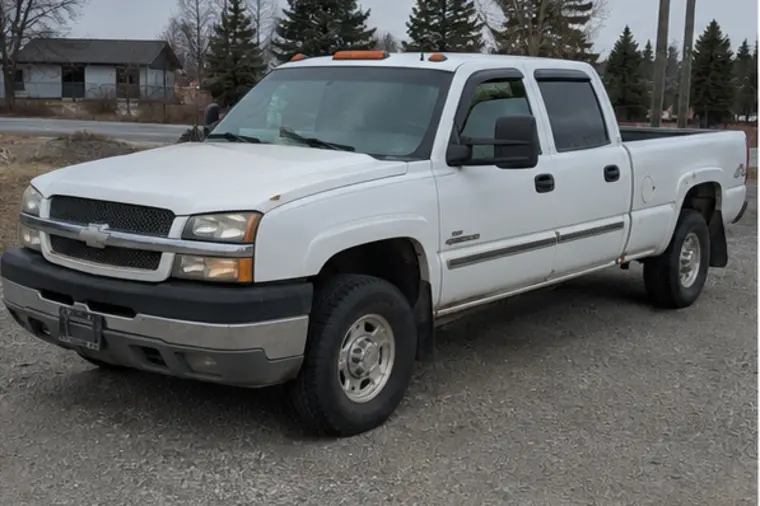
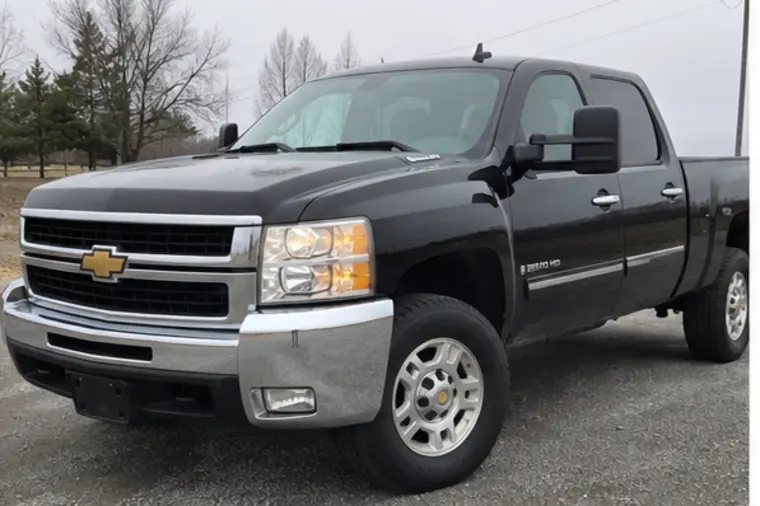
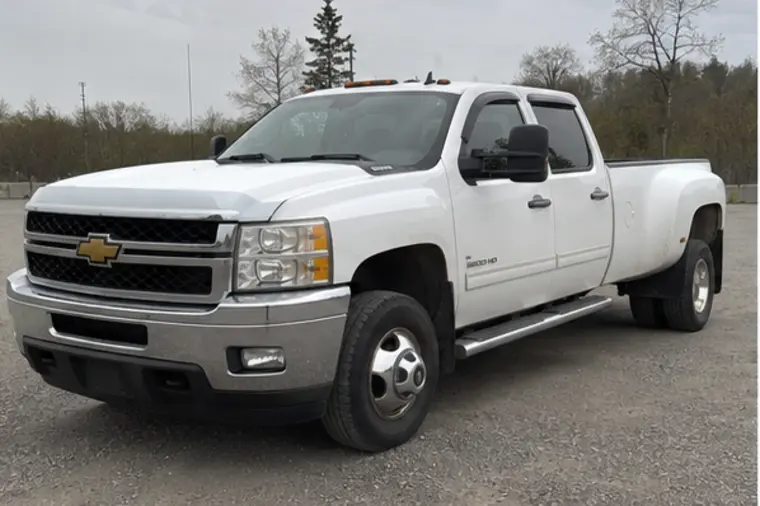
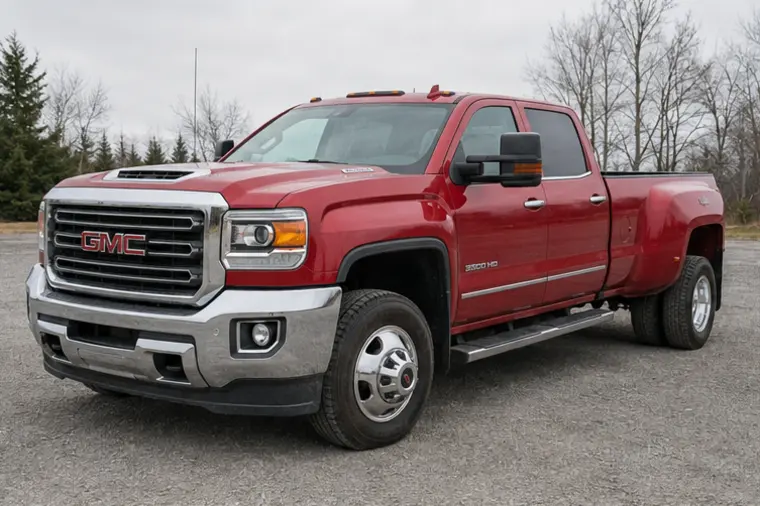
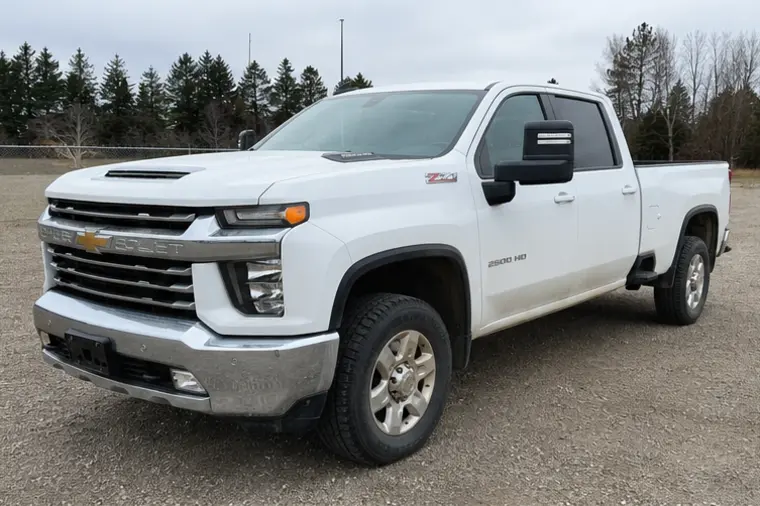
The 6.6L Duramax name spans successive engine codes and several GM HD truck generations. The engine code, model year, transmission, emissions equipment and truck configuration all matter.
Generation timeline
LB7
The introductory 6.6L Duramax era. Verify the exact build date, service history and the condition of the now-older chassis and supporting systems.
LLY
GM's 2006 Silverado kit still lists LLY alongside LBZ, with separate manual and automatic ratings. Confirm the exact build and powertrain rather than relying on registration year.
LBZ
A distinct pre-LMM used-market period paired with its own model-year truck and transmission context.
LMM
A later body and emissions era. Buyers should verify aftertreatment condition, service history and previous modifications.
LML
A newer emissions and HD-platform period with configuration-specific towing and payload documentation.
L5P
The current broad HD engine family spans continuing output, transmission and truck-platform updates. Research the exact model year rather than one headline rating.
Transition dates can overlap within a model year. Confirm the VIN, build date, emissions label and official documentation for the exact truck.
Use the timeline as an identification map, not a buying verdict
A useful Duramax-generation comparison answers three different questions: which engine was originally specified, which engine and calibration are installed now, and whether the complete truck suits the intended job. Keep those answers separate. An advertisement may correctly name an engine family while omitting a replacement, a transmission change or years of undocumented tuning. None of those omissions is resolved by a model-year badge.
Start with the truck's VIN and factory equipment information, then reconcile the engine identifier, build date and invoices. The timeline below is a broad HD pickup map, not a parts interchange catalogue. Chevrolet's original 2006 information kit is a particularly useful warning: it lists both LLY and LBZ engines and separates automatic and manual ratings. A simple '2006 means LBZ' shortcut can therefore send a buyer toward the wrong specification or repair information.
Primary-source power anchors: retain the transmission and engine speed
The following rows are selected factory anchors, not a complete annual power chart. The 2001 and 2006 figures come from GM's original Chevrolet information kits; the later L5P row comes from GM's technical reference. They describe engine output in the stated application, not measured wheel output, towing capacity or the performance of an altered used truck.
| Source-specific application | Horsepower | Torque | Important boundary |
|---|---|---|---|
| 2001 Silverado HD Duramax 6600 | 300 hp at 3,100 rpm | 520 lb-ft at 1,800 rpm | Original HD introduction literature |
| 2006 Silverado HD LLY, automatic | 310 hp at 3,000 rpm | 605 lb-ft at 1,600 rpm | Do not substitute the manual row |
| 2006 Silverado HD LLY, manual | 300 hp at 3,000 rpm | 520 lb-ft at 1,600 rpm | Same code, different published pairing |
| 2006 Silverado HD LBZ, automatic | 360 hp at 3,200 rpm | 650 lb-ft at 1,600 rpm | Interim-model-year introduction context |
| Later L5P, GM Silverado/Sierra HD reference | 470 hp at 2,800 rpm | 975 lb-ft at 1,600 rpm | GM distinguishes it from 2023-and-older L5P |
What a major revision changes for the buyer
GM's 2006 material describes changes to the block, pistons, fuel system, turbocharger and controls, alongside the Allison 1000's move from five to six automatic speeds. That is more informative than treating the revision as a larger horsepower number. When researching a replacement part or an old repair, identify the applicable hardware and control system first. These historical changes do not prove that one version is more reliable than another.
The modern L5P reference lists cooled EGR, SCR and a diesel particulate filter. Its service questions therefore include the installed aftertreatment and related warning history, not just the engine's mechanical condition. Separately, the LZ0 is a 3.0L inline-six development of LM2, not another name for the 6.6L HD sequence. Its 305-hp and 495-lb-ft Silverado application belongs in the half-ton branch. Neither displacement nor a shared Duramax badge makes the parts, maintenance or truck limits interchangeable.
Modification evidence belongs in a generation comparison
GM bulletin 08-06-04-006N, dated February 2022, documents a calibration-evidence process for its listed Duramax applications. It distinguishes the LLY/LBZ information path from the LGH/LML/LMM path. This is historical professional service and warranty documentation, not a current all-Duramax inspection procedure or a failure-frequency study.
For a buyer, the practical question is whether the seller can explain what was changed, when, why and by whom. Ask the inspecting shop to identify the installed calibration and assess the relevant hardware using current, applicable service information. A truck returned to a stock-looking appearance does not provide a complete modification history. Conversely, an invoice for a legitimate repair is not proof of abuse. Assess the records and physical findings together; do not diagnose an engine from exhaust appearance or an internet label.
Translate the engine choice into a truck and service plan
Choose the cab, bed, axle, drivetrain and rear-wheel configuration around the loaded assignment before comparing engine eras. A generation table cannot establish rear-axle capacity or the payload left after passengers, an in-bed hitch and work equipment. Use the exact model-year truck guide and the candidate's labels, then verify the loaded combination. A later engine in an older chassis does not import the donor truck's tow rating.
Build the service plan from the matching owner's manual and diesel supplement. List oil and filter work, fuel filtration, coolant, belts and hoses, transmission and axle service, and any required aftertreatment work as separate entries. For each, record the applicable specification, due date or distance, last documented completion and unresolved questions. Do not borrow a modern L5P interval for an early engine or assume a service reminder was reset only after work was completed.
Repair access also matters. Before buying an older configuration for essential daily towing, establish which shop can inspect and support it and whether downtime fits your schedule. Compare documented catch-up work and service access rather than an unsupported universal repair allowance. This is a use-case decision, not a reason to promote newer or older engines automatically.
A defensible shortlist has explicit unresolved questions
Keep a short decision file for each candidate: factory identity, installed hardware, service chronology, independent inspection, load suitability and repair support. Mark missing evidence as unknown rather than turning it into either a clean bill of health or a presumed failure. Have the inspection explain any starting, cooling, drivability or fluid concern before purchase.
This guide does not supply a controlled best-Duramax ranking, a universal years-to-avoid list or a complete LB7-through-L5P annual output matrix. The selected original-document examples explain why those shortcuts are unsafe. Use the detailed 6.6L engine and model-year guides for narrower questions, then compare candidates under the same intended workload. A generation name narrows the research; it does not finish the buying decision.
Start by separating 3.0L and 6.6L research
The 3.0L half-ton engine and 6.6L HD engine belong to different applications. GM identifies LZ0 as the development following LM2 in the 3.0L line; that change should not be confused with the sequence of HD Duramax codes.
Use engine identification to choose the correct branch, then narrow the model year and transmission. If a seller supplies an engine code, verify it against the vehicle’s build information. The code is useful evidence, but it does not resolve undocumented replacements or modifications on its own.
Track revisions within an engine code
The later L5P specification is explicitly compared with 2023-and-older L5P engines in GM’s reference. A code can therefore span changes important to output and service research. Avoid stopping the identification process after reading “L5P” in a listing.
For a used-buying worksheet, record the code, model year, application and transmission together. Add the specific documents used for each number you quote. That turns a generation table into a traceable purchase aid and prevents a current marketing figure from drifting into an older truck’s description.
Compare repair evidence without creating a league table
A meaningful generation comparison separates the type of issue from its frequency. A bulletin or campaign can justify a targeted inspection question; it does not establish how often an entire engine population fails. Likewise, a seller’s replacement invoice should identify the work without being treated as proof of a complete vehicle rebuild.
Use this guide to reach the relevant engine page and model page, then commission the inspection around the selected truck. Record unresolved evidence plainly. A documented older candidate may be worth evaluating alongside a newer one, but the comparison needs the same workload and ownership assumptions to be useful.
Engine codes are a starting point
Code ranges are broad North American pickup context and transition dates can overlap. Confirm the code, VIN, calibration, transmission and factory documentation for the exact vehicle.
Chevrolet and GMC applications
Duramax HD engines appear in Silverado and Sierra 2500HD and 3500HD applications. Cab, bed, axle, drivetrain and SRW or DRW configuration still determine the truck's practical role.
Avoid unsupported rankings
A generation label cannot replace service records and inspection. Compare known history, current condition, prior use and workmanship on modifications before making a purchase decision.
Engine codes are a route into deeper research
Use model year, VIN and authoritative documentation to establish the applicable Duramax era. Engine-code shorthand is helpful only when it leads to the correct truck platform, transmission and inspection questions.
Choose the inspection path for the engine code
Use the early Duramax, LMM/LML or L5P buying guide to turn the identified engine code into a practical inspection and service-record checklist. Keep half-ton 3.0L research separate from these HD pickup applications.
Keep transition years and application codes visible
The timeline organizes commonly encountered HD pickup eras. Transition years require additional care: a registration year or familiar body shape may not settle the engine code. Obtain factory identification and reconcile any engine replacement before applying a code-specific service claim.
Use the comparison to select an inspection scope rather than declare a best engine from anecdotes. A technical bulletin concerns its named applications and symptoms; it should not be expanded into a failure forecast for every Duramax.
| Search intent | Research route |
|---|---|
| Early HD ownership | Early Duramax buying guide and chassis-condition assessment |
| LMM or LML candidate | Separate emissions-era identity and matching service information |
| L5P candidate | Exact truck year, transmission and installed equipment |
| 3.0L half-ton | Separate LM2/LZ0 research, outside this 6.6L timeline |
Evidence note: manufacturer documents establish the specific facts and applications cited. Buying workflows and cost scenarios are DieselTrucks.ca editorial guidance. These pages do not publish measured failure rates or confirm the condition, recall status or capacity of a particular truck.
FIND TRUCKS USING THIS ENGINE
Connect the engine to a model year and exact truck.
Engine-family research is one part of the configuration. Use the explorer to connect model, year, transmission, cab, bed and rear-wheel context.
General educational content for Canadian diesel-pickup research. Verify the exact truck, model year, certification labels, owner manual and manufacturer documentation, and obtain qualified mechanical or towing advice where appropriate.
Sources & Further Verification
Use the exact model year, VIN, truck labels and current manufacturer documentation when moving from general research to a purchase or towing decision.
- GM LZ0 technical description — later 3.0L version and LM2 comparison
- GM L5P technical description — later specification versus 2023-and-older engines
- GM original 2001 Silverado HD information kit
- GM original 2006 Silverado information kit
- GM 08-06-04-006N, February 2022
- Chevrolet Canada manuals and guides