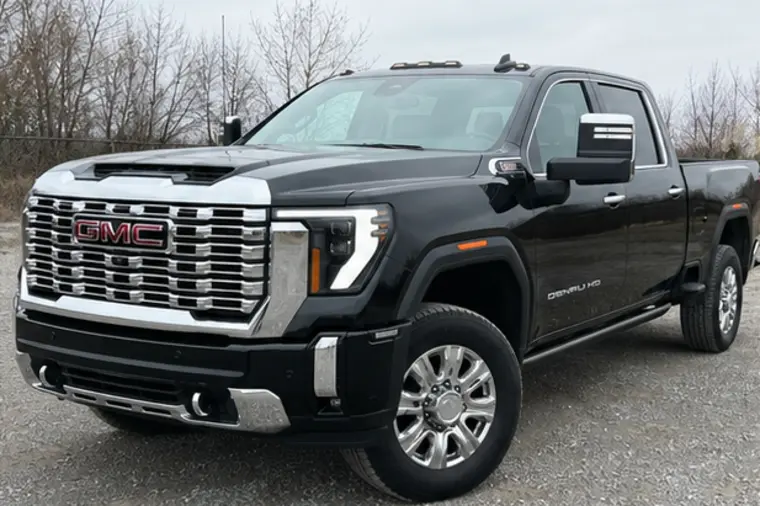
A GMC Sierra 2500HD problems assessment should connect the Duramax generation, observed symptoms and previous work. Start with the candidate's identity and documented concerns, then evaluate whether the complete truck is suitable for its next towing or work assignment. This guide focuses on diesel HD pickups; Sierra 1500 engine advice and gasoline-engine complaints need their own evidence.
Put the engine and symptom on the same worksheet
Get the VIN, model year, engine code, transmission information and service records before interpreting an online problem list. A repair discussion concerning an earlier Duramax should not be transferred to an L5P simply because both are 6.6L engines. Likewise, a later model's equipment cannot establish what is fitted to an older truck.
Use the table to organize a professional inspection. It is not a frequency chart, and several entries may not apply to your year. The most serious finding on a particular used truck may be its present condition rather than one of the documented concerns listed here.
| Check | Evidence or context | What the buyer should obtain |
|---|---|---|
| Transmission campaign | U.S. 24V-797; confirm local VIN applicability | Campaign status, completion record and subsequent repair history |
| Fuel-pressure warning | 20-NA-197 | Diagnostic findings rather than a parts guess |
| Coolant loss | 18-NA-098 | Confirmed leak location and repair verification |
| Cold rough running | 19-NA-108 | Cold observation, engine identification and service history |
| Older fuel-system repairs | PIP5151F | Contamination findings and itemized repair scope |
| Work equipment and towing | Exact candidate configuration | Labels, installed-hardware inspection and load calculation |
Transmission concerns: campaign work and hardware history
GM's 24V-797 filing covers defined 2020–2022 diesel Sierra HD vehicles. Excess valve wear can cause harsh shifts and, in rare cases, momentary rear-wheel lock-up. Its remedy is a software update, not a transmission rebuild.
Ask GMC to establish the current campaign position for the actual Canadian VIN. Keep the dated result even if the truck has no open action. If a seller says the transmission was “done,” clarify whether that means fluid service, programming, valve-body work or a replacement assembly. Those descriptions represent different histories and should have different supporting documents.
A truck with a current shift complaint should not be accepted for towing merely because an earlier campaign was completed. Give the inspecting technician the symptom conditions and let the shop decide how to evaluate it safely. Do not create a loaded test simply to see whether the fault becomes worse.
Fuel-pressure codes: inspect the electrical evidence
GM 20-NA-197 identifies possible fuel-pressure sensor connector corrosion or damage in specified 2017–2020 L5P Sierra applications. Its code list includes P0191 and P0087. These codes alone do not establish a failed fuel pump.
For an affected-year candidate, ask whether prior diagnosis included the relevant wiring and connector checks. Request the measured findings or a clear workshop explanation of why the installed part was necessary. A sequence of sensor and pump invoices without an identified cause deserves clarification before purchase.
Present drivability problems still need attention even if a connector repair sounds inexpensive. The buying question is whether the actual fault has been demonstrated and resolved. Do not negotiate from the least expensive possible explanation while leaving the diagnosis open, and do not open a high-pressure fuel system as a driveway inspection.
Coolant loss: locate the source before pricing the repair
GM 18-NA-098 maps possible coolant leak paths for specified 2017–2020 Duramax applications. It notes that a leak higher on the engine can travel downward and resemble a rear-cover leak. This supports tracing the source rather than diagnosing by the final drip location.
Ask the seller how often coolant has been added, over what distance and whether a low-level message returned after service. Have the shop inspect using the correct procedure and safe temperature conditions. Retain its location finding with the estimate; a vague recommendation to replace a major component is difficult to evaluate without the diagnostic basis.
Do not treat recurring coolant loss as normal ownership simply because the truck still drives. Equally, avoid assuming every low-level event proves head-gasket failure. The confirmed source, any overheating history and the post-repair checks determine the next decision. Do not open a hot pressurized cooling system during a viewing.
A cold-running complaint needs a genuinely cold assessment
Bulletin 19-NA-108 describes a particular 2017–2019 L5P cold-running/misfire concern and a possible double-head-gasket assembly condition. Its diagnostic entry conditions include distance since new or injector replacement. It is a narrow investigation, not a general explanation for all rough starts.
Arrange for the shop to observe the candidate before the seller warms it. Record how long the rough operation lasts, what appears on the instrument panel and what recent work occurred. If the complaint disappears warm, that change is useful evidence rather than a reason to dismiss it.
Avoid quoting an engine repair before the technician has checked the actual symptom and applicability. This bulletin does not justify assuming a rare assembly concern on every truck. Use it as one documented lead when the vehicle and findings match, alongside current service information and the rest of the diagnostic process.
Older Duramax fuel repairs: ask what was actually found
PIP5151F includes specified 2011–2019 6.6L Sierra applications and illustrates fuel contamination associated with starting and running concerns. Its evidence distinguishes contamination from an unsupported assumption about which component failed first.
If an older Sierra has a substantial fuel-system invoice, ask for the original diagnosis and the full repair scope. Was the contamination identified? Which components were inspected, cleaned or replaced? What follow-up established satisfactory operation? A short receipt reading “fuel system repaired” leaves important buying questions unanswered.
Keep the engine family explicit when comparing candidates. A repaired older truck is not automatically preferable or inferior to a later L5P; assess the condition and documentation of each. Do not present a contamination case as a measured failure rate for every pump or engine built in that era.
Inspect the 2500HD around its intended workload
A 2500HD buyer should resolve the carried-load budget before choosing between a camper, fifth-wheel, bumper-pull trailer or permanently installed service equipment. Read the exact truck's labels and manufacturer documentation, then account for occupants, tools, hitch and cargo. An accessory fitted by a previous owner remains part of the weight calculation.
Have the inspector review hitch attachment, bed condition, tire wear, steering and suspension, and signs of previous repairs around working equipment. If there is evidence of a removed plow or other heavy attachment, ask what it was and how the truck was used. The purpose is to identify inspection priorities, not to infer damage from use alone.
Distinguish an unsuitable load plan from a mechanical defect. Replacing worn parts does not resolve an unverified capacity assumption. If the job requires a different configuration, compare a suitable 3500HD candidate before spending money trying to justify the 2500HD already on your shortlist.
Canadian service history and prevention
Ask how the truck was stored, started and maintained through winter and whether it regularly carried a trailer or idled at work. Match the maintenance history to the applicable manual, rather than borrowing a schedule from another Duramax generation. Keep fluid specifications, dates and kilometres with each service entry.
Inspect the underside and installed accessories on a lift. Record corrosion, previous coatings, damaged wiring protection and repairs in sufficient detail for the technician to explain their significance. A freshly cleaned engine bay or underbody should prompt a closer look at available evidence, not an automatic accusation that the seller is hiding something.
After purchase, keep developing the same record. Investigate new warnings promptly and retain the initial diagnostic data. Good documentation will not prevent every defect, but it reduces the uncertainty surrounding maintenance, repeat complaints and decisions about when the truck is ready to return to work.
Turn the inspection into a repair and downtime decision
Ask the shop to separate necessary repairs from catch-up maintenance and desirable improvements. For each unresolved concern, request the next diagnostic step, an estimate for that step and an explanation of what could change the repair scope. This is more useful than attaching a generic “Duramax repair allowance” to every candidate.
For towing or commercial use, identify the consequence of losing the truck during the intended job. A replacement vehicle must suit the actual trailer and load; a readily available light-duty rental may not solve the problem. Obtain local parts and appointment availability before promising the truck's first work date.
Decide whether the seller will complete the repair or whether you will buy with a written, understood scope. Retain the inspection and follow-up evidence either way. A discount can compensate for known work, but it cannot establish a diagnosis or certify the safety of an unresolved vehicle.
Sierra 2500HD problems: buyer FAQs
Does P0191 mean the pump needs replacement? No. The cited connector bulletin is one reason to require proper diagnosis on matching applications. The actual truck may have another cause.
Does coolant under the rear of the engine identify the leaking part? No. Trace the source with qualified diagnosis; fluid can travel before it becomes visible underneath.
Are all 2017–2019 L5P trucks affected by the cold-start assembly concern? The bulletin does not establish that. Applicability, symptoms and diagnostic findings must align, and no failure rate is published here.
Should a repaired truck stay on the shortlist? It can, when the work is documented, the follow-up condition is satisfactory and the configuration fits your use. Keep unresolved safety or drivability problems separate from negotiable maintenance.
Evidence note: manufacturer documents establish the specific facts and applications cited. Buying workflows and cost scenarios are DieselTrucks.ca editorial guidance. These pages do not publish measured failure rates or confirm the condition, recall status or capacity of a particular truck.
General educational content for Canadian diesel-pickup research. Verify the exact truck, model year, certification labels, owner manual and manufacturer documentation, and obtain qualified mechanical or towing advice where appropriate.
Sources & Further Verification
Use the exact model year, VIN, truck labels and current manufacturer documentation when moving from general research to a purchase or towing decision.
- GM N242454440 / U.S. 24V-797 — affected vehicles and remedy
- GM 20-NA-197, September 2020 — fuel-pressure connector diagnosis
- GM 18-NA-098, June 2019 — Duramax coolant leak diagnosis
- GM 19-NA-108, June 2019 — defined L5P cold-start concern
- GM PIP5151F, July 2018 — diesel fuel contamination evidence
- Chevrolet Canada manuals and guides