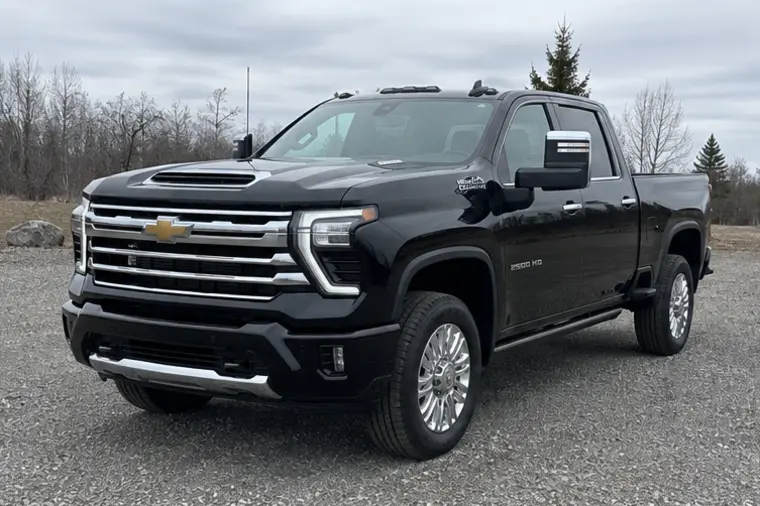
Chevrolet Silverado 2500HD diesel problems should be investigated by engine generation, symptom and repair history. This guide focuses on useful documented leads and the buying decisions they inform. It also addresses the working pickup around the engine: its tires, hitch, chassis, modifications and ability to carry the load you actually intend to move.
Make a problem list for the actual truck
Separate the seller's reported symptoms, the shop's confirmed findings and the general concerns you want checked. These are different kinds of evidence. Record the VIN, engine code, model year and modifications so that the inspector can choose the relevant documentation before the appointment.
Not every entry applies to every Silverado 2500HD. A source covering a particular L5P application should not be applied to an earlier engine by displacement alone. The page is a focused inspection guide, not an exhaustive catalogue of every repair a used truck could need.
| Concern to investigate | Evidence to match | Buying consequence |
|---|---|---|
| Transmission shift history | Canadian recall 2024637 | Confirm campaign action and investigate present symptoms |
| Fuel-pressure codes | 20-NA-197 | Establish electrical or mechanical cause before pricing parts |
| Coolant loss or repeated top-ups | 18-NA-098 | Locate the leak and define the repair scope |
| Cold rough running | 19-NA-108 where applicable | Observe the complaint before warm-up hides it |
| Older fuel-system replacement | PIP5151F | Review contamination evidence and the complete invoice |
| Hitch, tires or suspension changes | Physical inspection and exact limits | Decide whether the truck remains suitable for the job |
Diesel transmission campaign: separate status from condition
Transport Canada recall 2024637 includes specified 2020–2022 diesel Silverado HD vehicles. Valve wear can cause harsh shifts and wheel lock-up. The corrective software detects wear and can activate warnings with a fifth-gear restriction.
Ask Chevrolet for the current VIN result, and keep the campaign completion record where applicable. If the truck is already showing a shift problem, have that condition assessed independently. Do not accept a previous campaign visit as a blanket statement that the transmission is mechanically ready for another season of towing.
When reviewing receipts, ask the seller to identify each action in ordinary terms: scheduled fluid service, programming, diagnosis or hardware repair. This prevents a misunderstanding where both parties say “transmission service” but mean different work. Obtain qualified advice about any unresolved symptom before arranging a normal driving or towing assignment.
A pressure-code diagnosis should not begin with a shopping list
GM 20-NA-197 describes possible fuel-pressure sensor connector corrosion or damage in specified 2017–2020 L5P Silverado applications. P0191 is among its listed codes. Its diagnostic direction makes connector condition relevant before assuming an expensive mechanical repair.
For a truck with repeated fuel-pressure warnings, ask for more than a screenshot of a code reader. What did the shop find, what did it rule out and why was the chosen component replaced? If the latest visit was only a reset, preserve that fact as an unresolved item rather than calling the problem repaired.
Do not assume the inexpensive possibility is necessarily the correct one. The inspector must determine the actual fault. A buyer's role is to request a defensible diagnosis and a clear repair estimate, not to open the system or authorize several replacement parts in the hope that one will solve the complaint.
Coolant loss needs a located leak
The June 2019 version of GM 18-NA-098 covers specified 2017–2020 Duramax applications and identifies several possible coolant leak locations. Fluid travelling from higher on the engine can complicate diagnosis from an underside observation alone.
Ask for the history of low-level messages and top-ups, including the distance between events. Has the truck overheated, or has the seller simply noticed a changing level? Give those facts to the shop. A cooling-system inspection should explain the identified source and the work required, not just propose a major repair based on where fluid eventually drips.
After a repair, ask how the system was checked and whether the original complaint returned. A receipt for coolant or an unexplained reservoir refill is not the same as a completed leak repair. During a viewing, keep clear of hot pressurized components and let the technician select the proper procedure.
Cold misfire evidence should be read narrowly
GM 19-NA-108 concerns a defined 2017–2019 L5P cold-running complaint and a possible doubled head-gasket installation on one bank. The bulletin includes diagnostic preconditions, including distance since new or injector replacement. It does not say that every rough-starting L5P has this condition.
Use a cold inspection to collect the symptom before deciding what caused it. Ask whether the truck smooths out warm, whether a warning remains and whether recent injector or engine work is documented. The inspector can then decide whether the specific bulletin belongs in the diagnostic process.
The buying implication is to preserve evidence, not to label an entire year as defective. Do not budget a head-gasket repair from a brief video or a seller's description. Wait for the qualified diagnosis and ask how any proposed repair relates to the observed problem and the source's application.
Earlier fuel-system work: read beyond the pump line
PIP5151F discusses contamination evidence in specified 2011–2019 6.6L Silverado applications with starting, running or pressure concerns. It includes water and incorrect-fluid examples; it does not establish the failure frequency of every Duramax fuel pump.
If a candidate has received substantial fuel-system work, request the full invoice and the original findings. Ask whether the shop identified contamination, how the repair scope was selected and what verification followed. A description of “new pump” leaves the rest of the system and the reason for the failure unclear.
An older truck with thorough evidence may still be a suitable purchase. Compare its documented condition with the alternatives rather than rewarding or penalizing an engine label on its own. Keep any unresolved recurrence in the inspection report so it can be reflected in the decision and repair plan.
Inspect the chassis and attachments before choosing a trailer
The 2500HD's job suitability depends on the exact configuration and installed equipment. Read the certification and tire information, identify the hitch, and calculate the people, tools, accessories and loaded trailer contribution the truck will carry. A model-family maximum cannot substitute for that individual load plan.
Have the inspection include tire wear, steering, suspension, brakes, bed condition and hitch mounting. If equipment has been added or removed, ask for the installation records and examine the affected areas. A truck that looks stock in a sales photograph may still have a work history relevant to the assessment.
Do not confuse a load limitation with a repairable fault. Replacing tires or suspension components may address condition, but it does not automatically create a different certified capacity. If the intended assignment needs another configuration, compare an appropriately equipped 3500HD before treating the 2500HD as the only purchasing option.
Use a three-stage inspection appointment
Before starting, review the seller's records and the list of reported symptoms. Ask the shop to note what it can verify and what remains uncertain. A cold-start concern, intermittent electrical complaint or specialized upfit may require time or expertise beyond a standard viewing, so agree on the scope in advance.
During the assessment, collect the relevant scan findings, operating observations and physical condition report. Let the technician select safe test conditions. Do not deliberately overload the truck or provoke a dangerous driving event to prove that a symptom exists. If a complaint cannot be reproduced, retain that limitation in the written report.
At the end, ask for findings grouped into immediate work, maintenance planning and further diagnosis. Request a clear explanation of any safety or drivability concern before deciding how the truck will be moved or used. The sale should proceed from the information actually obtained, not the inspection result everyone hoped to receive.
Prevention: maintain the right truck, not an online average
Use the maintenance schedule and fluid specifications for the exact model and engine, including the applicable operating conditions. Keep dates, kilometres and invoices. A maintenance reset indicates a reset occurred; the invoice is what documents the service performed and the materials used.
For a truck operating through Canadian winters, include the underbody and installed accessory wiring in routine condition reviews. Ask a qualified shop to explain the significance of corrosion or previous repairs. Do not infer a healthy chassis from a fresh coating, or a failed chassis from superficial appearance alone.
Record new symptoms as they occur. A brief note about temperature, load, speed, recent service and the exact warning can help the next diagnostic visit. Avoid repeatedly clearing codes without keeping the original information, since the history is part of understanding a recurring concern.
Repair cost and ownership decision
Obtain a quote for the diagnosed scope instead of using a single average repair price. Separate diagnosis, parts, labour, fluids, programming and tax where relevant. If the scope may grow after inspection or disassembly, ask the shop to state the assumptions and the next authorization point.
Budget for the practical interruption as well as the invoice. A truck needed for towing or work may require a suitable replacement, trailer storage or rescheduled commitments. Confirm appointment and parts availability before treating a proposed repair date as certain. Use your actual situation in the downtime calculation.
A lower sale price can account for known work but cannot establish an unknown cause. Decide whether you want the seller to repair and document the problem before purchase or whether you have a sufficiently clear scope to manage it yourself through a qualified shop.
Silverado 2500HD problems: FAQs
Does a fuel-pressure code prove the pump failed? No. It needs diagnosis, and matching L5P applications have documented electrical inspection guidance.
Should every coolant-loss complaint be budgeted as a head-gasket job? No. Locate the source and assess the history before selecting the repair.
Does a bulletin mean every truck in its year range has the defect? No. It gives technical guidance for matching conditions, not a measured ownership-wide failure rate.
Can a mechanically sound 2500HD still be wrong for my trailer? Yes. Configuration and the actual loaded limits must suit the assignment independently of mechanical condition.
Evidence note: manufacturer documents establish the specific facts and applications cited. Buying workflows and cost scenarios are DieselTrucks.ca editorial guidance. These pages do not publish measured failure rates or confirm the condition, recall status or capacity of a particular truck.
General educational content for Canadian diesel-pickup research. Verify the exact truck, model year, certification labels, owner manual and manufacturer documentation, and obtain qualified mechanical or towing advice where appropriate.
Sources & Further Verification
Use the exact model year, VIN, truck labels and current manufacturer documentation when moving from general research to a purchase or towing decision.
- Transport Canada 2024637 — diesel transmission recall
- GM 20-NA-197, September 2020 — fuel-pressure connector diagnosis
- GM 18-NA-098, June 2019 — Duramax coolant leak diagnosis
- GM 19-NA-108, June 2019 — defined L5P cold-start concern
- GM PIP5151F, July 2018 — diesel fuel contamination evidence
- Chevrolet Canada manuals and guides