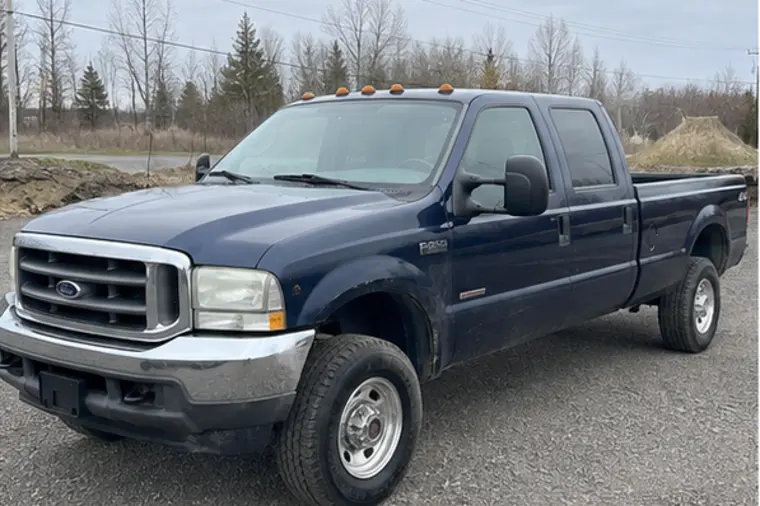
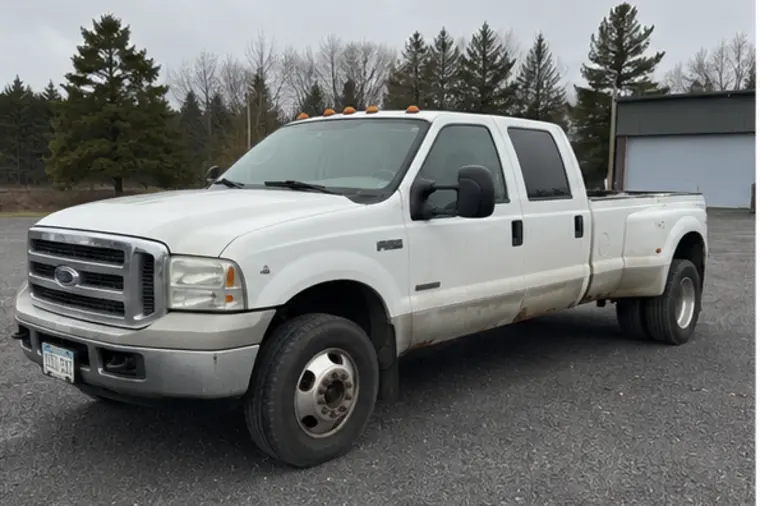
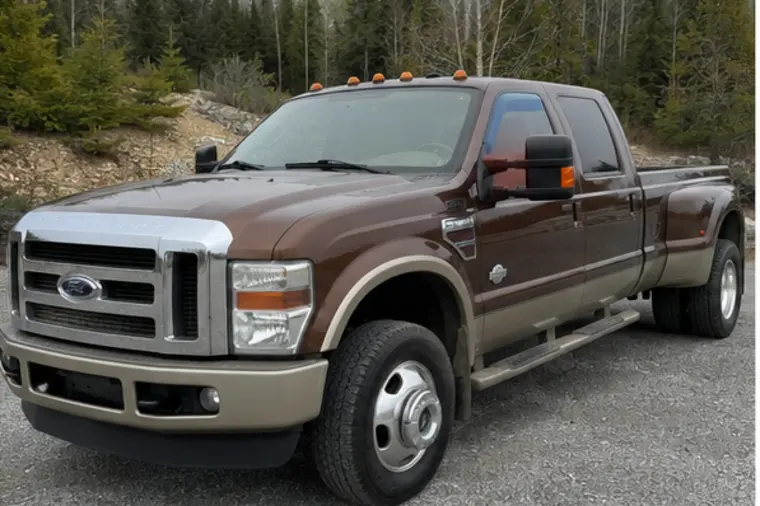
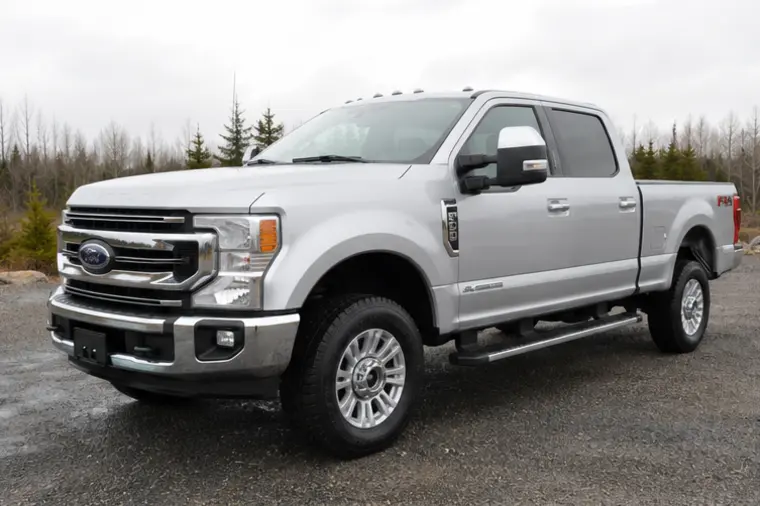
Power Stroke is a family name, not one engine. Buyers should identify the displacement, model year, truck platform, transmission and emissions era before drawing conclusions from the badge.
Generation timeline
7.3L Power Stroke
An earlier electronically controlled diesel era. Verify the exact truck year, chassis condition, service evidence and the condition of age-related systems.
6.0L Power Stroke
An overlapping 2003 transition makes VIN and build-date research useful. Documentation of maintenance, cooling, fuel and previous repair work matters.
6.4L Power Stroke
A short production era with different emissions and ownership context from both the 6.0L and later 6.7L.
6.7L Power Stroke
Ford's modern in-house diesel spans several output, turbocharger, transmission and Super Duty product updates; do not apply one current specification to every year.
Transition dates can overlap within a model year. Confirm the VIN, build date, emissions label and official documentation for the exact truck.
Use generations to choose evidence, not to declare a winner
This guide maps the four heavy-duty Power Stroke families named in the timeline: 7.3L, 6.0L, 6.4L and 6.7L. The useful question is what changes in identification, operating requirements and inspection—not which badge wins a popularity contest. Keep the engine family, model year, truck application and installed transmission as separate fields in your notes.
A listing's displacement is a starting point. Confirm the VIN and build information, inspect engine and emissions identification, and reconcile any replacement hardware or electronic changes. A truck can retain its original model-year identity while no longer carrying an untouched original powertrain. Do not apply a generation summary as a parts-ordering or repair instruction.
What the original Ford documents change about the inspection
The table links each family to a specific piece of manufacturer evidence. These are examples of why the right document matters, not a complete catalogue of faults or all annual specifications. Keep the full owner guide alongside the diesel supplement because vehicle loading and engine operation are different subjects.
| Family and dated evidence | Verified distinction | Buying question |
|---|---|---|
| 7.3L — 2003 supplement | Oil pressure is used to actuate the fuel injectors | Do oil-service and starting records fit this system? |
| 6.0L — 2007 supplement | Oil-actuated injection; F-Super Duty HFCM and E-Series FCM applications distinguished | Is the service evidence for the actual platform? |
| 6.4L — Ford TSB 12-12-10 | Conditional 2008–2010 F-Super Duty EGT-sensor diagnostic path | Do the symptoms and recorded codes actually match? |
| 6.7L — 2011 supplement | SCR uses DEF; DPF is a separate exhaust-treatment function | Are fluid, warning-message and emissions records complete? |
Older oil-actuated systems require more than an odometer comparison
Ford's 2003 7.3L supplement connects oil viscosity and service intervals to the pressure needed for injector actuation. Its 2007 6.0L supplement likewise explains that relationship and separately names the Powertrain Control Module and Fuel Injection Control Module. These facts justify asking for proper service and diagnostic evidence; they do not make every hard-start complaint an oil-system or module failure.
For an older candidate, obtain a genuinely cold assessment when practical and ask the inspector to record how it starts, idles and behaves after warming. Review the oil and fuel-service chronology, repair invoices and any recurring complaints. Do not diagnose by exhaust colour or by one remembered forum symptom. The technician needs the actual application and test results.
The 2007 document's Econoline footer is not permission to treat every procedure as van-only or to transfer every van detail to a pickup: its text explicitly distinguishes F-Super Duty and E-Series fuel-conditioning installations. Read those application labels. The same discipline is necessary when a search result combines pickups, vans, Excursion or chassis-cab references under the Power Stroke name.
Age-related truck condition remains a separate decision. Corrosion, electrical repairs, steering, brakes, tires and transmission condition can determine the cost of an older purchase even when the engine's service file is convincing. Ask for estimates on documented defects instead of budgeting around an assumed engine lifespan.
A 6.4L bulletin illustrates why symptom boundaries matter
Ford's December 2012 TSB 12-12-10 addresses some 2008–2010 F-Super Duty vehicles with 6.4L diesel, lack of power, an illuminated malfunction indicator and listed diagnostic codes associated with exhaust-gas-temperature sensing. Its first decision is whether the specified codes are present; when they are not, the bulletin directs diagnosis elsewhere.
That is useful evidence for a professional reviewing a matching complaint, not a reason to replace parts pre-emptively or declare every 6.4L unreliable. The bulletin is neither a recall nor a measured failure rate. Its historical warranty wording does not establish current coverage for a used Canadian truck.
When a seller says a bulletin was completed, obtain the invoice and diagnostic context. Confirm the original symptom was resolved and that no new or unrelated issue remains. Keep a repair claim tied to the truck and the work, not to a sweeping statement that an entire generation has been 'fixed'. Detailed 6.4L buying and problems research remains on its dedicated pages.
The 6.7L era is not one frozen output or emissions specification
Ford's 2011 diesel supplement describes SCR and DEF separately from the DPF and its regeneration functions. Do not treat a DEF message, a particulate-filter message and an engine fault as interchangeable. Read the exact warning and use the correct year's instructions and professional diagnosis; this generation guide does not prescribe a universal drive cycle or stationary-regeneration procedure.
At the current end of the timeline, Ford's 2026 pickup guide lists standard 6.7L output at 475 hp and 1,050 lb-ft and the high-output version at 500 hp and 1,200 lb-ft. Both belong to the 6.7L family. Those ratings are not evidence that an early 6.7L has the same hardware, transmission or calibration.
Treat output, vehicle rating and condition as three different questions. Engine torque does not establish payload or towing suitability, and a current maximum cannot be applied to an older F-250 or F-350. Identify the actual pickup or chassis-cab application, then use its matching guide and labels. The current guide is a dated illustration of variation, not a retrofit recommendation.
Build a generation-specific buying file and a realistic shortlist
Keep five kinds of evidence together: vehicle identity, correct manufacturer literature, chronological servicing, modification and repair records, and an independent inspection report. Note explicitly where something is unknown. A missing invoice is uncertainty; it is not proof that a particular component failed or that maintenance never happened.
Ask what service is due for the actual duty cycle rather than transferring an interval between generations. Cold short trips, extended idling, heavy hauling and ordinary road use may lead you to different sections of a manufacturer's schedule. Have the correct fluids and procedures confirmed by the servicing professional. A shared Power Stroke badge does not establish interchangeability.
For each suitable candidate, compare the cost of reaching a known baseline, the availability of competent service where you travel and the consequences of downtime. Use actual quotations for identified work. These sources provide no controlled, directly comparable generation-wide failure rates, no guaranteed remaining kilometres and no universal fuel-economy result.
Which generation should you buy? The one whose verified complete-truck capability, condition, service needs and budget fit your job is a defensible answer; a blanket winner is not. Does a newer engine remove inspection risk? No. Does an older engine's reputation excuse missing records? No. Keep the separate engine, problems, reliability and year-selection guides available for the next level of research.
Finish by verifying any applicable campaign through the manufacturer using the VIN and the vehicle's market. A U.S. bulletin, a model-family timeline or a clean search result cannot establish Canadian recall status. The purpose of this map is to make the next question more precise, not to approve an unseen truck.
Use the generation to choose the right inspection brief
The first decision is which engine is installed, followed by which truck application and model year it serves. Keep the 7.3L, 6.0L, 6.4L and 6.7L research paths separate. A body-generation name, registration year or Power Stroke emblem alone is not enough to select parts or service instructions.
This is also a useful discipline for engine-swapped or rebuilt trucks. Record the chassis identity and installed engine separately, then ask a qualified shop how the present combination changes diagnostics and parts sourcing. Avoid treating a newer replacement engine as if every supporting component had also been renewed.
| Starting point | Next document to collect |
|---|---|
| Engine identity | Build record and engine-specific identification |
| Truck application | Pickup or chassis-cab owner literature |
| Exact model year | Matching diesel supplement and maintenance schedule |
| Modification history | Itemized parts and calibration records |
A later rating does not rewrite an earlier generation
The 2024 pickup guide separates standard-output and high-output 6.7L versions. That distinction sits within one displacement, demonstrating why an engine-family timeline should not end at a single badge or headline number.
Use the individual engine guides for version-specific research. When comparing generations, bring the same intended workload, ownership period and repair budget to the exercise. A purchase-price saving on an older truck is only useful if its condition and support requirements fit the way you will use it.
Keep reliability evidence in the right category
A recall identifies a defined safety-related population and required action. A service bulletin explains a condition and diagnostic or repair guidance. An owner’s experience describes one vehicle. None of these, by itself, ranks every Power Stroke generation by expected life.
For a buyer, the most useful output is a shortlist of questions that an inspection can answer. Separate documented campaigns, observed symptoms, completed repairs and missing evidence in the purchase file. That approach makes a generation comparison actionable without pretending the available sources provide a universal winner.
Use the timeline as a research map
Year ranges describe broad pickup-era context and can include transition-year overlap. Confirm the VIN, emissions label and manufacturer documentation for the exact truck.
Truck platform and transmission
Engine-family research should stay connected to the F-250, F-350 or F-450 platform, cab, bed, axle and transmission fitted to the truck. A good engine description does not establish payload, towing capacity or overall condition.
Used-buying priorities
Ask for a genuinely cold inspection, a complete warning-light check, dated service records and clear modification disclosure.
- Ask for dated maintenance and repair records rather than relying on a verbal summary.
- Evaluate a true cold start, warning lights, leaks, transmission behaviour and underbody condition.
- Confirm whether the truck has towed, carried commercial loads or been modified, and inspect accordingly.
- Verify emissions equipment, tires, suspension and the exact payload label on the truck itself.
Use the generation guide as a buying map
Start with the engine family to identify the appropriate model-year research, then move into the separate used-buying guide for inspection, records and ownership questions. The reference page and buying page serve different intents.
Do not transfer one era's claims to another
Power Stroke generations differ in truck platform, transmission and emissions context. Exact ratings and service requirements belong to the applicable model-year Ford documentation.
Select the document before comparing the badge
Use the timeline to enter the correct engine reference, then open the dedicated buying guide for inspection and repair evidence. The Ford truck manual and diesel supplement have complementary roles; keep both for the candidate's year.
Engine preference can narrow a shortlist, but the final choice should compare documented condition and complete-truck load fit. A newer engine generation is not evidence that an individual truck was maintained, and an older engine's reputation does not price the chassis repairs it may need.
| Research purpose | Start here |
|---|---|
| Older injection and starting context | 7.3L application and its diesel supplement |
| Documented repair-claim assessment | 6.0L buying guide and actual repair file |
| 2008–2010 candidate | 6.4L-specific inspection and operating documents |
| Later Super Duty | 6.7L reference plus exact-year transmission and towing information |
Evidence note: manufacturer documents establish the specific facts and applications cited. Buying workflows and cost scenarios are DieselTrucks.ca editorial guidance. These pages do not publish measured failure rates or confirm the condition, recall status or capacity of a particular truck.
FIND TRUCKS USING THIS ENGINE
Connect the engine to a model year and exact truck.
Engine-family research is one part of the configuration. Use the explorer to connect model, year, transmission, cab, bed and rear-wheel context.
General educational content for Canadian diesel-pickup research. Verify the exact truck, model year, certification labels, owner manual and manufacturer documentation, and obtain qualified mechanical or towing advice where appropriate.
Sources & Further Verification
Use the exact model year, VIN, truck labels and current manufacturer documentation when moving from general research to a purchase or towing decision.