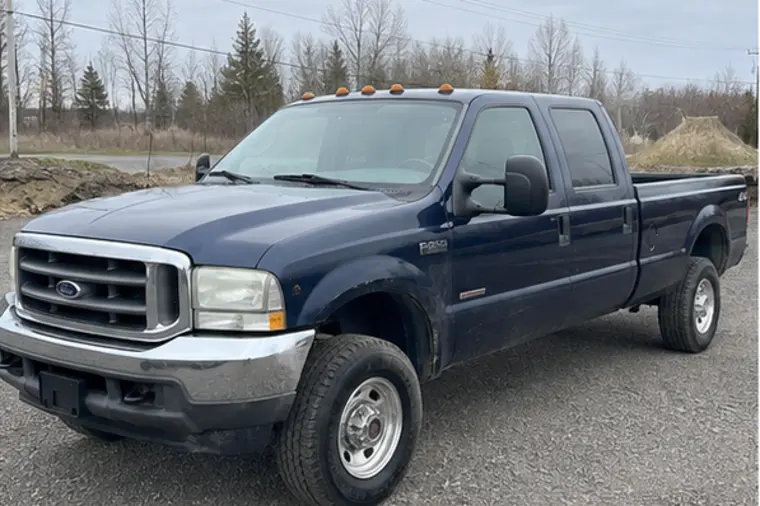
A 7.3L Power Stroke can have a strong reputation and still be the wrong used truck. The reviewed primary evidence explains how a matching 2003 engine operates, but it does not provide exposure-adjusted failure rates or a remaining-life forecast. Reliability must be assessed at candidate level: establish the exact Ford application, reconstruct service and repair history, test cold and fully warm operation, diagnose oil-pressure injection, fuel, air and wiring concerns, audit modifications and verify the entire vehicle can perform the job with acceptable support and downtime.
Reliability verdict: condition and evidence outrank reputation
A reliable candidate has aligned identity, coherent maintenance and repair records, satisfactory cold and hot operation, legal configuration, safe load fit and credible local support.
Keep a truck pending when a material symptom, modification, repair, identity or capacity question is unresolved. Decline it when the consequence exceeds the ownership plan or safe configuration cannot be established.
Do not turn survivor stories, complaint counts or longevity anecdotes into a percentage. They lack a common population, exposure and inspection standard.
Establish the application and evidence hierarchy
Record VIN, year, F-Series, Excursion or E-Series line, body, engine and emissions labels, transmission, axle, tires, original market and calibration. Reconcile replacement engines and body conversions with invoices.
Use original manuals for operating and maintenance facts, campaign sources for defined safety actions, candidate records for history and professional inspection for present condition.
None substitutes for the others. A manual cannot prove compliance; a recall record cannot diagnose every symptom; an inspection cannot recreate unknown decades.
Treat the 2003 supplement as bounded evidence
Ford's supplement documents oil-pressure-actuated injection, electric fuel supply, filtration and water separation, cold-weather operation, air restriction and application differences.
It does not compare reliability across years or publish failure rates for injectors, modules, sensors, wiring, turbochargers, high-pressure-oil components or internal engines.
Use its procedures and system descriptions when the truck matches. Verify another year through its own original literature rather than assuming specifications and intervals are unchanged.
Reconstruct the maintenance position
Collect dated and kilometre-linked oil and filter, fuel-filter and water-separator, coolant, transmission, axle, transfer-case and brake records. Include product specifications where documented.
Because Ford explains that oil pressure actuates the injectors, lubrication evidence is relevant to starting and running. A fresh service cannot prove past compliance or erase wear.
Add duty: towing, idle, winter, dust, storage and short cycles. Engine hours and ownership chronology can clarify what odometer distance alone cannot.
Test cold and hot operation as different states
From a true cold soak, record temperature, block-heater use, batteries and charging, wait-to-start behaviour, crank time, smoke, warnings and stabilization. Ford connects cold operation with correct oil, winter fuel, filter waxing, fuel level and glow-plug control.
After full warm operation, assess restart, idle, response, smoke, fluid trends, warnings and transmission behaviour. Preserve codes and data before clearing them.
An abnormal start does not identify one component. A warm demonstration does not establish winter reliability.
Evaluate oil-pressure injection evidence
For long crank, no-start, hot restart or rough running, capture cranking speed, relevant oil-pressure and injection data, fuel supply, electrical condition and operating temperature.
Ask what measurement led to any pump, injector, seal, sensor, module or wiring repair. Connect complaint, diagnosis, scope and condition-matched recheck.
Fresh oil, a replaced sensor or a new injector set is not proof of cause by itself. Keep an unresolved chain visible in the valuation.
Evaluate fuel and contamination evidence
Review filter and water-separator history, warning operation, leaks, restriction data and fuel-quality findings. Preserve a suitable sample before cleaning when contamination is suspected.
Identify which tank-to-injector components were assessed, replaced or reused. A fuel-system invoice may cover one section while leaving the initiating condition or downstream effects unclear.
Recheck under the same temperature and load that produced the complaint. A parts list without a comparable outcome is incomplete reliability evidence.
Check air, turbo and exhaust without shortcuts
Inspect air restriction, intake and charge-air integrity, exhaust condition, oil supply, boost-related data, smoke and performance under safe load. Ford notes severe-weather snow or ice restriction as one possible context.
Do not call the turbocharger failed from sound or low power alone. Fuel, air, exhaust, electrical and mechanical evidence must be separated.
Identify power, boost or exhaust-brake additions. Ford warned that some aftermarket products could cause severe powertrain damage.
Audit electrical and wiring condition
Inspect batteries, charging, cables, grounds, accessible harness routing, connectors, repaired sections and evidence of moisture, heat or rodent damage.
Seller labels such as “IDM,” “cam sensor” or “under-valve-cover harness” are not diagnoses. Request codes, electrical measurements, parts and the result under the original condition.
On an older vehicle, several intermittent faults may coexist. Build a timeline rather than counting each visit as a separate internal-engine failure.
Read repairs and rebuilds narrowly
For engine replacement, rebuild or major injection and turbo work, obtain the initiating complaint, measurements, disassembly findings, serial or assembly identity, parts, reused systems, installer, warranty and outcome.
A rebuilt engine does not renew fuel, cooling, electrical, transmission, chassis or body systems. Establish whether the original cause was addressed.
Invoice value is not a reliability score. A complete, coherent repair and recheck is evidence; spending alone is not.
Inspect the complete vehicle
Assess transmission, transfer case, axles, steering, brakes, tires, wheels, frame, mounts, hitch, wiring, body and corrosion. Include plow, towing, service-body and off-road use.
Separate engine findings from transmission, chassis and body findings. A satisfactory engine cannot make an unsafe or overloaded truck reliable for the assignment.
Time-related degradation matters even at low kilometres. Storage, seals, hoses, grounds and corrosion belong in the ownership plan.
Verify load fit independently
Use certification or door labels, axle and tire limits, hitch limits and exact vehicle literature to calculate occupants, cargo, body, accessories and loaded tongue or pin weight.
Do not infer towing or payload from engine output. F-Series, Excursion and E-Series packaging and complete-vehicle ratings are not interchangeable.
Near a limit, use representative scale weights and professional setup advice. Reliability for the wrong load is not a useful purchase outcome.
Check campaign status precisely
Use Ford Canada and Government of Canada tools for the actual VIN and retain dated results. No VIN was submitted for this guide, so no Canadian truck is described as open, complete, included or excluded.
The NHTSA 2002 F-250 SD result is U.S. model-level whole-vehicle evidence, not a 7.3L engine failure dataset. Keep campaign, engine diagnosis and present condition separate.
Completion resolves the defined action only. It does not certify the whole truck or guarantee remaining life.
Plan service and downtime
Use Ford Canada's locator to identify nearby facilities, then confirm legacy-diesel capability, parts access, timing, body access and modification acceptance for the exact truck.
A listing is not a capability guarantee. Speak with the actual shop before relying on it for commercial support.
Estimate transport, diagnosis, parts delay, repair, validation and substitute capacity. A truck can be mechanically attractive yet operationally unreliable for a time-critical job.
Use a reliability evidence matrix
Classify each system as supported, repaired and rechecked, unresolved or not assessed. Do not average the categories into a fabricated score.
| Area | Supported | Unresolved |
|---|---|---|
| Identity | VIN, labels, literature and replacement records agree | Application or installed engine and calibration conflict |
| Maintenance | Dated, kilometre-linked service and duty chronology | Unsupported “always maintained” claim |
| Operation | Cold and hot tests plus relevant data are satisfactory | Pre-warmed truck or unreproduced symptom |
| Repairs | Complaint, diagnosis, scope and recheck close the chain | Repeated parts without measured cause |
| Configuration | Legal hardware and known modifications | Unknown tuning or removed equipment |
| Work fit | Verified ratings, load arithmetic and support | Capacity inferred from engine reputation |
Preserve an ownership baseline
Save identity photos, manuals, campaign results, service history, scans, inspection, repairs, modifications, load documents, estimates and stated limitations.
Separate immediate safety work, baseline maintenance, diagnosed repairs, unresolved investigation and optional upgrades. Use local written scopes rather than generic online prices.
Reliability is a managed condition, not a permanent badge. Revisit the baseline as use, symptoms and evidence change.
7.3L Power Stroke reliability questions
How reliable is the 7.3L Power Stroke? No reviewed primary source supplies one defensible percentage across all applications and histories.
Does high mileage prove the engine is worn out? No; it requires condition, service and duty evidence.
Does low mileage prove reliability? No; time, storage and incomplete maintenance still matter.
Does a rebuilt engine reset the truck? No; verify cause, scope, recheck and every supporting vehicle system.
Can recall results replace an inspection? No. They answer defined safety-action questions, not the truck's complete condition.
Evidence note: manufacturer documents establish the specific facts and applications cited. Buying workflows and cost scenarios are DieselTrucks.ca editorial guidance. These pages do not publish measured failure rates or confirm the condition, recall status or capacity of a particular truck.
General educational content for Canadian diesel-pickup research. Verify the exact truck, model year, certification labels, owner manual and manufacturer documentation, and obtain qualified mechanical or towing advice where appropriate.
Sources & Further Verification
Use the exact model year, VIN, truck labels and current manufacturer documentation when moving from general research to a purchase or towing decision.
- Ford 2003 7.3L supplement — engine lubrication and injection
- Ford Canada — current owner-manual access by vehicle and model year
- NHTSA recall API — 2002 Ford F-250 SD model-level U.S. results
- Ford Canada — current VIN recall lookup
- Government of Canada — current recalls, advisories and safety-alert search
- Ford Canada — dealer and service-location search
- Ford owner manuals