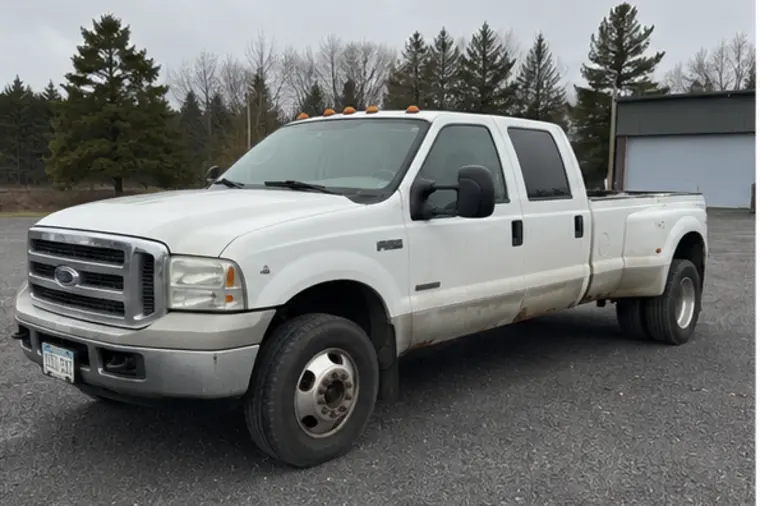
No reviewed primary source establishes one statistically most reliable 6.0L Power Stroke model year. Ford's 2007 diesel supplement provides a well-defined late-production reference for F-Super Duty and E-Series operation, maintenance and system architecture, while a 2005 U.S. campaign documents one narrow stalling population. Those sources help buyers compare evidence; they do not rank years. The strongest candidate is the exact truck whose identity, repair chronology, cold-and-hot behaviour, maintenance, configuration and service path withstand independent review.
Start with the answer: there is no universal winning year
A buyer can reasonably prefer a later documented configuration, an earlier truck with a stronger repair file, or an E-Series application that fits a different assignment. None of those preferences is proof of a lower failure rate. The reviewed sources do not compare model-year populations with equal exposure, maintenance, duty cycle and verified outcomes.
Define the job before comparing advertisements: pickup or van, passengers, payload, trailer, winter use, route, annual distance, idle time, downtime tolerance and service geography. Then compare only vehicles that can safely perform it.
Select the best-supported candidate, not the year with the strongest reputation. A clean inspection cannot erase missing identity or repair history, and a thick invoice file cannot make a mismatched or unsafe truck suitable.
Confirm the exact vehicle and engine application
Record VIN, model year, build labels, F-Super Duty or E-Series line, body, wheelbase, drivetrain, transmission, engine label and original market. If an engine, cab, control module or complete vehicle was replaced, connect the installed identifiers to the work order.
Ford's 2007 supplement expressly distinguishes the F-Super Duty frame-mounted horizontal fuel conditioning module from the E-Series fuel conditioning module near the transmission. It also gives separate ambulance-preparation direction. That is enough to reject the idea that every 6.0L application shares one inspection or parts path.
Match the chassis to its exact Ford owner literature and the engine to the service information appropriate to the installed configuration. A seller's “2007 engine” description is not a substitute for identifiers.
Use 2007 as a documented reference, not a reliability award
The Ford supplement reviewed for this guide is dated for the 2007 6.0L diesel and covers both F-Super Duty and E-Series applications. It explains oil-pressure-actuated fuel injection, PCM and FICM control, fuel/water separation, cold-weather operation and relevant maintenance warnings.
That makes 2007 useful as a late-era evidence anchor: a buyer can compare the candidate's equipment, literature, service records and operating behaviour with a primary document. It does not show that a 2007 truck fails less often than an earlier one.
Do not apply a 2007 procedure, fluid statement or component location backward without exact-year confirmation. For every other year, retrieve the matching Ford literature and record any application difference rather than filling the gap from memory.
Compare years through documented fields
This table creates research checkpoints. It does not assign a score or claim that one year has superior durability.
| Comparison field | What the reviewed evidence supports | What still requires candidate-specific proof |
|---|---|---|
| Application | Ford distinguishes F-Super Duty and E-Series service context | VIN, body, build labels and installed equipment |
| Injection control | The 2007 supplement describes oil-pressure-actuated injectors controlled by PCM/FICM | Measured starting data, wiring condition and repair outcome |
| Fuel conditioning | Different module location and arrangement by vehicle line | Both filter histories, contamination evidence and safe inspection |
| Cold-weather operation | Ford addresses oil grade, winter fuel, batteries, block heater and restriction | True cold-soak behaviour in the intended climate |
| Cooling context | Ford identifies an oil cooler and supplies operating warnings | Current pressure, temperature and leakage test results |
| Campaign context | U.S. 05V270 describes a defined 2005 stalling population | Current Canadian VIN status and present-condition diagnosis |
Keep 05V270 in its narrow lane
The NHTSA model-level result for a 2005 Ford F-250 SD includes campaign 05V270 for certain 6.0L diesel vehicles that could stall. The remedy description addresses the FICM wire harness, the injection-control-pressure sensor connector or both after inspection.
That filing supports a specific U.S. model-year and campaign question. It does not establish the frequency of all stalling, condemn every 2005 truck, rank 2005 against other years or report the status of a Canadian VIN.
For an actual candidate, use Ford Canada's current VIN recall lookup and the Government of Canada recall search. Retain the result and repair order. Diagnose any current stall separately even when campaign completion is documented.
Compare starting evidence cold and hot
Arrange a genuine cold soak when practical. Record ambient temperature, block-heater use, battery state, wait-to-start sequence, cranking duration, smoke, idle stabilization, warnings and scan information before anyone clears codes.
After a fully warm drive, stop and restart the engine under safe conditions. A good warm demonstration cannot answer cold-start questions, and a cold start alone cannot resolve a temperature-dependent hot-restart complaint.
Ask the inspecting technician which voltage, current, pressure-related, temperature and control observations were captured while the symptom occurred. Do not name injectors, a pump, a sensor or a module from cranking behaviour alone.
Treat oil history as operating evidence
Ford explains that engine-oil viscosity matters because oil pressure operates the injectors and warns that extended oil-change intervals may affect performance, economy and engine life. That makes oil identity and interval evidence relevant to year comparison.
Request dated records showing the oil and filter used, kilometres or hours, operating conditions and any pressure-related diagnosis. Match the required fluid and interval to the exact-year literature rather than publishing one rule for the entire engine family.
Fresh oil is not proof that a hard-start concern is repaired. Conversely, an incomplete record is uncertainty, not automatic evidence of engine damage. Price the catch-up and diagnostic work needed to close the gap.
Inspect fuel filtration, water handling and contamination history
The 2007 supplement describes primary water separation through an HFCM or FCM and an engine-mounted secondary fuel filter. It directs action when the water-in-fuel indicator appears and provides application-specific service context.
Ask for both filter histories, fuel source, water-in-fuel events, contamination diagnosis and any replaced components. Inspect for leaks, damaged connectors and improvised plumbing without opening a pressurized or running system.
If fuel work was performed, request the original complaint, test results, complete parts scope and post-repair outcome. A pair of new filters or an injector invoice cannot establish that supply, contamination or electrical causes were investigated.
Evaluate cooling claims with measurements
Ford identifies an engine oil cooler in the engine valley whose purpose is to regulate oil temperature. This supports collecting oil/coolant temperature and cooling-system evidence; it does not diagnose an oil cooler, EGR cooler or head gasket from reputation.
For coolant loss, pressure, overheating or towing-temperature claims, document level, fluid condition, visible leakage, operating data and the professional tests used. Record whether the event occurred while towing, idling, plowing, climbing or driving unloaded.
For a prior cooler, gasket or related repair, connect complaint, diagnosis, parts, machine or installation work and a relevant loaded recheck. The candidate may be acceptable after verified work, but the repair label alone should not decide the year comparison.
Investigate low power, air and turbo evidence in sequence
Record when low power occurs, smoke colour, warnings, air restriction, fuel restriction, boost-related data, exhaust evidence and load. The Ford supplement notes that filter appearance alone does not establish restriction and that snow or ice can create a temporary restriction.
Do not treat a turbocharger replacement as a reliability upgrade without knowing why it was installed and whether the original concern closed. Request parts, calibration, oil/air/exhaust findings and post-repair data.
A truck used for snow removal or winter highway work needs an inspection reflecting that environment. A summer test drive cannot fully answer snow ingestion, cold fuel and cold electrical questions, so keep those limitations visible.
Read every major repair as a chronology
Build separate timelines for starting, injection, FICM/wiring, fuel, cooling, turbo, engine, transmission and electrical work. Each entry should identify complaint, measured finding, diagnosis, parts, installer, date/kilometres and outcome.
“Bulletproofed” is not a defined repair scope. Ask for itemized evidence of coolers, gaskets, fasteners, machining, calibration and related work, plus the reason and recheck. Classify each claimed item as documented, visually consistent, functionally rechecked, unresolved or not assessed.
A rebuilt engine is not a complete-truck reset. Identify what assembly was installed or rebuilt, what reused systems remained and whether the current engine identity matches the invoices.
Treat tuning and emissions changes as a separate configuration
Ford warns that aftermarket products intended to increase power can damage the engine or transmission and that control systems may retain modification information. Record calibrations, programmers, injectors, turbo, intake/exhaust, fuel-system and transmission changes.
Ask who specified the combination, whether original equipment is available and which facility will diagnose it. A dyno sheet documents one configuration and test condition; it is not a durability record.
Confirm current legality, inspection requirements, insurance acceptance and shop support for the jurisdiction. Do not recommend defeating emissions or safety equipment, and do not score an unknown tune as a year advantage.
Assess the transmission, driveline and chassis independently
Identify the installed transmission, calibration, converter or clutch work, cooling, transfer case, axle ratio, tire size and differential changes. Road-test engagement, shifts, noise, vibration and temperature behaviour using safe application-specific procedures.
Inspect steering, brakes, tires, wheels, frame, body mounts, hitch, lighting and corrosion. A sound 6.0L cannot compensate for a weak frame, unsafe brakes or a driveline that cannot support the assignment.
Relate engine and transmission repairs by date. If increased-power work preceded driveline repairs, investigate the combination rather than attributing the outcome to model year alone.
Verify towing and payload from the complete truck
Calculate occupants, cargo, accessories, hitch equipment and loaded tongue or pin weight. Use the door labels, axle and tire limits, hitch rating and original configuration-specific Ford towing information for the exact cab, wheelbase, drivetrain and equipment.
Do not convert engine output into truck capacity. Two vehicles from the same model year and engine family can have different payload, axle, hitch and trailer limits.
If representative weights do not fit the candidate with acceptable margin, reject that configuration. A preferred 6.0L year cannot legally or safely expand a rating.
Make winter, duty cycle and storage part of the comparison
Ford's 2007 guidance addresses winterized fuel, oil grade, charged batteries, block-heater use, adequate fuel level and possible snow or ice restriction. Compare those requirements with the buyer's actual climate, parking and support.
Ask about towing, idling, short cycles, plow duty, dusty sites, storage and engine hours where available. Low odometer kilometres do not establish light use or complete time-based maintenance.
For seasonal storage, inspect batteries, fluids, fuel condition, tires, seals and recommissioning history. For a daily work truck, emphasize repeatable cold starts, recovery access and substitute capacity.
Verify current recall status without claiming a VIN result
Use Ford Canada's current VIN lookup for the candidate and retain the dated result. Use the Government of Canada search to research model-level records, then connect any finding to the exact vehicle and manufacturer instruction.
The Ford Canada manual portal helps locate current exact-year literature, but an access page does not prove the truck was maintained to it. The Ford dealer locator identifies possible support locations, but it does not certify 6.0L expertise, parts availability or acceptance of modifications.
No VIN was supplied for this guide. No truck is represented as open, cleared, repaired or eligible for a particular campaign.
Use a consistent pre-purchase inspection sequence
Before travel, request VIN, application, cold-start video, warning-light check, scan summary, maintenance, campaign evidence, repair invoices and modification disclosure. Resolve identity conflicts before paying for transport or inspection.
On site, preserve codes, inspect fluids and leaks, batteries and wiring, filtration, cooling, intake/turbo plumbing and the full chassis. Complete cold start, warm operation, hot restart and safe road evaluation when conditions permit.
Afterward, obtain written application-specific diagnosis for material findings. Separate immediate safety work, due maintenance, diagnosed repairs, unresolved investigation and optional changes in the purchase estimate.
Compare ownership consequence without inventing probabilities
Estimate acquisition, immediate work, maintenance catch-up, diagnosis, transport, parts delay, reassembly, insurance and substitute vehicle costs. Use current written quotes tied to the actual truck rather than a generic repair number.
Run normal-use and downtime scenarios without assigning a made-up chance of failure. A repairable candidate can still be wrong for remote, seasonal or sole-truck work if support and replacement capacity are weak.
Confirm that a chosen shop accepts the vehicle line, installed engine, body and modifications. A location in a directory is only a starting point; ask about diagnostic scheduling, parts path, recovery and relevant capability.
Apply explicit selection and decline rules
These rules classify an individual candidate. They do not create a model-year blacklist or reliability ranking.
| Finding | Initial decision | Evidence needed to reconsider |
|---|---|---|
| Exact identity and records align | Continue comparison | Independent inspection and assignment fit |
| Seller-warmed engine with no cold evidence | Pause | Observed true cold start or qualified equivalent evidence |
| Active stall, overheat, fluid loss or unsafe warning | Pause operation | Diagnosis, defined repair and relevant recheck |
| “Bulletproofed” with no itemized scope | Treat as unverified | Parts, installer, reason and outcome records |
| Unresolved VIN campaign status | Pause | Current official lookup and remedy record |
| Unsafe chassis, brakes, tires or load mismatch | Decline as configured | Different safe truck or documented corrective scope |
| No viable service/recovery path for essential work | Decline for that assignment | Credible support and substitute plan |
Choose in two stages
First, compare applications and years on identity, factory literature, intended work, configuration and available support. This removes candidates that cannot perform the job or cannot be verified.
Second, compare the surviving trucks on maintenance continuity, repairs, modifications, cold/hot behaviour, campaign evidence, chassis condition, price and downtime. Classify each as suitable, suitable after defined work, pending diagnosis or unsuitable.
Choose only when the strongest candidate file and the operational consequences both fit. Keep unresolved items explicit and date the evidence so a later repair, campaign result or inspection can change the decision.
6.0L Power Stroke best-years questions
Is 2007 automatically the best 6.0L Power Stroke year? No. It is the exact late-era Ford reference reviewed here, not a statistical reliability winner.
Should every 2005 truck be avoided because of 05V270? No. The campaign has a defined U.S. scope; verify the actual VIN and diagnose present symptoms.
Does “bulletproofed” prove a truck is reliable? No. Verify the itemized scope, original complaint, installer and relevant outcome.
Can a good engine inspection settle the purchase? No. Transmission, chassis, load rating, recalls, modifications and service continuity matter independently.
What should decide the purchase? Exact identity, coherent records, satisfactory cold-and-hot inspection, safe configuration, credible support and acceptable unresolved risk.
Evidence note: manufacturer documents establish the specific facts and applications cited. Buying workflows and cost scenarios are DieselTrucks.ca editorial guidance. These pages do not publish measured failure rates or confirm the condition, recall status or capacity of a particular truck.
General educational content for Canadian diesel-pickup research. Verify the exact truck, model year, certification labels, owner manual and manufacturer documentation, and obtain qualified mechanical or towing advice where appropriate.
Sources & Further Verification
Use the exact model year, VIN, truck labels and current manufacturer documentation when moving from general research to a purchase or towing decision.
- Ford 2007 6.0L diesel supplement — F-Super Duty fuel and lubrication sections
- Ford Canada — current owner-manual access by vehicle and model year
- NHTSA recall API — 2005 Ford F-250 SD model-level U.S. results including 05V270
- Ford Canada — current VIN recall lookup
- Government of Canada — current recalls, advisories and safety-alert search
- Ford Canada — dealer and service-location search
- Ford owner manuals