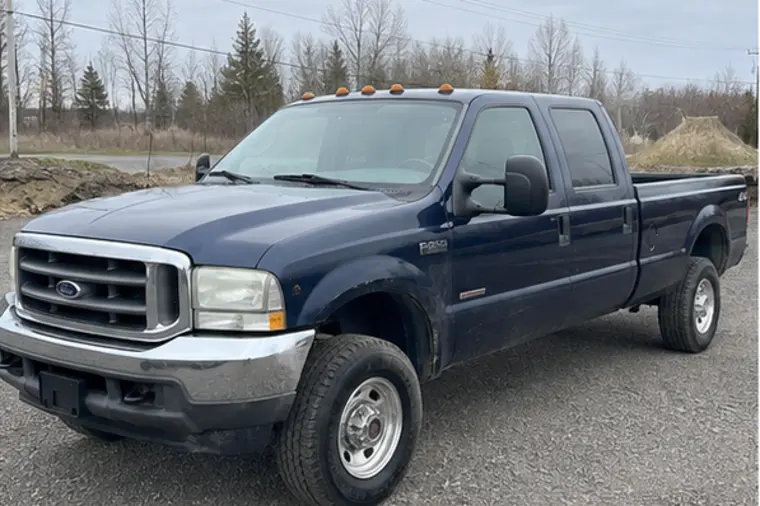
There is no evidence-based single “best year” for every 7.3L Power Stroke buyer. Ford's original 2003 supplement is a strong late-era operating reference for F-Series, Excursion and E-Series applications, but it is not a comparative reliability study. Today, decades of service, storage, repair and modification separate two trucks of the same year more than a calendar label can show. Choose the best candidate for the job by confirming identity, cold and hot behaviour, oil-pressure injection evidence, fuel and air systems, complete-truck condition and Canadian support.
Best-year verdict: buy the evidence, not the calendar
The strongest candidate is the truck whose identity, maintenance, repairs and present condition can be connected in one coherent file. A later build is not automatically better, and an earlier truck is not automatically simpler to own.
Use 2003 as a documentation benchmark only when the candidate matches the Ford supplement's application. That manual explains relevant systems and operating practices; it does not say that 2003 trucks fail less often than other years.
Compare candidates under the same intended workload, inspection standard and downtime assumptions. If one truck cannot be identified or tested properly, keep it pending rather than awarding points for reputation.
Confirm the exact Ford application first
Record the VIN, model year, F-Series, Excursion or E-Series line, pickup/van/body type, engine and emissions labels, transmission, axle, wheel and tire arrangement, original market and current calibration. Photograph the labels and connect any replacement engine or body change to invoices.
Ford's 2003 supplement spans multiple vehicle lines. A shared engine family does not make service access, cooling exposure, fuel-tank arrangement, payload, towing or vocational use interchangeable.
Build a one-page identity sheet before comparing years. A badge, advertisement or seller memory cannot establish what remains installed after decades of component swaps and repairs.
Understand what changed—and what the sources cannot prove
The reviewed primary set supplies a detailed 2003 diesel supplement plus exact-year vehicle-manual access. It does not supply a controlled year-by-year engine-output, failure-rate or ownership-cost dataset.
Treat a revision, part number or transmission pairing as an application boundary, not a reliability award. Verify the exact literature and installed hardware for each candidate instead of transferring one specification across the family.
Do not rely on a horsepower-and-torque table assembled from unsourced secondary lists. Exact output belongs to the vehicle's original model-year literature and calibration evidence.
Use 2003 as a late-era operating reference—not a winner
Ford documents oil-pressure-actuated injection, an electric fuel-supply pump, an engine-mounted fuel filter and water separator, cold-weather practices, air-restriction monitoring and application differences in the 2003 supplement.
Those details make a matching 2003 candidate easier to evaluate against original operating guidance. They do not establish that its injectors, sensors, turbocharger or internal engine will last longer than another year.
A document-rich truck still needs records and inspection. A clean manual history cannot substitute for what the engine and complete vehicle do now.
Compare pickup, Excursion and E-Series candidates separately
A buyer looking for a pickup, passenger-oriented Excursion or E-Series commercial body is choosing different packaging and duty, even when the engine family overlaps.
Compare service access, cooling airflow, body integration, seating or cargo requirement, wheelbase, axle and tire limits, hitch installation and intended load within the correct vehicle line. Never transfer a pickup capacity or service procedure to a van or another body.
For an altered van, ambulance, shuttle or work body, document the upfit, wiring, grounds, auxiliary loads, cooling airflow, mounting and access. The completed vehicle—not the engine label alone—is the ownership unit.
Reconstruct maintenance by time, distance and use
Collect oil and filter records by date and kilometres, fuel-filter and water-separator work, coolant history and supporting transmission, axle, transfer-case and brake service. Note product specifications where invoices provide them.
Ford explains that oil pressure is required to actuate the injectors, which makes lubrication evidence part of the starting and running assessment. Fresh oil before sale cannot recreate missing history.
Account for towing, idling, winter use, dusty work, storage and short cycles. Low kilometres may accompany long inactivity; higher kilometres may accompany consistent scheduled service.
Test a true cold start
Arrange a genuine cold soak when practical. Record ambient temperature, block-heater use, battery and charging condition, wait-to-start behaviour, cranking time, smoke, warnings and stabilization.
Ford's guidance connects cold operation with oil viscosity, winterized fuel, possible filter waxing, fuel level and glow-plug control, while warning against ether and extended cranking.
A warmed truck cannot answer the same question. If weather or access prevents a meaningful cold test, preserve the limitation instead of scoring the system as satisfactory.
Test fully warm operation and restart
Drive the truck safely to full operating temperature and assess hot restart, idle, response, smoke, fluid trends, warnings and transmission behaviour. Reproduce the seller's stated concern under the conditions in which it occurs.
For long crank, hot no-start, stall or rough running, preserve codes and data before parts are changed. Separate cranking speed, oil-pressure injection, fuel supply, wiring and mechanical evidence.
One successful demonstration is a snapshot. It does not guarantee performance under winter cold, sustained load or the buyer's commercial duty.
Audit fuel and water-separation evidence
Ford identifies the frame-mounted electric supply pump, engine-mounted filter and water separator, restriction sensor and unit injectors as distinct parts of the system.
Ask when the filter was changed, whether the separator was drained, whether the water-in-fuel warning functioned and whether contamination was ever documented. Preserve a suitable sample before cleaning when fuel quality is disputed.
A new injector set or fuel pump does not automatically explain an earlier symptom. Require the complaint, measurements, conclusion, complete repair scope and comparable recheck.
Check air restriction, turbo and exhaust in sequence
Inspect the restriction gauge, filter and intake integrity, charge-air plumbing, exhaust evidence, boost-related data, smoke and performance under safe load. Ford notes that snow or ice can restrict intake air in severe conditions.
Do not diagnose a turbocharger from sound or low power alone. Check air, fuel, exhaust, oil supply, wiring and load evidence in an orderly sequence.
Ford also warned that some boost, power and exhaust-brake products could cause severe powertrain damage. Identify every installed device and calibration before valuing the truck.
Treat modifications as a separate decision column
List tuners, chips, calibrations, turbo, injectors, intake, exhaust, transmission changes, auxiliary fuel equipment and removed factory systems. Record part numbers, installer, purpose and supporting invoices.
“Stock,” “returned to stock” and “built” are seller statements until hardware, software and records agree. A removed device does not prove factory operation throughout the truck's life.
Ask a qualified local shop whether it will inspect and support the present configuration. A modification can change diagnosis, parts sourcing, legality, insurance and resale without proving an internal-engine fault.
Read major repair records narrowly
For engine replacement, rebuild, injector work, high-pressure-oil repair or turbo replacement, obtain the original complaint, test results, assembly or serial identity, parts, installer, kilometres, warranty and recheck.
A replacement engine does not renew fuel, cooling, transmission, electrical, chassis or body systems by default. Determine which supporting components were inspected or reused.
Do not add the invoice total directly to value. A well-documented repair strengthens only the system and condition it actually resolved.
Compare complete-truck condition
Inspect transmission, transfer case, axles, steering, brakes, tires, wheels, frame, mounts, hitch, electrical system, body and corrosion. Include plow, towing, service-body and off-road history.
Separate engine, transmission, chassis and body findings. An engine that starts well cannot make an overloaded, corroded or unsafe truck suitable.
Age-related hoses, seals, wiring, connectors, grounds and storage damage belong in the acquisition plan even when the internal engine is satisfactory.
Verify towing and payload independently
Calculate occupants, cargo, accessories, body, hitch hardware and loaded tongue or pin weight. Use certification or door labels, axle and tire limits, hitch ratings and exact vehicle literature.
Engine reputation and output do not create payload or trailer capacity. Cab, wheelbase, drivetrain, axle, rear-wheel arrangement, tires and body can materially change usable limits.
If the intended combination approaches a limit, obtain representative scale weights and professional setup advice. Reject a mismatched truck regardless of year.
Check campaign status without turning it into engine ranking
Use Ford Canada's current VIN lookup and the Government of Canada recall search for the actual truck. Save dated results and work orders.
The NHTSA 2002 F-250 SD result is U.S. model-level whole-vehicle evidence. It does not prove a 7.3L engine problem, Canadian inclusion, current completion or failure frequency.
Campaign completion addresses its defined condition only. It does not certify the engine, transmission, chassis or present symptoms.
Confirm parts, service and downtime before purchase
Use Ford Canada's service-location search as a starting point, then ask whether the facility supports the exact year, vehicle line, engine, body and modification state. A directory listing does not guarantee legacy-diesel experience or parts.
For commercial use, estimate transport, diagnosis, disassembly, parts delay, repair, reassembly and validation separately. Include substitute-vehicle or lost-work consequences.
The “best year” may be the wrong purchase when local support cannot keep that exact configuration working within the operating plan.
Use a two-stage candidate worksheet
First screen identity, legal configuration, safe load fit, documentation and support. Remove trucks that cannot be verified or cannot do the job.
Then compare service history, cold and hot operation, diagnosis, repair chronology, modifications, complete-truck condition, price and downtime. Classify each area as supported, repaired and rechecked, unresolved or not assessed.
Do not average serious unknowns into a false numeric score. Choose the candidate with the strongest coherent evidence and acceptable consequence.
| Decision area | Strong evidence | Pause condition |
|---|---|---|
| Identity | VIN, labels, original literature and replacement records agree | Engine, year, calibration or body cannot be reconciled |
| Maintenance | Dated, kilometre-linked engine and vehicle records | Seller summary without records |
| Operation | True cold and fully warm tests plus relevant data | Pre-warmed arrival or unresolved symptom |
| Repairs | Complaint, diagnosis, scope and comparable recheck | Parts list without measured cause |
| Work fit | Labels, ratings, load arithmetic and support align | Capacity inferred from engine name |
Preserve the decision file
Save the advertisement, VIN and labels, exact manuals, recall results, maintenance, scans, inspection report, repair chronology, modification inventory, load documents and written estimates.
Separate purchase price, immediate safety work, baseline maintenance, diagnosed repair, unresolved investigation and optional upgrades. Do not use generic online repair prices as candidate-specific quotes.
This file supports one purchase at one time. It does not create a universal best-year ranking, warranty or remaining-life forecast.
7.3L Power Stroke best-years questions
What is the single best 7.3L Power Stroke year? The reviewed primary evidence does not establish one universal winner.
Is 2003 the best year? It is a useful late-era documentation reference, not a statistical reliability award.
Are older versions automatically simpler or more reliable? No. Verify exact application, hardware, records and present condition.
Should I buy the lowest-kilometre truck? Not automatically; time, storage, duty, maintenance and complete-truck condition matter.
Does a rebuilt engine make a truck the best choice? Only if identity, cause, scope, recheck and the rest of the vehicle support that conclusion.
Evidence note: manufacturer documents establish the specific facts and applications cited. Buying workflows and cost scenarios are DieselTrucks.ca editorial guidance. These pages do not publish measured failure rates or confirm the condition, recall status or capacity of a particular truck.
General educational content for Canadian diesel-pickup research. Verify the exact truck, model year, certification labels, owner manual and manufacturer documentation, and obtain qualified mechanical or towing advice where appropriate.
Sources & Further Verification
Use the exact model year, VIN, truck labels and current manufacturer documentation when moving from general research to a purchase or towing decision.
- Ford 2003 7.3L supplement — engine lubrication and injection
- Ford Canada — current owner-manual access by vehicle and model year
- NHTSA recall API — 2002 Ford F-250 SD model-level U.S. results
- Ford Canada — current VIN recall lookup
- Government of Canada — current recalls, advisories and safety-alert search
- Ford Canada — dealer and service-location search
- Ford owner manuals