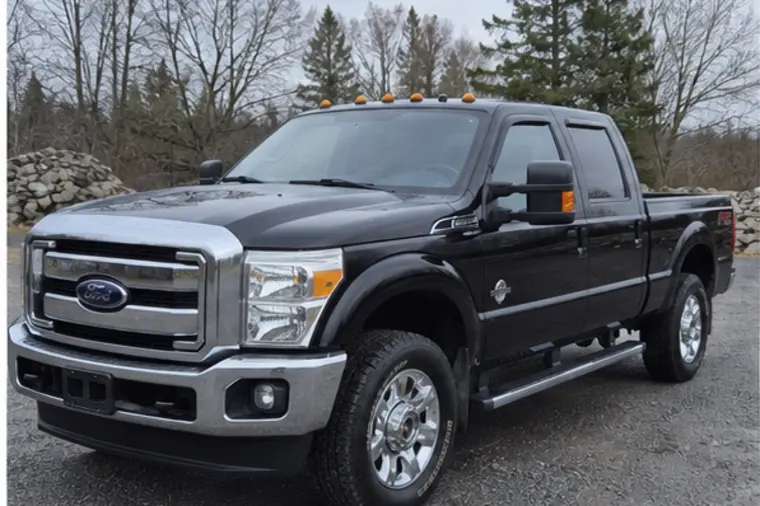
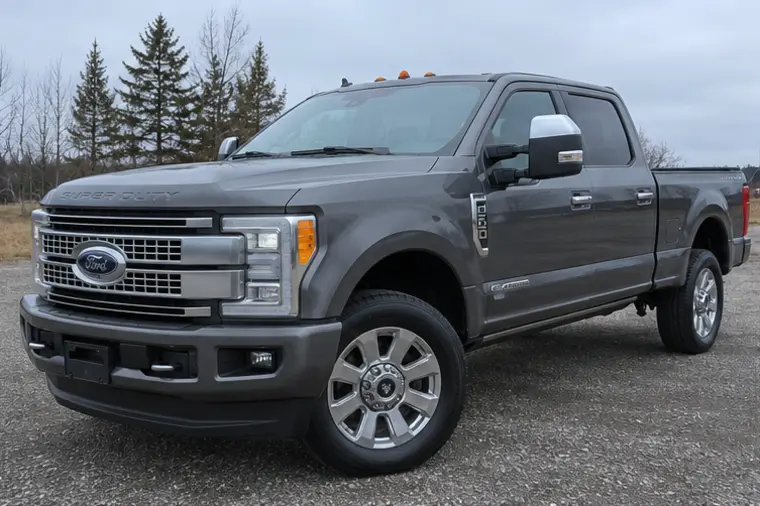
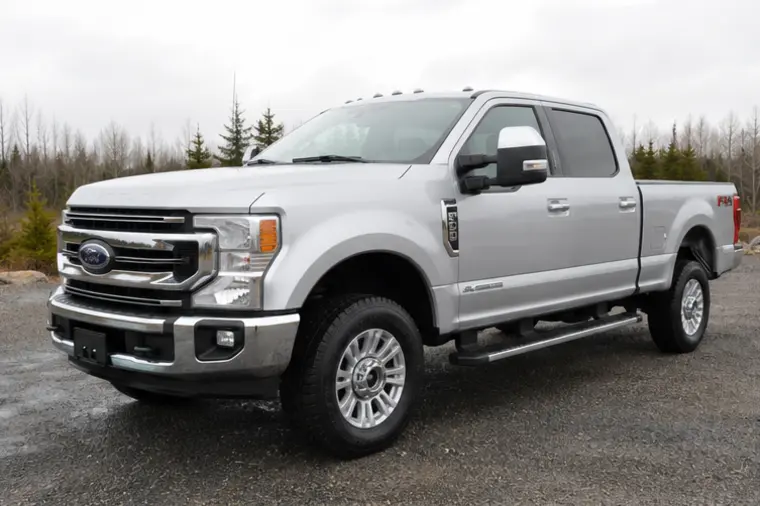
No reviewed primary source provides an exposure-adjusted ranking that names one universal best 6.7L Power Stroke year. Ford documents useful comparison boundaries: a 2015–2016 turbo application, a 2019 six-speed diesel reference, a third-generation 2020 diesel with a ten-speed, and separate standard- and high-output 2024 pickup versions. Ford's updated 24S78 filing also defines a 2020–2022 fuel-pump campaign population. Use those facts to select an equipment era, then choose the individual truck whose identity, maintenance, condition, capacity and support fit the assignment.
Direct answer: the best year depends on the equipment objective
Use a documented 2019 truck as a comparison benchmark when the buyer specifically wants Ford's six-speed diesel combination. Start with 2020 and later candidates when the third-generation diesel and ten-speed are the objective. Use 2024 as a documented reference for buyers comparing standard- and high-output pickup versions.
Those are equipment-based shortlists, not reliability awards. A different year is the better purchase when its exact configuration, service file, inspection, capacity and support are stronger.
No year should remain on the shortlist after an unresolved safety condition, active warning, identity conflict, illegal modification or load mismatch. Candidate evidence overrules calendar preference.
Define the work before choosing an engine era
Record occupants, cargo, accessories, trailer type, loaded tongue or pin weight, route, winter exposure, annual distance, idle/PTO duty, downtime tolerance, recovery distance and service geography.
Eliminate trucks that cannot safely and legally perform the assignment. A higher-output engine cannot create payload, axle, tire, hitch or trailer capacity that the complete configuration does not have.
A personal tow vehicle and a remote commercial chassis cab can produce different shortlists. State the duty and consequence standard before comparing years so the recommendation does not drift toward whichever advertisement looks newest.
Verify the exact Super Duty application
Record VIN, model year, F-250 through F-600 class, pickup or chassis cab, cab/body, wheelbase, drivetrain, rear-wheel arrangement, axle, engine and emissions labels, transmission, original market and calibration. Photograph labels and connect replacements to invoices.
Do not transfer pickup output or towing figures to a chassis cab. Do not infer a six-speed, ten-speed, standard-output or high-output version from a generic “6.7 diesel” advertisement.
When registration, build information, labels and seller claims conflict, pause. Exact identity controls manuals, campaigns, ratings, parts and diagnostic procedures.
Compare the documented equipment boundaries
The boundaries select documents and questions. They are not a best-to-worst league table.
| Comparison boundary | What Ford's primary material establishes | What it does not establish |
|---|---|---|
| 2015–2016 turbo application | Ford's replacement kit distinguishes this application from pre-2015 hardware | Failure frequency, present condition or a retrofit recommendation |
| 2019 diesel reference | Original Ford brochure pairs the 6.7L diesel with a TorqShift six-speed | That 2019 is statistically most reliable |
| 2020 diesel reference | Original packaging guide identifies a third-generation 6.7L and ten-speed | That the first year of the pairing should be selected or rejected automatically |
| 2020–2022 24S78 population | Updated filing defines specified 6.7L F-Super Duty vehicles, risk and software remedy | Canadian VIN status or a failure rate for every truck in those years |
| 2024 pickup reference | Ford lists standard- and high-output 6.7L versions within the pickup lineup | Chassis-cab specifications or long-term comparative reliability |
Use 2019 as a six-speed shopping benchmark
Ford's 2019 Super Duty brochure identifies the 6.7L diesel with the TorqShift six-speed automatic. For a buyer who wants that combination, a well-documented 2019 truck is a clear reference point before comparing earlier or later candidates.
That recommendation is conditional. A 2019 candidate loses preferred status if its maintenance is weak, steering behaviour is unresolved, emissions hardware is altered, major repairs lack diagnosis or its configuration does not meet the load.
Compare neighbouring years rather than filtering advertisements so tightly that stronger candidates disappear. The benefit of a benchmark is a consistent equipment and evidence comparison, not a promise attached to the date.
Treat 2020 as a powertrain boundary
Ford's 2020 Packaging Guide identifies a third-generation 6.7L diesel paired with the new ten-speed automatic. It also shows why powertrain identification matters: a generic 2020 Super Duty transmission description can mix diesel and gasoline combinations.
Choose the 2020-onward branch when the ten-speed and later diesel era fit the job. Do not assume more gears prove better reliability, that a first-year combination must fail, or that increased output settles ownership value.
Use the exact-year manual for maintenance and operating guidance. Inspect engine and transmission operation cold and fully warm, preserve codes and repair history, and keep transmission findings separate from internal-engine conclusions.
Understand the limited 2015–2016 turbo evidence
Ford's 2015–2016 replacement turbo-kit description distinguishes that application from pre-2015 hardware in performance capability. This is useful component-identification evidence, not comparative failure data.
For a 2015–2016 candidate, establish whether the truck retains its documented application hardware or received a replacement. An invoice should identify the part, complaint, diagnosis, work and outcome.
Do not recommend retrofitting an earlier truck from this product listing. A different application requires its own validated parts and service path, and a turbo revision cannot certify the fuel, cooling, emissions, transmission or chassis systems around it.
Use 2024 to compare standard and high output
Ford's 2024 Super Duty pickup towing guide lists the standard 6.7L diesel at 475 hp and 1,050 lb-ft and the high-output version at 500 hp and 1,200 lb-ft. Both figures belong to the stated 2024 pickup context.
Do not apply either figure to an earlier truck or a chassis cab. Additional output may matter to a defined workload, but it does not prove better reliability, greater payload or a lower ownership cost.
| 2024 pickup engine version | Horsepower | Torque |
|---|---|---|
| Standard-output 6.7L | 475 hp | 1,050 lb-ft |
| High-output 6.7L | 500 hp | 1,200 lb-ft |
Resolve the 2020–2022 fuel-pump campaign question
Ford's 24S78 / NHTSA 24V957 filing, updated 23 January 2026, defines specified 2020–2022 F-Super Duty vehicles with 6.7L engines, including F-250 through F-600. It describes aged biodiesel deposits contributing to high-pressure pump wear, possible debris and loss of motive power.
The filing lists possible warnings including extended cranking, a check-engine light, noise and reduced power. It describes PCM and TCM software intended to increase pump cooling and prevent deposit formation.
Verify the actual Canadian VIN through current Ford and Government of Canada paths. A U.S. filing does not establish Canadian eligibility, and software completion does not repair already-damaged mechanical parts or certify present fuel-system condition.
Separate campaign completion from fuel-system condition
For a truck inside the defined campaign range, retain dated VIN status and the detailed work order. Ask whether fuel symptoms existed before or after the campaign visit and whether contamination or mechanical damage was found.
For extended crank, rail-pressure codes, reduced power or stall, capture supply/high-pressure data, filters, fuel quality, electrical tests and contamination evidence. Do not name a pump or injectors from the year or symptom alone.
A truck outside 24S78 still requires diagnosis when it has a fuel concern. An in-scope truck with documented completion still requires the same present-condition inspection as every other candidate.
Compare maintenance by time, distance, hours and duty
Use Ford Canada's exact-year manual access and the candidate's correct diesel schedule. Record engine oil/filter, fuel filtration, coolant and supporting transmission, transfer-case, axle and emissions-related service by date, kilometres, engine/PTO hours, product and duty.
Towing, idling, PTO, dusty sites, winter work, short cycles and storage can make odometer-only comparisons misleading. Low kilometres do not prove light use, while higher kilometres do not prove neglect.
Fresh baseline service improves today's position but cannot recreate missing history. Keep unsupported prior compliance as an explicit uncertainty rather than a fabricated pass or failure.
Compare DPF, DEF and regeneration evidence
Record exact warnings and codes, soot and ash information, pressure/temperature sensor evidence, regeneration history and duty. Short trips and idling provide context but are not automatic causes.
Regeneration can address soot under correct conditions; it does not remove ash or prove upstream fuel, air, sensor, dosing or engine causes are resolved. A cleared message is not a diagnostic result.
Confirm legal original-equipment emissions hardware and calibration. Deleted or unknown systems change legality, insurance, diagnostics and service acceptance and should not be treated as an engine-year advantage.
Test true cold and fully warm operation
Arrange a true cold soak when practical and safe. Record ambient temperature, block-heater use, batteries and charging, wait-to-start behaviour, cranking, smoke, warnings, codes and stabilization.
After full warm operation, evaluate restart, cooling, fluids, warnings, engine response and transmission behaviour. One warm demonstration cannot answer winter operation; one abnormal start cannot identify battery, glow-plug, fuel, compression, calibration or other cause without measurements.
If season or site conditions prevent a relevant test, retain the limitation. Do not mark untested operation as satisfactory because the seller supplied a warm-start video.
Investigate cooling, air and turbo in sequence
For coolant loss or overheating, record level trend, visible leaks, pressure tests, temperature data, fan operation and load. Do not name a pump, cooler, radiator or gasket from engine reputation.
For low power, capture air restriction, charge-air leakage, fuel delivery, exhaust restriction, boost-related data, codes, smoke and operating state. Inspect pipes, clamps, wiring and previous repair areas before naming the turbocharger.
Previous work supports a candidate only when the original complaint, measured finding, complete repair scope and comparable recheck align.
Read engine replacement and major repair records narrowly
For a replacement engine, short block, rebuild or major fuel/turbo repair, obtain complaint, tests, disassembly findings, assembly/serial identity, parts, reused systems, calibration, installer, warranty and outcome.
A replacement engine does not renew the fuel, cooling, emissions, transmission, driveline, electrical, chassis or body by default. Determine whether the initiating condition and affected supporting systems were addressed.
Compare coherent chronologies rather than invoice totals. Expensive work can strengthen a candidate only when it closes a defined problem and current inspection agrees.
Audit tuning, emissions and vocational integration
List calibrations, tuners, fuel/air/turbo/exhaust changes and transmission programming. On chassis cabs, include PTO equipment, hydraulics, body wiring, grounds, mounting, driveline angles, weight distribution, cooling airflow and service access.
Confirm federal/provincial legality, insurer acceptance and shop willingness to support the exact configuration. “Stock,” “returned to stock” and “built” remain seller statements until hardware, software and records align.
The completed truck is the ownership unit. A body-builder or transmission fault can determine suitability without becoming evidence of an internal 6.7L failure.
Verify payload and towing independently of output
Calculate occupants, cargo, accessories, body, hitch equipment and loaded tongue or pin weight. Use certification/door labels, axle/tire limits, hitch ratings and the exact Ford configuration guide.
Do not infer capacity from engine output. Pickup versus chassis cab, cab, wheelbase, drivetrain, axle, rear-wheel arrangement, tires, body and packages can change usable ratings.
Near a limit, obtain representative scale weights. Reject a mismatched truck regardless of engine year or condition, and compare a different truck class rather than expecting a powertrain choice to fix insufficient payload.
Compare the whole truck, not only the engine
Inspect transmission, transfer case, axles, steering, brakes, tires, wheels, frame, mounts, hitch, electrical system, body and corrosion. Record plow, towing, service-body and off-road history.
Keep engine, transmission, chassis and body findings in separate columns. One strong system should not hide an unsafe or costly unresolved condition elsewhere.
An older truck with coherent records and satisfactory full-vehicle evidence may outrank a newer candidate with identity conflicts, warnings or poorly documented repairs.
Plan Canadian support and downtime
Use Ford Canada's service-location search as a starting point, then confirm the facility accepts the exact model year, truck class, engine version, body and modification state.
A directory entry does not certify diesel expertise, appointment timing, parts or body-access capability. Include transport, diagnosis, disassembly, parts delay, programming, validation and substitute capacity.
For remote or commercial work, the best year on paper may be the wrong candidate if its recovery and downtime consequences exceed the operating plan.
Build a two-stage comparison worksheet
First compare identity, legal configuration, verified load fit, equipment objective, exact-year literature, campaign research and support. Remove trucks that cannot be verified or cannot safely do the work.
Second compare maintenance, cold/hot operation, scans and inspection, repair chronology, modifications, complete-truck condition, price and downtime. Classify each area as supported, repaired and rechecked, unresolved or not assessed.
Choose the candidate with the strongest coherent evidence and acceptable consequence. Do not convert unknowns to zero or average unlike safety, maintenance and comfort findings into a false score.
Preserve the decision file
Save the advertisement, VIN and labels, exact manuals, campaign results, maintenance, scans, inspection, repair chronology, modifications, load documents, written estimates and limitations. Mark seller statements as reports until verified.
Separate purchase price, immediate safety work, scheduled maintenance, diagnosed repairs, unresolved investigation and optional upgrades. Use current local written scopes, not generic online repair prices.
The file supports a decision about one truck at one time. It does not create an exposure-adjusted year ranking, warranty or remaining-life forecast.
6.7L Power Stroke best-years questions
What is the single best 6.7L Power Stroke year? The reviewed primary evidence does not support one universal winner.
Why use 2019 as a benchmark? Ford documents a six-speed diesel combination, making it a clear comparison point for buyers who want that equipment.
Is 2020 automatically worse because the powertrain changed? No. The third-generation diesel and ten-speed boundary selects different evidence; it does not establish a failure probability.
Is the 2024 high-output engine always the best choice? No. Its documented output may suit a workload, but it does not establish capacity, condition or long-term comparative reliability.
Should every 2020–2022 truck be rejected? No. Verify exact application, current Canadian VIN campaign status, work performed and present fuel-system condition.
Evidence note: manufacturer documents establish the specific facts and applications cited. Buying workflows and cost scenarios are DieselTrucks.ca editorial guidance. These pages do not publish measured failure rates or confirm the condition, recall status or capacity of a particular truck.
General educational content for Canadian diesel-pickup research. Verify the exact truck, model year, certification labels, owner manual and manufacturer documentation, and obtain qualified mechanical or towing advice where appropriate.
Sources & Further Verification
Use the exact model year, VIN, truck labels and current manufacturer documentation when moving from general research to a purchase or towing decision.
- Ford 2019 Super Duty brochure — original Ford publication, archived by Zigwheels
- Ford 2020 Super Duty Packaging Guide — original Ford publication, dealer-hosted copy
- Ford 2020 Super Duty owner manual — Canadian/U.S. vehicle and diesel maintenance sections
- Ford 2015–2016 6.7L diesel turbo replacement kit — limited design comparison, not reliability data
- Ford 2024 Super Duty pickup towing guide — original configuration tables and footnotes
- Ford 24S78 / 24V957 — manufacturer filing updated 23 January 2026, defined 6.7L populations
- Ford Canada — current VIN recall lookup
- Government of Canada — current recalls, advisories and safety-alert search
- Ford Canada — current owner-manual access by vehicle and model year
- Ford Canada — dealer and service-location search
- Ford owner manuals