
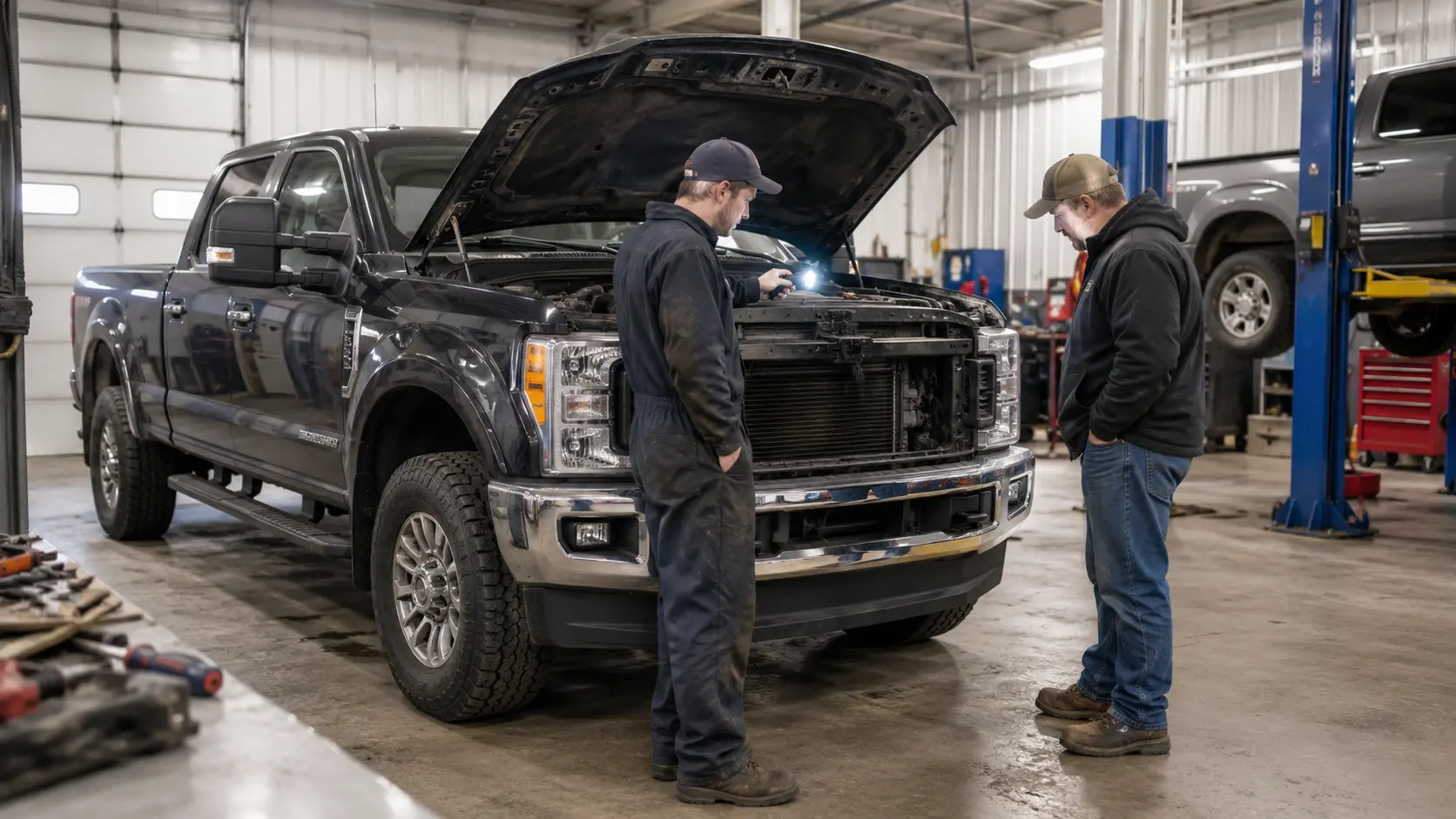
A useful inspection separates observations from diagnosis and moves from documents to a genuinely cold vehicle, stationary checks, a road test and qualified mechanical review.
Close the inspection with a written disposition for every finding
Before payment, convert the inspection into a handoff that another person can audit. Give every finding one of four dispositions: purchase stop, diagnosed repair before use, scheduled or condition-based service, or unresolved question requiring further evidence. Keep the inspector's observation, diagnosis, recommended action and supporting photograph or measurement together. A seller promise, cleared code or verbal estimate does not close an unresolved item.
Run the candidate VIN through the applicable Canadian manufacturer recall lookup and review Transport Canada's recall resources separately from the mechanical inspection. Record the lookup date, VIN used, campaign identifier and stated status, then obtain completion documentation where relevant. A recall search does not establish the condition of unrelated systems, and an inspection cannot determine administrative recall completion without the appropriate record.
Build the decision from the actual truck. Use written local estimates for diagnosed work and keep uncertain diagnosis visible instead of entering zero. Confirm who will complete agreed repairs, what evidence will be supplied and whether the truck must be re-inspected. Reject or pause the transaction when identity, structural, safety or material mechanical questions remain unresolved for the intended use; do not convert uncertainty into a generic discount.
| Disposition | Required evidence | Purchase action |
|---|---|---|
| Purchase stop | Identity conflict, unsafe condition or unacceptable structural finding | Do not proceed on an assumption or seller promise |
| Repair before use | Diagnosis, itemized written estimate and completion/re-inspection plan | Add the actual quoted commitment or require completion |
| Service due | Exact vehicle procedure, interval or measured condition | Schedule and price the defined task separately |
| Unresolved | Named test, missing record or specialist review | Pause until resolved or reject the candidate |
A diesel inspection sequence that preserves useful evidence
Arrange the inspection before the truck is warmed up where practical, and agree with the seller on access for a qualified independent shop. Record the VIN, displayed kilometres, engine identification and any available total/idle-hour information. Photograph relevant labels so the report can be matched to the actual configuration rather than a listing title.
Ask the technician to record initial diagnostic findings before interpreting the seller's explanation. A recently cleared warning light, warm engine or fresh undercoating can change what can be established during the visit. None proves wrongdoing on its own, but each may create a question that the inspection needs to resolve.
| Inspection stage | Evidence to retain | What it does not establish alone |
|---|---|---|
| Identity and records | VIN, engine/transmission details, labels and invoices | Present mechanical condition |
| Cold start and diagnostics | Observed conditions, codes and recommended further tests | A universal remaining-engine-life estimate |
| Underbody | Photographs and findings on corrosion, leaks and mounting areas | Structural soundness from exterior appearance alone |
| Chassis and hitch | Steering, brake, tire and hitch findings | Towing capacity without the correct labels and documents |
| Road assessment | Safe cold/warm behaviour and symptoms | That an intermittent issue never occurs |
| Written conclusion | Diagnosed work, unresolved questions and estimates | A guarantee against future failures |
Why an oil-cap or blow-by demonstration is not a complete engine test
An informal oil-cap demonstration cannot certify the health or remaining life of a diesel engine. Ask a qualified technician which measured tests are appropriate to the engine and observed symptoms, and request the results and interpretation. Avoid turning a video, vapour observation or a seller's claim into an engine-health score.
Engine identification matters to the investigation. Ford's period 7.3L and 6.0L supplements describe oil-related injector actuation, while its 6.4L F-Super Duty material discusses a different emissions-system context. The correct starting, lubrication, fuel and aftertreatment questions depend on the actual application. A generic diesel checklist is a starting point, not the diagnostic procedure for every engine.
Convert the report into three decisions
Resolve safety, identity and serious structural concerns before committing to purchase. Obtain an itemized quote for diagnosed repairs. Keep unresolved symptoms in a separate category with a plan for further diagnosis; do not hide them inside an optimistic general repair allowance.
For a Canadian used truck, retain underbody photographs and ask the inspector to distinguish surface corrosion from areas needing closer assessment. Review hitch mounting and accessory wiring alongside the engine. A truck with excellent powertrain paperwork can still need substantial chassis work before it is suitable for its next job.
Records and history
Request the VIN, exact configuration, service timeline, ownership and use history, accident documentation where available, and written disclosure of modifications.
- Compare VIN, registration and advertisement details.
- Build a dated kilometre and engine-hour timeline.
- Verify invoices for important repairs and recalls where applicable.
Exterior
Inspect panels, paint consistency, glass, lights, bed, tailgate, hitch areas, tires and wheels in good light. Record damage and repairs without assuming their cause.
Rust and frame
Check the frame, crossmembers, body and bed mounts, suspension attachment points, hitch structure and visible brake or fuel lines. Distinguish surface corrosion from scaling, perforation or previous structural repair with qualified help.
Cold inspection
Ask the seller not to warm the truck before arrival. Before starting, confirm the engine and cooling system appear cold, check visible fluid condition and leaks where safe, and arrange permission for a diagnostic scan.
Cold start
Observe crank time, warning lamps, gauges, messages, charging behaviour, noise, smoke and new leaks. A symptom is a reason for further investigation, not a diagnosis by itself.
Dashboard and controls
Confirm warning lamps illuminate for their normal bulb check and then respond as the manufacturer describes. Exercise climate, lighting, camera, trailer-brake and other fitted controls and record missing or intermittent functions.
Engine bay
Look for leaks, damaged hoses, improvised wiring, non-standard components, fluid contamination and poor workmanship. Do not touch hot, moving or pressurized components.
Drivetrain
Inspect transmission, transfer case, driveshafts, axles, steering and suspension for leaks, damage, play and service evidence appropriate to the exact truck and duty cycle.
Emissions equipment
Record the apparent DPF, DEF, EGR and software status and compare it with invoices and a qualified scan. Do not attempt to defeat, bypass or test emissions systems through unsafe or unlawful procedures.
Underbody
Use a lift or qualified shop for safe access to the frame, mounts, brake and fuel lines, exhaust, tanks, cooling components, suspension, hitch installation and evidence of previous commercial or off-road use.
Test drive
With permission and suitable conditions, observe engagement, shifting, steering, braking, vibration, temperatures, four-wheel-drive operation and warning behaviour. Confirm the route and test scope with the owner.
Professional diesel inspection
A qualified technician is especially valuable for expensive, modified, high-kilometre, warning-light or work-history trucks. Define the inspection scope and obtain the findings in writing.
Book an inspection with a written scope
Tell the shop the engine, model year, modifications and planned towing or body use before booking. Ask whether its equipment can interrogate the relevant modules and whether the appointment includes a genuinely cold start. Give the technician the seller's symptom list and service records, not just a request to say whether the truck is good.
| Deliverable | What the buyer needs |
|---|---|
| Findings | Location, severity and supporting measurement or photograph |
| Diagnostic limits | Items not tested and conditions that prevented a test |
| Repair estimate | Immediate work separated from optional and deferred work |
| Road-test record | Temperature, route conditions and symptoms reproduced |
Resolve the expensive unknowns before negotiation
A generic check mark beside engine or transmission is less useful than a written account of what was tested. If a specialist follow-up is needed, make that the next purchase gate. Do not treat the inspection fee as wasted when it prevents buying a truck with a fault outside your repair budget.
Include a dated recall check using Transport Canada and the manufacturer’s VIN resource in the purchase file. That check complements the mechanical inspection rather than certifying condition.
Evidence note: manufacturer documents establish the specific facts and applications cited. Buying workflows and cost scenarios are DieselTrucks.ca editorial guidance. These pages do not publish measured failure rates or confirm the condition, recall status or capacity of a particular truck.
RESEARCH BEFORE INSPECTION
Build a configuration-aware inspection reading list.
Select the truck details you know first. Your profile will prioritize the model, engine generation, labels, recall, service-record and towing research relevant to the shortlist.
General educational content for Canadian diesel-pickup research. Verify the exact truck, model year, certification labels, owner manual and manufacturer documentation, and obtain qualified mechanical or towing advice where appropriate.
Sources & Further Verification
Use the exact model year, VIN, truck labels and current manufacturer documentation when moving from general research to a purchase or towing decision.