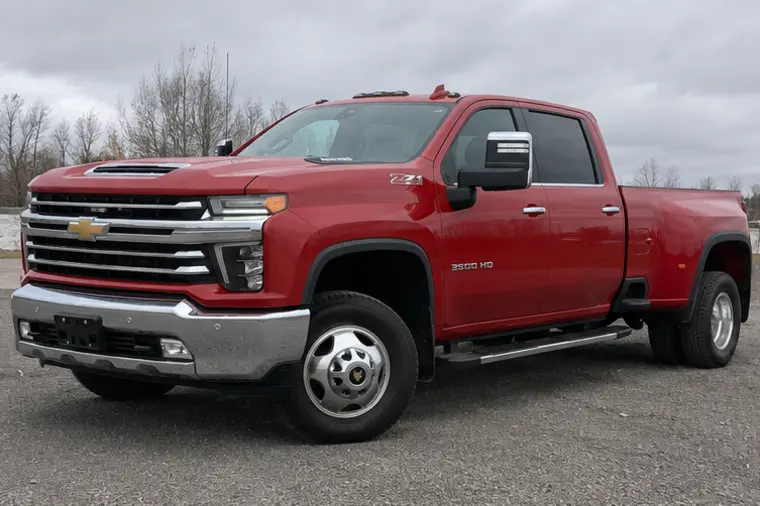
The Silverado 3500HD is a one-ton pickup for buyers who need greater payload reserve or heavier fifth-wheel and gooseneck capability.
MODEL-YEAR INTELLIGENCE
Research Chevrolet Silverado 3500HD by Model-Year Era
6.6L Duramax
Use the selected model year and canonical engine relationship as research context. Confirm the exact transmission, cab, bed, drivetrain, rear-wheel configuration, labels and manufacturer documentation on the truck.
Choose the engine and year range that matches your truck. These ranges organize research; confirm the exact equipment from its labels and records.
Research this model in detail
Start with the 3500HD pickup you need, not its headline maximum
The Silverado 3500HD diesel buyer makes several linked choices: model year, engine and transmission, cab and bed, two- or four-wheel drive, single or dual rear wheels, and hitch type. A recreational fifth-wheel, a loaded service body and a daily-use pickup may need different configurations even when all three advertisements say 3500HD. Define the load and access requirements before filtering by trim.
This parent guide helps organize that decision. The separate problems, reliability, best-year and years-to-avoid articles retain their narrower jobs; this page does not turn a few campaign records or specification examples into a universal verdict on the model. Marketplace links likewise do not certify stock, condition or available offers.
Engine generations: identify the installed version and its supporting systems
Use the Duramax generation guide to place an older truck in context, then verify its engine code, build information and transmission against original records. The same 6.6L displacement spans different output, controls and emissions equipment. A replacement engine or a seller's description of an upgrade needs invoices and installed identifiers, not just a model-year assumption.
GM's current L5P technical reference gives 470 hp at 2,800 rpm and 975 lb-ft at 1,600 rpm, explicitly distinguishing this later engine from 2023-and-older L5P versions. It lists cooled EGR, SCR and a diesel particulate filter. Chevrolet Canada's 2026 HD reference pairs its diesel with a ten-speed automatic. These are current, application-specific anchors, not ratings for every used 3500HD.
A newer control system may change the service information and diagnostic tools needed, while an older truck may pose different parts, corrosion and repair-history questions. Neither observation establishes a best generation. For essential work, ask the inspecting shop whether it supports the exact engine and transmission, and whether the truck's present condition fits the downtime you can tolerate.
Towing evidence: regular-cab maxima are not crew-cab ratings
The U.S. 2026 selector prints different hitch limits for its regular-cab long-bed 2WD DRW diesel: 32,000 lb fifth-wheel and 35,500 lb gooseneck in the 43,500-lb GCWR branch. The Max Trailering branch raises gooseneck to 36,000 lb at 43,900-lb GCWR but retains the 32,000-lb fifth-wheel value. Its conventional ceiling remains 20,000 lb. Do not collapse those branches into one universal tow rating.
Those rows describe a specific pickup configuration in U.S. documentation. They do not establish Canadian VIN eligibility, a crew-cab rating, remaining payload or the rating of an aftermarket service body. The detailed year-specific towing page preserves the broader matrix; here the useful lesson is to match the truck and hitch before reading the number.
Before purchase, make a one-page load sheet with the intended trailer, passengers, cargo, installed hitch and permanent equipment. Compare the selected chart cell with the actual vehicle labels and loaded measurements. Keep GVWR, each axle rating, tire and wheel limits, GCWR and hitch limits visible as separate checks. Passing one does not cancel another.
Payload, campers and completed bodies need their own records
Payload is not the difference between the brochure trailer maximum and the trailer you plan to buy. It concerns weight carried by the truck. A fifth-wheel hitch, auxiliary tank, toolbox, passengers and trailer connection load can all consume the candidate's available allowance. Record the actual installed equipment before treating a brochure or seller's payload figure as usable.
For a camper, the 2026 manual identifies a vehicle-specific glovebox loading label and centre-of-gravity zone. Its procedure includes loaded front and rear axle checks against their ratings, with the total checked against GVWR. That is a more useful buying question than whether all one-ton trucks can carry a given camper.
For a service body, retain the body manufacturer's and installer's documentation as well as the chassis records. Inspect mounts, wiring, added electrical loads and any hydraulic equipment. Work out the stocked weight, not simply the empty body's weight. A used work truck can contain permanent equipment that is valuable for one buyer but consumes essential load allowance for another.
Recall evidence helps frame an inspection; it is not a reliability score
GM's October 2024 filing for NHTSA 24V797 identifies certain 2020–2022 diesel Silverado 2500/3500 trucks. It describes transmission control-valve wear, harsh shifting and a possible momentary rear-wheel lock, with a software remedy designed to detect the condition. Its diesel restriction and production scope matter: do not apply this record to every gasoline truck or every later model year.
For a candidate in the relevant period, ask for current VIN-specific campaign status and the repair documentation, then have any shifting symptoms assessed independently. A completed historical action is not an all-systems condition certificate. Equally, the existence of a campaign does not establish the failure probability of the vehicle in front of you. Canadian status requires Canadian and manufacturer verification; none has been performed for this article.
Use the individual year guides when comparing newer candidates, including their separate equipment and campaign boundaries. Keep a seller's statement, a public campaign description and an inspection finding in different columns. If those accounts conflict, resolve the discrepancy before purchase rather than averaging them into a subjective reliability score.
Ownership costs and high-mileage buying: request the work, not a guess
Separate routine service, overdue work, optional changes and unresolved diagnosis in your ownership budget. Have a shop quote each category for the identified engine, transmission and wheel package. A generic diesel maintenance allowance will not tell you whether this truck immediately needs tires, hitch repair, corrosion work or a specialist diagnosis.
A DRW example adds inner-tire access and a wheel-specific service plan. Chevrolet's 2026 manual treats polished forged dual wheels differently from the ordinary rotation pattern. If the wheels have been changed, identify them before approving a service quote. Tire appearance from the outside of a listing photograph is not a complete inspection of a dually.
For a high-mileage candidate, reconcile the sequence of invoices with the odometer, available hours and reported work. Ask what led to major replacements and whether symptoms returned. Inspect the frame and body mounts, brakes, steering, cooling, leaks, trailer wiring and the installed hitch with qualified help. Do not replace this inspection with an arbitrary kilometre cutoff or a claimed remaining engine lifespan.
Finish with a written purchase decision: the intended load fits, the exact configuration is documented, the condition concerns are understood, and the service and downtime plan is realistic. If one condition remains unresolved, describe it precisely. The best-year and years-to-avoid children can organize narrower research, but the final decision still concerns this particular truck.
Rear-wheel arrangement comes before the trim shortlist
Chevrolet’s 2026 Silverado HD material distinguishes SRW and DRW 3500HD configurations. Start there, then establish the cab, bed and equipment that fit the intended trailer or carried load.
The useful comparison is between two complete working configurations. Do not assume the wider truck is automatically suitable, or that an SRW is unsuitable before doing the load calculations. Both need the same evidence-based assessment.
| 3500HD decision | Evidence to compare |
|---|---|
| SRW or DRW | Exact payload and axle limits for the loaded job |
| Pickup bed or work body | Installed body and equipment documentation |
| Fifth-wheel or gooseneck | Correct hitch, installation and configuration rating |
| Personal or commercial use | Operating pattern, downtime tolerance and service support |
Keep the diesel specification tied to its era
The 2026 HD diesel reference is 470 hp and 975 lb-ft with a ten-speed automatic. Earlier 3500HD trucks require their own engine-code, model-year and transmission research. Preserve those distinctions when comparing asking prices.
A changed powertrain or extensive repair history should be documented before valuation. Ask which components were replaced, which were reused and whether the original concern was resolved. A rebuilt component is one part of the purchase file, not a complete condition statement.
Inspect the installation that carries the work
Examine bed rails, hitch mounts, added wiring and any body installation as part of the professional inspection. Ask for the manufacturer and model of the hitch, the installation instructions and records of alterations. If a camper or service body is part of the plan, include its loaded weight and fit requirements.
For a dually, make access to all rear tires part of the inspection brief. Finish with a written work list and a comparison against another truck that can perform the same job.
Model evolution & used-buying eras
Research the specific 6.6L Duramax generation, transmission and model-year equipment rather than treating every Duramax HD as equivalent.
Cab, bed and work configurations
Available SRW and DRW configurations create meaningful differences in width, payload, stability and daily use.
Towing and payload
There is no single towing or payload number for every truck wearing this model badge. Ratings vary with model year, cab, bed, drivetrain, axle ratio, wheel configuration and factory equipment.
- Read the door-jamb payload label on the exact truck.
- Use the owner manual and manufacturer towing guide for the model year.
- Account for passengers, cargo, hitch equipment and trailer pin or tongue weight.
Used-buying checks
A diesel pickup should be assessed as a complete working vehicle, not only as an engine choice.
- Ask for dated maintenance and repair records rather than relying on a verbal summary.
- Evaluate a true cold start, warning lights, leaks, transmission behaviour and underbody condition.
- Confirm whether the truck has towed, carried commercial loads or been modified, and inspect accordingly.
- Verify emissions equipment, tires, suspension and the exact payload label on the truck itself.
Evaluate the rear-wheel choice with the trailer attached in the calculation
The 3500HD's SRW/DRW fork affects daily dimensions and the load configurations available to the buyer. Work out the hitch, people, tools and planned connection load before choosing between two listings. Inspect inner dually tires and wheel access as part of ownership planning.
| Silverado 3500HD task | Evidence to retain |
|---|---|
| Heavy recreational trailer | Hitch installation and loaded axle records |
| Bed-mounted equipment | Installed mass, mounting and remaining load allowance |
| Commercial body | Body identity and completed-truck documentation |
Compare a pickup with a completed-body truck carefully
A service body may remove ordinary bed space while adding useful storage and permanent weight. Its empty weight and load placement change the truck's working capacity. Obtain an inspection of body mounts, wiring and any hydraulic equipment. Do not transfer a pickup brochure's payload claim to a truck whose completed configuration has changed.
Evidence note: manufacturer documents establish the specific facts and applications cited. Buying workflows and cost scenarios are DieselTrucks.ca editorial guidance. These pages do not publish measured failure rates or confirm the condition, recall status or capacity of a particular truck.
General educational content for Canadian diesel-pickup research. Verify the exact truck, model year, certification labels, owner manual and manufacturer documentation, and obtain qualified mechanical or towing advice where appropriate.
Sources & Further Verification
Use the exact model year, VIN, truck labels and current manufacturer documentation when moving from general research to a purchase or towing decision.