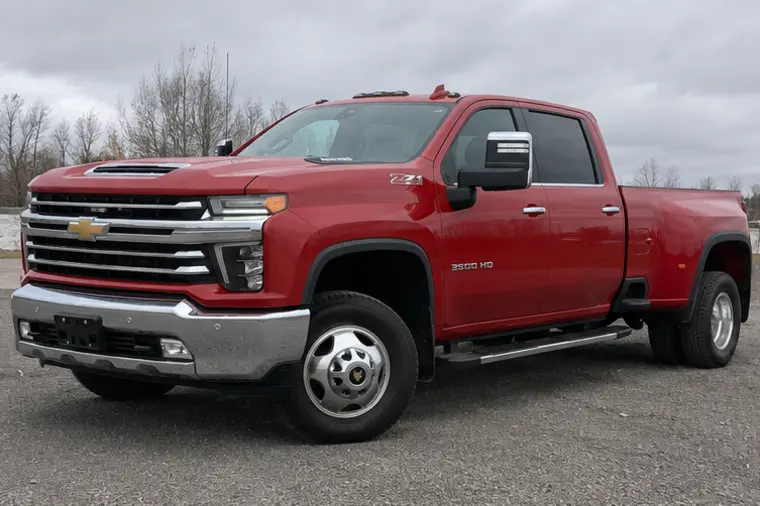
Avoid a Chevrolet Silverado 3500HD diesel when a material safety, identity, repair or load-suitability issue cannot be resolved within the requirements of the job. Defined L5P diagnostic records and the specified 2020–2022 diesel transmission campaign deserve attention, but they do not establish a universal year blacklist. Judge the actual truck, rear-wheel arrangement, completed equipment and repair evidence before deciding to buy.
A model-year window is a reason to investigate
Specified 2020–2022 diesel Silverado HD vehicles appear in Transport Canada 2024637. Defined earlier L5P applications also appear in GM's pressure-connector, coolant and cold-start records, each with its own scope. These documents identify questions to investigate; they do not establish that every truck across the combined years has the same problems.
Verify the actual engine, year and build before applying a document. A current VIN check should establish campaign information for the candidate, while a condition assessment should address its symptoms and repair history. Neither a year match nor absence from these selected sources is a complete verdict on the vehicle.
The practical decision is to continue evaluating, pause for a material answer, decline an unsuitable candidate or reconsider after supported correction. No comparable Canadian failure-frequency dataset is established here for a universal best-and-worst list. A precise individual decision is more useful than an alarming ranking that cannot be substantiated.
Do not let a later revision replace inspection
Chevrolet's 2024 announcement documents its revised diesel and updated equipment. The gasoline engine's change from six to ten speeds should not be described as the diesel's first ten-speed year. Match the actual powertrain before using a year change to interpret a listing or repair account.
An equipment revision does not establish that every earlier concern was eliminated, and a bulletin for an earlier application does not automatically apply to a later vehicle. Obtain the correct documents for the candidate. Where equipment has been modified, establish the installed hardware and calibration instead of relying only on its original specification.
| Application or claim | Evidence to request | What should not be assumed |
|---|---|---|
| Earlier L5P with relevant symptoms | Application-specific diagnostic findings | Every same-year engine has the described cause |
| Specified campaign vehicle | Current VIN result and performed-work record | Completion certifies the entire transmission |
| Later revised diesel | Actual equipment and current assessment | A model-year change guarantees trouble-free use |
| Modified rear-wheel or work-body setup | Installation and final configuration evidence | Original chassis data fully describes the vehicle now |
| Maximum-towing advertisement | Candidate-specific labels and loaded assessment | Every 3500HD has the range's highest capability |
Decline a truck that cannot support the actual load
Chevrolet's 2024 chart separates SRW and DRW, cab, package and hitch conditions. Identify the relevant configuration and obtain the candidate's labels. Do not use the largest number in the chart as a universal rating for a 3500HD, or assume that a dually automatically satisfies every carrying requirement.
Include occupants, body equipment, tools, hitch hardware, cargo and the trailer's load on the truck. Use measured weights where practical. For a completed service vehicle, retain final documentation rather than relying on unfinished-chassis information. The completed body can change the usable vehicle before any additional work supplies are loaded.
If the necessary evidence cannot be obtained, pause the capability decision. If the real combination does not fit, decline that candidate or reassess the intended setup with qualified help. A preferred year, a premium trim or additional engine output does not automatically resolve the mismatch. Mechanical condition and capability are separate purchase gates.
Rear-wheel and body concerns can outweigh an attractive year
Have the complete tire and wheel arrangement inspected, including less visible areas on a dually. Ask the technician to assess condition, suitability, wear and accessible clearance. A clean outer tire or an attractive replacement wheel does not validate the whole arrangement or establish that a modification retains the original configuration's capability.
Review brakes, hitch attachments, frame and bed condition, visible corrosion, wiring and body installations. Work equipment may require an assessment beyond a general vehicle inspection. Identify which systems are central to the job and whether the inspector can evaluate them. Retain access and specialist limitations instead of treating an unassessed system as approved.
A material structural, equipment or installation concern should be resolved before the truck enters service. If repair is appropriate, obtain a supported scope and a relevant recheck. Do not let a desired model year reduce the standard applied to the physical truck. The purchase is for its actual working condition, not a favourable reputation attached to its badge.
Transmission symptoms deserve a separate decision
Obtain campaign completion evidence and any additional transmission repair records. Ask whether abnormal shifts or warnings occurred before or after the work. A software action and replacement of a mechanical component are different events; either still needs context about the original complaint and outcome.
If symptoms continue, have a qualified professional determine an appropriate assessment. Do not try to provoke a potentially serious fault through aggressive driving. A suspected safety concern warrants pausing use and obtaining diagnosis before further evaluation. A short normal demonstration does not explain every intermittent complaint documented in the history.
Read the repair sequence. What was reported, what was found, what was changed and did the original concern return? Repeated invoices may still leave uncertainty, while a coherent repair record can support reconsideration. The decisive issue is whether the current evidence and support plan fit the next assignment, especially when the truck is needed for immediate heavy towing.
Do not price engine repairs from symptoms alone
The selected L5P documents identify particular diagnostic possibilities within stated applications. A pressure-related code does not establish a failed pump, a coolant warning does not identify a particular leak path and rough cold running alone does not prove the specific cause described in the cold-start bulletin. Obtain findings for the actual vehicle.
Ask for a written diagnosis and repair scope before treating a candidate as a bargain needing only a small part. Apply the same standard to a proposed major repair. The cost and expected interruption should follow supported work rather than the cheapest or most alarming explanation available online.
Where a repair has been performed, request evidence that addresses the original complaint. An unrelated service, cleaned engine bay, cleared warning or revised advertisement may not resolve it. A focused recheck should answer the question that caused the purchase to pause. Preserve any remaining limitation instead of assuming that work automatically guarantees future life.
A clear pause-and-reconsider standard
Specify the evidence needed before commissioning more work. Another generic history report may not resolve a diagnostic concern, and another short inspection may not establish a specialist installation's suitability. Focused questions help avoid repeating checks that produce little new information.
Reconsideration is not an obligation to buy. An inspection can have been worthwhile precisely because it identified a candidate to decline. If substantive correction changes the evidence, compare the revised truck with alternatives using the same standard. Time already spent should not lower the requirements for capability, condition or support.
| Material concern | Appropriate initial response | Evidence that could change the decision |
|---|---|---|
| Unclear engine or configuration identity | Pause reliance on the records | Matching build information and installed equipment |
| Unexplained recurring symptom | Obtain relevant diagnosis before committing to use | Supported cause, corrective work and focused recheck |
| Missing completed-body evidence | Pause the capability decision | Final documentation and appropriate assessment |
| Unsuitable tire, wheel or hitch setup | Decline as presently configured | Corrective work and qualified verification |
| Repair timing incompatible with the job | Choose another candidate or change the plan | Credible completion timing and capable substitute |
Repair timing and recovery belong in the purchase decision
Obtain estimates for diagnosed needs and ask about parts and appointments. Separate immediate repairs, scheduled servicing, wear items and optional improvements. No universal repair price or remaining-distance prediction is provided here. The actual scope and the owner's ability to support it should determine the budget discussion.
Verify that a substitute vehicle could perform the intended trailer or body-dependent task. Transportation for the driver alone may not preserve the assignment. For fixed travel dates or committed work, allow time for inspection, repair and follow-up. A material unexplained fault may be incompatible with one owner's plan even if another owner has time to investigate it.
Retain labels, inspection findings, campaign results, body documentation and repair records together. State which systems remain unassessed and what would be needed to close the question. A decision to decline should follow the unresolved material issue and the owner's requirements, without turning it into a blanket claim against every vehicle from the same year.
Silverado 3500HD years-to-avoid questions
Should every truck in a campaign year be rejected? No. Check the actual VIN, completed work and current condition.
Does a dually badge settle capacity? No. Verify the configuration, installed equipment and real loaded requirements.
Can a repaired candidate return to consideration? Yes, when the diagnosis, work and recheck address the original concern.
What is the clearest walk-away signal? A material unresolved safety, identity, repair or capability issue that cannot be adequately assessed or corrected within the needs of the job.
Evidence note: manufacturer documents establish the specific facts and applications cited. Buying workflows and cost scenarios are DieselTrucks.ca editorial guidance. These pages do not publish measured failure rates or confirm the condition, recall status or capacity of a particular truck.
General educational content for Canadian diesel-pickup research. Verify the exact truck, model year, certification labels, owner manual and manufacturer documentation, and obtain qualified mechanical or towing advice where appropriate.
Sources & Further Verification
Use the exact model year, VIN, truck labels and current manufacturer documentation when moving from general research to a purchase or towing decision.
- Transport Canada 2024637 — diesel transmission recall
- GM 20-NA-197, September 2020 — fuel-pressure connector diagnosis
- GM 18-NA-098, June 2019 — Duramax coolant leak diagnosis
- GM 19-NA-108, June 2019 — defined L5P cold-start concern
- Chevrolet 2024 Silverado HD announcement — original manufacturer equipment changes, updated June 2023
- Chevrolet 2024 Silverado 3500HD chart — original manufacturer SRW, DRW and hitch conditions
- Chevrolet Canada manuals and guides