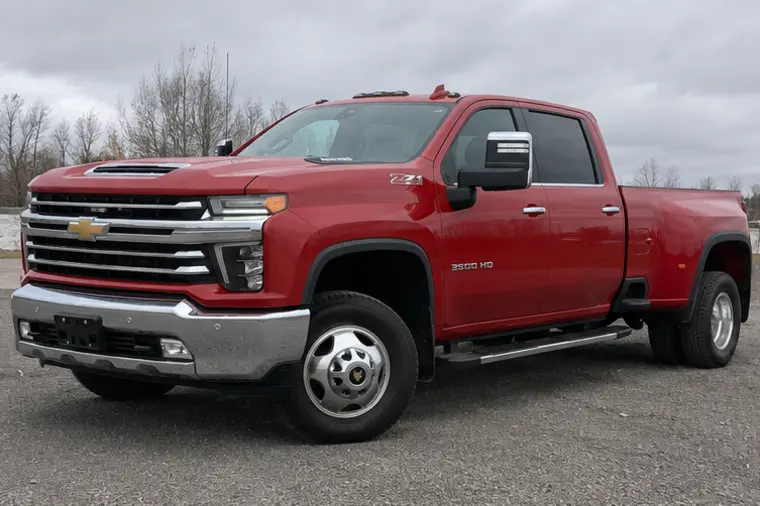
Chevrolet Silverado 3500HD diesel reliability depends on the complete working vehicle. The L5P and transmission are central, but rear-wheel condition, brakes, hitch equipment, body installations, loading and maintenance also affect whether it can do the next job. Use scoped primary evidence and a current assessment to make that decision. No universal Canadian failure rate or guaranteed remaining service life is established here.
Reliability should describe the work the truck must perform
A heavy-trailer owner, a contractor carrying permanent equipment and an operator buying a completed service vehicle may need different things from a 3500HD. Define the actual load, operating area, timing and service access before assessing dependability. The same mechanical finding can have different practical consequences when one owner has flexible scheduling and another needs immediate remote operation.
Separate failure frequency from consequence and recovery. The selected service and campaign documents do not provide a comparable denominator for a year-by-year failure rate. They can still identify material inspection questions. Consequence concerns what a fault would mean; recovery concerns diagnosis, parts, appointments and a substitute able to perform the same task.
An honest assessment should state what is known, what needs work and what remains unassessed. A single reliability label can conceal these differences. The objective is a purchase and ownership decision supported by the actual vehicle's evidence, not a promise that every truck sharing its engine badge will behave the same way.
Establish the exact powertrain and working configuration
Chevrolet's 2024 announcement identifies the revised diesel and other equipment changes. Its gas engine moved from six speeds to ten; the diesel already used a ten-speed. Do not combine those applications when interpreting repair stories or deciding what changed. GM's L5P description also distinguishes the later revision from 2023-and-older engines.
Verify the actual year, engine, transmission and installed equipment. For a modified truck, establish the hardware and calibration being assessed. A Silverado 1500 complaint, a gasoline HD record or a different commercial Duramax application may involve unrelated equipment. Similar branding is not enough to establish that a diagnostic document applies.
| Configuration fact | Reliability question it informs |
|---|---|
| Exact engine and year | Which service and maintenance information applies? |
| Actual transmission | Does the reported concern match this application? |
| SRW or DRW arrangement | What rear-wheel inspection and loading evidence are needed? |
| Factory pickup or completed body | Which installations and final documents need assessment? |
| Work history and modifications | What does the original build description leave unexplained? |
L5P symptoms need a supported diagnosis
GM's 20-NA-197 describes a possible fuel-pressure sensor connector cause in defined 2017–2020 L5P applications. Its coolant document provides separate leak-path context for defined Duramax vehicles, and the 2017–2019 cold-start bulletin has its own diagnostic conditions. None authorizes diagnosing the cause solely from a dashboard message or brief seller description.
Ask the technician to explain the findings and their relationship to the actual complaint. A list of replaced parts without the underlying diagnosis may leave an important question open. Where work has been performed, determine whether the original symptom returned and what subsequent evaluation established. A repair record should describe an outcome, not merely an expense.
Arrange a cold-start assessment when relevant history warrants it, and provide the circumstances before the appointment. An evaluation of a warmed engine may not address the question that matters. For pressure or coolant concerns, obtain a written diagnostic and repair scope before estimating cost or downtime. Avoid assuming either the cheapest or most severe possible cause.
Campaign status is one part of transmission assessment
Transport Canada 2024637 includes specified 2020–2022 diesel Silverado HD applications. Obtain the individual VIN's current result and any completion evidence. That record addresses the campaign work, not every aspect of current mechanical condition or all possible transmission concerns.
Ask whether shift complaints or warnings occurred before or after the campaign visit. Separate software work from diagnosis and mechanical repair documented elsewhere. A replacement component needs an explanation of why it was required and what happened afterwards. Repeated visits with the same unresolved behaviour deserve a focused review rather than a simple repaired label.
A qualified professional should decide how an abnormal concern can be evaluated appropriately. Do not drive aggressively to provoke a potentially serious event. If a safety issue is suspected, pause use and arrange diagnosis. A short normal demonstration is limited evidence when an intermittent complaint remains unexplained, particularly before committing to a heavy-trailer assignment.
Working hours and installed equipment affect the review
For the applicable 2025 diesel, the supplement addresses PTO and extended idle use in maintenance planning. It also limits manual DPF regeneration to equipped fleet/commercial vehicles. Verify the actual equipment and use the correct manual rather than assuming every Silverado 3500HD has that function or can follow a generic procedure.
Request available operating-hour information and records showing how the vehicle was maintained for its actual work. Do not convert those hours into an invented failure probability or remaining-life estimate. Use the relevant documentation for an earlier vehicle instead of automatically applying the later schedule. Low road distance alone is an incomplete account of stationary working use.
Separate engine/chassis service from maintenance of a fitted body or specialist equipment. Ask who installed it and which qualified person can assess it. If the general inspection cannot cover a system central to the job, retain that limitation and obtain the relevant evaluation before treating the complete vehicle as ready for service.
Rear-wheel and chassis condition can determine availability
Inspect the full tire and wheel arrangement, including less visible areas on a dually. Have the technician assess condition, suitability, wear and accessible clearances using the appropriate vehicle information. A clean outside surface does not establish the condition of the complete assembly or validate later wheel and tire modifications.
Review brakes, hitch attachments, frame and bed condition, visible corrosion, wiring and body installations. Work equipment can affect loading and create inspection needs beyond the engine. Obtain documentation where available and identify any access limitations. A sound powertrain cannot compensate for an unsuitable or inadequately assessed working installation.
Use the candidate's labels and the correct Chevrolet configuration information for the intended load. The 2024 chart distinguishes SRW, DRW, cab, package and hitch conditions. Do not transfer a range maximum or an unfinished chassis figure to a completed vehicle. Account for occupants, tools, body equipment and the trailer's load on the truck before deciding that the configuration fits.
A useful inspection produces decisions, not just check marks
Give the inspector the intended assignment and recurring complaints in advance. A focused question may require more than a generic short inspection. Agree on what a recheck should establish after work is completed so that another visit addresses the original concern rather than simply producing another broad report.
Keep the report, labels, body documentation and service records together. A coherent file helps the next shop distinguish a new complaint from one that remained unresolved after earlier work. Preserve unknowns honestly; silence about a system should not be treated as certification that it was fully assessed.
| Assessment area | Evidence to retain | Decision it supports |
|---|---|---|
| Powertrain behaviour | Findings, diagnostics and relevant history | Whether a symptom needs further work |
| Rear-wheel and chassis condition | Written observations and limits | Urgent repairs and near-term wear needs |
| Body and work equipment | Installation records and qualified assessment | Whether the complete vehicle suits the job |
| Loading | Actual labels and loaded requirements | Whether the configuration is appropriate |
| Repair scope | Cause, estimate and proposed recheck | Whether entry into service is realistic |
Plan for repair and recovery at the vehicle's real capability
Obtain estimates for identified needs and ask about parts and appointments. Separate scheduled maintenance, consumables, diagnosed repairs and optional improvements. A universal repair allowance cannot represent every used 3500HD, and this guide does not predict a remaining distance before a major fault.
Confirm whether a substitute vehicle can perform the actual trailer or body-dependent task. Transporting the driver alone may not preserve work capability. Leave time for inspection, repair and follow-up before an inflexible assignment. Where a material intermittent concern remains unexplained, decide whether the available support can accommodate that uncertainty rather than relying on a model-year reputation.
Silverado 3500HD reliability questions
Is engine condition enough to judge the truck? No. Include transmission, rear-wheel arrangement, chassis, hitch and completed equipment.
Does low mileage establish light use? No. Work pattern, available hours, maintenance and current condition matter.
Can every truck perform manual DPF regeneration? Do not assume that; verify equipment and follow the correct vehicle instructions.
What supports a dependable purchase? Appropriate capability, explainable records, a satisfactory current assessment and a workable plan for identified needs and limitations.
Evidence note: manufacturer documents establish the specific facts and applications cited. Buying workflows and cost scenarios are DieselTrucks.ca editorial guidance. These pages do not publish measured failure rates or confirm the condition, recall status or capacity of a particular truck.
General educational content for Canadian diesel-pickup research. Verify the exact truck, model year, certification labels, owner manual and manufacturer documentation, and obtain qualified mechanical or towing advice where appropriate.
Sources & Further Verification
Use the exact model year, VIN, truck labels and current manufacturer documentation when moving from general research to a purchase or towing decision.
- Chevrolet 2024 Silverado HD announcement — original manufacturer equipment changes, updated June 2023
- GM L5P technical description — later specification versus 2023-and-older engines
- GM 20-NA-197, September 2020 — fuel-pressure connector diagnosis
- GM 18-NA-098, June 2019 — Duramax coolant leak diagnosis
- GM 19-NA-108, June 2019 — defined L5P cold-start concern
- Transport Canada 2024637 — diesel transmission recall
- GM 2025 6.6L Duramax diesel supplement — original manufacturer operating and maintenance instructions
- Chevrolet 2024 Silverado 3500HD chart — original manufacturer SRW, DRW and hitch conditions
- Chevrolet Canada manuals and guides