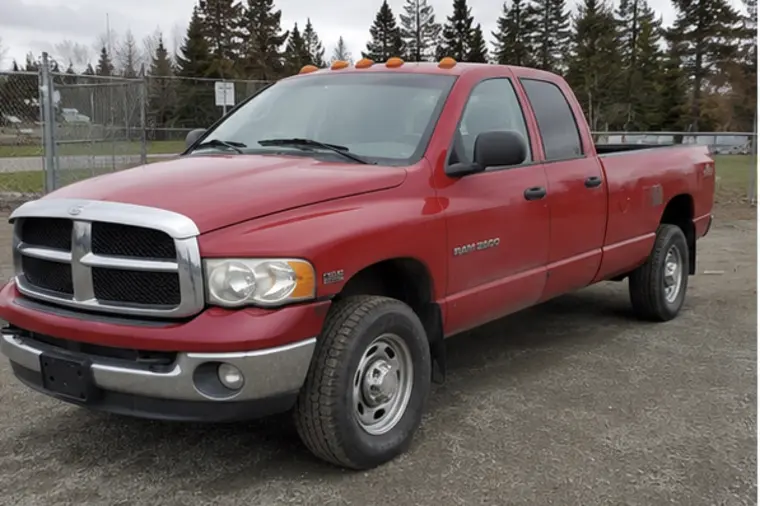
The 5.9L Cummins served Dodge and RAM pickups from 1989 into 2007, but 12-valve, 24-valve and later common-rail versions are not interchangeable buying propositions.
Decide which 5.9L ownership proposition you are considering
A 5.9L Cummins is not one uniform used-truck product. The broad 12-valve, early 24-valve and later common-rail periods below are useful starting points, but the actual engine, transmission and installed fuel system determine the next research step. Buying an older mechanical-era truck for occasional use is a different decision from depending on a later common-rail truck for daily loaded work.
Write down the planned annual distance, normal trip length, trailer or camper load and acceptable downtime before choosing an era. Then test the candidate against that job. A familiar engine reputation cannot compensate for a truck that lacks the required loaded capacity, needs unresolved structural repairs or cannot be supported within your working schedule. This guide concerns Dodge/RAM pickup applications; an industrial or marine 5.9L specification is not a substitute.
Factory output anchors, not a universal 325-hp claim
Cummins' history places the first Dodge/RAM pickup application in 1989 at 160 hp and 400 lb-ft. Dodge's archived 2007 Heavy Duty announcement identifies the outgoing 5.9L, offered through December 2006, at 325 hp at 2,900 rpm and 610 lb-ft at 1,600 rpm. That latter source was reconciled in our dedicated specification research; its endpoint is not applied to every earlier truck.
The table deliberately leaves intervening ratings to exact-application research. Standard-output, high-output, transmission and calibration differences must not be filled by interpolation. Factory engine ratings also do not establish current output after wear, replacement components or tuning.
| Documented pickup anchor | Power | Torque | Use in a buying file |
|---|---|---|---|
| 1989 introduction, Cummins history | 160 hp | 400 lb-ft | Historical starting point, not a later-truck rating |
| 1996 milestone, Cummins history | Exceeded 200 hp | Not specified by this milestone | A threshold, not a complete specification |
| Outgoing 5.9L through December 2006, Dodge announcement | 325 hp at 2,900 rpm | 610 lb-ft at 1,600 rpm | Retain exact late-application context |
| A candidate between these anchors | Verify | Verify | Match engine, transmission and original literature |
Use the 2006 maintenance example without making it universal
The original 2006 Dodge diesel owner's manual distinguishes Schedule B duty from Schedule A. Its B conditions include frequent short trips, cold idling, dusty use, frequent towing and commercial work. The following page adds off-road operation and sustained high-speed, high-load use, and directs owners to use whichever time or distance interval arrives first. A low odometer reading therefore does not, by itself, justify the lighter-duty schedule.
The manual also groups checks by occasion. It calls for oil-level and fuel-filter water attention at fuel stops; monthly checks include tires, batteries, fluids and the air-cleaner restriction indicator. Oil-change visits include additional exhaust, brake-hose, driveline and cooling checks. These are selected 2006 examples, not instructions for every 1989–2007 engine. Obtain the exact manual and engine-specific information before carrying out work.
For a purchase, turn those categories into record requests. Ask which schedule matched the truck's use, which services were recorded and what the inspection finds now. An invoice saying only 'oil change' does not establish that all accompanying checks were performed. Equally, an absent receipt does not prove that a component has failed; it creates an unresolved maintenance question to assess and budget.
Fuel-system labels are not diagnoses or failure probabilities
When a seller mentions injector work, a pump replacement, hard starting or a fuel-delivery modification, ask for the original complaint, test findings, exact parts and outcome after repair. The distinction between an early 24-valve installation and a later common-rail installation matters before choosing a diagnostic procedure. Do not treat a generic 5.9L forum checklist as a repair order.
Have a qualified diesel shop investigate current symptoms on the identified engine. A cold-start observation, fault code or unusual noise can justify further testing, but none establishes a particular failed part by itself. Avoid opening high-pressure fuel connections as a buyer's test. Confirm that any necessary inspection can be completed safely, with the seller's permission, before committing to the truck.
Our reviewed primary material does not establish comparable failure rates for the popularly discussed pump, injector, block or dowel-pin concerns across the entire family. The separate problems and reliability guides retain those evidence boundaries. A long list of possible faults is not a probability model, and a recent replacement does not reset the age of every connected system.
Evaluate fuel economy and life expectancy with usable measurements
For fuel economy, request a log covering several complete fill-to-fill intervals rather than a best single trip or dashboard number. Add the litres purchased and divide by the corresponding kilometres, then multiply by 100 to calculate L/100 km. Keep towing, unloaded driving, winter operation and extensive idling distinguishable. Check whether tire-size changes affect the recorded distance before comparing two trucks.
That calculation describes the recorded use, not an official rating or a promise about your route. Apply your own expected distance and a clearly dated local fuel-price assumption when budgeting. Keep fuel savings separate from maintenance, catch-up repairs and downtime; a favourable consumption result does not establish that the whole ownership plan is cheaper.
There is no defensible universal remaining-life figure for an unseen 5.9L. Kilometres, engine hours where available, service history, prior load, corrosion and inspection findings describe different parts of the risk. Treat them together. A seller's high-mileage success story may be genuine, but it cannot predict how long another truck will last.
Finish the shortlist with an exact-application evidence pack
Collect the VIN and engine serial information, identify the transmission, reconcile replacement parts and obtain the applicable vehicle and engine literature. Cummins' manual-access path uses engine-specific identification; the truck's owner documentation supplies vehicle systems and loading context. Neither source alone certifies what is currently installed on a modified vehicle.
Before purchase, reconcile the planned load against the truck's labels and original towing documentation, obtain an independent condition report and request a written scope for unresolved work. Keep Canadian recall verification separate from mechanical inspection: no VIN has been checked for this article. Continue through the independent best-years and years-to-avoid guides without treating the parent as an unsupported ranking. The decision is whether this documented truck fits your work and ownership plan, not whether all 5.9L trucks deserve the same verdict.
An older engine purchase includes the older truck around it
A 5.9L Cummins shortlist should begin with engine identity and service evidence, then give equal attention to the transmission, steering, brakes, wiring and body. A respected engine name does not renew the rest of a decades-old truck or establish that a previous owner maintained every system to the same standard.
Cummins’ history places its first Dodge/RAM pickup application in 1989 and the move to 6.7L in 2007. Use the exact truck’s identification to resolve the particular 5.9L application rather than treating that entire history as one specification.
Separate originality from suitability
Ask for a list of changed components and the reason for each change. A replacement injection component, turbocharger or transmission should be supported by an invoice that identifies what is now installed. Originality and condition are different questions: original equipment may be worn, while replacement equipment may be appropriate but poorly documented.
Use the answers to construct a shop inspection brief. If the truck’s configuration cannot be established, pause the purchase decision rather than guessing its output, capacity or service requirements.
| Seller statement | Follow-up question |
|---|---|
| “Stock truck” | Which powertrain or calibration parts have ever been changed? |
| “Engine rebuilt” | What work was included, by whom, and at what kilometres? |
| “Ready to tow” | Which loaded trailer and exact truck limits support that statement? |
| “All maintenance done” | Which scheduled items are documented and what comes due next? |
Budget for the intended ownership period
For occasional personal use, the central question may be whether the truck can be maintained within your schedule and budget. For commercial work, add the consequence of losing the truck while parts or repairs are arranged. Ask local service providers about the actual candidate and the work they can support.
Compare the total acquisition and catch-up plan with a later truck that meets the same job. Avoid treating a lower asking price as the full cost of entry. The useful decision is whether the verified vehicle and its known maintenance position fit your intended work, not whether one engine name is universally better.
Three broad research periods
Start by separating 1989–1998 12-valve, 1998.5–2002 24-valve and 2003–2007 common-rail pickup contexts, then verify the exact model year and configuration.
Truck around the engine
Inspect transmission, transfer case, front end, steering, axles, brakes, frame, body and electrical systems. Older trucks may have decades of work use or layered modifications.
Service and modification questions
Document fuel-system, tuning, transmission and cooling work. Ask what parts are original, replaced or unknown and why the work was performed.
- Ask for dated maintenance and repair records rather than relying on a verbal summary.
- Evaluate a true cold start, warning lights, leaks, transmission behaviour and underbody condition.
- Confirm whether the truck has towed, carried commercial loads or been modified, and inspect accordingly.
- Verify emissions equipment, tires, suspension and the exact payload label on the truck itself.
Injection-era identity and whole-truck reliability
Do not combine every 5.9L into one inspection or parts list. Identify the injection-era and model-year context from the truck and documentation, then use a shop familiar with that configuration. A later common-rail truck and an earlier 5.9L can share the displacement label while requiring different diagnostic and service approaches.
Review pump and injector invoices for the actual fault, installed components and follow-up operation. Starting complaints need diagnosis rather than a presumed fuel-system replacement. Ask about tuning, replacement engines and changed transmissions, and keep those claims distinct from the factory configuration.
Cummins' history establishes the broad transition to 6.7L in 2007; it does not provide a reliability ranking for used 5.9L trucks. Age-related chassis, steering, brake and wiring work can dominate ownership cost. Compare the complete truck and local service support before paying a reputation premium for the engine badge.
Identify the injection-era application before ordering an inspection
The 5.9L label covers materially different Dodge pickup periods. Record engine identity, model year, factory documentation and any replacement or modification history. A part or diagnostic procedure discussed for one 5.9L application should not automatically be transferred to another.
| Evidence | Purchase use |
|---|---|
| Factory and installed engine identifiers | Selects the appropriate service research |
| Fuel-system invoices | Establishes component changes and original symptoms |
| Transmission history | Separates engine reputation from drivetrain repair exposure |
Assess age independently of engine appeal
Examine steering, brakes, cab mounts, lines and frame condition with the same attention given to the Cummins. For commercial use, ask a local shop about support for the exact installed configuration. An older truck can be a workable purchase when its condition and repair plan fit the job; engine reputation alone cannot establish that fit.
Evidence note: manufacturer documents establish the specific facts and applications cited. Buying workflows and cost scenarios are DieselTrucks.ca editorial guidance. These pages do not publish measured failure rates or confirm the condition, recall status or capacity of a particular truck.
FIND TRUCKS USING THIS ENGINE
Connect the engine to a model year and exact truck.
Engine-family research is one part of the configuration. Use the explorer to connect model, year, transmission, cab, bed and rear-wheel context.
General educational content for Canadian diesel-pickup research. Verify the exact truck, model year, certification labels, owner manual and manufacturer documentation, and obtain qualified mechanical or towing advice where appropriate.
Sources & Further Verification
Use the exact model year, VIN, truck labels and current manufacturer documentation when moving from general research to a purchase or towing decision.
- Cummins: RAM engine-history milestones
- Dodge 2007 Heavy Duty announcement — archived late-5.9L endpoint
- Dodge 2006 diesel owner's manual — Schedule B conditions (manufacturer document mirror)
- Dodge 2006 diesel owner's manual — time/distance and fuel-stop checks
- Dodge 2006 diesel owner's manual — monthly and oil-change checks
- Cummins manual-access and engine identification