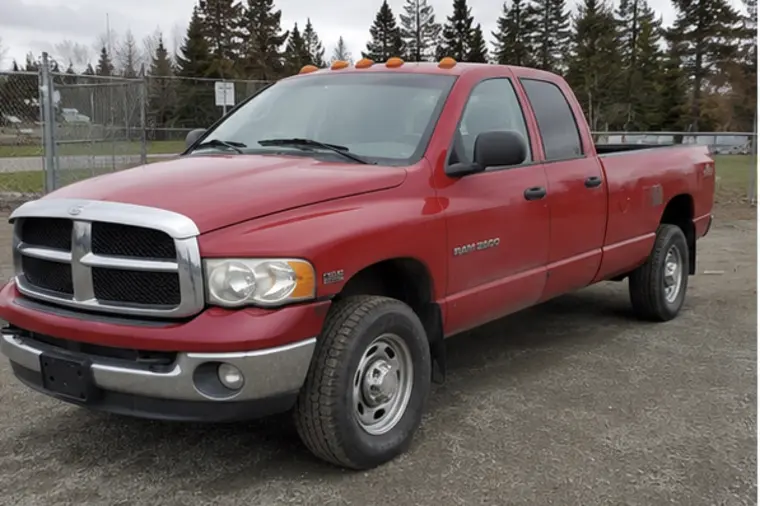
The reviewed primary sources establish a long 1989–2007 pickup-engine history and several output milestones, but they do not provide an exposure-adjusted reliability rate across every 5.9L Cummins era. A defensible reliability assessment therefore belongs to the exact Dodge/Cummins combination: engine and chassis identity, installed fuel system, transmission, maintenance, repair effectiveness, modifications, present condition, duty fit and service continuity.
Reliability verdict: assess the surviving truck, not the reputation
A used 5.9L Cummins can be a supportable purchase when the installed engine is correctly identified, its service and repair chronology is coherent, modifications are understood, cold and hot inspection findings are satisfactory, the transmission and chassis are suitable, and qualified support exists.
That is not a promise of future uptime. Surviving trucks span decades of loads, owners, repairs, storage, corrosion and configuration changes. Engine-family reputation cannot replace evidence from the candidate.
Pause when identity, fuel-system work, recurring smoke or starting symptoms, cooling history, rebuild scope, tuning or driveline condition is unclear. Decline when a material safety, legal, load or service-access problem cannot be resolved on acceptable terms.
Define which reliability question matters
Separate start-and-run consistency, propulsion availability, ability to perform the intended load, repairability, parts and diagnostic access, and acceptable downtime. A buyer seeking a local secondary truck may tolerate a condition that is unsuitable for a sole remote tow unit.
Severity describes what a condition can do; frequency describes how often it occurs in a valid exposed population; consequence describes what it means for this buyer. The reviewed set supports some conditions and chronology questions but not comparable year-by-year frequency.
State the required outcome and downtime threshold before comparing trucks. Otherwise an attractive engine label can hide a transmission, frame, braking, payload or support mismatch.
Verify engine and chassis identity first
Record VIN, model year, build information, engine serial number or dataplate, transmission, fuel-system components and original market. Preserve chassis and installed-engine identities separately when an engine, block, injection system or controller was replaced.
Dodge's 2007 Heavy Duty announcement says the 5.9L continued through December 2006 while the 6.7L was introduced. A registration-year label near that boundary does not settle which engine is installed.
Match the engine to Cummins technical literature and the truck to the correct Mopar manual. Shared displacement does not make procedures, output, fuel hardware or controls interchangeable across the full span.
Use output milestones as change evidence, not durability scores
Cummins documents the pickup beginning in 1989 at 160 hp and 400 lb-ft, exceeding 200 hp in 1996, surpassing 500 lb-ft in 2001 and transitioning to a 350-hp 6.7L in 2007. Dodge documents 610 lb-ft for the outgoing 5.9L through December 2006.
These milestones show that engine and truck demands changed over time. They do not supply failure rates, exact ratings for every calibration or proof that more or less output is inherently more reliable.
Use exact-year literature to identify the candidate. Higher output makes transmission, clutch, cooling, axle, tire and modification evidence more—not less—important.
Keep evidence types separate
The NHTSA 2002 Dodge RAM 2500 record presents complaints, recalls and manufacturer communications as distinct categories. A complaint is one reported experience, a communication describes a condition or procedure, and a recall defines a safety population and remedy.
None becomes a failure percentage without a valid exposed population and comparable outcomes. Do not count complaints, communications or search results to create a reliability score.
Use each item to form a candidate question: what symptom occurred, which system is installed, what test identified the cause, what repair was completed and did the result hold under comparable conditions?
Evaluate fuel-system reliability by installed era
The 5.9L name spans different injection, supply and control strategies. Identify actual pumps, injectors, auxiliary supply equipment, filters, calibration and wiring before applying an inspection or repair claim.
For replaced components, request the original complaint, measurements, diagnosis, part number, installer, date/kilometres and post-repair result. A brand-name component or pressure gauge is not proof of correct installation, calibration or present accuracy.
Hard start, no start, stalling, knock, smoke and fuel dilution are symptoms with more than one possible cause. Qualified application-specific diagnosis should precede a parts conclusion; never loosen a running common-rail high-pressure connection as a viewing test.
Treat folklore labels as hypotheses
Terms such as VP44, lift pump, 53 block, killer dowel pin, injector, head gasket and blow-by can identify useful questions. They do not prove that every matching year has the condition or that a truck outside the label is clear.
Verify the installed engine, casting or component and look for an active symptom or connected repair record. A casting mark, parts receipt or photograph of an unidentified engine is weaker than candidate-specific inspection and documentation.
The primary set reviewed here lacks the production denominators and comparable inspection results required to rank these labels by frequency. Keep remaining life unknown unless a qualified assessment supports a narrower conclusion.
Judge maintenance continuity in the correct application
Use engine-specific Cummins information and model-year vehicle literature for oil, filters, coolant, fuel-system service, starting and warning procedures. Match records to VIN or engine identity, dates, kilometres and installed equipment.
Low odometer readings do not prove light duty or complete time-based maintenance. Ask about towing, idle, engine hours where available, cold starts, storage, dust and seasonal operation.
Missing records increase uncertainty but do not diagnose a failed component. Define catch-up work and inspection scope, then decide whether price and downtime can contain the gap.
Measure repair effectiveness, not invoice total
Build a chronology for fuel-system, injector, turbocharger, cooling, engine, front-cover, transmission and driveline work. Record complaint, test results, diagnosis, parts, installer, date/kilometres and outcome.
A rebuild is not a whole-truck reset. Identify machining, measurements, components and calibration, then inspect the systems that were not renewed. A high invoice can still leave the original condition unresolved.
When work repeats, determine whether it is continuation, an ineffective repair or a new cause. Give more weight to records that connect the original condition to a relevant successful recheck.
Inspect cold, hot and under safe operation
Arrange a genuine cold start when practical. Record temperature, heater use, cranking, idle stabilization, smoke, oil/coolant/fuel evidence, warning-lamp operation and available scan information before codes are cleared.
After warm operation, recheck restart, cooling, leaks, transmission behaviour and seller-reported conditions. Conduct a safe road evaluation appropriate to weather, traffic and truck condition; do not recreate a dangerous stall, leak or overheating event.
Provide identity and repair history to a diesel-capable technician who can choose tests for the installed fuel system. A warmed arrival and short lot drive answer fewer reliability questions.
Assess transmission and driveline as part of propulsion reliability
Identify the manual or automatic transmission, installed unit, calibration, clutch or converter, cooling, axle ratio, tire size and differential changes. The engine cannot deliver reliable work through an unsuitable or unresolved driveline.
Ask whether power modifications preceded clutch, transmission, driveshaft or axle repairs. Review the actual diagnosis and outcome rather than assuming the engine year caused the work.
Inspect engagement, shifts, noise, vibration, leakage and temperature using application-appropriate procedures. Keep engine condition and driveline capacity separate in the evidence file, then assess how they operate together.
Investigate modifications as a second system
List injectors, turbocharger, fuel supply, calibration, intake/exhaust, gauges, clutch/transmission and electrical work. Record who specified the combination, installed it and currently supports it.
A dyno sheet documents one test configuration and conditions. It does not establish durability, legal compliance or the present calibration. Seller claims of safer power or better fuel economy remain unverified.
Unknown changes can alter heat, cylinder pressure, driveline load, diagnostics, insurance, registration and parts selection. Obtain an application-specific restoration scope rather than assuming visible stock parts prove originality.
Check complete-truck safety and VIN status
The 2006 Dodge RAM 2500 U.S. model result includes vehicle-level campaigns involving systems outside the engine. Those results demonstrate why a sound 5.9L assessment cannot replace a whole-VIN and whole-truck review.
For a Canadian candidate, use the current Mopar Canada VIN path and retain the dated result and work orders. A U.S. model-level API response does not prove Canadian eligibility or current completion.
No VIN was submitted, so this guide does not represent a truck as open, complete or cleared. Inspect steering, brakes, tires, wheels, frame, body, hitch and electrical systems independently.
Match duty, load and configuration
Record occupants, cargo, accessories, hitch equipment and loaded tongue or pin weight. Verify payload label, axle/tire limits, hitch and exact configuration-specific towing information.
Engine torque is not payload and does not authorize a maximum from another cab, bed, axle or drivetrain. A healthy engine in an overloaded configuration is not operationally reliable.
Compare route, winter use, annual distance, towing frequency, idle, storage and recovery access. Hold those assumptions constant between candidates so an era preference does not hide a duty mismatch.
Include parts, expertise and downtime
Use the Cummins service locator as a starting point, then confirm the facility accepts the Dodge pickup application, installed engine era, transmission and modifications. Brand familiarity alone does not prove capability for the required work.
Ask about appointment timing, parts path, recovery and a substitute vehicle that can perform the same assignment. Separate repair price from downtime consequence.
Service continuity does not change component frequency. It changes whether a repairable candidate can meet the buyer's operating requirements.
Build an evidence matrix for shortlisted trucks
Use the same matrix for every candidate and date the evidence. Rank actual trucks, not internet reputations for their engine eras.
| Reliability input | Stronger evidence | Unresolved state |
|---|---|---|
| Identity | Matching VIN, labels, dataplate and records | Year or engine description conflicts |
| Fuel system | Installed components, measurements and repair outcome | Seller component label without diagnosis |
| Maintenance | Dated identity-linked records | Reset display or recent service only |
| Engine repair | Complaint, scope, measurements and recheck | “Rebuilt” without work record |
| Driveline | Correct application and satisfactory inspection | Shift, clutch, heat or vibration concern |
| Modifications | Documented combination with current support | Unknown calibration, wiring or emissions change |
| Assignment | Verified load fit and service/recovery plan | Payload, towing or downtime mismatch |
Use explicit decision thresholds
Proceed when identity is coherent, maintenance and repairs are understandable, symptoms are satisfactorily assessed, modifications and driveline are supportable, the load fits and downtime is acceptable.
Proceed after defined work when scope, cost, timing and recheck are bounded. Pause for identity conflicts, recurring starting/smoke/cooling symptoms, unclear rebuilds, unknown tuning or denied inspection.
Decline when a material safety, legal, capacity or service-access problem cannot be resolved. Preserve the reason and revisit only if evidence changes the original condition.
5.9L Cummins reliability questions
Is a 5.9L Cummins always reliable? No engine-family reputation establishes the condition or future uptime of a decades-old truck.
Which era is most reliable? The reviewed primary sources do not provide comparable exposure-adjusted failure rates.
Does a rebuilt engine prove the truck is dependable? No. Verify the rebuild and inspect the transmission, chassis and other systems separately.
Are common problem labels useless? No. They are useful inspection questions when matched to the installed engine, but they are not automatic diagnoses.
What is the strongest reliability evidence? Correct identity, coherent maintenance and repair results, satisfactory condition-based inspection, suitable configuration and credible support.
Evidence note: manufacturer documents establish the specific facts and applications cited. Buying workflows and cost scenarios are DieselTrucks.ca editorial guidance. These pages do not publish measured failure rates or confirm the condition, recall status or capacity of a particular truck.
General educational content for Canadian diesel-pickup research. Verify the exact truck, model year, certification labels, owner manual and manufacturer documentation, and obtain qualified mechanical or towing advice where appropriate.
Sources & Further Verification
Use the exact model year, VIN, truck labels and current manufacturer documentation when moving from general research to a purchase or towing decision.
- Dodge 2007 RAM Heavy Duty announcement — 5.9L through December 2006 and 610 lb-ft
- Cummins manuals and technical information — engine-specific literature access
- Mopar owner-manual access — model-year vehicle literature
- Cummins RAM history — 1989 and 2007 milestones
- NHTSA 2002 Dodge RAM 2500 record — recalls, complaints and manufacturer communications kept as separate evidence types
- NHTSA recall API — 2006 Dodge RAM 2500 model-level U.S. results
- Mopar Canada — current VIN recall and customer-satisfaction notice lookup
- Cummins sales and service locator — application-aware support search