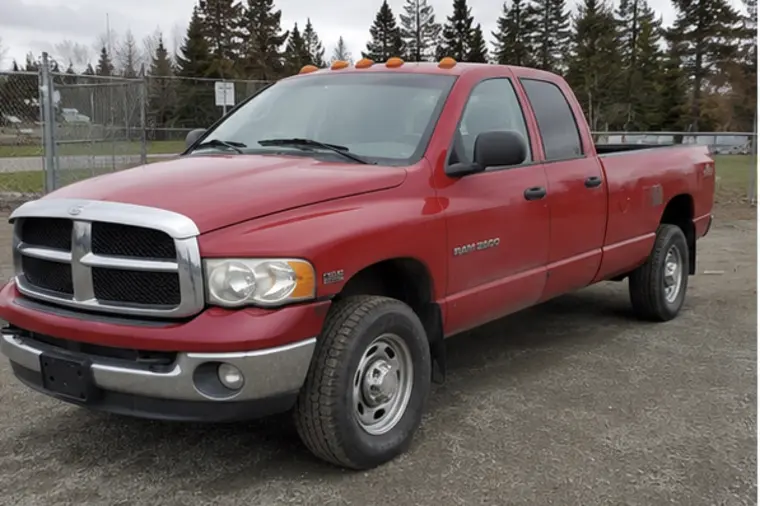
No reviewed primary source establishes one statistically most reliable 5.9L Cummins year. Cummins documents a long arc from the 1989 pickup introduction to the 2007 6.7L launch, with power milestones along the way; those milestones create useful comparison eras, not a reliability ranking. Choose the exact Dodge/Cummins combination whose identity, fuel system, transmission, maintenance, repairs, modifications, truck condition and service path best fit the assignment.
Start with the answer: select an era, then a truck
Choose an early mechanical-era candidate when its installed configuration, condition, documentation and available expertise fit the buyer. Choose a later electronically controlled or common-rail candidate when its documented equipment and output, transmission pairing and present evidence better suit the work.
Neither is a reliability guarantee. A rebuilt or modified older truck can carry more uncertainty than an original later candidate, while a documented older engine in a structurally sound truck may be stronger than a neglected newer one.
Write the assignment first: passengers, payload, trailer, route, winter use, annual distance, downtime tolerance and service geography. The best engine era is still the wrong purchase when the complete truck cannot safely perform the job.
Confirm engine and chassis identity before comparing years
Record VIN, model year, build information, engine serial number or dataplate, transmission, fuel-system components and original market. Treat chassis identity and installed-engine identity separately when an engine, fuel system or control module was replaced.
A model-year label near the 2007 displacement transition is not enough. Dodge's original 2007 announcement says the 5.9L continued through December 2006 while introducing the 6.7L; verify the actual engine rather than assuming every 2007-labelled truck is the same.
Match the engine to Cummins technical information and the chassis to the correct Mopar literature. Do not transfer procedures, fluids, output or parts from another 5.9L era merely because displacement matches.
Use documented output milestones as era markers
These statements do not create one specification for every transmission, calibration or market. Use original exact-year literature before relying on a candidate's horsepower and torque.
Do not convert engine torque into payload or towing capacity. Door labels, axle/tire limits, hitch, cab/bed, drivetrain and factory equipment control the complete truck.
| Cummins/RAM milestone | Primary-source statement | Buying use |
|---|---|---|
| 1989 introduction | 5.9L begins at 160 hp and 400 lb-ft | First pickup era; verify original drivetrain and present configuration |
| 1996 | Cummins history says output exceeded 200 hp | Output marker only; obtain exact-year literature |
| 2001 | Cummins history says torque surpassed 500 lb-ft | Later-era marker, not a reliability threshold |
| Through December 2006 | Dodge documents the outgoing 5.9L at 610 lb-ft | Late 5.9L comparison point; confirm transmission and configuration |
| 2007 transition | Cummins launches the 6.7L at 350 hp | Displacement boundary, not proof every registration-year truck changed together |
Compare broad eras without collapsing them
The 1989–2007 5.9L span includes major changes in valvetrain, injection/control strategy, output and truck platform. Use labels such as 12-valve, 24-valve and common rail only after verifying the installed engine and components.
Build an era sheet with exact literature, engine identifier, injection/supply system, transmission, output evidence, maintenance requirements and diagnostic support. Mark a converted or swapped system as its own configuration rather than forcing it into a stock category.
The era sheet routes inspection and parts research. It does not prove that one design fails less often because the reviewed sources lack comparable exposure, maintenance and outcome data.
Treat 1989 as the beginning, not an automatic recommendation
Cummins identifies 1989 as the first Cummins-powered RAM pickup, with 160 hp and 400 lb-ft. That supports the historical starting point; it does not certify a surviving first-generation truck's present engine, drivetrain, frame or safety systems.
An early candidate now reflects decades of owners, repairs, corrosion, wiring, body work, storage and possible engine changes. Verify original versus installed equipment and inspect the whole vehicle.
Choose one only when parts, expertise and downtime fit. Simplicity in the original design does not eliminate age, undocumented work or scarce application-specific support.
Treat the 1996 and 2001 milestones as research checkpoints
Cummins records exceeding 200 hp in 1996 and surpassing 500 lb-ft in 2001. Those milestones show the package evolved; they do not identify a universal “sweet spot” or exact rating for every truck in those years.
For a candidate near either marker, obtain exact-year engine and vehicle literature and confirm transmission and installed calibration. Do not assign a later milestone backward across an entire era.
Compare the buyer's need for output with condition, driveline capacity and modification history. More documented torque may help under load while making transmission, clutch, cooling and axle evidence more important.
Use the late 5.9L as an output candidate, not a winner
The Dodge 2007 RAM Heavy Duty announcement says the 5.9L continued through December 2006 with 610 lb-ft of torque. A correctly identified late 5.9L can therefore anchor the later-output comparison.
The announcement does not supply a failure rate, maintenance history or candidate-specific transmission and configuration. Verify the exact truck through labels, literature and inspection.
If the buyer prefers the final documented 5.9L period, compare price, modifications, fuel-system history, emissions configuration, transmission evidence and service access with earlier candidates using the same assignment.
Compare fuel systems through installed evidence
Do not choose on “mechanical,” “VP44” or “common rail” reputation alone. Identify the installed injection and supply system, auxiliary equipment, part numbers, calibration, wiring and why components were replaced.
For prior work, request complaint, measurements, diagnosis, parts, installer, date/kilometres and result. A brand-name pump or injector invoice without upstream/downstream findings does not establish repair effectiveness.
Never loosen a high-pressure connection on a running common-rail engine as a buying test. A qualified diesel shop should select application-specific supply, pressure, electrical and scan checks.
Keep problem labels separate from year selection
Terms such as VP44, lift pump, 53 block, killer dowel pin, injector, head gasket or blow-by identify questions, not automatic rejection or ranking rules. Confirm the label applies to the installed engine and diagnose symptoms.
The NHTSA 2002 Dodge RAM 2500 record separates complaints, recalls and manufacturer communications. Preserve that distinction: a complaint documents one report, a communication describes a condition or procedure, and a recall defines a safety population and remedy.
The reviewed set supplies no denominator for a year-by-year failure percentage. Use the problems guide to structure diagnostics, then return here to compare complete candidates.
Judge maintenance continuity, not odometer alone
Use exact engine and vehicle manuals for oil, filters, coolant, fuel-system service, starting and warning procedures. Match records to VIN or engine identity, dates, kilometres and installed equipment.
Low kilometres do not prove light duty or complete time-based care. Ask about towing, idle, cold starts, storage, dusty work, short cycles and engine hours where available.
Missing history is uncertainty rather than proof of failure. Estimate catch-up work and inspection scope, then decide whether purchase terms and downtime contain the unknown.
Read repairs as a chronology
For injection/supply components, injectors, turbocharger, engine, cooling, transmission or front-cover work, record complaint, diagnosis, parts, installer, date/kilometres and outcome. Classify maintenance, preventive work and failure repair separately.
A rebuild is not a universal reset. Identify machining, components, measurements, calibration and the reason for work, then inspect truck systems that were not renewed.
Repeated repairs may describe continuation, an ineffective repair or a different cause. A large invoice strengthens evidence only when it coherently closes the original concern.
Inspect each candidate cold, hot and as a whole truck
Arrange a genuine cold start when practical. Record temperature, heater use, cranking, idle, smoke, oil/coolant/fuel evidence, warnings and scan information before codes are cleared.
After warm operation, recheck restart, cooling, transmission behaviour and reported conditions. Conduct a safe road evaluation suited to weather and traffic; do not recreate a hazardous stall, leak or overheating event.
Inspect steering, brakes, tires, wheels, frame, body, hitch, driveline and transmission independently. A sound engine cannot make a structurally compromised truck safe.
Verify whole-vehicle recall status and market
The 2006 Dodge RAM 2500 U.S. model result includes vehicle-level campaigns such as clutch-interlock and occupant-restraint actions. These are not 5.9L engine defects, but they show why the complete VIN must be checked.
For a Canadian truck, use the current official Mopar VIN path and retain the result and work orders. A U.S. model-level API result does not establish Canadian eligibility or current completion.
No VIN was submitted. No candidate or model year is represented as open, cleared or repaired.
Evaluate transmission and driveline with the engine
Identify manual versus automatic transmission, installed unit, calibration, clutch or converter work, cooling, axle ratio, tire size and differential changes. Engine output alone does not describe how the truck carries and controls load.
Ask whether power changes preceded clutch, transmission, driveshaft or axle repairs. Request diagnosis and outcome rather than assuming the engine year caused or cured the driveline issue.
During inspection, assess shift quality, engagement, noise, leaks and cooling using application-appropriate procedures. Do not select an engine era while treating the attached drivetrain as interchangeable.
Investigate tuning and non-stock combinations
List injectors, turbocharger, fuel supply, calibration, intake/exhaust, gauges, clutch/transmission and electrical work. Ask who specified the combination, what original components remain and which shop supports it.
A dyno sheet documents one test configuration and conditions, not durability. Seller claims of safe power or better fuel economy are not a reliability record.
Unknown changes can affect heat, cylinder pressure, driveline load, diagnosis, insurance, registration and parts selection. Price restoration only from an application-specific scope.
Verify payload, towing and assignment fit
Record occupants, cargo, accessories, hitch equipment and loaded tongue or pin weight. Use the truck's payload label, axle/tire limits, hitch and original configuration-specific towing information.
Do not use an engine torque milestone as a truck rating. Cab, bed, drivetrain, axle, tires and equipment can change permissible load within the same engine year.
If the real load exceeds a limit or lacks acceptable margin, choose another truck. No 5.9L reputation fixes a configuration mismatch.
Compare ownership scenarios rather than price alone
Estimate immediate safety work, due maintenance, diagnosed repairs, unresolved investigation, tires, insurance, recovery and substitute transport. Use current local written scopes where cost or access matters.
Separate engine, transmission, chassis and body needs. A lower-cost early truck can require more age-related work; a higher-cost late truck can still carry modification or fuel-system uncertainty.
Run normal-use and downtime cases without inventing a failure probability. The result should show whether the buyer can tolerate known work and evidence gaps.
Confirm parts, expertise and continuity
Use Cummins technical information to identify the engine and the service locator as a starting point, then confirm the facility accepts the Dodge pickup application, installed fuel system, transmission and modifications.
Ask about diagnostic appointments, parts path, recovery and a substitute capable of the same job. A repairable truck can still be unsuitable for time-critical or remote work.
Support quality does not prove a year mechanically better. It changes the operational consequence of owning that configuration.
Use a two-stage best-year decision
First compare eras on identity, required output, transmission, configuration, support and buyer preference. This creates a shortlist without pretending to measure reliability.
Second compare actual trucks on maintenance, repairs, modifications, inspection, VIN status, load fit, price and downtime. Classify each as suitable, suitable after defined work, pending diagnosis or unsuitable.
Choose the candidate with the strongest complete evidence and assignment fit. Preserve what remains unknown and the condition that would change the decision.
Use the same worksheet for every shortlisted truck and date each record. A seller-provided claim remains separate from a verified label, invoice, measurement or inspection finding. This prevents a familiar engine-era reputation from outweighing a weaker candidate file and makes the final choice explainable if new evidence arrives before purchase.
5.9L Cummins best-years questions
Is there one best 5.9L Cummins year? No reviewed primary source provides the comparable failure data required for that conclusion.
Is the last 5.9L automatically best? No. It has documented output, but the truck still requires fuel-system, transmission, maintenance, modification and condition evidence.
Are early mechanical trucks always more reliable? No. Simpler original architecture does not erase age, repairs, corrosion or undocumented changes.
Does a 2007 registration prove a 6.7L engine? No. Verify the actual build and engine at the transition.
What should decide the purchase? Exact identity, suitable output and configuration, coherent records, satisfactory inspection, support and acceptable downtime.
Evidence note: manufacturer documents establish the specific facts and applications cited. Buying workflows and cost scenarios are DieselTrucks.ca editorial guidance. These pages do not publish measured failure rates or confirm the condition, recall status or capacity of a particular truck.
General educational content for Canadian diesel-pickup research. Verify the exact truck, model year, certification labels, owner manual and manufacturer documentation, and obtain qualified mechanical or towing advice where appropriate.
Sources & Further Verification
Use the exact model year, VIN, truck labels and current manufacturer documentation when moving from general research to a purchase or towing decision.
- Dodge 2007 RAM Heavy Duty announcement — 5.9L through December 2006 and 610 lb-ft
- Cummins manuals and technical information — engine-specific literature access
- Mopar owner-manual access — model-year vehicle literature
- Cummins RAM history — 1989 and 2007 milestones
- NHTSA 2002 Dodge RAM 2500 record — recalls, complaints and manufacturer communications kept as separate evidence types
- NHTSA recall API — 2006 Dodge RAM 2500 model-level U.S. results
- Mopar Canada — current VIN recall and customer-satisfaction notice lookup
- Cummins sales and service locator — application-aware support search