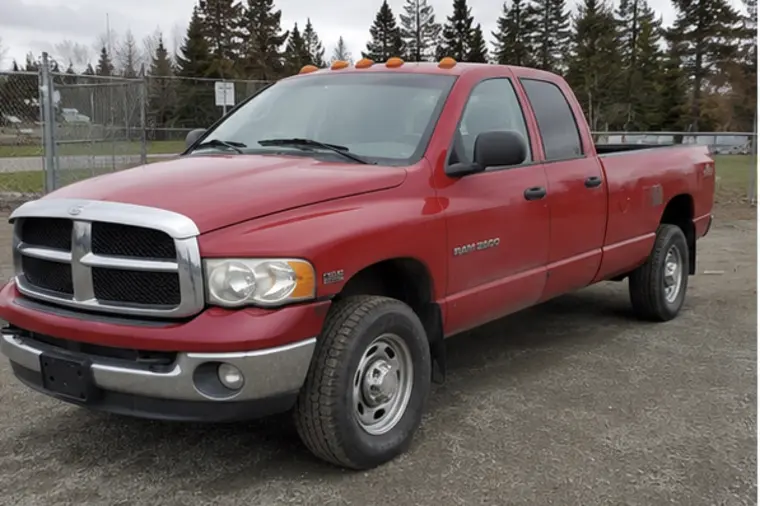
There is no evidence-based single best 24-valve Cummins year for every buyer. Cummins documents the 5.9L ISB from 1998–2007, with 215–325 horsepower, 420–610 lb-ft, four valves per cylinder, electronic engine management and common-rail injection beginning in model year 2003. Dodge says the outgoing 5.9L remained available through December 2006 as the 6.7L arrived. Those facts support distinct shopping bands. Start with a verified 2003–December 2006 5.9L when common-rail hardware and the later documented output range fit the assignment; compare 1998–2002 candidates separately when the earlier injection/control era is preferred. At both ends, prove engine identity. Condition, fuel-system history, modifications, transmission, whole-truck safety and support ultimately outrank the year.
Best-year verdict: choose the fuel-system era first
Use a verified 2003–December 2006 5.9L as the starting band when the common-rail era and the upper end of Cummins' documented 24-valve output progression match the buyer's objective.
Use 1998–2002 as a separate search band when the pre-common-rail version is preferred and a candidate has the stronger history, condition and support. Do not call either band universally more reliable.
At the 1998 and 2007 boundaries, year labels alone are insufficient. Confirm the installed engine and exact truck before applying specifications or procedures.
Understand the documented 24-valve range
Cummins lists 1998–2007 production, 215–325 horsepower at 2,700–2,900 rpm and 420–610 lb-ft at 1,400–1,600 rpm across the 5.9L 24-valve run. It identifies an inline-six 5.9L/359-cubic-inch engine with cast-iron block and head, overhead valves, four valves per cylinder, turbocharging and aftercooling.
The ranges describe the production family. They do not assign every output to every Dodge year, transmission, market or calibration, and they do not measure used-engine performance.
Verify the exact candidate through its engine serial, original vehicle literature and installed hardware. Do not award the production maximum from a model-year label.
Use the 2003 common-rail boundary precisely
Cummins says direct-injection common rail began in model year 2003. That creates a clear equipment boundary between 1998–2002 and 2003-onward 5.9L candidates.
It does not establish that common rail is more reliable, that an earlier injection system is easier to own, or that one side costs less to repair. Those conclusions require comparable exposure and outcome evidence the source does not provide.
Choose the era whose fuel-system operation, diagnostics, parts and local support fit the ownership plan, then inspect the individual installation.
Handle the 1998 transition before comparing trucks
Cummins lists 1998 as both the final 12-valve production year and the first 24-valve ISB year. A “1998 Cummins” advertisement therefore does not settle the valvetrain or fuel system.
Record chassis build labels, engine dataplate and serial, visible configuration and replacement history. Match the engine to Cummins technical information and the chassis to the correct Mopar material.
Pause when identity conflicts remain. A transition-year error changes parts, procedures, output assumptions and valuation.
Handle the 2007 displacement transition before comparing output
Dodge's original announcement says the 5.9L remained available through December 2006 while the 6.7L was introduced for 2007. Registration or advertisement year alone may not resolve the installed engine near this boundary.
Require build and engine identity, fuel and emissions hardware, transmission pairing and replacement records. Do not apply 5.9L recommendations to a 6.7L candidate because both may be described as a 2007 truck.
The announcement documents the outgoing 5.9L at 610 lb-ft. It does not certify an unseen truck's configuration, present output or condition.
Compare the two primary shopping bands
These bands select evidence. They are not reliability, failure-frequency or remaining-life rankings.
| Shopping band | Documented anchor | Buyer objective | Main evidence need |
|---|---|---|---|
| 1998–2002 24-valve | ISB begins in 1998; before Cummins' MY2003 common-rail boundary | Earlier electronic 24-valve fuel-system era | Exact installed injection/supply hardware, electrical evidence, repairs and support |
| 2003–December 2006 5.9L | Common rail begins MY2003; Dodge says 5.9L continued through December 2006 | Later 5.9L common-rail era and upper documented output progression | Exact rating, fuel-system history, transmission, modifications and build identity |
| 1998 transition candidate | 12-valve and 24-valve production both listed | Buyer willing to verify a boundary-year truck | Explicit engine/valvetrain/fuel-system proof |
| 2007-labelled candidate | 5.9L-to-6.7L displacement transition | Buyer comparing the final 5.9L with early 6.7L | Build date, displacement, emissions system and vehicle documentation |
Consider 1998–2002 as its own fuel-system era
Cummins describes the ISB introduction as bringing four valves per cylinder and electronic engine management. Its timeline places these years before model-year 2003 common rail.
Choose a candidate from this band when that verified configuration fits the project and its evidence file is stronger. Inspect supply, filtration, injection control, electrical integrity and previous pump work as one connected system.
Do not select or reject the band from “VP44” reputation alone. The reviewed primary sources do not publish comparable pump or engine failure rates by year.
Start with 2003–December 2006 for common rail
This band has the clearest equipment-based recommendation: Cummins dates common rail from model year 2003, while Dodge dates the 5.9L through December 2006 and records 610 lb-ft for the outgoing engine.
It suits buyers intentionally seeking the later 5.9L fuel system and output progression. It is not a statistical reliability winner, and not every truck in the band has the same rating or transmission.
Confirm exact build, engine serial, calibration, fuel hardware and vehicle literature. A poorly documented modified candidate should not outrank a well-supported earlier truck.
Verify exact output and transmission pairing
The Cummins range spans 215–325 horsepower and 420–610 lb-ft. Use engine and vehicle literature to establish the candidate's actual factory version rather than filling a year table from unsourced secondary lists.
Record the automatic or manual transmission, clutch or converter history, axle ratio, tire size and power changes. Inspect engagement, shifting and driveline behaviour cold, warm and under a safe appropriate load.
More factory torque does not create payload or towing capacity and may make supporting-system condition more important to the purchase.
Let fuel-system evidence decide between candidates
Inspect the tank-to-engine path, filters, fittings, hoses, supply pump, added pumps, injection hardware, wiring and warning or monitoring equipment. Photograph part numbers and preserve a suitable fuel sample when contamination is suspected.
For hard start, stall, dead-pedal, low-power or rail-pressure concerns, capture exact conditions, codes and application-correct measurements. Keep pre-common-rail and common-rail diagnostic paths separate.
An expensive pump or injector invoice strengthens a candidate only when the complaint, measured cause, supporting-system scope and comparable result align.
Test true-cold and fully warm operation
Arrange a true cold soak where practical. Record ambient temperature, block-heater use, batteries and cranking, warning lamps, start time, smoke, idle, leaks, codes and stabilization.
After full warm operation, evaluate restart, response, cooling, fluids, warnings and transmission behaviour. Use a safe road or controlled load suitable for the truck.
A warm presentation cannot establish cold starting. A good cold idle cannot prove loaded fuel delivery, cooling stability or hot restart.
Inspect air, turbo, cooling and fluids
Inspect air restriction, intake and charge-air plumbing, turbocharger mounting and oil paths, exhaust, radiator, aftercooler, hoses, fan and belt drives and evidence of past overheating or cleanup.
Trend oil and coolant levels over known distance and duty. Record smoke by colour, duration, temperature and load, then separate fuel, air, turbo, cooling, lubrication and internal-engine paths.
Do not name a turbocharger, head gasket, block or seal from reputation or drip location. Use condition-matched diagnosis and recheck.
Keep popular problem claims out of the year ranking
VP44, lift-pump, injector, common-rail, “53 block,” head-gasket and transmission claims are inspection routes, not substitutes for candidate evidence.
The reviewed official set does not provide a common population, exposure, maintenance standard and inspected outcome that would support a year-by-year failure league table.
Ask what symptom occurred, what measurement selected the repair, what related systems were assessed and whether the original condition passed afterward.
Audit tuning and supporting modifications
List fuel-system and calibration changes, injectors, turbocharger, intake, aftercooler, exhaust, gauges, transmission programming or hardware, axle gearing, tire size, suspension and wiring.
Request the objective, installer, part numbers, measurements, supporting changes and results. Verify legality, insurance and shop acceptance.
“Stock,” “built” and “returned to stock” require hardware, software and record confirmation. Unknown modifications can reverse an otherwise sensible year preference.
Read rebuild and replacement claims narrowly
For an engine replacement, rebuild, head, fuel-system or turbo repair, obtain the initiating complaint, tests, engine serial, disassembly findings, measurements, parts, reused systems, installer, warranty and outcome.
Cummins directs engine-specific parts and literature research through the ESN. Use it to verify application instead of assuming a replacement matches the chassis year.
A rebuilt engine does not renew cooling, fuel supply, transmission, driveline, electrical, chassis or body systems.
Inspect the whole Dodge truck
Assess transmission or clutch, transfer case, axles, driveshafts, steering, brakes, tires, wheels, frame, mounts, hitch, wiring, cab, box and corrosion. Include plow, towing, service-body and off-road history.
Separate engine, transmission, chassis and body findings. A strong 5.9L cannot compensate for an unsafe or unsuitable vehicle.
Age-related degradation matters even at low kilometres. Compare candidates using the same whole-truck inspection standard.
Match the truck to the intended assignment
Use certification and payload labels, axle and tire limits, hitch limits and exact vehicle literature. Calculate occupants, cargo, body, tools, accessories and loaded tongue or pin weight.
Do not infer capacity from engine output or 2500/3500 badging alone. Cab, box, drivetrain, axle, wheels and equipment change the result.
Include route, grades, winter use, towing frequency, idle time, annual distance and downtime tolerance. The best fuel-system era for one buyer may be wrong for another.
Research safety status in the correct market
Use Mopar Canada's current VIN lookup and retain the dated result. Use Government of Canada sources for Canadian model-level research and connect any action to the actual VIN and remedy record.
The NHTSA 2002 Dodge RAM 2500 record illustrates separate U.S. recalls, complaints and manufacturer communications. Those counts cannot rank 24-valve years or establish Canadian VIN status.
No VIN was supplied. No candidate is represented as open, complete, included, excluded or unaffected.
Plan service and parts support before choosing
Use Cummins' locator to identify possible engine support, then confirm the facility accepts the exact engine serial, Dodge chassis, fuel-system era and modifications. Confirm vehicle-side and transmission capability separately.
A directory entry cannot guarantee legacy-diesel expertise, appointment timing, parts availability or price. Model transport, diagnostic queue, disassembly, parts delay, repair, validation and substitute capacity.
The strongest engine candidate can still be the wrong work truck when support or interruption exceeds the plan.
Use a two-stage comparison worksheet
First compare verified identity, fuel-system era, exact literature, legal configuration, load fit and service geography. Remove candidates that cannot be reconciled or cannot safely do the work.
Then compare maintenance chronology, cold and hot operation, fuel and electrical evidence, fluids and cooling, repairs, modifications, transmission, whole-truck condition, price and downtime.
Classify each category as supported, repaired and rechecked, unresolved or not assessed. Do not average a serious safety finding into a numeric score.
Apply explicit selection gates
Proceed when identity is aligned, the preferred fuel-system era is confirmed, material systems are assessed, repairs close their original conditions, modifications are legal and supportable, and truck and load fit are sound.
Pause for a transition-year identity conflict, pre-warmed engine, warning or fluid uncertainty, undocumented pump or injector work, unknown tuning, repeat repairs or missing capacity evidence.
Decline when safety or structure is unacceptable, legal configuration cannot be established, the unresolved repair exceeds the plan or support cannot meet the assignment.
Preserve the evidence limits
The reviewed primary set supports production years, architecture, output ranges, the model-year 2003 common-rail boundary and the late-2006 5.9L-to-6.7L transition.
It does not provide exposure-adjusted failure rates, a universal best year, exact rating for an unseen truck, Canadian candidate VIN result, repair-cost distribution or remaining-life forecast.
Use a year band to select the correct evidence. Use the candidate to make the purchase decision.
24-valve Cummins best-year questions
What is the best 24-valve Cummins year? Start with a verified 2003–December 2006 5.9L when the common-rail era fits, then choose the truck with the strongest evidence and work fit.
Are 1998–2002 trucks bad? No. They are a distinct pre-common-rail search band, not a proven inferior reliability group.
Is every 1998 Cummins a 24-valve? No. Cummins lists both 12-valve and 24-valve production in 1998, so verify the engine.
Is every 2007 truck a 5.9L? No. Dodge documents the 5.9L through December 2006 while introducing the 6.7L for 2007.
Does common rail prove better reliability? No. It identifies a system era and diagnostic path, not a failure-rate winner.
Can higher torque decide the purchase? No. Verify exact output, transmission, complete-truck condition and capacity separately.
Evidence note: manufacturer documents establish the specific facts and applications cited. Buying workflows and cost scenarios are DieselTrucks.ca editorial guidance. These pages do not publish measured failure rates or confirm the condition, recall status or capacity of a particular truck.
General educational content for Canadian diesel-pickup research. Verify the exact truck, model year, certification labels, owner manual and manufacturer documentation, and obtain qualified mechanical or towing advice where appropriate.
Sources & Further Verification
Use the exact model year, VIN, truck labels and current manufacturer documentation when moving from general research to a purchase or towing decision.
- Cummins 5.9L-to-6.7L evolution, 12 April 2016 — 12-valve years, output range, injection and intercooler milestones
- Dodge 2007 RAM Heavy Duty announcement — 5.9L through December 2006 and 610 lb-ft
- Cummins genuine-parts guidance — engine dataplate, ESN and QuickServe manual access
- Cummins manuals and technical information — engine-specific literature access
- Mopar owner-manual access — model-year vehicle literature
- NHTSA 2002 Dodge RAM 2500 record — recalls, complaints and manufacturer communications kept as separate evidence types
- Mopar Canada — current VIN recall and customer-satisfaction notice lookup
- Government of Canada — current recalls, advisories and safety-alert search
- Cummins sales and service locator — application-aware support search
- Cummins–RAM engine history