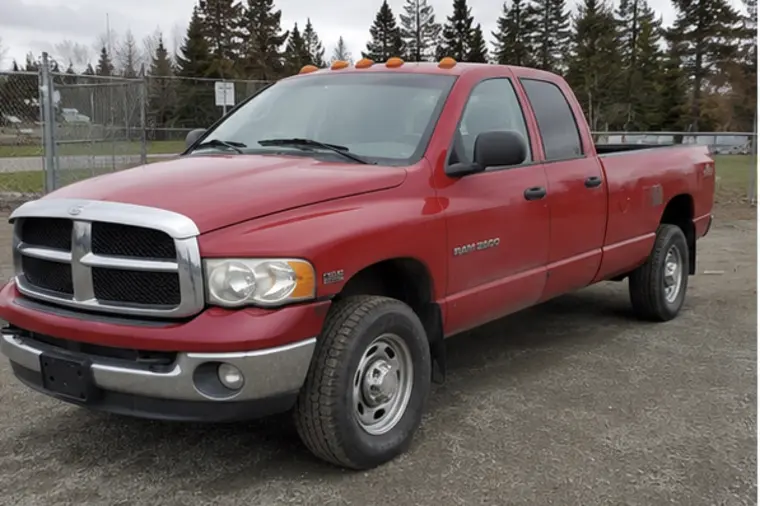
The reviewed primary sources do not support a universal 5.9L Cummins year blacklist. They support a stricter candidate rule: avoid a truck when engine or chassis identity is uncertain, a serious symptom or repair story is unresolved, modifications cannot be supported, the transmission or chassis is unsuitable, or safe inspection and service access are unavailable. Reconsider only when the original material condition is documented, corrected and rechecked.
Direct answer: avoid unresolved trucks, not calendar years
Pause when VIN, build, installed engine, fuel-system era or transmission cannot be reconciled; when starting, smoke, fuel, cooling or driveline symptoms remain unexplained; or when rebuild and modification records are incomplete.
Decline when the seller blocks a genuine cold start, scan or independent inspection, or when a material safety, legal, load, structural or service-access problem cannot be resolved on acceptable terms.
Do not convert a popular component label, complaint count or milestone year into a permanent blacklist. The decades-old candidate and its evidence decide the purchase.
Verify identity before applying any year warning
Record VIN, model year, build information, engine serial number or dataplate, transmission, installed fuel system and original market. Keep the chassis and installed-engine identities separate when an engine, block, pump or controller was changed.
Dodge's original 2007 Heavy Duty announcement says the 5.9L continued through December 2006 while the 6.7L was introduced. A 2007 registration label alone cannot prove which displacement or build is present.
Use Cummins technical information for the engine and the correct Mopar literature for the truck. Pause when the identifiers, advertisement and repair history conflict.
Do not mistake an output milestone for a reliability boundary
Cummins documents the pickup introduction in 1989 at 160 hp and 400 lb-ft, exceeding 200 hp in 1996, surpassing 500 lb-ft in 2001 and launching the 6.7L in 2007. Dodge documents 610 lb-ft for the outgoing late 5.9L.
These are change markers, not comparable failure outcomes. They do not prove that 1989, 1996, 2001 or the final 5.9L period should be chosen or avoided.
Use exact-year literature and assess transmission, cooling, axles, tires and modifications as output rises. Do not transfer one rating to another calibration or market.
Apply explicit pause, decline and reconsider rules
The rule applies to an individual truck. It does not establish a universal bad era.
| Candidate finding | Initial decision | Evidence required to reconsider |
|---|---|---|
| Engine/chassis identity conflict | Pause | Matching VIN, build, dataplate and replacement records |
| Hard start, stall, smoke, coolant or fuel symptom | Pause or decline | Reproduced condition, diagnosis, repair and relevant recheck |
| “Rebuilt” engine without scope | Pause | Machine work, parts, measurements, installer and outcome |
| Fuel-system component claim without tests | Pause | Installed part identity, measurements and repair result |
| Unknown tuning or wiring | Pause or decline | Documented configuration, legality and support assessment |
| Transmission, frame, brake or steering concern | Pause or decline | Qualified diagnosis and satisfactory correction |
| Payload/towing mismatch | Decline that truck | A configuration verified for the actual load |
| Inspection access refused | Decline | Full access before funds become non-refundable |
Treat fuel-system labels as routing questions
Mechanical, VP44 and common-rail descriptions refer to materially different installed systems. Identify the pump, injectors, supply equipment, filters, calibration and wiring before interpreting symptoms or repairs.
Pause when a seller cites a brand-name pump, injector or lift-pump upgrade without the original complaint, measurements, part number, installer and result. A gauge or invoice does not prove present accuracy or correct integration.
Hard start, no start, stalling, knock, smoke and fuel dilution can have multiple causes. Require application-specific diagnosis; never loosen a running common-rail high-pressure connection during a viewing.
Keep folklore from becoming a rejection shortcut
VP44, 53 block, killer dowel pin, injector, head gasket and blow-by are popular search labels. Verify that the term applies to the installed engine and look for candidate-specific symptoms, inspection and repair evidence.
A casting mark does not prove an active crack, and a parts receipt does not prove installation. A preventive-work claim should connect the exact engine, parts, method, installer and date.
The reviewed sources do not supply production denominators or comparable inspection outcomes for a failure percentage. Pause the actual uncertainty instead of rejecting every truck that shares a forum label.
Separate complaints, communications and recalls
The NHTSA 2002 Dodge RAM 2500 record keeps complaints, recalls and manufacturer communications in different categories. Preserve that distinction when a seller or online source calls an item “common.”
A complaint documents one report; a communication can describe a condition or procedure; a recall defines a safety population and remedy. None alone measures year-level engine reliability.
Use the record to frame inspection questions without importing U.S. model-level results into a Canadian VIN conclusion.
Pause unexplained starting, smoke and fluid evidence
Record genuine cold-start temperature, heater use, cranking, idle stabilization, smoke timing, oil/coolant/fuel evidence, warning operation and scan findings before anything is cleared.
Ask for measured oil consumption and connected service records rather than “uses none.” A warm, cleaned engine can conceal the conditions the buyer needs to observe.
Do not turn one smoke or blow-by observation into a remaining-life estimate. Pause until a qualified technician assesses the exact engine and intended use.
Read rebuilds and major repairs as a chronology
For engine, block, head, fuel system, injectors, turbocharger, cooling or front-cover work, record complaint, diagnosis, machine work, parts, measurements, installer, date/kilometres and outcome.
A rebuilt engine does not reset transmission, axles, steering, brakes, frame, body or wiring. It is stronger evidence only when the scope and post-repair result are coherent.
Repeated work can mean continuation, an ineffective repair or a different cause. Reconsider only when new evidence addresses the original material condition.
Reject unsupported modification combinations
List injectors, turbocharger, fuel supply, calibration, intake/exhaust, gauges, clutch/transmission and electrical changes. Identify who specified and installed the combination and which shop will support it.
A dyno sheet proves one test configuration and conditions, not durability or present calibration. Seller claims of safe power, reliability or fuel economy are not verification.
Unknown modifications can affect heat, cylinder pressure, driveline load, diagnosis, insurance, registration and parts. Obtain a written restoration/support scope or decline when the uncertainty is unacceptable.
Inspect transmission and driveline independently
Identify the installed manual or automatic transmission, calibration, clutch or converter, cooling, axle ratio, tires and differential changes. Engine year does not establish the driveline's condition or capacity.
Ask whether power changes preceded transmission, driveshaft or axle work. Review diagnosis and result instead of assuming a late or early 5.9L caused the repair.
Pause shift, engagement, noise, vibration, leak or temperature concerns until assessed through the correct procedure. A strong engine cannot compensate for an unsuitable driveline.
Check the whole VIN and Canadian status
The NHTSA 2006 Dodge RAM 2500 API result includes U.S. vehicle campaigns outside the engine, illustrating why engine reputation cannot replace a whole-truck review.
For a Canadian candidate, use the current Mopar Canada VIN path and retain the dated result and work orders. A U.S. model result does not establish Canadian eligibility or completion.
No VIN was submitted. This guide does not represent any truck as open, cleared or repaired.
Decline unsafe or structurally unsuitable trucks
Inspect steering, brakes, tires, wheels, frame, body, hitch, suspension, driveline and electrical systems. Corrosion, collision repair, body mounts and added equipment can matter more than the engine-era preference.
Do not let a good cold start or attractive engine history override a material structural or braking concern. Use qualified inspection for areas outside a diesel technician's scope.
If safe repair scope cannot be defined before purchase, decline. A discount does not make an unknown safety condition bounded.
Reject a configuration that cannot carry the assignment
Record occupants, cargo, accessories, hitch equipment and loaded tongue or pin weight. Verify the truck's payload label, axle/tire limits, hitch and exact configuration-specific towing information.
Engine torque is not payload and does not authorize a maximum from another cab, bed, axle or drivetrain. The load must fit the completed vehicle.
Choose another configuration when the actual duty exceeds a limit or lacks acceptable margin. This is a truck rejection, not an engine-year verdict.
Treat maintenance gaps as priced uncertainty
Use exact engine and vehicle manuals for oil, filters, coolant, fuel-system service, starting and warning procedures. Match records to identity, dates, kilometres and installed equipment.
Low kilometres do not prove light duty. Ask about engine hours where available, towing, idle, cold starts, dust, short cycles and storage.
Missing records do not diagnose failure, but the buyer should price catch-up work, inspection and downtime. Decline if those unknowns cannot be contained.
Require a cold, hot and road evaluation
Arrange a genuine cold start where practical, then repeat relevant observations after full warm operation. Record starting, smoke, cooling, leaks, warnings, transmission operation and the seller's reported conditions.
Use a safe road evaluation appropriate to traffic, weather and vehicle condition. Do not deliberately recreate a hazardous stall, leak, loss of control or overheating event.
Decline when material inspection access is refused. An already-warm arrival and a short parking-lot loop do not answer the same questions.
Price service access and downtime
Use the Cummins locator as a starting point, then confirm the facility accepts the Dodge pickup, engine era, transmission and modifications. A listing does not guarantee capability or availability.
Separate immediate safety work, maintenance, diagnosed repair and unresolved investigation. Add recovery and substitute transport for the actual assignment using current local information.
A repairable truck can still be unsuitable where parts, expertise or downtime do not fit. That consequence belongs in the rejection decision without inventing a failure probability.
Preserve the rejection or reconsideration record
Save identity, manuals used, VIN results, maintenance, scans, inspection, repairs, modifications, load calculation, support plan and limitations. Mark seller statements as unverified until corroborated.
Classify each material item as resolved and rechecked, unresolved, not assessed or incompatible with the assignment. Do not average away a high-consequence unknown.
If evidence changes later, revisit the exact original condition. Do not carry one declined truck's finding forward as proof that its entire year should be avoided.
5.9L Cummins years-to-avoid questions
Which 5.9L Cummins years should everyone avoid? The reviewed primary sources do not support a universal list.
Should buyers avoid every VP44 or common-rail truck? No. Verify the installed system and assess candidate-specific evidence.
Is a rebuilt engine automatically safe? No. Review scope and outcome, then inspect the transmission and whole truck.
Should a 2007 truck be assumed to have a 6.7L? No. Confirm the build and installed engine at the transition.
When should a buyer walk away? When a material identity, symptom, repair, modification, safety, load or service issue cannot be resolved on acceptable terms.
Evidence note: manufacturer documents establish the specific facts and applications cited. Buying workflows and cost scenarios are DieselTrucks.ca editorial guidance. These pages do not publish measured failure rates or confirm the condition, recall status or capacity of a particular truck.
General educational content for Canadian diesel-pickup research. Verify the exact truck, model year, certification labels, owner manual and manufacturer documentation, and obtain qualified mechanical or towing advice where appropriate.
Sources & Further Verification
Use the exact model year, VIN, truck labels and current manufacturer documentation when moving from general research to a purchase or towing decision.
- Dodge 2007 RAM Heavy Duty announcement — 5.9L through December 2006 and 610 lb-ft
- Cummins manuals and technical information — engine-specific literature access
- Mopar owner-manual access — model-year vehicle literature
- Cummins RAM history — 1989 and 2007 milestones
- NHTSA 2002 Dodge RAM 2500 record — recalls, complaints and manufacturer communications kept as separate evidence types
- NHTSA recall API — 2006 Dodge RAM 2500 model-level U.S. results
- Mopar Canada — current VIN recall and customer-satisfaction notice lookup
- Cummins sales and service locator — application-aware support search