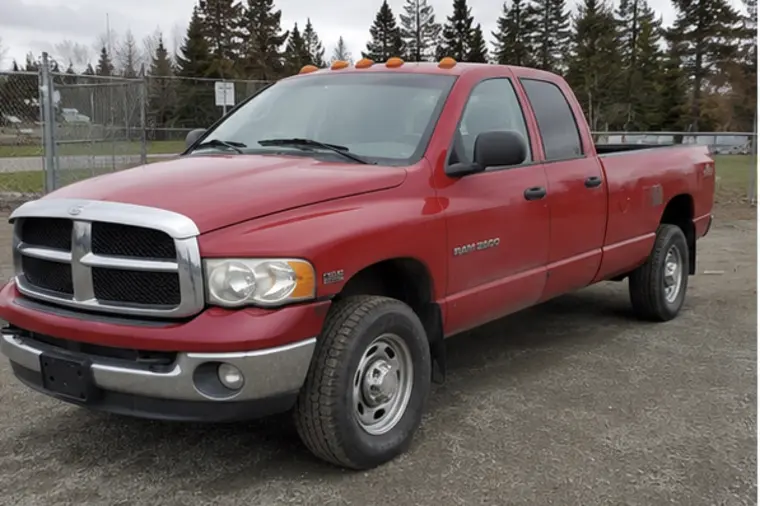
No reviewed primary source provides an exposure-adjusted reliability percentage for every 24-valve Cummins. Cummins documents a 1998–2007 5.9L ISB family with electronic management and four valves per cylinder, plus a model-year 2003 common-rail change. Dodge documents the outgoing 5.9L through December 2006 during the 2007 transition. Those boundaries change parts and diagnostic paths; they do not establish a universal winner. A reliable purchase is one correctly identified engine and truck whose maintenance, cold and hot operation, fuel and electrical evidence, repairs, modifications, capacity, safety and support fit the intended work.
Reliability verdict: evaluate the candidate, not the reputation
Treat 24-valve reliability as a candidate-level question: can this exact engine and complete Dodge truck repeat the required assignment safely, legally and with acceptable interruption?
The official record defines architecture, production and fuel-system boundaries. It does not provide comparable failure rates, remaining-life forecasts or a percentage that can be transferred to an unseen truck.
Start with identity, then reconstruct maintenance and repairs, test the actual operating conditions, inspect the whole vehicle and price unresolved risk into a written decision.
Establish the exact engine and truck first
Record VIN, chassis build information, model year, engine dataplate and serial number, displacement, valvetrain, fuel system, transmission, drivetrain, axle, cab and box, original market and current emissions configuration.
Cummins lists 1998 as both the last 12-valve year and the first 24-valve ISB year. Dodge also says the 5.9L continued through December 2006 while the 6.7L arrived for 2007. A registration year or advertisement cannot resolve either boundary alone.
Cummins directs parts and engine-literature research through the engine serial number. Use exact Cummins information for the engine and exact Mopar literature for the truck; pause when labels, records and installed hardware conflict.
Separate the two fuel-system eras
Cummins dates common-rail injection from model year 2003. Evaluate 1998–2002 pre-common-rail engines and 2003–December 2006 common-rail 5.9L engines as different applications with different parts, measurements and service capability.
Do not translate that change into a reliability ranking. The reviewed official sources do not compare exposure, maintenance, failure frequency or repair outcomes between the two groups.
Verify the installed system before ordering work or interpreting pressure, code or component evidence. A correct diagnostic process for one era can be inapplicable to the other.
Define the reliability assignment before inspection
Record payload, trailer, route, grades, winter exposure, idle time, annual kilometres, downtime tolerance, recovery distance, substitute capacity and local service access.
A lightly used personal tow vehicle and a remote work truck impose different consequences on the same unresolved symptom. Define proceed, repair-first and decline thresholds before a seller's presentation changes them.
Do not use horsepower or torque as capacity. Cummins' family range of 215–325 horsepower and 420–610 lb-ft does not replace the exact truck's certification, axle, tire, hitch and configuration limits.
Use an evidence hierarchy
Keep official scope, candidate status, repair effectiveness and operational consequence in separate fields.
| Evidence | What it supports | What it does not prove alone |
|---|---|---|
| Candidate measurements under recorded conditions | Present condition during that test | Remaining life in every temperature, load and duty |
| Complete maintenance and repair chronology | What was serviced, diagnosed, repaired and rechecked | Condition of unrelated or untested systems |
| Exact engine and vehicle literature | Applicable procedures, fluids, limits and components | That earlier owners complied |
| Recall or manufacturer communication | A defined population, concern or service path | Failure frequency or Canadian VIN status |
| Seller statement | A question to verify | Cause, completed repair or present condition |
Separate severity, frequency and consequence
Severity describes what can happen. Frequency requires a suitable population and exposure denominator. Consequence describes what the same event means to this owner and assignment.
The reviewed sources can define particular systems and official records, but they do not supply a comparable 24-valve failure-rate dataset. Complaint or bulletin counts are not a denominator, and search popularity is not evidence of prevalence.
A concern that is tolerable for a local second vehicle may exceed the plan for remote towing. State which dimension drives the decision instead of compressing all three into an invented reliability score.
Reconstruct maintenance by time, distance, hours and duty
Use engine-serial-specific Cummins information and exact-year Dodge literature to identify applicable oil, coolant, filtration, belt, transmission, axle and other service requirements.
Record dates, kilometres, engine or PTO hours where available, products, part numbers and duty. Towing, dust, idling, short cycling, winter starts and storage can make odometer-only history incomplete.
Classify each interval as supported, partial or unknown. Fresh fluids establish a new baseline; they do not reconstruct missed service or prove internal condition.
Test a true-cold start
Arrange a genuine cold soak where practical. Record ambient temperature, block-heater use, battery state, cranking speed, wait-to-start behaviour, warning lamps, start time, initial smoke, idle stability, leaks and stored or pending codes.
A truck warmed before arrival cannot answer cold-start questions. If season or access prevents the required condition, label the test not assessed rather than passed.
An abnormal start selects further fuel, electrical, heater, compression or calibration testing; it does not name a component by reputation.
Recheck fully warm operation and restart
Bring the engine and drivetrain to stable operating temperature under a safe duty appropriate to the truck. Record response, smoke, boost or other application-correct data, cooling stability, fluid behaviour, warning messages and transmission operation.
Shut down and perform a hot restart after a documented interval. Compare the symptom and measurements with the cold test instead of treating one clean idle as proof of reliable loaded operation.
Preserve scan files, temperatures and conditions so a shop can reproduce the same event.
Inspect the fuel path as one connected system
Map the tank, pickup, lines, fittings, filters, supply pump, added pumps, injection equipment, wiring and any monitoring equipment. Photograph part numbers and retain an appropriate fuel sample when contamination is suspected.
For long crank, stall, low power or pressure concerns, preserve codes and obtain era-correct supply, injection or common-rail measurements. Keep pre-common-rail and common-rail diagnostic paths separate.
A replaced injection pump or injector set strengthens the file only when the original complaint, measured cause, supporting-system scope and comparable post-repair result align.
Treat VP44 and lift-pump claims as inspection routes
On a verified pre-common-rail 24-valve candidate, identify installed supply and injection hardware, wiring, filter history, prior diagnosis and any pump replacement. Ask which symptom occurred, what measurement selected the repair and whether the full supply path was evaluated.
Do not reject every 1998–2002 engine from the words “VP44,” or assume an added lift pump proves protection. Hardware presence is not evidence of correct installation, delivery, electrical integrity or repair outcome.
The reviewed primary set does not provide an exposure-adjusted VP44 or lift-pump failure rate by model year.
Evaluate common-rail evidence on its own terms
For a verified model-year 2003-onward 5.9L, document rail-related codes, desired and actual values under defined conditions, filtration, fuel quality, injector or pump history, return or balance evidence when applicable and contamination findings.
Do not transfer a pre-common-rail test threshold or failure narrative to common rail. Likewise, a common-rail component invoice does not establish the cause of every start, smoke or low-power complaint.
Require application-correct procedures and a result that resolves the original condition without creating unexplained debris, leakage or repeat visits.
Preserve electrical and code evidence
Scan the applicable engine and vehicle modules before codes are cleared. Save active, pending and history codes, freeze-frame or equivalent context, battery and charging results, grounds, harness condition and any non-factory wiring.
Electronic engine management is part of Cummins' documented 24-valve ISB change. An intermittent connection, voltage problem or added-device fault can overlap a mechanical symptom.
Use exact wiring and diagnostic literature. A parts replacement without the original code, circuit test and comparable recheck remains incomplete evidence.
Diagnose smoke and low power by sequence
Record smoke colour, duration, temperature, load and transition point. For low power, inspect air restriction, charge-air plumbing, turbo operation, exhaust restriction, fuel delivery, electrical inputs and application-correct data before naming a cause.
Smoke alone cannot distinguish fuel, air, turbo, cooling, oil or internal-engine paths. A modified calibration or injector changes the baseline and must be disclosed.
Repeat the condition safely after repair. “Runs better” is weaker evidence than a documented symptom, measured correction and comparable result.
Inspect cooling, oil and external leakage
Record cold and hot fluid levels, pressure and temperature evidence where applicable, radiator and aftercooler condition, hoses, fan and belt drives, oil and coolant cross-contamination indicators and leakage paths after cleaning when necessary.
Trend consumption over a known distance and duty. A drip location does not identify the originating seal, and one normal temperature reading does not prove cooling margin under the intended load.
Do not diagnose a head gasket, cracked block, oil cooler, water pump or seal from reputation. Require tests that match the symptom and operating condition.
Handle “53 block” and internal-engine claims carefully
Record casting identifiers, inspection access, coolant history, visible condition, pressure-test or teardown evidence and any prior block or engine work. Treat a seller's casting claim as an identity question until verified.
The reviewed primary sources do not supply a population failure rate for a particular casting, nor do they prove an unseen block is affected or sound. Casting identity alone cannot replace present-condition inspection.
For blow-by, compression, oil-use, coolant-loss or noise concerns, use condition-matched measurements and record temperature, load and test method.
Read major repairs and replacements narrowly
For head, block, rebuild, replacement engine, pump, injector or turbo work, obtain the initiating complaint, diagnostic evidence, engine serial, disassembly findings, measurements, parts, machining, reused systems, installer, warranty and post-repair result.
Cummins' engine-serial process helps confirm application. A replacement engine does not automatically renew fuel supply, cooling, transmission, electrical, driveline, chassis or body systems.
Invoice value is not a reliability score. A coherent cause, complete scope and comparable recheck are what reduce uncertainty.
Reconstruct repeat visits as one timeline
Place symptoms, codes, conditions, tests, parts, programming and outcomes in chronological order. Several invoices may represent one unresolved complaint, staged diagnosis, an intermittent connection or separate concerns.
Do not count visits as independent failures without evidence. Ask whether the same condition returned under the same temperature, load and duty, and whether the earlier work addressed the measured cause.
Classify each chain as repaired and rechecked, unresolved or not assessed. Keep invoices, scan files and photographs linked to the same engine and truck.
Audit tuning and supporting modifications
List calibrations, injectors, turbocharger, intake, aftercooler, exhaust, fuel pumps, gauges, transmission software or hardware, axle gearing, tire size, suspension and wiring changes.
Request objective, installer, part numbers, measurements, supporting changes, legal status and outcome. Confirm insurance and local shop acceptance.
“Stock,” “built” and “returned to stock” are reports until hardware, software and records agree. Unknown tuning can change diagnostic baselines, loading and support.
Inspect the transmission and whole truck separately
Identify transmission or clutch, converter, cooler, transfer case, axles, driveshafts, steering, brakes, tires, wheels, frame, mounts, hitch, wiring, cab, box and corrosion. Include plow, towing, service-body and off-road history.
Keep engine, transmission, chassis and body findings distinct. A shift or driveline complaint is important to complete-truck reliability but is not automatically an internal Cummins failure.
A strong engine cannot make an unsafe, overloaded or structurally compromised truck suitable for work.
Verify capacity from the completed vehicle
Use the candidate's certification and payload labels, axle and tire limits, hitch limits and exact vehicle literature. Add occupants, cargo, body, tools, accessories and loaded tongue or pin weight.
Engine torque cannot create payload, axle, tire, hitch or trailer capacity. Cab, box, drivetrain, rear-wheel configuration, axle and installed body all matter.
Test within safe and legal limits. If the intended combination cannot be documented, reliability for that assignment remains unproven.
Research safety status in the correct market
Use Mopar Canada's current VIN lookup and retain the dated result. Search Government of Canada records for Canadian model-level context, then connect any action to the exact VIN and remedy documentation.
The NHTSA 2002 Dodge RAM 2500 page separates U.S. recalls, complaints and manufacturer communications. Those categories and counts cannot rank 24-valve reliability or establish Canadian VIN status.
No candidate VIN was supplied, so no truck is represented as included, excluded, open, complete or unaffected.
Confirm parts, service and downtime before purchase
Use Cummins' locator to identify possible engine support, then confirm the facility accepts the exact engine serial, Dodge chassis, fuel-system era and modifications. Confirm vehicle-side and transmission capability separately.
A directory listing does not guarantee legacy-diesel expertise, appointment timing, parts availability or price. Model recovery, diagnostic queue, disassembly, parts delay, repair, validation and substitute capacity.
Reliability for a working owner includes the consequence of interruption, not just whether a repair is technically possible.
Use a candidate reliability matrix
Do not average a severe safety or identity failure into a numeric score. The matrix preserves why the candidate passed, paused or failed.
| Area | Supported | Repair first | Pause or decline |
|---|---|---|---|
| Identity and literature | VIN, labels, ESN and installed hardware agree | Correctable documentation gap | Material identity conflict |
| Maintenance and repairs | Chronology, diagnosis and recheck align | Defined baseline or follow-up | Repeated unresolved condition |
| Cold, hot and load operation | Relevant tests satisfactory | Written repair and retest | Material symptom not diagnosed |
| Fuel, electrical, cooling and air | Era-correct measurements support condition | Bounded work fits plan | Contamination, overheating or unknown tuning beyond tolerance |
| Truck, capacity and safety | Complete vehicle is safe and fits assignment | Defined chassis work | Unsafe, overloaded or structurally unacceptable |
| Support and downtime | Capable local path and interruption fit | Contingency funded | No credible support for required use |
Apply explicit buying gates
Proceed when identity is reconciled, maintenance and repair evidence is coherent, relevant cold/hot/load checks are satisfactory, modifications are legal and supportable, the whole truck is safe and capacity is proven.
Proceed after work only when the complaint, scope, responsibility, cost, timing and condition-matched recheck are written and fit the plan.
Pause for a pre-warmed engine, boundary-year identity conflict, unresolved code, undocumented pump or injector work, fluid uncertainty, unknown tuning, repeat repair or missing load evidence. Decline when safety, legality, structure, unresolved repair consequence or lack of support exceeds the requirement.
Preserve the evidence limits
The reviewed primary set supports the 1998–2007 24-valve production range, architecture and output range, the model-year 2003 common-rail boundary, the late-2006 5.9L transition, engine-serial literature access and current Canadian lookup paths.
It does not provide exposure-adjusted failure rates, a universal reliability percentage, a best or worst year, exact specification for an unseen truck, Canadian candidate VIN status, repair-cost distribution or remaining-life forecast.
Keep untested items marked not assessed. The result is a defensible purchase and operating decision for one candidate, not a warranty.
24-valve Cummins reliability questions
Is the 24-valve Cummins reliable? It can be a suitable engine, but no reviewed primary source supplies one family-wide percentage; verify the exact candidate and complete truck.
Is pre-common-rail or common rail more reliable? The official record establishes a model-year 2003 equipment boundary, not a comparative failure-rate winner.
Does a replaced VP44, injection pump or injector set settle reliability? No. Verify the original complaint, diagnosis, supporting-system scope and comparable result.
Does a “53 block” claim decide the purchase? No. Verify identity and present condition with suitable evidence rather than treating reputation as diagnosis.
Can a recall or complaint count rank years? No. Scope, candidate status, frequency and repair outcome are separate questions.
What supports a purchase? Exact identity, coherent maintenance and repairs, satisfactory condition-matched testing, legal configuration, safe load fit, credible support and acceptable downtime.
Evidence note: manufacturer documents establish the specific facts and applications cited. Buying workflows and cost scenarios are DieselTrucks.ca editorial guidance. These pages do not publish measured failure rates or confirm the condition, recall status or capacity of a particular truck.
General educational content for Canadian diesel-pickup research. Verify the exact truck, model year, certification labels, owner manual and manufacturer documentation, and obtain qualified mechanical or towing advice where appropriate.
Sources & Further Verification
Use the exact model year, VIN, truck labels and current manufacturer documentation when moving from general research to a purchase or towing decision.
- Cummins 5.9L-to-6.7L evolution, 12 April 2016 — 12-valve years, output range, injection and intercooler milestones
- Dodge 2007 RAM Heavy Duty announcement — 5.9L through December 2006 and 610 lb-ft
- Cummins genuine-parts guidance — engine dataplate, ESN and QuickServe manual access
- Cummins manuals and technical information — engine-specific literature access
- Mopar owner-manual access — model-year vehicle literature
- NHTSA 2002 Dodge RAM 2500 record — recalls, complaints and manufacturer communications kept as separate evidence types
- Mopar Canada — current VIN recall and customer-satisfaction notice lookup
- Government of Canada — current recalls, advisories and safety-alert search
- Cummins sales and service locator — application-aware support search
- Cummins–RAM engine history