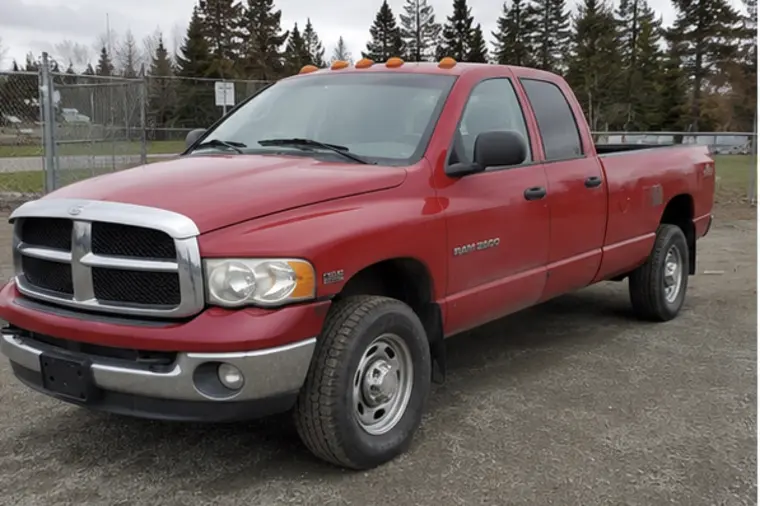
The reviewed primary evidence does not support blacklisting an entire 12-valve Cummins year. Cummins documents 1989–1998 production, mid-1991 intercooling, production-wide output ranges and a 1998 overlap with the first 24-valve ISB. Those milestones change what a buyer must verify, but they do not publish failure frequency by year. Avoid candidate conditions instead: unresolved engine identity, a pre-warmed presentation, unexplained starting or fluid symptoms, undocumented fuel and power changes, major repairs without diagnosis and recheck, unsafe chassis or load configuration, uncertain safety-action status, and inadequate service or downtime support. A year stays only as a research boundary; the inspected truck supplies the decision.
Years-to-avoid verdict: no universal blacklist
Do not reject 1989–1998 solely from the calendar. Cummins' published timeline does not compare field failures, maintenance exposure, duty, modifications or survivor condition across those years.
Pause or decline a specific truck when a material risk remains unresolved or its consequence exceeds the ownership plan. Reconsider only when objective evidence closes that risk.
This approach can reject a popular late truck and accept a well-supported early one. It preserves what is known without pretending all surviving examples share a condition.
Use the timeline to frame checks, not rank failures
Cummins lists 160–215 horsepower and 400–440 lb-ft across the 12-valve run, says intercooling began in mid-1991 and notes output above 200 horsepower by 1996. It lists Bosch VE and P7100 direct-injection systems.
These are architecture and revision anchors. The source does not say an early non-intercooled truck fails more often, a later truck lasts longer or one injection system has a lower population failure rate.
Apply exact-year and engine-specific literature to the candidate. Do not carry a specification, procedure or reputation across configurations without verification.
Treat 1998 as an identity gate
Cummins dates the final 12-valve year and the first 24-valve ISB year to 1998. Therefore, avoid committing to a “1998 12-valve” until the installed engine is proven.
Reconcile chassis build labels, engine dataplate and serial, visible valve-train and fuel-system configuration, and replacement records. An engine swap may also make the original truck literature and current engine literature differ.
Pause when the seller's description and physical evidence conflict. Wrong identity changes parts, procedures, valuation and the meaning of previous repairs.
Do not reject the early years from output alone
Cummins identifies 1989 as the beginning of the pickup relationship and 160 horsepower/400 lb-ft as the starting point. It says intercooling arrived in mid-1991.
Lower documented starting output can make an early truck less suitable for a buyer prioritizing factory power, but that is a work-fit decision—not proof of unreliability.
Avoid an early candidate when its original configuration, cooling, performance, parts or support cannot meet the assignment. Do not label every 1989–mid-1991 engine defective.
Do not approve later years from output alone
Cummins says output exceeded 200 horsepower by 1996 and lists 215 horsepower as the top of the production-wide range. That makes 1996–1998 a sensible later-output search band, not an automatic pass.
A later truck can still have identity conflict, poor maintenance, unsafe modifications, unresolved symptoms, transmission or chassis damage and inadequate support.
Verify the candidate's exact factory rating in matching original literature. Do not assign the production maximum to every late truck or confuse higher output with longer life.
Avoid unresolved cold- and hot-start behaviour
Request a true cold soak. Record ambient temperature, block-heater use, battery and cranking condition, shutdown-control movement, start time, smoke, idle, leakage, warnings and abnormal sound.
Repeat restart and operating observations fully warm. Preserve whether a concern happens after storage, at a certain fuel level, following service or only under load.
Pause when the truck is pre-warmed, start conditions are hidden or a symptom is dismissed without measurement. Decline when operation would risk damage or the investigation exceeds the plan.
Avoid fuel-system guesses and undocumented adjustments
Identify the installed injection system and inspect accessible supply lines, filters, fittings, hoses, pump area, shutdown controls and added electrical equipment.
For hard start, stalling, unstable running or low power, require evidence separating cranking, supply, air entry, restriction, shutdown, timing, injection control and internal condition.
Unknown fuel settings, improvised wiring or a parts invoice without diagnosis are unresolved. Reconsider after identity, configuration, legality, measurements and a condition-matched recheck are documented.
Avoid unexplained smoke and fluid change
Describe smoke by colour, density, duration, temperature and load. Trend oil and coolant levels over known distance, time and duty using the correct procedure.
Inspect external leak paths and the fuel, air, turbo, exhaust, cooling, lubrication and internal-engine branches indicated by the observation. Do not select a component from smoke colour or drip location alone.
Decline operation when warnings, rapid temperature change, fluid mixing or loss suggests damage or safety risk. A cleaned engine bay or fresh fluids cannot establish the cause or remaining life.
Avoid cooling uncertainty in a working truck
Inspect radiator, intercooler where fitted, hoses, fan and belt drives, water-pump area, cap and reservoir, heater circuit, engine joints and evidence of previous overheating or cleanup.
Verify stable operation under a safe condition representative of intended duty. A short idle cannot establish loaded cooling, and the presence of an intercooler does not certify the installed system.
Pause for missing history, unexplained coolant change, mismatched swap components or inadequate airflow. Reconsider after the cause, repair scope and comparable recheck are supported.
Avoid popular problem labels without closure
Claims about a front-cover dowel, injection or supply pump, head gasket, block, turbocharger or transmission should trigger inspection—not a year-wide verdict.
Ask what symptom occurred, how it was measured, which parts and related systems were assessed, what was changed and whether the original condition passed after repair.
“Addressed,” “upgraded” and “bulletproof” are not sufficient records. The reviewed official set supplies no exposure-adjusted year-by-year failure rate for those labels.
Avoid major repairs with an open evidence chain
For an engine replacement, rebuild, head, injection or turbo repair, obtain the initiating complaint, measurements, engine identity, disassembly findings, parts, reused systems, machine work, installer, warranty and result.
Confirm that the cause was addressed and that supporting fuel, cooling, air, lubrication and drivetrain systems were checked where relevant.
Pause when the invoice is only a parts list. Reconsider after the repair is tied to the original condition and verified cold, hot or under safe comparable load.
Avoid unknown modification scope
Inventory fuel settings, injectors, turbocharger, intake, intercooler, exhaust, gauges, shutdown controls, transmission work, axle gearing, tires, suspension and accessory wiring.
Require the objective, part numbers, installer, measurements, supporting changes and recheck. Verify road legality, insurance and shop acceptance.
Unknown calibration or mismatched hardware is a material risk even when the truck performs well briefly. Decline when the configuration cannot be made legal, safe or supportable within the plan.
Avoid transmission and chassis blind spots
Inspect clutch or converter behaviour, shift quality, fluid evidence, transfer case, axles, driveshafts, steering, brakes, tires, wheels, frame, mounts, hitch, wiring, body and corrosion.
Do not let engine reputation hide an unsafe structure, overloaded axle, worn driveline or unsuitable transmission. Separate each finding in the budget and decision.
Time and corrosion can dominate low-kilometre examples. A rebuilt engine does not renew the truck around it.
Avoid trucks that cannot legally carry the job
Use certification and payload labels, axle and tire limits, hitch limits and exact vehicle literature. Calculate occupants, cargo, body, tools, accessories and loaded tongue or pin weight.
Do not infer payload or towing capacity from engine torque, fuel system or model reputation. Cab, box, transmission, axle, wheels and equipment change the complete-vehicle result.
Decline a truck that cannot safely and legally perform the intended work. Reconsider only if the assignment or verified configuration changes.
Avoid vague maintenance histories without a baseline
Request dated oil and filter, fuel-filter, cooling, valve-adjustment, air-filter and belt-drive records for the exact engine. Separately review vehicle and transmission service.
Match products, intervals and procedures to the engine serial and model-year literature. Do not assume another 6BT application or later RAM schedule applies.
Missing history is uncertainty, not automatic proof of neglect. Price the inspection and immediate baseline honestly, and decline when combined unknowns exceed the budget.
Verify Canadian safety status before proceeding
Use Mopar Canada's current VIN lookup and retain the dated result. Use Government of Canada sources for Canadian model-level research and connect any relevant action to the actual VIN and completion record.
Use NHTSA only for U.S. VIN or model context. Campaign eligibility does not establish an engine defect, and completion does not certify the whole vehicle.
No VIN was supplied. No Canadian candidate is represented as open, complete, included, excluded or unaffected.
Avoid support and downtime mismatches
Use Cummins' locator to identify possible engine support, then confirm the actual facility accepts the engine serial, Dodge chassis, modifications and requested work. Confirm vehicle-side support separately.
Ask about transport, diagnostic queue, parts sourcing, fabrication, disassembly, machine work, validation and substitute capacity. A directory listing is not a capability, timing or price guarantee.
Decline when foreseeable interruption exceeds the operating plan, even if the present inspection is acceptable.
Use explicit pause, decline and reconsider gates
These gates judge the candidate and assignment. They are not frequency or severity rankings for an entire year.
| Finding | Initial decision | Evidence that can change it |
|---|---|---|
| Identity conflict or ambiguous 1998 engine | Pause | Chassis labels, engine ESN, hardware and records reconcile |
| Pre-warmed truck or unresolved start issue | Pause | True cold and hot tests plus diagnosis close the concern |
| Unexplained smoke, fluid loss or overheating | Pause or decline | Cause, repair scope and comparable recheck are documented |
| Unknown fuel settings or power changes | Pause | Hardware, settings, legality, support and results are verified |
| Unsafe structure, brakes, tires or load fit | Decline | Professional repair and verified safe configuration |
| Support or downtime outside the assignment | Decline for that use | A viable service, transport and contingency plan exists |
Stage a rejection-focused inspection
Before travel, request VIN and ESN photos, build labels, a true cold-start video, dashboard bulb check, maintenance chronology, repair and modification records, and dated safety results.
On site, verify identity before detailed testing. Inspect cold and hot operation, fuel and shutdown systems, fluids, cooling, air/turbo/exhaust, wiring, transmission, driveline, brakes, steering, tires, frame, hitch and corrosion.
Have material findings assessed by a technician familiar with the installed application. Obtain written scopes for safety work, maintenance catch-up, diagnosed repair and unresolved investigation.
Preserve unknowns in the decision
Classify each material area as supported, repaired and rechecked, unresolved or not assessed. Do not convert “not assessed” into a pass or average a safety issue into a numeric score.
Separate immediate safety work, baseline maintenance, diagnosed repairs, unresolved investigation and optional upgrades. Use candidate-specific local estimates.
Retain the advertisement, identity, manuals, recall results, history, scans, inspection, repair records, modification evidence, load arithmetic and limitations.
Preserve the limits of a years-to-avoid answer
The reviewed primary set establishes production, architecture, output ranges, system names, intercooling and transition milestones. It does not supply exposure-adjusted failure rates or severity rankings by 12-valve year.
It also cannot establish an unseen truck's exact rating, maintenance compliance, Canadian VIN status, repair cost or remaining life.
Avoid unsupported certainty. A candidate can move from pause to proceed only when better evidence closes the material risk.
12-valve Cummins years-to-avoid questions
Which 12-valve Cummins year should I avoid? The reviewed evidence supports no universal year blacklist; reject unresolved candidate conditions instead.
Should I avoid 1998? Not automatically, but verify the installed engine because Cummins dates both 12-valve and 24-valve production to that year.
Should I avoid 1989–mid-1991 because it was not intercooled? Only if that verified configuration does not fit the use; the milestone is not failure-rate evidence.
Should I avoid a modified truck? Pause until hardware, settings, legality, history and supporting systems are verified.
Does a rebuilt engine remove every concern? No. Verify cause, scope, outcome and the entire truck around it.
Can low mileage override missing records? No. Age, storage, duty and present condition still require evidence.
Evidence note: manufacturer documents establish the specific facts and applications cited. Buying workflows and cost scenarios are DieselTrucks.ca editorial guidance. These pages do not publish measured failure rates or confirm the condition, recall status or capacity of a particular truck.
General educational content for Canadian diesel-pickup research. Verify the exact truck, model year, certification labels, owner manual and manufacturer documentation, and obtain qualified mechanical or towing advice where appropriate.
Sources & Further Verification
Use the exact model year, VIN, truck labels and current manufacturer documentation when moving from general research to a purchase or towing decision.
- Cummins 5.9L-to-6.7L evolution, 12 April 2016 — 12-valve years, output range, injection and intercooler milestones
- Cummins RAM history — 1989 and 2007 milestones
- Cummins genuine-parts guidance — engine dataplate, ESN and QuickServe manual access
- Cummins manuals and technical information — engine-specific literature access
- Mopar owner-manual access — model-year vehicle literature
- Mopar Canada — current VIN recall and customer-satisfaction notice lookup
- Government of Canada — current recalls, advisories and safety-alert search
- NHTSA vehicle recall search — U.S. VIN and model-level safety research
- Cummins sales and service locator — application-aware support search