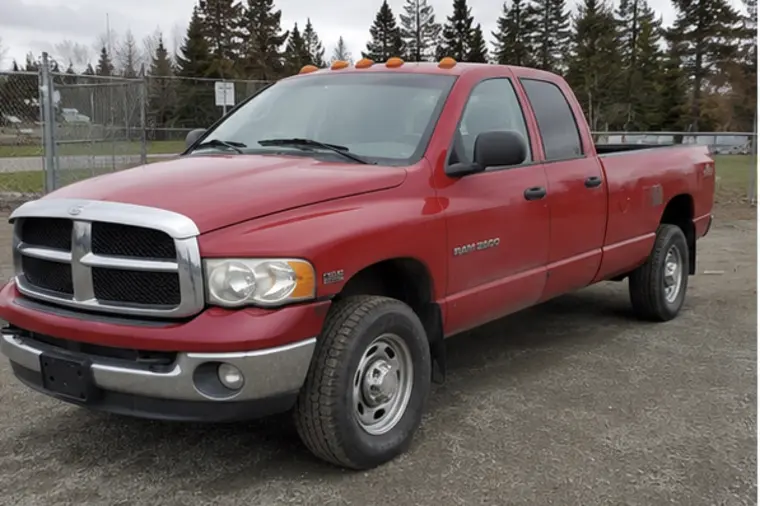
The best 12-valve Cummins year is the one that fits the assignment and survives an evidence-led inspection. Cummins documents 1989–1998 production, a mid-1991 intercooling milestone, a 160–215 horsepower range, a 400–440 lb-ft torque range and output above 200 horsepower by 1996. Those facts support useful search bands, but they do not prove that one year has the lowest failure rate. For a buyer seeking later-production factory output, a verified 1996–1998 12-valve candidate is a sensible starting band; 1998 needs extra identity work because Cummins also dates the 24-valve ISB to that year. Earlier trucks can be the better fit for originality or a simpler restoration plan. In every band, installed-engine identity, complete-truck condition, modifications, transmission, records and support outrank the calendar.
Best-year verdict: choose a band, then choose the truck
Use 1996–1998 as a conditional search band when later 12-valve production and the upper end of Cummins' documented factory-output range matter. Cummins says the pickup engine exceeded 200 horsepower by 1996, but it does not publish a year-by-year reliability ranking.
Use the intercooled mid-1991–1993 band when an early Dodge-era truck and factory intercooling fit the project. Treat 1989–mid-1991 primarily as an early-history or restoration search, not as the automatic performance choice.
These are shopping priorities, not guarantees. A documented, correctly configured earlier truck can be a better buy than a modified or poorly supported late truck.
Establish the actual 12-valve identity first
Cummins lists the 5.9L 12-valve 6BT from 1989 through 1998. Record the chassis VIN and build labels, engine dataplate or serial, transmission, fuel-system hardware and original market. Reconcile replacement engines, pump changes and swaps with invoices.
Use the engine serial to obtain matching Cummins technical information and the vehicle year to obtain matching Mopar literature. The two identities can differ after decades of repair or modification.
Do not infer the installed engine from the hood, valve cover or advertisement alone. If labels and hardware conflict, keep the year recommendation pending until a qualified inspector resolves them.
Read the documented specifications narrowly
Cummins documents the 12-valve as an inline-six 5.9L/359-cubic-inch engine with cast-iron block and head, overhead valves and two valves per cylinder. It gives a production-wide range of 160–215 horsepower at 2,500 rpm and 400–440 lb-ft at 1,600 rpm.
The same source lists Bosch VE and P7100 direct-injection systems and says intercooling began in mid-1991. It does not map every rating and fuel-system combination to every Dodge chassis, transmission and build date.
Verify the candidate's exact rating in the correct original literature. Do not assign the top number to every late truck or treat a production-wide range as a dyno result for a used example.
Compare the useful search bands
The table identifies research priorities. It is not a failure-frequency, price or remaining-life table.
| Search band | Documented anchor | Best fit | Main verification need |
|---|---|---|---|
| 1989–mid-1991 | Beginning of Cummins-powered Dodge pickups; 160 hp and 400 lb-ft starting point | Original early truck or restoration | Exact engine, non-intercooled configuration, history and parts/support plan |
| Mid-1991–1993 | Cummins says intercooling began mid-1991 | Early-generation character with the intercooling milestone | Build date, installed charge-air hardware and complete-truck condition |
| 1994–1995 | Middle of documented 12-valve production | Buyer balancing older-truck simplicity and later packaging | Exact injection hardware, rating, transmission and modification history |
| 1996–1998 | Cummins says output exceeded 200 hp by 1996 | Later-production search and higher documented factory-output band | Exact rating; 1998 requires explicit 12-valve-versus-24-valve proof |
Treat 1989–mid-1991 as the early-history choice
Cummins dates the first Cummins-powered RAM to 1989 and lists the initial pickup output at 160 horsepower and 400 lb-ft. Its technical timeline says intercooling arrived in mid-1991.
Choose this band for originality, a period restoration or a work plan that accepts the earliest configuration. Do not call it the best band for the highest documented factory output.
Confirm build date, charge-air layout, cold and hot operation, body and frame condition, parts access and the availability of a shop willing to support the exact configuration. Historical importance does not reduce age-related work.
Use mid-1991–1993 for an intercooled early truck
The mid-1991 intercooling milestone gives this band a defensible distinction without inventing a reliability advantage. It may suit a buyer who wants the earlier Dodge context but prefers the documented intercooled configuration.
Verify the actual build and installed system. Decades of engine swaps, radiator and intercooler changes, front-end repairs and power modifications can erase the original pairing.
Inspect the entire cooling and charge-air path, not just the presence of an intercooler. Record leakage, hose condition, mounting, airflow and operating temperature under a safe comparable load.
Evaluate 1994–1995 on hardware and history
This band sits between the intercooling milestone and Cummins' 1996 above-200-horsepower milestone. The reviewed primary set does not establish a unique reliability advantage for either year.
Use it when the individual truck's identity, records, condition and configuration are stronger than competing candidates. Photograph injection hardware, labels and engine serial, then verify the exact application before ordering parts or applying a rating.
Pay particular attention to previous fuel-system, transmission, cooling and power work. A clean exterior or familiar pump label cannot establish calibration quality or remaining life.
Start with 1996–1998 for later documented output
Cummins states that the engine exceeded 200 horsepower by 1996 and gives 215 horsepower as the top of the 12-valve production-wide range. That supports this later band as a search priority when factory output matters.
It does not prove that every 1996–1998 truck has 215 horsepower, that later is more reliable, or that the original engine remains installed. Confirm the exact year, rating, transmission and hardware in matching documents.
Give condition and coherent records more weight than the milestone. A lower-output truck with known maintenance and legal, supportable hardware can be the better work vehicle.
Handle the 1998 transition explicitly
Cummins lists 1989–1998 for the 12-valve 6BT and also lists 1998 as the beginning of the 24-valve ISB. Therefore, “1998 Cummins” is not a complete engine identity.
Require chassis build evidence, engine dataplate or serial, valve-train and fuel-system confirmation and records for any replacement. Do not apply 12-valve guidance to a 24-valve truck because the model year overlaps.
If the candidate cannot be reconciled, pause. The wrong identity changes parts, service information, inspection branches, valuation and the meaning of previous repairs.
Match output to the transmission and truck
Engine output is only one part of the powertrain. Record the exact transmission, clutch or torque-converter history, axle ratio, tire size, certification labels, hitch and modifications.
Test shift quality, engagement, temperatures and driveline behaviour under a safe condition appropriate to the vehicle. Do not infer transmission capacity or towing capability from the engine's torque range.
For work use, calculate occupants, cargo, body, accessories and loaded tongue or pin weight from the complete vehicle's labels and exact literature. The best engine year cannot correct an unsuitable or unsafe configuration.
Let present mechanical condition outrank year
Begin from a true cold soak when possible. Record ambient temperature, block-heater use, batteries, cranking, shutdown-control behaviour, smoke, idle, leaks and warnings. Repeat relevant observations fully warm and during restart.
Inspect fuel supply, filtration, air and charge-air paths, turbocharger, cooling, lubrication, electrical system and accessible engine installation. Measure concerns using the correct engine-specific procedure.
A successful start or short idle is not a load test. A warm presentation cannot establish cold-start quality, and one clean fluid sample cannot predict remaining life.
Audit fuel and shutdown work before ranking a candidate
Identify the installed injection system and every added pump, regulator, filter, line, linkage, solenoid and electrical control. Compare part numbers and installation records with the engine serial and intended use.
For hard start, stalling or low power, preserve the condition and require measurements that separate cranking, supply, air entry, filtration, shutdown control, injection timing and internal engine paths.
Do not reward a truck simply because it has an expensive pump or recent fuel work. Credit a repair only when the complaint, diagnosis, scope and condition-matched recheck form a coherent chain.
Keep popular problem claims evidence-bounded
Online discussions often name a front-cover dowel, lift pump, injection pump, head gasket, block or turbocharger as a year-selection shortcut. The reviewed primary sources do not provide exposure-adjusted failure rates by 12-valve model year for those items.
Convert each claim into an inspection question. Ask what was observed, how it was measured, what was repaired, which related components were assessed and whether the original condition was reproduced after repair.
Do not accept “addressed” without records or visible professional evidence. Do not reject an entire year because one candidate has a defect or a campaign source discusses a defined vehicle population.
Inspect cooling, leakage and age-related condition
Trend coolant and oil levels using the correct procedure. Inspect accessible hoses, radiator, charge-air cooler, fan drive, belt drive, water-pump area, engine joints, crankcase ventilation and evidence of previous cleanup.
Trace the highest fresh source of leakage rather than naming a seal from the drip point. For overheating, pressurization or fluid mixing, require a diagnosis that separates external, cooling-system and internal paths.
Rubber, wiring, seals, mounts and corrosion age even when kilometres are low. A late 12-valve year is still nearly three decades old and needs a complete baseline.
Treat modifications as a new configuration
Inventory fuel settings, injectors, turbocharger, intake, exhaust, intercooler, gauges, calibration hardware, transmission work, axle gearing, tires, suspension and electrical additions.
Ask for the objective, installer, part numbers, measurements, supporting changes and results. Verify legality, insurance acceptance, service access and whether the truck can be returned to a documented configuration.
Do not claim a modification caused or prevented a failure without evidence. Unknown tuning or mismatched supporting systems can make an otherwise preferred year the weaker purchase.
Verify Canadian safety status by VIN
Use Mopar Canada's current VIN lookup and retain the dated result. Use the Government of Canada recall search for Canadian model-level research and connect any relevant result to the actual VIN and remedy record.
Use NHTSA only for U.S. VIN or model context. U.S. and Canadian populations, remedies and completion records are not interchangeable.
No VIN was supplied for this guide. No candidate is represented as open, complete, included, excluded or unaffected by a safety action.
Match the year to the use case
The starting band narrows the search. It does not replace inspection, load arithmetic or a budget tied to actual findings.
| Buyer priority | Sensible starting band | Why | What can override it |
|---|---|---|---|
| Later 12-valve factory-output milestone | Verified 1996–1998 12-valve | Cummins documents above 200 hp by 1996 | Identity conflict, modifications, weak records, condition or work-fit failure |
| Early intercooled Dodge character | Verified mid-1991–1993 | Cummins documents intercooling from mid-1991 | Swap history, cooling/charge-air faults, corrosion or support gap |
| Earliest-production restoration | 1989–mid-1991 | Beginning of the Cummins/Dodge pickup relationship | Missing originality evidence, unsafe structure or uneconomic project scope |
| Dependable work truck | Any verified band | Candidate evidence and complete-truck fit matter most | Unresolved safety, powertrain, load, support or downtime risk |
Stage the pre-purchase inspection
Before travel, request identity photos, a true cold-start video, dashboard bulb check, maintenance chronology, repair and modification records, recent scans or measurements and dated VIN-recall results.
On site, reconcile the chassis and engine, inspect cold and hot operation, fluids, leakage, fuel and air systems, cooling, wiring, transmission, driveline, brakes, steering, tires, frame, hitch and corrosion. Use a safe road test appropriate to the truck.
Have material findings assessed by a technician familiar with the exact application. Separate safety work, maintenance catch-up, diagnosed repair, unresolved investigation and optional changes in the written scope.
Plan parts, service and downtime before purchase
Use Cummins' locator to identify possible service support, then confirm the actual facility accepts the installed legacy engine, Dodge chassis, modifications and requested work. A locator result alone is not a capability or appointment guarantee.
Confirm vehicle-side support separately. Ask about parts sourcing, diagnostic information, body access, transport, queue, disassembly, machine work, validation and substitute capacity.
Use local written estimates tied to the inspected truck. Generic online prices cannot represent the candidate's labour access, parts availability or repair boundary.
Make the decision with explicit gates
Proceed when identity is aligned, cold and hot operation is satisfactory, material systems are assessed, repairs close their original conditions, configuration is legal, work fit is verified and support matches downtime tolerance.
Pause for a 1998 identity conflict, pre-warmed presentation, unexplained smoke or fluid change, unknown fuel or power work, incomplete major-repair evidence, uncertain recall status or missing load information.
Decline when safety or structure is unacceptable, the required repair or investigation exceeds the plan, legal configuration cannot be established, or service and downtime are incompatible with the assignment.
Preserve the limits of the recommendation
The reviewed primary set establishes production years, architecture, output ranges, injection-system names, the intercooling milestone and a 1996 output milestone. It does not provide exposure-adjusted failures, a universal best year, repair-cost distribution or remaining-life forecast.
It also cannot establish the Canadian VIN status, exact factory rating, installed engine, maintenance compliance or present condition of an unseen truck.
Treat “best” as the best-supported candidate for a defined job. Retain the evidence and unresolved items so a recommendation can change when better candidate-specific information appears.
12-valve Cummins best-year questions
What is the best 12-valve Cummins year? Start with a verified 1996–1998 12-valve when later production and the documented above-200-horsepower milestone matter, then choose by condition and evidence.
Is every 1998 Cummins a 12-valve? No. Cummins dates both the last 12-valve production year and the first 24-valve year to 1998, so verify the installed engine.
Are mid-1991–1993 trucks a good early choice? They are a defensible intercooled early search band, not a proven reliability winner.
Does a P7100 label prove the best year? No. Verify the exact installed system, rating, configuration, work and present condition.
Should low mileage decide the purchase? No. Age, storage, duty, records, modifications and current condition still require inspection.
Can recall or complaint counts rank engine years? No. Keep market, population, system, exposure and candidate evidence precise.
Evidence note: manufacturer documents establish the specific facts and applications cited. Buying workflows and cost scenarios are DieselTrucks.ca editorial guidance. These pages do not publish measured failure rates or confirm the condition, recall status or capacity of a particular truck.
General educational content for Canadian diesel-pickup research. Verify the exact truck, model year, certification labels, owner manual and manufacturer documentation, and obtain qualified mechanical or towing advice where appropriate.
Sources & Further Verification
Use the exact model year, VIN, truck labels and current manufacturer documentation when moving from general research to a purchase or towing decision.
- Cummins 5.9L-to-6.7L evolution, 12 April 2016 — 12-valve years, output range, injection and intercooler milestones
- Cummins RAM history — 1989 and 2007 milestones
- Cummins manuals and technical information — engine-specific literature access
- Mopar owner-manual access — model-year vehicle literature
- Mopar Canada — current VIN recall and customer-satisfaction notice lookup
- Government of Canada — current recalls, advisories and safety-alert search
- NHTSA vehicle recall search — U.S. VIN and model-level safety research
- Cummins sales and service locator — application-aware support search