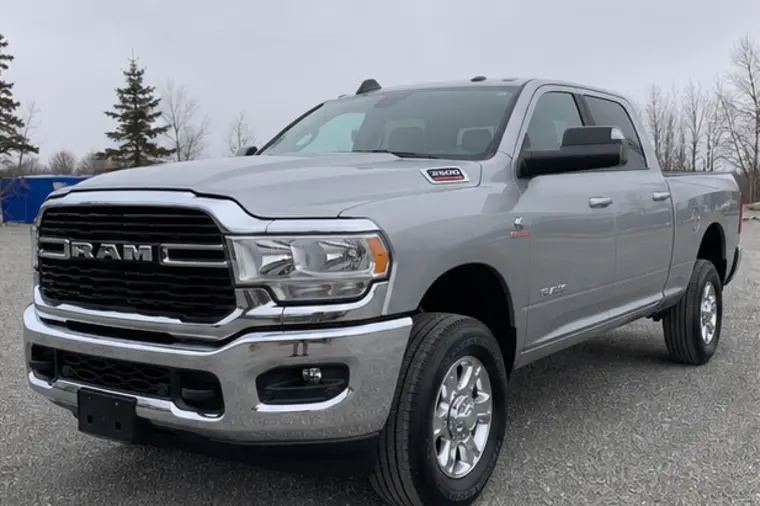
RAM 2500 diesel problems should be investigated by the actual Cummins and transmission combination. Several documented campaigns concern different model-year populations and different systems: the high-pressure fuel pump, intake heater relay and 68RFE transmission. Identify the truck first, check current Canadian VIN information, then assess its present condition and repair history.
RAM 2500 problem summary by affected application
These are selected manufacturer-documented concerns and inspection priorities, not a live recall report for every RAM 2500. A year appearing in a table does not confirm that the candidate VIN is included, and a year outside a listed campaign does not establish that the truck has no other issues.
| Concern | RAM 2500 scope in the cited document | Why it matters | Evidence to request |
|---|---|---|---|
| Y78 high-pressure fuel pump | Defined 2019–2020 6.7L diesel population | Pump failure can disrupt fuel delivery and cause loss of motive power | Current campaign result plus repair and contamination-assessment records |
| 13A intake heater relay | Specified 2021–2023 6.7L trucks with the identified relay | Electrical short can cause fire with ignition on or off | VIN applicability, current owner instructions and final repair confirmation |
| ZA3 transmission fluid expulsion | Specified 2020–2023 6.7L trucks with 68RFE | Expelled fluid can reach an ignition source | Transmission identification and dipstick/vent campaign documentation |
| Starting, emissions or shift symptoms | Depends on the exact year, equipment and condition | Similar symptoms can have different causes | Initial diagnostic findings and a written inspection report |
Y78 fuel-pump campaign: ask what happened to this truck
FCA's Y78 / U.S. 21V-880 filing covers specified 2019–2020 RAM diesel applications. It describes premature high-pressure pump failure and possible debris entering the fuel system, with fuel starvation and loss of motive power. The listed warning observations include a malfunction light, leakage, abnormal noise or a change in driving behaviour.
The buying enquiry has two parts. First, ask the manufacturer whether the VIN is affected and whether the required action is complete. Second, ask the seller whether the vehicle experienced a failure and obtain the repair record. Campaign completion and an earlier breakdown are related but different pieces of evidence.
For a repaired truck, have a qualified diesel technician review the diagnosis and itemized work. Ask whether contamination was found and what inspection or replacement of other components was documented. Avoid reducing the story to a pump brand or assuming that one new component certifies the entire fuel system.
If the candidate currently has poor starting, fuel leakage or reduced power, have that condition investigated before committing to use it. A past campaign entry does not explain every current symptom. Likewise, a clean start at a seller's address cannot determine whether an intermittent fault has been resolved.
13A heater relay: distinguish the fire concern from starting performance
The 13A / U.S. 23V-060 filing identifies specified 2021–2023 RAM 2500 trucks with a particular intake heater relay. An electrical short can cause a fire whether the ignition is on or off. The document advises affected vehicles awaiting final repair to be parked outside buildings and away from other vehicles; confirm and follow the current manufacturer instructions for the actual VIN.
A truck that starts normally can still require a campaign check. Starting performance is not a test of whether the recalled relay has received the final remedy. Ask for confirmation of the campaign number and completion rather than accepting an undated statement that “the heater was done.”
Keep the electrical relay concern separate from other online discussions about intake components or engine damage. A document about one part does not establish the cause of every problem described under the phrase “grid heater.” The mechanic should identify the actual equipment and any additional symptoms rather than using a broad label as a diagnosis.
If the seller reports previous electrical repairs, obtain invoices and establish whether they relate to this campaign or another fault. Do not substitute a bypass, disconnected component or seller-devised precaution for the manufacturer's applicable remedy and current operating instructions.
ZA3 applies to a particular transmission, not every Cummins truck
FCA's ZA3 / U.S. 22V-835 scope includes specified 2020–2023 RAM 2500 pickups with the 6.7L diesel and 68RFE transmission. It describes pressure and heat that can expel transmission fluid through the dipstick tube, creating a fire risk if the fluid reaches an ignition source. Transmission identification is therefore essential before applying the document.
The cited repair communication calls for revised dipstick and vent equipment and an owner's-manual update. Its instructions distinguish the replacement locking dipstick from the tool used for checking fluid level. If that equipment is present, ask the servicing shop to explain the correct current check procedure and confirm the campaign record; do not assume an unfamiliar dipstick means the transmission is empty or that it should be replaced with the recalled part.
Campaign hardware does not constitute a transmission overhaul. Review fluid-service history, any leak diagnosis and cold/warm shift complaints separately. If the seller claims the entire transmission was replaced, ask what was installed, why, and whether the campaign status was checked after that work.
Do not infer the RAM 3500's exact affected years from this RAM 2500 page. The ZA3 filing lists different model-year ranges for the two pickups. Also keep the revised 2025-onward eight-speed powertrain separate from this 68RFE-specific campaign.
The 2025 powertrain change is a research boundary
Cummins' January 2025 announcement describes a revised pickup engine system paired with an eight-speed transmission. That is a reason to identify newer RAM 2500 candidates separately from the older combinations discussed above. It is not proof that the revision has no problems or a reason to apply an old transmission campaign to it without evidence.
Ask for the actual build and service information when comparing a late-model truck with a 2024-or-earlier candidate. Use the appropriate owner's manual, campaign lookup and shop knowledge for each. A familiar displacement and model name do not guarantee interchangeable components or maintenance requirements.
For older Dodge/RAM diesel trucks, establish the particular 5.9L or 6.7L era before choosing an inspection scope. This guide's selected later campaigns are not a complete history of every older RAM 2500. The generation and engine guides provide the context needed to ask the right questions.
What an independent RAM 2500 inspection should record
Arrange a cold-start assessment where practical and ask the technician to record the initial warning and diagnostic information. Keep codes and observations with the report even when further testing is required. Clearing a light and returning for a brief drive is not equivalent to establishing and repairing its cause.
Inspect the engine, transmission, cooling and emissions equipment appropriate to the application, together with steering, brakes, tires, underbody corrosion and hitch mounting. A problem guide focused on Cummins components should not cause you to neglect the rest of the pickup. The inspection should distinguish present defects from ordinary service due and from questions that remain unresolved.
Review modifications openly. Obtain the hardware and calibration history, verify appropriate factory emissions equipment, and ask the shop what can be established about the current state. A seller's claim that a tune prevents all future problems is not evidence of the truck's condition.
Payload and towing complaints may need a setup assessment
If a concern appears only with a trailer, collect the loaded trailer and truck information as well as the symptom description. Count passengers, bed cargo, permanent equipment, hitch hardware and loaded tongue or pin weight. Verify the actual truck's payload, axle, tire, hitch and combination limits.
RAM's current capability material separates gas and diesel maxima; an advertised gas payload is not the label on a Cummins-equipped candidate. A 2500 that is unsuitable for the intended carried load does not become suitable because its engine runs well. Compare a different configuration or a suitable 3500 when the verified load requires it.
Do not deliberately repeat an unsafe loaded-driving event to diagnose it. Provide the available observations and documents to a qualified professional and resolve the relevant mechanical and setup questions before normal towing.
Repair path, prevention and purchase budgeting
For an applicable recall, use the manufacturer's current process and retain the final completion record. For a present symptom, request diagnosis and an itemized repair scope. For routine service, use the exact manual and duty requirements. These are three separate tasks; doing one does not automatically complete the others.
Good records help prevent a maintenance gap from becoming invisible, but they cannot guarantee that a component will never fail. Keep the dates, kilometres and specifications for service, record recurring symptoms promptly and have appropriate equipment checked rather than relying on a universal additive or modification claim.
Build the purchase budget from known work and a separate contingency. Include shop scheduling and a realistic substitute truck if the RAM earns income. Do not assign a confident average repair price to an unresolved major fault, and do not treat a low asking price as evidence that the required work will be straightforward.
RAM 2500 problems: buyer questions
Are all 2019–2020 RAM 2500 diesels affected by Y78? The filing defines a particular population. Confirm the actual VIN through the manufacturer rather than treating the model year alone as a definitive answer.
Does every 6.7L RAM have the same transmission problem? No. ZA3 identifies the 68RFE and specified model years. Establish the installed transmission before applying any campaign or service information.
Can a normally starting truck still need the heater-relay recall? Yes. The campaign concerns an electrical fire risk, not simply whether the engine starts. Use current VIN instructions and repair confirmation.
Is a recalled truck automatically a bad purchase? Its applicability, completed remedy, current condition and full ownership proposition must be assessed. The existence of a campaign does not establish a whole-model failure rate or replace an independent inspection.
Evidence note: manufacturer documents establish the specific facts and applications cited. Buying workflows and cost scenarios are DieselTrucks.ca editorial guidance. These pages do not publish measured failure rates or confirm the condition, recall status or capacity of a particular truck.
General educational content for Canadian diesel-pickup research. Verify the exact truck, model year, certification labels, owner manual and manufacturer documentation, and obtain qualified mechanical or towing advice where appropriate.
Sources & Further Verification
Use the exact model year, VIN, truck labels and current manufacturer documentation when moving from general research to a purchase or towing decision.
- FCA Y78 / U.S. 21V-880 filing — specified 2019–2020 diesel population
- FCA 13A / U.S. 23V-060 — defined 2021–2023 intake heater relay population
- FCA ZA3 / U.S. 22V-835 — specified 68RFE transmission and model years
- FCA ZA3 repair communication — transmission dipstick campaign scope
- Cummins January 2025 announcement — revised engine, eight-speed and separate pickup/chassis-cab outputs
- RAM Canada 2026 2500 capability — separate gas/diesel maxima and equipment conditions
- Cummins–RAM engine history