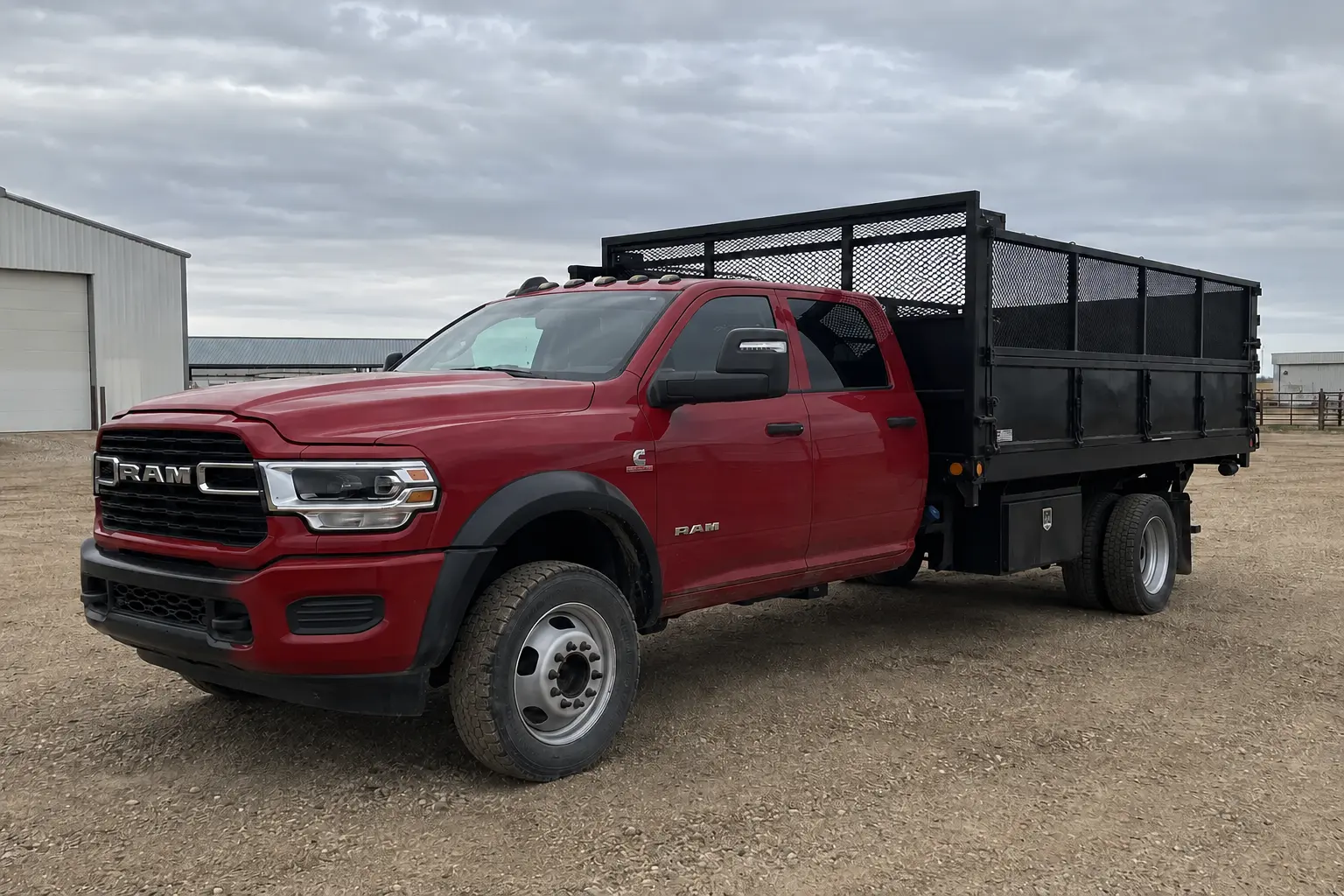
The RAM 5500 is part of a commercial chassis-cab family rather than a pickup with a factory bed. Final capability depends on both the ordered chassis and the completed body.
MODEL-YEAR INTELLIGENCE
Research RAM 5500 Chassis Cab by Model-Year Era
6.7L Cummins
Use the selected model year and canonical engine relationship as research context. Confirm the exact transmission, cab, bed, drivetrain, rear-wheel configuration, labels and manufacturer documentation on the truck.
Choose the engine and year range that matches your truck. These ranges organize research; confirm the exact equipment from its labels and records.
Chassis-cab family context
RAM's chassis-cab family includes 3500, 4500 and 5500 models. Cummins and transmission details vary by model year; do not transfer pickup specifications or one year's ratings across the family.
Verify the completed vehicle
Record cab, drivetrain, rear wheels, wheelbase, cab-to-axle dimension, upfit type and final-stage manufacturer.
- Confirm the certification and payload information on the completed truck.
- Match PTO, hydraulic and electrical equipment to documentation.
- Check body mounts, frame alterations and load distribution.
Used-buying checks
Commercial duty can produce high engine hours, idle time and concentrated chassis wear even when kilometres appear moderate.
- Ask for dated maintenance and repair records rather than relying on a verbal summary.
- Evaluate a true cold start, warning lights, leaks, transmission behaviour and underbody condition.
- Confirm whether the truck has towed, carried commercial loads or been modified, and inspect accordingly.
- Verify emissions equipment, tires, suspension and the exact payload label on the truck itself.
Match the RAM 5500 body to the recurring job
Use an equipment and material manifest to choose between service, landscape, dump and other bodies. RAM's upfit resources are a planning entry point; obtain exact-year documents and a qualified installer review for a proposed body. On a used truck, request final labels and installation records rather than assuming an existing body is correctly matched.
Weigh the completed truck with the usual crew and equipment, then check the heaviest recurring work scenario. A landscape route, wet-material delivery and equipment-trailer move may reach different axle or combination constraints. Do not treat empty body volume as usable capacity.
Verify the chassis-cab powertrain and any campaign history for the exact VIN. Pickup high-output advertising is not a 5500 specification. Compare the installation's productive condition and repair support with the business need; a successful engine road test does not establish that a hoist, compressor or other upfit equipment is serviceable.
Define the body job in measurable terms
A RAM 5500 purchase should start with the required body length, equipment mass, crew, supplies and trailer, if any. Have the body installer assess cab-to-axle dimensions and load position. The available space on a deck is not evidence that its full volume can be filled with heavy material.
| RAM 5500 evaluation | Purchase document |
|---|---|
| Body installation | Body identity, mounting details and completed-vehicle labels |
| Stationary equipment | PTO compatibility, hours and operating instructions |
| Loaded operation | Separate front/rear weights in the working state |
Check chassis and auxiliary repair support
Identify who services the transmission/PTO arrangement and who maintains the body, hoist or crane. Ask whether diagnostic access is affected by the upfit. If a body needs removal for major work, include that labour in the estimate. Treat an advertised ready-to-work claim as a request for a demonstration and records, not a substitute for them.
Evidence note: manufacturer documents establish the specific facts and applications cited. Buying workflows and cost scenarios are DieselTrucks.ca editorial guidance. These pages do not publish measured failure rates or confirm the condition, recall status or capacity of a particular truck.
General educational content for Canadian diesel-pickup research. Verify the exact truck, model year, certification labels, owner manual and manufacturer documentation, and obtain qualified mechanical or towing advice where appropriate.
Sources & Further Verification
Use the exact model year, VIN, truck labels and current manufacturer documentation when moving from general research to a purchase or towing decision.