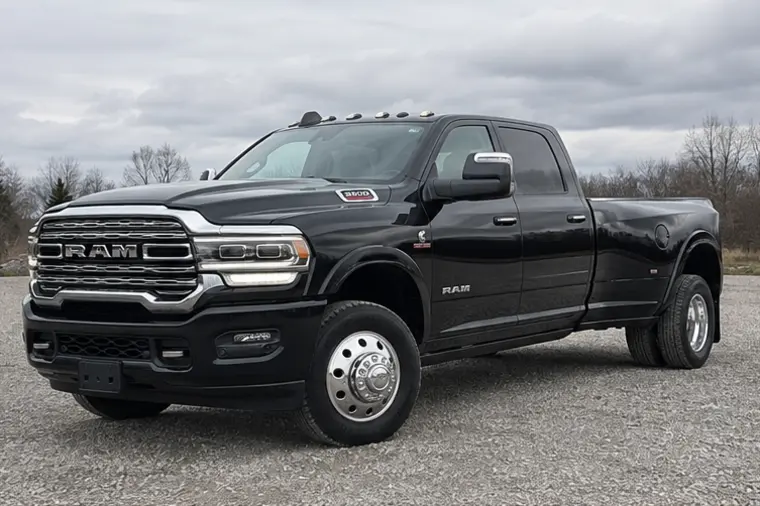
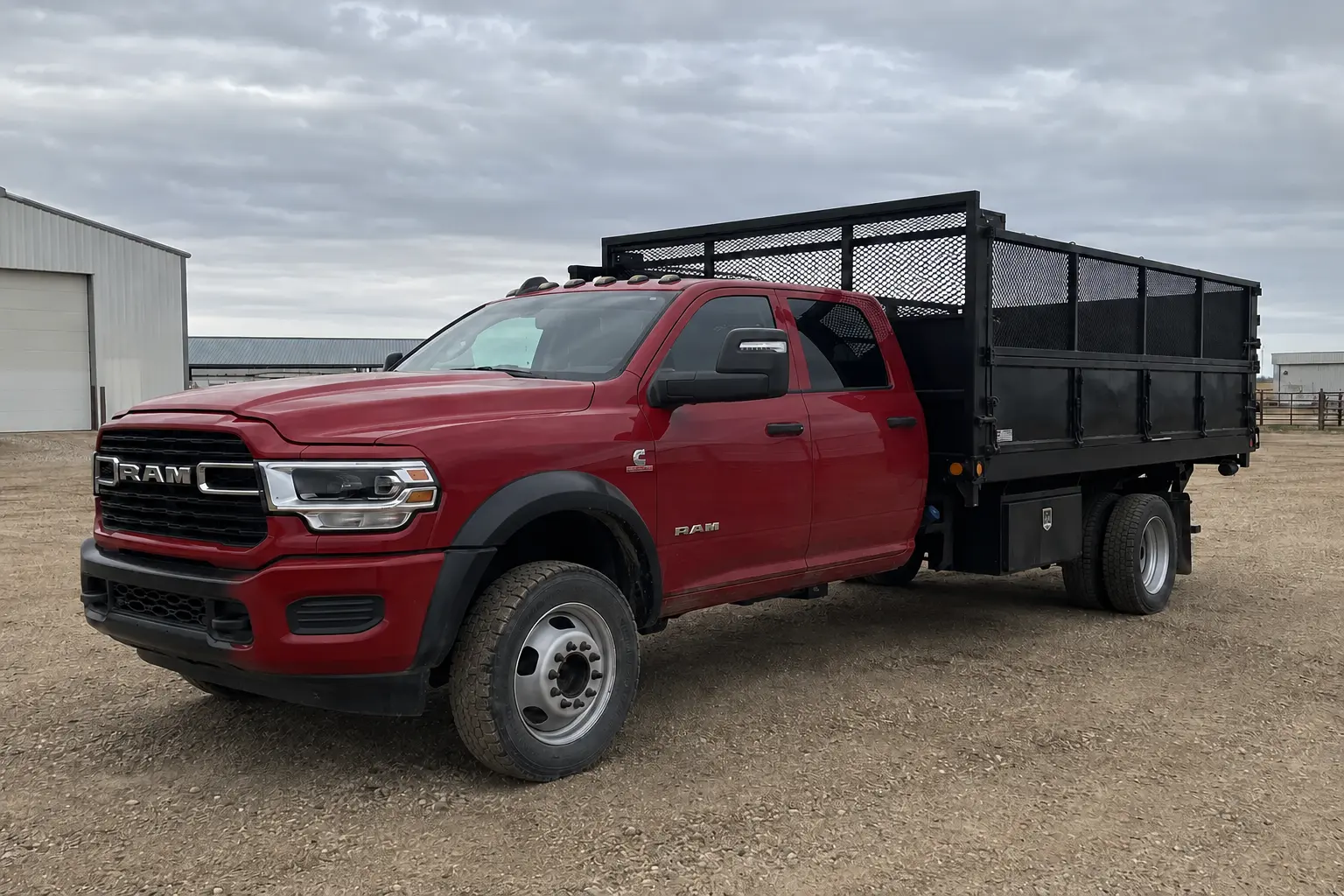
The RAM 3500 pickup and RAM 5500 chassis cab answer different body and work requirements. Compare what the finished truck carries and does before comparing engine output.
Build the buying decision
Define body job
Flexible pickup use or integrated upfit?
Verify powertrain
Application + year + transmission
Compare completed trucks
Working weights + equipment condition + support
| Decision factor | Option and use case | Compared alternative |
|---|---|---|
| Work architecture | 3500 pickup: pickup-bed and towing configuration. | 5500 chassis cab: completed upfit and equipment installation. |
| Powertrain | Verify pickup year, transmission and output version. | Verify chassis-cab year, transmission and calibration separately. |
| Purchase evidence | Truck condition, labels and hitch details. | Truck condition plus body, final labels and equipment records. |
Specify the body first
A 3500 pickup can be a candidate for mixed bed use and towing when its exact configuration fits the load. A 5500 chassis cab is a candidate for an integrated work body. Decide whether the business needs open bed flexibility, compartment storage, hydraulic equipment or material handling.
RAM's upfit guide organizes applications and chassis-cab planning. Use the exact model-year body-builder material and an installer review for dimensions, equipment and compatibility. A used body already bolted to the frame still needs installation evidence.
Verify the Cummins application
Do not transfer a pickup's advertised high-output specification to a 5500. Record the engine, transmission and calibration evidence for each truck, using documentation for its year and application. The engine family alone is not a complete configuration.
Weigh completed candidates in working condition and review axle, vehicle, trailer and combined ratings separately. Include tools, occupants and hitch load. A truck selected for body capacity may need a different trailer and hitch assessment from one selected primarily for pickup towing.
Compare ownership evidence fairly
Collect the same records and qualified inspection findings for both vehicles. Use the fuel-system guide to understand campaign evidence, then check Canadian VIN applicability and completion. Keep a recall lookup separate from the present-condition inspection: neither replaces the other.
Price the body, hydraulics or auxiliary equipment as well as the chassis. Choose the installation that can perform the recurring job and be supported locally, rather than using the model number as a substitute for a load plan.
Evidence note: manufacturer documents establish the specific facts and applications cited. Buying workflows and cost scenarios are DieselTrucks.ca editorial guidance. These pages do not publish measured failure rates or confirm the condition, recall status or capacity of a particular truck.
General educational content for Canadian diesel-pickup research. Verify the exact truck, model year, certification labels, owner manual and manufacturer documentation, and obtain qualified mechanical or towing advice where appropriate.
Sources & Further Verification
Use the exact model year, VIN, truck labels and current manufacturer documentation when moving from general research to a purchase or towing decision.